- Accueil

- Image numérique
- Georges Braque
- Pedestal Table
 Aperçu en situation
 Envoyer
 Partager
 Détails de l'œuvre

 Télécharger
 Articles similaires
 Radiographie
 Diaporama
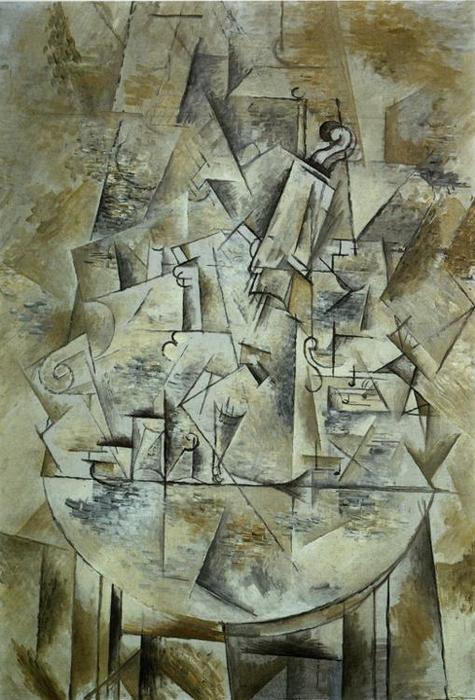
Pedestal Table
 Acrylic On Canvas
- WallArt
- Analytical Cubism
 1911
1911- Modern
 116.0 x 81.0 cm
 Lire la suite
Acquérez une image numérique haute résolution et optimisée, d'une qualité bien supérieure à l'aperçu en ligne.
Chaque fichier est méticuleusement préparé par nos spécialistes internes à l'aide d'outils avancés et d'une retouche manuelle experte. Nous garantissons que chaque image possède une clarté exceptionnelle, une précision des couleurs irréprochable et un niveau de détail fin.
Le fichier final est livré par e-mail sous 72 heures, optimisé pour une utilisation immédiate dans des contextes professionnels, éditoriaux et d'impression. Il offre la même qualité de confiance que celle utilisée par les plus grands studios de création, éditeurs et galeries.
Image numérique
Téléchargez un fichier haute résolution pour votre usage personnel, l'impression et vos projets créatifs. ( Passer au tirage Passer à la peinture faite à la main)
Inclus avec chaque commande d'image numérique
Livraison numérique experte, garantie.
En choisissant OriginalUniqueArt.com, vous n'obtenez pas seulement une simple image : vous recevez une œuvre numérique sublimée avec professionnalisme, conçue avec précision et accompagnée d'une garantie de satisfaction. Voici tout ce qui accompagne automatiquement votre commande :

Envoi rapide par e-mail
Votre fichier d'image numérique haute résolution vous sera envoyé par e-mail sous 72 heures après votre commande — prêt à un usage immédiat.

Fichier numérique optimisé par l'IA
Votre œuvre d'art bénéficie d'une optimisation professionnelle grâce à des outils d'IA avancés et une retouche manuelle, garantissant un niveau maximal de détail, de clarté et de fidélité chromatique.

Réexpédition gratuite à vie
Vous avez accidentellement supprimé ou perdu votre fichier ? Pas d'inquiétude — nous vous le renverrons gratuitement, quand vous le souhaitez.

Aucun frais de douane - À jamais
Profitez de votre œuvre d'art instantanément sans frais de douane ni de livraison — les téléchargements numériques sont toujours exonérés de taxes.

Garantie de fidélité des couleurs
Nous garantissons que votre image numérique reproduit les couleurs de l'original aussi fidèlement que possible grâce à des outils professionnels et une gestion rigoureuse des couleurs.

Garantie satisfaction 60 jours
Si vous n'êtes pas satisfait de votre image numérique, nous la retoucherons ou vous rembourserons 100% sous 60 jours — sans poser de questions.

Garantie de remboursement à 100%
Pas satisfait ? Obtenez un remboursement intégral dans les 60 jours suivant la réception de votre fichier numérique — sans aucune question posée.

Remises sur les commandes groupées
Achetez 3 images, économisez 10% - Achetez 5, économisez 15% - Achetez 10+, économisez 20%. Idéal pour les projets créatifs, les galeries et les agences.
Description de la collection
Georges Braque’s ‘Pedestal Table’: A Fragmented World of Form and Perception
Georges Braque's “Pedestal Table,” painted in 1911, is not merely a depiction of an object; it’s a carefully constructed puzzle for the viewer, a window into the nascent world of Analytical Cubism. This work, housed within the Kunstmuseum Basel, immediately captivates with its fragmented forms and deliberate ambiguity, inviting us to actively participate in reconstructing the scene before us. The painting presents a man seated at a table, a horse statue looming in the background, and a sense of contained chaos—a visual embodiment of the era’s shifting perceptions of reality.
Braque's choice of subject matter – a simple pedestal table – is itself significant. Pedestals, as our research reveals (linked here: Wikipedia Search), traditionally elevate and support objects, providing stability and grounding. However, in Braque’s painting, the pedestal becomes a fractured element, dissected and reassembled into geometric planes. This disruption of traditional spatial relationships is a hallmark of Cubism, reflecting a desire to move beyond single viewpoints and represent an object from multiple perspectives simultaneously. The table itself isn't rendered as a solid, unified form; instead, it’s broken down into interlocking facets, suggesting its inherent instability and the subjective nature of observation.
Analytical Cubism: Deconstructing Reality
Painted during the period of Analytical Cubism – roughly 1908-1912 – “Pedestal Table” exemplifies the movement's core principles. This phase, developed in close collaboration with Pablo Picasso, focused on reducing objects to their fundamental geometric components. Braque’s palette is deliberately muted, dominated by browns, ochres, and grays, creating a sense of somberness and introspection. The artist employs a meticulous technique, applying paint in thin, overlapping layers – a characteristic of Analytical Cubism – to build up the complex network of planes and angles that define each element. The use of monochromatic tones further emphasizes the deconstruction of form, stripping away any illusion of depth or three-dimensionality.
Further insight into Braque’s approach can be found in articles like Georges Braque: Pioneering Cubism & the Evolution of Modern Form, which details his experimentation with color and form during this pivotal period. The artist’s meticulous attention to detail, combined with a radical departure from traditional representation, established Analytical Cubism as a groundbreaking movement that profoundly influenced the course of 20th-century art.
Symbolic Layers and Emotional Resonance
Beyond its formal innovations, “Pedestal Table” invites speculation about its symbolic meaning. The presence of the horse statue, a recurring motif in Braque’s work (linked here: Wikipedia Search), could represent power, strength, or even vulnerability – themes often explored within the context of the era's social and political landscape. The guitar held by the seated figure might symbolize creativity, contemplation, or perhaps a moment of quiet reflection amidst the intellectual ferment of Parisian artistic circles. The inclusion of books and letters suggests an engagement with knowledge, ideas, and communication—elements central to the burgeoning modern world.
Despite its fragmented composition, “Pedestal Table” evokes a sense of contained energy and subtle drama. The interplay of light and shadow, combined with the carefully arranged planes, creates a visual rhythm that draws the eye across the canvas. It’s a painting that rewards careful observation, inviting us to decipher its complex layers of meaning and appreciate Braque's masterful manipulation of form and space. Reproductions of this work, like our high-quality hand-painted versions (viewable here: Pedestal Table, Kunstmuseum Basel and Pedestal Table 1), offer a unique opportunity to experience the power and beauty of this seminal Cubist masterpiece in your own home.
A Collector’s Perspective: Braque's Legacy
Georges Braque (1882-1963) remains one of the most influential figures in modern art. His contributions to Cubism, alongside Picasso, fundamentally altered our understanding of representation and paved the way for subsequent artistic movements. Exploring his oeuvre – from iconic works like “Houses at L’Estaque” (Georges Braque) – reveals a sustained commitment to experimentation, innovation, and a profound engagement with the complexities of the modern world. Investing in a reproduction of "Pedestal Table" is not simply acquiring an image; it’s connecting with a pivotal moment in art history and celebrating the genius of a true visionary.
Biographie de l'artiste
**Jeunesse et formation**
Georges Braque, peintre français renommé, collagiste, dessinateur, graveur et sculpteur, est né le 13 mai 1882 à Argenteuil, dans les Val-d'Oise. Il a grandi à Le Havre et a initialement été formé pour devenir peigneur et décorateur comme son père et son grand-père. Cependant, les inclinations artistiques de Braque l’ont conduit à étudier la peinture à l’École des Beaux-Arts de Le Havre de 1897 à 1899.**Évolution artistique et fauvisme**
En 1902, après avoir terminé son apprentissage auprès d'un décorateur à Paris, Braque a fréquenté l’Académie Humbert jusqu’en 1904. Cette période a marqué son introduction au fauvisme, un style caractérisé par des couleurs vives et des réponses émotionnelles. Influencé par les œuvres de Henri Matisse et André Derain, Braque a adopté une approche fauviste, comme en témoigne son tableau La Patience (fauvisme, huile sur toile).**Contribution au cubisme**
La collaboration de Braque avec Pablo Picasso de 1908 à 1912 a conduit au développement du cubisme. Leurs œuvres cubistes analytiques, telles que Georges Braque: La Patience et Pablo Picasso: Le Clarinette(cubisme analytique, huile sur toile), sont aujourd’hui considérées comme des jalons de l'histoire de l'art.**Héritage et œuvres notables**
* Maisons à l’Estaque : Témoignage de l'utilisation innovante de la géométrie et de la perspective simultanée par Braque. * La Patience(fauvisme, huile sur toile) : démontre le style fauve de Braque. * Le Clarinette(cubisme analytique, huile sur toile) : œuvre cubiste collaborative avec Picasso.**Musées et collections**
* Musée d'Orsay : présente une vaste collection d'art impressionniste et post-impressionniste, incluant des œuvres de Braque. * Musée de l'Orangerie : expose une large gamme d'œuvres d'art, incluant celles de Braque et d'autres artistes notables.- Découvrez-en davantage sur la vie et l’œuvre de Georges Braque sur OriginalUniqueArt.com
- Explorez la collection du Musée d'Orsay, présentant des œuvres de Braque et d'autres artistes, sur Musée d'Orsay - Wikipédia
- Apprenez-en davantage sur le fauvisme et son influence sur le développement du cubisme avec le mouvement artistique fauviste sur OriginalUniqueArt.com
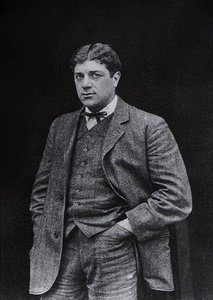
Georges Braque
1882 - 1963 , France
En bref
- Artistes Influents:
- Henri Matisse
- André Derain
- Paul Cézanne
- Date De Décès: 1963
- Date De Naissance: 13 mai 1882
- Influence Sur Les Artistes: ['Pablo Picasso']
- Lieu De Naissance: Argenteuil, France
- Mouvement Artistique: Cubisme, Fauvisme
- Nationalité: Française
- Nom Complet: Georges Braque
- Oeuvres Notables:
- Maisons à L'Estaque
- La Patience
- Le Clarinette
- Nature morte avec cruets

