

 Aperçu en situation
 Partager
 Partager
 Détails

 Télécharger l'image
 Articles similaires
 Radiographie
 Voir le diaporama
Bird On A Carmine

 Afficher la suite
Giclées et impressions d'art
Impressions giclées ou sur toile de qualité musée, avec une production rapide et des finitions au choix. ( Acheter la peinture faite à la main Acheter l'image)




P118B $10

P118H $10

P118W $10

P438Z $10

P508JH $12

P508YH $12

P805H $10

P805Z $10

P919BZ $10

P919G $10

P919XJ $10

P959ZH $10

P968JZ $12

W106C $8

W218G $10

W218JH $8

W218Y $10

W307PJ $10

W316G $10

W316PJ $8

W316Y $10

W398PJ $8

W4111J $10

W500HY $15

W500JH $15

W692G $12

W849H $8

W940BG $15

W953PJ $8




Choisissez parmi nos formats prédéfinis qui respectent les proportions originales de l’œuvre.

Vous pouvez saisir vos propres dimensions pour vous adapter à un cadre ou à un espace spécifique. Si la taille sélectionnée ne correspond pas aux proportions de l'image originale, nous recadrerons l'œuvre ou étendrons l'image avec une bordure en miroir ou une couleur unie. Une maquette numérique vous sera envoyée pour approbation avant le début de la production.
Veuillez noter que l'aperçu à l'écran ne reflète pas le recadrage ou l'extension réelle. Seule la maquette montrera avec précision la composition finale.
Bien que des tailles personnalisées soient disponibles, nous vous recommandons de choisir une dimension dans la liste prédéfinie afin de préserver les proportions originales.
Livraison dans le monde entier () en 2 semaines au lieu des 4/5 semaines habituelles. (26 août)

Livraison express gratuite dans le monde entier

Toile de lin de haute qualité

Assurance transport complète

Garantie de remboursement des droits de douane

Garantie de fidélité des couleurs

Politique de retour de 60 jours (uniquement en cas de défaut)

Garantie de remboursement à 100%

Tarifs dégressifs sur quantité
 L'option verre n'est disponible que pour les dimensions inférieures à 110 cm.

Bird On A Carmine
Giclées et impressions d'art
Format de la reproduction
-


Prix total final
$ 80
Description de la pièce
Georges Braque’s “Bird on a Carmine”: A Fragmented Vision of Flight
Georges Braque's "Bird on a Carmine," a captivating example of his pivotal role in the development of Cubism, isn’t merely a depiction of a bird; it’s an exploration of perception and form rendered with remarkable intensity. Painted around 1912 – a period of intense experimentation within the burgeoning movement – the artwork presents a seemingly simple subject: a bird poised atop a vibrant red circle. However, beneath this initial impression lies a complex layering of geometric shapes, fractured planes, and subtly shifting perspectives that demand close observation. The painting’s power resides not in its realistic representation but in its ability to dismantle traditional notions of space and volume, offering instead a fragmented, multi-faceted view of the subject.
The technique employed by Braque is characteristic of Analytic Cubism, a phase deeply rooted in his collaboration with Pablo Picasso. He meticulously analyzed objects – in this case, the bird – breaking them down into their constituent geometric elements: cubes, cones, and cylinders. These fragments are then reassembled on the canvas not as unified forms, but as overlapping planes that create an illusion of depth and volume through a deliberate distortion of perspective. Notice how the bird’s wings, rendered with sharp angles and intersecting lines, seem to both extend outwards towards the viewer and simultaneously recede into the background – a masterful manipulation of spatial relationships.
The Carmine Circle: Symbolism and Color
The crimson circle itself is far from arbitrary. The color “carmine,” a deep, rich shade of red derived from cochineal dye, carries significant symbolic weight. Red has historically represented passion, energy, and even danger – qualities that resonate powerfully within the context of flight. The bird’s ascent, framed by this intense hue, suggests a yearning for freedom, a desire to break free from earthly constraints. Furthermore, the circle itself can be interpreted as an enclosure, a boundary that the bird is actively attempting to transcend. It's a visual metaphor for the struggle between confinement and liberation.
The stark black border surrounding the red circle further emphasizes this dynamic. The sharp delineation creates a sense of containment, highlighting the bird’s precarious position – balanced on the edge of its journey. This deliberate contrast between the vibrant color and the restrictive line amplifies the painting's emotional impact, conveying both excitement and uncertainty.
Historical Context: Braque and the Birth of Cubism
To fully appreciate “Bird on a Carmine,” it’s crucial to understand its place within the broader context of early 20th-century art. Following the influence of Paul Cézanne, whose emphasis on geometric forms and multiple viewpoints paved the way, Braque and Picasso embarked on a radical reimagining of pictorial representation. They rejected traditional techniques of perspective and illusionism, instead prioritizing the exploration of form and structure as ends in themselves. This period marked a decisive shift away from representational art towards abstraction – a move that profoundly impacted the course of modern art.
Braque’s contribution to this revolutionary movement was particularly significant. While Picasso often focused on dynamism and narrative, Braque tended toward a more contemplative approach, meticulously dissecting objects and reconstructing them in a way that emphasized their underlying geometric structure. His work during 1908-1912 is considered the cornerstone of Analytic Cubism, characterized by monochromatic palettes and intricate fragmentation.
A Legacy of Fragmentation: Reproduction and Interpretation
OriginalUniqueArt offers meticulously crafted hand-painted reproductions of “Bird on a Carmine,” allowing art lovers to experience Braque’s groundbreaking vision in stunning detail. Each reproduction is created using traditional oil painting techniques, faithfully capturing the nuances of color, texture, and form that define the original artwork. The result is a piece that not only celebrates Braque's artistic genius but also invites viewers to engage with the complexities of Cubism – to question their own perceptions of space, time, and representation.
Whether displayed in a contemporary interior or as a cherished addition to an art collection, “Bird on a Carmine” remains a powerful testament to the transformative potential of modern art. It’s a painting that continues to resonate with viewers today, prompting reflection on themes of freedom, confinement, and the ever-evolving nature of artistic expression.
Biographie de l'artiste
**Jeunesse et formation**
Georges Braque, peintre français renommé, collagiste, dessinateur, graveur et sculpteur, est né le 13 mai 1882 à Argenteuil, dans les Val-d'Oise. Il a grandi à Le Havre et a initialement été formé pour devenir peigneur et décorateur comme son père et son grand-père. Cependant, les inclinations artistiques de Braque l’ont conduit à étudier la peinture à l’École des Beaux-Arts de Le Havre de 1897 à 1899.**Évolution artistique et fauvisme**
En 1902, après avoir terminé son apprentissage auprès d'un décorateur à Paris, Braque a fréquenté l’Académie Humbert jusqu’en 1904. Cette période a marqué son introduction au fauvisme, un style caractérisé par des couleurs vives et des réponses émotionnelles. Influencé par les œuvres de Henri Matisse et André Derain, Braque a adopté une approche fauviste, comme en témoigne son tableau La Patience (fauvisme, huile sur toile).**Contribution au cubisme**
La collaboration de Braque avec Pablo Picasso de 1908 à 1912 a conduit au développement du cubisme. Leurs œuvres cubistes analytiques, telles que Georges Braque: La Patience et Pablo Picasso: Le Clarinette(cubisme analytique, huile sur toile), sont aujourd’hui considérées comme des jalons de l'histoire de l'art.**Héritage et œuvres notables**
* Maisons à l’Estaque : Témoignage de l'utilisation innovante de la géométrie et de la perspective simultanée par Braque. * La Patience(fauvisme, huile sur toile) : démontre le style fauve de Braque. * Le Clarinette(cubisme analytique, huile sur toile) : œuvre cubiste collaborative avec Picasso.**Musées et collections**
* Musée d'Orsay : présente une vaste collection d'art impressionniste et post-impressionniste, incluant des œuvres de Braque. * Musée de l'Orangerie : expose une large gamme d'œuvres d'art, incluant celles de Braque et d'autres artistes notables.- Découvrez-en davantage sur la vie et l’œuvre de Georges Braque sur OriginalUniqueArt.com
- Explorez la collection du Musée d'Orsay, présentant des œuvres de Braque et d'autres artistes, sur Musée d'Orsay - Wikipédia
- Apprenez-en davantage sur le fauvisme et son influence sur le développement du cubisme avec le mouvement artistique fauviste sur OriginalUniqueArt.com
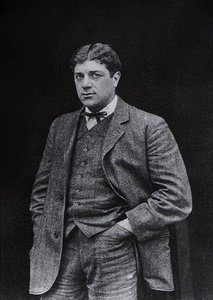
Georges Braque
1882 - 1963 , France
En bref
- Artistes Influents:
- Henri Matisse
- André Derain
- Paul Cézanne
- Date De Décès: 1963
- Date De Naissance: 13 mai 1882
- Influence Sur Les Artistes: ['Pablo Picasso']
- Lieu De Naissance: Argenteuil, France
- Mouvement Artistique: Cubisme, Fauvisme
- Nationalité: Française
- Nom Complet: Georges Braque
- Oeuvres Notables:
- Maisons à L'Estaque
- La Patience
- Le Clarinette
- Nature morte avec cruets
Articles similaires

Georges Braque : Les 25 Œuvres Maîtresses du Cubisme et de la Modernité | OriginalUniqueArt
Plongez dans l'univers de Georges Braque avec les 25 œuvres incontournables du cubisme. Découvrez l'histoire, les techniques et l'impact de ce maître de l'art moderne. Reproductions d'art exceptionnelles sur OriginalUniqueArt.com.

Georges Seurat : Les 25 Œuvres Maîtresses du Pointillisme | OriginalUniqueArt
Plongez dans l'univers lumineux de Georges Seurat ! Découvrez les 25 œuvres majeures du pointillisme, de 'Un dimanche après-midi à l'Île de la Grande Jatte' aux 'Poseuses'. Reproductions d'art exceptionnelles et inspiration déco sur OriginalUniqueArt.com.

Cubism Unveiled: How Picasso and Braque Redefined Modern Art through Geometric Revolution
Explore the revolutionary world of Cubism. Discover how Pablo Picasso and Georges Braque dismantled perspective to redefine modern art through geometric innovation and analytical mastery. An essential guide for art students, collectors, and history enthusiasts.
Georges Braque : De la Fauvisme à l'Essence du Cubisme – Une Révolution Formelle dans l'Art Moderne
Explorez l'évolution artistique de Georges Braque, du Fauvisme à la révolution cubiste. Analyse approfondie des techniques, influences et héritage durable de ce maître de l'art moderne. Un guide pour collectionneurs avertis.
Cubism Unveiled: How Picasso and Braque Redefined Reality Through Geometric Abstraction
Explore the revolutionary world of Cubism. Discover how masters Pablo Picasso and Georges Braque dismantled reality through geometric abstraction to redefine modern art history.



