Aperçu en situation
 Partager
 Partager
 Détails
 Guide imprimable

 Télécharger
 Articles similaires
 Radiographie
 Voir le diaporama
 Statistiques
James Stanley
 Oil On Canvas
- WallArt
- Romanticism
 1755
1755- Early Modern
 625.0 x 750.0 cm
 Walker Art Gallery
 Afficher la suite
Reproduction à l'huile faite à la main
Huile sur toile peinte à la main, avec cadre et dimensions personnalisés, réalisée sur commande par nos artistes. ( Passer au format impression Passer au format image numérique)




P118B €10

P118H €10

P118W €10

P438Z €10

P508JH €12

P508YH €12

P805H €10

P805Z €10

P919BZ €10

P919G €10

P919XJ €10

P959ZH €10

P968JZ €12

W106C €8

W218G €10

W218JH €8

W218Y €10

W307PJ €10

W316G €10

W316PJ €8

W316Y €10

W398PJ €8

W4111J €10

W500HY €15

W500JH €15

W692G €12

W849H €8

W940BG €15

W953PJ €8




Choisissez parmi nos formats prédéfinis qui respectent les proportions originales de l’œuvre.

Vous pouvez saisir vos propres dimensions pour l'adapter à un cadre ou à un espace spécifique. Si la taille sélectionnée ne correspond pas aux proportions de l'image d'origine, nous recadrerons l'œuvre ou prolongerons la peinture avec des éléments peints à la main supplémentaires. Une maquette numérique vous sera envoyée pour approbation avant le début de la production.
Veuillez noter que l'aperçu à l'écran ne reflète pas le recadrage ou l'extension réels. Seule la maquette montrera fidèlement la composition finale.
Bien que des tailles personnalisées soient disponibles, nous vous recommandons de sélectionner une dimension dans la liste prédéfinie afin de préserver les proportions d'origine.
Après la commande, l’équipe OriginalUniqueArt.com contactera le client par e-mail pour recueillir ses instructions et lui fournira une maquette d’aperçu
Livraison dans le monde entier () en 3 à 4 semaines au lieu des 5 semaines habituelles. (8 octobre). Aucun compromis sur la qualité.

Livraison express gratuite dans le monde entier

Toile de lin de haute qualité

Assurance transport complète

Garantie de remboursement des droits de douane

Garantie de fidélité des couleurs

Garantie de retour de 100 jours (uniquement en cas de défaut)

Garantie de remboursement à 100%

Tarifs dégressifs sur quantité
 L'option verre n'est disponible que pour les dimensions inférieures à 110 cm.

James Stanley
Technique de reproduction
Format de la reproduction
-


Prix total final
€ 258
A Glimpse into Georgian Elegance
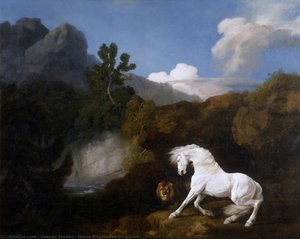
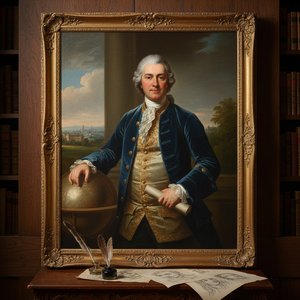
In the quiet, dignified presence of George Stubbs’s 1755 portrait, James Stanley, we encounter more than just a likeness; we step into the very heart of the Enlightenment. Before he became the preeminent master of equine anatomy, known for capturing the raw power of horses with scientific precision, Stubbs demonstrated a profound command over the human form. This early work serves as a captivating window into the social fabric of 18th-century Britain, presenting a gentleman whose identity remains shrouded in the mists of time, yet whose character radiates through the canvas. The sitter, identified only by an inscription noting his name and age of thirty-three, stands against a subtly textured, dark background that acts as a stage, stripping away all worldly distractions to focus the viewer’s entire attention upon the man himself.
The composition is masterfully understated, eschewing the grandiosity often found in aristocratic portraiture of the era in favor of a quiet, introspective intimacy. There is an immediate rapport established as Stanley’s gaze meets ours, inviting a moment of shared contemplation. This sense of connection is heightened by the artist's ability to balance formal dignity with a palpable human warmth. For the collector or interior designer, such a piece offers a sophisticated anchor for a room, providing a focal point that commands respect while maintaining an air of approachable grace.
The Intersection of Science and Artistry
What distinguishes this portrait is Stubbs’s unique ability to marry meticulous anatomical accuracy with a burgeoning impressionistic sensibility. While his later works would be celebrated for their rigorous study of musculature and bone structure, in James Stanley, we see the seeds of this scientific devotion applied to the human countenance. Every detail, from the subtle contours of the face to the texture of his attire, is rendered with a dedication to truth that was radical for its time. He avoids the trap of idealized beauty, choosing instead to honor the authentic features of his subject, a choice that lends the painting an enduring, timeless quality.
Technically, the work is a triumph of tonal variation. Stubbs employs a sophisticated play of light and shadow—chiaroscuro—to sculpt the figure out of the darkness. The edges of the subject are not harshly defined; rather, they softly bleed into the atmospheric background, creating a sense of depth and movement that prevents the portrait from feeling static. This technique anticipates the more fluid styles of later centuries, making the piece feel remarkably modern despite its mid-18th-century origins. The rich textures suggested by his clothing—the weight of the fabric and the glint of gold buttons—provide a tactile richness that makes the painting feel alive under varying light conditions.
An Enduring Legacy for the Discerning Eye
To possess a reproduction of this caliber is to bring a piece of British art history into one's personal sanctuary. James Stanley is not merely a decorative object; it is a conversation starter, a testament to an era where the pursuit of knowledge and the appreciation of beauty were inextricably linked. The painting evokes a sense of nostalgia for the Georgian age—a period of intellectual curiosity and refined elegance. Its somber palette and commanding presence make it an ideal choice for curated galleries, traditional studies, or contemporary spaces seeking a touch of historical gravity.
For those looking to inspire awe and reflection within a home or professional design project, this work offers unparalleled emotional resonance. It embodies the spirit of a pioneer—an artist who dared to look closer at the world around him. Whether viewed as a study in light, a masterclass in portraiture, or a relic of a bygone social landscape, Stubbs’s James Stanley remains a profound achievement that continues to captivate the soul of the art lover.
Questions et réponses
À quel âge George Stubbs a-t-il créé « James Stanley » ?
George Stubbs avait 31 ans lors de la création de « James Stanley » en 1755. L'âge est calculé à partir de l'année de naissance de l'artiste, 1724.
Quelle est la date de création de «James Stanley» de George Stubbs ?
«James Stanley» de George Stubbs a été créé en 1755.
Quelle est la luminance de «James Stanley» de George Stubbs ?
Les couleurs de « James Stanley » présentent une luminance Dark.
Qui a créé "James Stanley" ?
L'artiste à l'origine de « James Stanley » est George Stubbs. L'œuvre est répertoriée sous le nom de George Stubbs.
L'œuvre « James Stanley » est-elle libre de droits ?
Concernant les droits d'auteur, « James Stanley » est dans le dans le domaine public - ses droits d'auteur ont expiré.
Dans quel musée se trouve l'original de « James Stanley » ?
«James Stanley» de George Stubbs est exposé au Walker Art Gallery, Liverpool, Royaume-Uni. La mention du musée se rapporte à l'œuvre originale et non à des reproductions.
Quelle est la place de «James Stanley» de George Stubbs dans l'histoire de l'art ?
«James Stanley» de George Stubbs appartient au mouvement Romanticism, durant la période Early Modern. Ensemble, ils confèrent à l'œuvre sa place dans l'histoire de l'art.
Biographie de l'artiste
Premières années et formation
George Stubbs, peintre anglais renommé, est né le 25 août 1724 à Liverpool, au Royaume-Uni. Les premières années de sa vie sont marquées par un manque d'informations précises jusqu’à l’âge de 35 ans, la plupart des détails provenant des mémoires d’Ozias Humphry, basés sur des conversations avec Stubbs en 1794. Son parcours artistique a débuté à l’âge de 15 ans, lorsqu’il travailla initialement sous la direction de son père, tanneur ou préparateur de cuir. Il s'est ensuite adressé à Hamlet Winstanley, un peintre et graveur du Lancashire, pour un bref apprentissage. Cette courte période lui a permis d’étudier la collection de Knowsley Hall.Développement artistique et œuvres notables
La passion de Stubbs pour l’anatomie l’a conduit à s'installer à York en 1744, où il étudia sous la direction du chirurgien Charles Atkinson au York County Hospital. L'un de ses premiers travaux survivants est un ensemble d'illustrations pour le manuel de médecine de John Burton, publié en 1751. En 1756, Stubbs a loué une ferme dans le Lincolnshire et y a passé 18 mois à disséquer des chevaux, assisté par sa concubine, Mary Spencer. Cela a conduit à la publication de *L'anatomie du cheval* en 1766, dont les dessins originaux sont aujourd’hui conservés à la Royal Academy. Son travail a rapidement été reconnu par d'importants mécènes aristocratiques, notamment le 3e duc de Richmond, qui lui commanda trois grandes peintures en 1759. Cela marqua le début de sa carrière réussie, avec des œuvres produites pour plusieurs ducs et lords, culminant à l’achat d’une maison à Marylebone, Londres.Style artistique et influences
Le style de Stubbs se caractérise par une précision anatomique exceptionnelle, un réalisme minutieux et une attention particulière aux détails de la fourrure et du pelage des animaux. Il était influencé par les études scientifiques de l'époque, notamment en anatomie, mais aussi par l’art classique romain et grec. Ses peintures de chevaux sont particulièrement célèbres pour leur dynamisme et leur représentation fidèle de l'anatomie équine. Bien que réaliste dans sa description des animaux, Stubbs a également exploré des thèmes plus imaginatifs et romantiques, comme en témoignent ses séries de tableaux représentant un lion attaquant un cheval. Ces œuvres s’inscrivent dans le courant naissant du mouvement romantique, anticipant les développements artistiques du XIXe siècle.Héritage et contributions à l'art
L'œuvre la plus célèbre de Stubbs est sans doute *Whistlejacket*, une peinture d'un cheval pur-sang en galop commandée par le 2e marquis de Rockingham, aujourd’hui conservée à la National Gallery de Londres. Cette œuvre, ainsi que deux autres commandes pour Rockingham, rompent avec les conventions artistiques de l'époque en présentant des arrière-plans unis et sobres. *Whistlejacket* illustre parfaitement la maîtrise de Stubbs dans la capture de l'essence du cheval, son mouvement et sa puissance. Ses séries de peintures sur un lion attaquant un cheval sont considérées comme des exemples précoces du mouvement romantique, démontrant son influence sur l’art du XVIIIe siècle. L’héritage de Stubbs en tant qu’artiste équin reste inégalé, ses œuvres continuant d'inspirer et d'impressionner les amateurs d'art dans le monde entier.Œuvres majeures et expositions
Stubbs a laissé derrière lui un vaste corpus d'œuvres comprenant des portraits de chevaux, de chiens, de lions et d’autres animaux. Parmi ses autres œuvres notables figurent *La chasse du Grosvenor*, *Un Spaniel Noir d'Eau*, *Un Chasseur de Bays avec deux Spaniels* et *Lion attaquant un cheval*. Ses œuvres sont aujourd'hui exposées dans les plus grands musées du monde, notamment la National Gallery de Londres, le Holburne Museum à Bath et la Galerie Roy Miles à Londres. La Collection de Bearsted au Warwickshire possède également des œuvres significatives de Stubbs.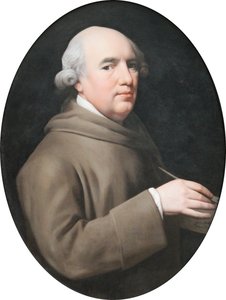
George Stubbs
1724 - 1806 , Royaume-Uni
En bref
- Artistes Influents: ['Hamlet Winstanley']
- Date De Naissance: 25 août 1724
- Lieu De Naissance: Liverpool, Royaume-Uni
- Mouvement Artistique: Romantisme
- Nationalité: Britannique
- Nom Complet: George Stubbs
- Œuvres Notables:
- Whistlejacket
- Lion attaquant un cheval
- La chasse du Grosvenor
Articles similaires

Animalia : L'empreinte durable des animaux dans l'art et le design d'intérieur
Explorez l'histoire fascinante de la représentation animale dans l'art et le design d'intérieur. Découvrez le symbolisme, les tendances et comment intégrer l'image animale chez vous avec .

Les 10 Chefs-d'œuvre du Néoclassicisme : Artistes et Décor Intemporels
Plongez au cœur du Néoclassicisme avec les 10 chefs-d'œuvre incontournables de David, Ingres et autres maîtres. Découvrez l'histoire fascinante de ces tableaux célèbres et trouvez l'inspiration déco classique sur !
George Stubbs: Anatomical Precision & Romantic Vision in 18th-Century British Art
Explore the captivating world of George Stubbs, the 18th-century master renowned for his anatomical precision & Romantic animal paintings. Discover his legacy and investment potential.
Beastly Brushstrokes: A Historical Journey Through Animal Painting & Aesthetic Movements
Explore the rich history of animal painting across cultures & movements. Discover iconic artists, symbolism, collecting trends & expert art consultation at OriginalUniqueArt.com.
Thomas Hudson: A Study in 18th-Century Portraiture & British Artistic Identity
Explore the life & work of Thomas Hudson, a leading 18th-century British portraitist. Discover his mastery of the 'Grand Manner,' influential style, and lasting impact on British art. Learn about his notable portraits like Judge William Noel & Alexander Van Aken.