
 Aperçu en situation
 Envoyer
 Partager
 Détails de l'œuvre
 Guide
Guide

 Télécharger l'image
 Articles similaires
 Radiographie
 Diaporama
 Q&A
Q&A Statistiques
The Gray Day

- 115.0 x 80.0 cm


 Lire la suite
L’œuvre d'art présentée sur cette page est protégée par le droit d'auteur, ce qui signifie que nous ne pouvons légalement créer ou vendre de reproduction identique. Cette protection est appliquée en vertu d'accords internationaux tels que la Convention de Berne et par les lois nationales, notamment celles énoncées par le Loi américaine sur le droit d'auteur - Titre 17.
Cette méthode est pleinement conforme aux réglementations sur le droit d'auteur car elle ne repose pas sur la copie ou la duplication de l'œuvre protégée. Il s'agit plutôt d'une réinterprétation créative — une nouvelle peinture qui s'inspire de l'original sans pour autant lui être identique.
Giclées et impressions d'art
Impressions giclées ou sur toile de qualité musée, avec une production rapide et des finitions au choix. ( Commander la reproduction peinte à la main Passer au format numérique)




P118B €10

P118H €10

P118W €10

P438Z €10

P508JH €12

P508YH €12

P805H €10

P805Z €10

P919BZ €10

P919G €10

P919XJ €10

P959ZH €10

P968JZ €12

W106C €8

W218G €10

W218JH €8

W218Y €10

W307PJ €10

W316G €10

W316PJ €8

W316Y €10

W398PJ €8

W4111J €10

W500HY €15

W500JH €15

W692G €12

W849H €8

W940BG €15

W953PJ €8




Choisissez parmi nos formats prédéfinis qui respectent les proportions originales de l’œuvre.

Saisissez la largeur et la hauteur souhaitées pour qu'elles s'adaptent à votre cadre ou à votre mur. Une impression peut être recadrée, mais jamais agrandie au-delà de l'image originale ; ainsi, un format de forme différente entraînera la perte d'une partie de l'image. Nous vous envoyons une maquette numérique pour approbation avant toute impression. L'image présentée sur cette page ne montre pas le recadrage réel — seule la maquette le permet.
Livraison dans le monde entier () en 2 semaines au lieu des 4/5 semaines habituelles. (2 novembre)

Livraison express gratuite dans le monde entier

Toile de lin de qualité supérieure

Assurance transport complète

Garantie de remboursement des droits de douane

Garantie de fidélité des couleurs

Politique de retour de 100 jours (uniquement en cas de défaut)

Garantie de remboursement à 100%

Offre de tarifs dégressifs
 L'option verre n'est disponible que pour les dimensions inférieures à 110 cm.

The Gray Day
Giclées et impressions d'art
Format de la reproduction
-


Prix total
€ 71
A Somber Reflection of a Shattered Era
In the hauntingly evocative oil on canvas titled “The Gray Day,” George Grosz invites viewers into the fractured psyche of Weimar Germany. Executed in 1921, this masterpiece serves as more than a mere depiction of urban life; it is a visceral, monochromatic window into an era defined by profound disillusionment and social upheaval. The painting captures a moment of heavy stillness, where the atmosphere feels thick with the residue of war and the uncertainty of a republic struggling to find its footing. Through his signature blend of unsettling realism and biting satire, Grosz transforms a simple street scene into a powerful indictment of a society caught in the grip of transition and decay.
The composition is anchored by two figures in the foreground, whose presence establishes a poignant tension between civilian existence and the lingering shadow of militarism. One man, clad in a formal suit and hat, engages in conversation with another figure wearing a military uniform topped with a striking red cap—a singular, sharp puncture of color in an otherwise muted world. This juxtaposition serves as a symbolic bridge between the domestic stability sought by the populace and the rigid, often violent, Prussian ethos that continued to haunt the German consciousness. As their silhouettes interact, the viewer is drawn into a silent dialogue about class, duty, and the shared anxiety of a generation.
Technique and the Aesthetic of Disillusionment
Grosz’s technical mastery in “The Gray Day” lies in his ability to use restraint to amplify emotional impact. Eschewing the vibrant palettes of his contemporaries, he employs a predominantly grayscale spectrum that mirrors the pervasive gloom of post-war Berlin. This monochromatic approach is not merely an aesthetic choice but a thematic one, reflecting the New Objectivity movement’s focus on the stark, unvarnished truths of reality. The artist utilizes bold, decisive lines to define the urban landscape, creating a sense of structural dynamism that prevents the somber mood from becoming stagnant.
Despite the overall gloom, Grosz’s attention to detail is meticulous. He captures the gritty textures of clothing and the industrial grit of the background with an almost surgical precision. In the distance, the silhouettes of buildings and rising smokestacks bleed into a heavy, overcast sky, symbolizing the relentless march of industrialization and the environmental and social pollution of the age. This careful layering of detail ensures that every element of the canvas—from the sharp edge of a lapel to the hazy smog of the horizon—contributing to a cohesive narrative of urban alienation.
A Timeless Masterpiece for the Discerning Collector
For art collectors and interior designers, “The Gray Day” offers a profound opportunity to possess a piece of history that transcends simple decoration. This painting is an intellectual powerhouse, providing a sophisticated focal point for spaces that value depth, narrative, and historical significance. Its muted tones and balanced composition make it an exceptionally versatile choice for modern interiors, where it can serve as a contemplative anchor amidst more contemporary or minimalist decor.
Owning a high-quality reproduction of this work allows one to bring the raw, emotive power of Dadaism into a private collection. It is a piece that invites long periods of study, rewarding the observer with new layers of meaning regarding the human condition and the resilience of the spirit amidst chaos. Whether displayed in a curated gallery setting or as a centerpiece in a thoughtfully designed living space, Grosz’s work remains an enduring testament to the ability of art to confront the darkest chapters of history with unflinching courage and unparalleled beauty.
Questions et réponses
Quelle pièce est recommandée pour «The Gray Day» de George Grosz, compte tenu de ses couleurs ?
Grâce à sa palette de couleurs Earthy, l'œuvre « The Gray Day » s'intègre parfaitement dans une Living Room.
Quelle est la technique utilisée pour «The Gray Day» de George Grosz ?
«The Gray Day» de George Grosz est réalisé en Oil On Canvas. Les reproductions visent à restituer l'aspect de cette technique.
Que représente «The Gray Day» de George Grosz ?
«The Gray Day» de George Grosz représente : dadaism, urban decay, social critique, satire, monochromatic palette, surrealism, zeitgeist.
Biographie de l'artiste
Première Vie et Influences
George Grosz, figure marquante du groupe Berlin Dada et de la Nouvelle Objectivité pendant la République de Weimar, est né le 26 juillet 1893 à Berlin, en Allemagne. En tant que Georg Ehrenfried Gross, il a grandi dans une famille luthérienne fervente, son père étant propriétaire d'un pub. La vie précoce de Grosz a été marquée par la mort de son père en 1901, après laquelle sa mère est devenue la gardienne du mess des officiers hussards locaux.Développement Artistique
Grosz a commencé son parcours artistique sous la tutelle d'un peintre local nommé Grot, développant davantage ses compétences grâce à de méticuleuses copies des scènes de boisson et des scènes de bataille imaginaires d’Eduard von Grützner. Il a ensuite étudié à l'Académie des beaux-arts de Dresde (1909-1911) puis au Collège des arts et métiers de Berlin.Œuvres Notables et Style
- La Fosse, une peinture présentant le style dadaïste de Grosz, est un exemple notable de son œuvre.
- Ce tableau, ainsi que d'autres comme L’Agitateur et Les Piliers de la Société, démontrent sa critique satirique de la communauté bourgeoise allemande.
- Ces œuvres se caractérisent par leur nature caricaturale, présentant souvent des images morbides et grotesques qui symbolisaient les forces fascistes en Allemagne.
- Cain ou Hitler en Enfer est une œuvre puissante anti-fasciste.
- L'Éclipse du Soleil dépeint le chaos de l’Allemagne de Weimar.
Collections de Musées et Expositions
Les œuvres de Grosz se trouvent dans divers musées, notamment les Kunstsammlungen und Museen Augsburg et la Kunsthalle Bielefeld, tous deux réputés pour leurs vastes collections d'art allemand.Vie Ultérieure et Héritage
Grosz a émigré aux États-Unis en 1933, devenant citoyen naturalisé en 1938. Il a enseigné à l'Art Students League de New York et a continué à exposer son travail jusqu’à son retour à Berlin, où il est décédé le 6 juillet 1959. Points Clés :- Grosz était un membre important du groupe Berlin Dada et de la Nouvelle Objectivité.
- Son œuvre se caractérise par des critiques satiriques de la communauté bourgeoise allemande.
- Il a émigré aux États-Unis en 1933 et est devenu citoyen naturalisé en 1938.
- L'héritage de Grosz continue d’être célébré à travers ses œuvres, qui peuvent être trouvées dans divers musées à travers l'Allemagne.
Références :
Liste de personnalités américaines d'origine allemande (Wikipédia)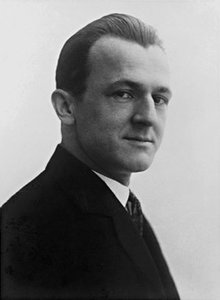
George Grosz
1893 - 1959 , Allemagne
L'essentiel de l'artiste
- Artistes Influents: ['Édouard von Grützner']
- Date De Décès: 6 juillet 1959
- Date De Naissance: 26 juillet 1893
- Lieu De Naissance: Berlin, Allemagne
- Mouvement Artistique: Dadaïsme, Nouvelle Objectivité
- Nationalité: Allemand, Américain
- Nom Complet: George Grosz
- Oeuvres Notables:
- La Fosse
- L'Agitateur
- Les Piliers de la Société
- Cain ou Hitler en Enfer
Articles connexes

The Enduring Legacy of Oil on Canvas: Technique, History & Aesthetic Impact
Explore the rich history & techniques of oil painting – from Renaissance masters to Impressionism. Discover pigments, layering methods, and why this timeless medium endures. Expert insights for artists & art enthusiasts.

Georges Seurat : Les 25 Œuvres Maîtresses du Pointillisme | OriginalUniqueArt
Plongez dans l'univers lumineux de Georges Seurat ! Découvrez les 25 œuvres majeures du pointillisme, de 'Un dimanche après-midi à l'Île de la Grande Jatte' aux 'Poseuses'. Reproductions d'art exceptionnelles et inspiration déco sur OriginalUniqueArt.com.

Maîtriser le Cubisme : Les 25 plus grands chefs-d'œuvre de Georges Braque
Explorez les 25 chefs-d'œuvre de Georges Braque et l'essence du Cubisme. Découvrez ces trésors sur OriginalUniqueArt.com.
Les 10 Chefs-d'œuvre Gris : Lumière et Intemporalité en Décoration
Plongez dans l'univers subtil des 10 plus beaux tableaux gris de l'histoire de l'art. Découvrez les secrets des maîtres impressionnistes et classiques, leurs techniques et nuances. Reproductions de qualité musée sur !
Les 10 Chefs-d'œuvre Gris Foncé : Artistes Célèbres & Décoration d'Intérieur
Plongez dans l'univers fascinant des 10 plus beaux tableaux gris foncé de l'histoire de l'art. Découvrez les artistes célèbres, leurs techniques et l'émotion derrière ces chefs-d'œuvre intemporels. Inspirez votre décoration intérieure avec !


