

 Aperçu en situation
 Envoyer
 Partager
 Détails de l'œuvre
 Guide
Guide

 Télécharger l'image
 Articles similaires
 Radiographie
 Diaporama
 Q&A
Q&A Statistiques
John the Murderer
 Oil On Canvas
- WallArt
- Cubist
 1918
1918 81.0 x 86.0 cm
 Lire la suite
L’œuvre d'art présentée sur cette page est protégée par le droit d'auteur, ce qui signifie que nous ne pouvons légalement créer ou vendre de reproduction identique. Cette protection est appliquée en vertu d'accords internationaux tels que la Convention de Berne et par les lois nationales, notamment celles énoncées par le Loi américaine sur le droit d'auteur - Titre 17.
Cette méthode est pleinement conforme aux réglementations sur le droit d'auteur car elle ne repose pas sur la copie ou la duplication de l'œuvre protégée. Il s'agit plutôt d'une réinterprétation créative — une nouvelle peinture qui s'inspire de l'original sans pour autant lui être identique.
Giclées et impressions d'art
Impressions giclées ou sur toile de qualité musée, avec une production rapide et des finitions au choix. ( Commander la reproduction peinte à la main Passer au format numérique)




P118B €10

P118H €10

P118W €10

P438Z €10

P508JH €12

P508YH €12

P805H €10

P805Z €10

P919BZ €10

P919G €10

P919XJ €10

P959ZH €10

P968JZ €12

W106C €8

W218G €10

W218JH €8

W218Y €10

W307PJ €10

W316G €10

W316PJ €8

W316Y €10

W398PJ €8

W4111J €10

W500HY €15

W500JH €15

W692G €12

W849H €8

W940BG €15

W953PJ €8




Choisissez parmi nos formats prédéfinis qui respectent les proportions originales de l’œuvre.

Saisissez la largeur et la hauteur souhaitées pour qu'elles s'adaptent à votre cadre ou à votre mur. Une impression peut être recadrée, mais jamais agrandie au-delà de l'image originale ; ainsi, un format de forme différente entraînera la perte d'une partie de l'image. Nous vous envoyons une maquette numérique pour approbation avant toute impression. L'image présentée sur cette page ne montre pas le recadrage réel — seule la maquette le permet.
Livraison dans le monde entier () en 2 semaines au lieu des 4/5 semaines habituelles. (31 octobre)

Livraison express gratuite dans le monde entier

Toile de lin de qualité supérieure

Assurance transport complète

Garantie de remboursement des droits de douane

Garantie de fidélité des couleurs

Politique de retour de 100 jours (uniquement en cas de défaut)

Garantie de remboursement à 100%

Offre de tarifs dégressifs
 L'option verre n'est disponible que pour les dimensions inférieures à 110 cm.

John the Murderer
Giclées et impressions d'art
Format de la reproduction
-


Prix total
€ 71
A Glimpse into Moral Ambiguity: George Grosz's "John the Murderer"
To stand before George Grosz’s John the Murderer is not merely to observe a painting; it is to confront a raw, unsettling moment of human frailty. Created in the charged atmosphere of 1918, this oil on canvas piece transcends simple portraiture or narrative scene-setting. Instead, it plunges the viewer into a world steeped in moral ambiguity and societal decay. The composition itself—a man holding a woman suspended above him, observed by another figure in the background—is immediately arresting, forcing an uncomfortable intimacy upon all who gaze upon it. Grosz, ever the unflinching chronicler of his time, uses this visceral tableau to dissect the underbelly of human nature.
The Language of Cubism and Fragmentation
Technically, the painting is a masterful deployment of Cubist elements. This style, which allowed artists like Picasso to shatter conventional perspectives, serves here not just as an aesthetic choice but as a profound commentary on reality itself. The fragmentation inherent in the technique mirrors the fractured social order that defined post-war Berlin. Grosz refuses the viewer the comfort of a single, stable viewpoint; instead, we are presented with multiple angles simultaneously, contributing to an overall feeling of unease and psychological tension. This visual disorder is key to understanding the painting's emotional weight.
Symbolism in the Domesticated Horror
What elevates John the Murderer beyond mere sensationalism is Grosz’s meticulous placement of seemingly innocuous objects. Scattered throughout the scene are vases and a potted plant—symbols traditionally associated with domesticity, order, and fragile beauty. These elements act as a devastating counterpoint to the violence unfolding at the center. They whisper of normalcy in the face of atrocity, suggesting that the capacity for brutality can bloom unexpectedly within the most mundane settings. This juxtaposition forces us to question where the line between civilization and savagery truly lies.
A Reflection on Weimar Turmoil
George Grosz’s biography paints him as a satirist who lived through epochs of profound political upheaval, particularly the volatile Weimar Republic. John the Murderer is steeped in this historical context; it functions as a furious indictment rendered with jagged lines and grotesque caricature. It speaks to the moral rot that permeated the era—a time when societal structures seemed brittle enough to shatter under the weight of ideological fervor. Owning or displaying a reproduction of this work is therefore not just an aesthetic choice for one's interior, but a sophisticated nod to 20th-century social critique.
Bringing the Edge Home
For those who appreciate art that demands contemplation rather than passive admiration, this piece offers unparalleled depth. The combination of Grosz’s biting satire, the intellectual rigor of Cubism, and the unsettling symbolism of everyday objects makes John the Murderer a powerful focal point for any discerning collector or designer. It is an artwork that does not whisper its message; it confronts you with it, ensuring that every viewing becomes a charged moment of reflection on morality, power, and the fragile veneer of civilization.
Questions et réponses
Quelle émotion les couleurs de «John the Murderer» de George Grosz dégagent-elles ?
Dans « John the Murderer », des couleurs Dark accompagnent une sensation Tense.
Quel est le rapport entre le sujet de « John the Murderer » et les thèmes habituels de George Grosz ?
«John the Murderer» dépeint cubism, violence, social critique, nudity, figurative art, berlin art, human nature, tandis que les thèmes récurrents de George Grosz sont cubist fragmentation of modern life, critique of weimar society's decay, political satire on human depravity, early grosz social commentary. La comparaison des deux montre comment l'œuvre s'inscrit dans la lignée des sujets habituels de l'artiste.
L'œuvre «John the Murderer» de George Grosz est-elle dans le domaine public ?
«John the Murderer» de George Grosz est dans le toujours protégé par le droit d'auteur. Ce statut régit les modalités de reproduction de l'image de l'œuvre.
Biographie de l'artiste
Première Vie et Influences
George Grosz, figure marquante du groupe Berlin Dada et de la Nouvelle Objectivité pendant la République de Weimar, est né le 26 juillet 1893 à Berlin, en Allemagne. En tant que Georg Ehrenfried Gross, il a grandi dans une famille luthérienne fervente, son père étant propriétaire d'un pub. La vie précoce de Grosz a été marquée par la mort de son père en 1901, après laquelle sa mère est devenue la gardienne du mess des officiers hussards locaux.Développement Artistique
Grosz a commencé son parcours artistique sous la tutelle d'un peintre local nommé Grot, développant davantage ses compétences grâce à de méticuleuses copies des scènes de boisson et des scènes de bataille imaginaires d’Eduard von Grützner. Il a ensuite étudié à l'Académie des beaux-arts de Dresde (1909-1911) puis au Collège des arts et métiers de Berlin.Œuvres Notables et Style
- La Fosse, une peinture présentant le style dadaïste de Grosz, est un exemple notable de son œuvre.
- Ce tableau, ainsi que d'autres comme L’Agitateur et Les Piliers de la Société, démontrent sa critique satirique de la communauté bourgeoise allemande.
- Ces œuvres se caractérisent par leur nature caricaturale, présentant souvent des images morbides et grotesques qui symbolisaient les forces fascistes en Allemagne.
- Cain ou Hitler en Enfer est une œuvre puissante anti-fasciste.
- L'Éclipse du Soleil dépeint le chaos de l’Allemagne de Weimar.
Collections de Musées et Expositions
Les œuvres de Grosz se trouvent dans divers musées, notamment les Kunstsammlungen und Museen Augsburg et la Kunsthalle Bielefeld, tous deux réputés pour leurs vastes collections d'art allemand.Vie Ultérieure et Héritage
Grosz a émigré aux États-Unis en 1933, devenant citoyen naturalisé en 1938. Il a enseigné à l'Art Students League de New York et a continué à exposer son travail jusqu’à son retour à Berlin, où il est décédé le 6 juillet 1959. Points Clés :- Grosz était un membre important du groupe Berlin Dada et de la Nouvelle Objectivité.
- Son œuvre se caractérise par des critiques satiriques de la communauté bourgeoise allemande.
- Il a émigré aux États-Unis en 1933 et est devenu citoyen naturalisé en 1938.
- L'héritage de Grosz continue d’être célébré à travers ses œuvres, qui peuvent être trouvées dans divers musées à travers l'Allemagne.
Références :
Liste de personnalités américaines d'origine allemande (Wikipédia)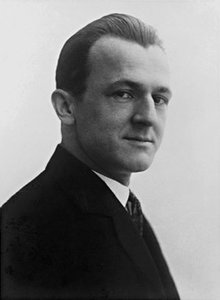
George Grosz
1893 - 1959 , Allemagne
L'essentiel de l'artiste
- Artistes Influents: ['Édouard von Grützner']
- Date De Décès: 6 juillet 1959
- Date De Naissance: 26 juillet 1893
- Lieu De Naissance: Berlin, Allemagne
- Mouvement Artistique: Dadaïsme, Nouvelle Objectivité
- Nationalité: Allemand, Américain
- Nom Complet: George Grosz
- Oeuvres Notables:
- La Fosse
- L'Agitateur
- Les Piliers de la Société
- Cain ou Hitler en Enfer
Articles connexes

Georges Seurat : Les 25 Œuvres Maîtresses du Pointillisme | OriginalUniqueArt
Plongez dans l'univers lumineux de Georges Seurat ! Découvrez les 25 œuvres majeures du pointillisme, de 'Un dimanche après-midi à l'Île de la Grande Jatte' aux 'Poseuses'. Reproductions d'art exceptionnelles et inspiration déco sur OriginalUniqueArt.com.

L'Excellence de l'Impression Giclée : Guide Technique pour des Reproductions d'Art de Qualité Musée
Maîtrisez la technique giclée et les encres pigmentaires pour vos collections. Découvrez les secrets d'une impression de qualité musée.

The Enduring Legacy of Fine Art Prints: Technique, History & Aesthetic Impact
Explore the rich history & techniques of fine art prints. Discover investment potential, assess authenticity, and learn how to preserve your collection with expert guidance. Trusted insights for discerning collectors.

Echoes of Time: Exploring the Enduring Appeal & Historical Context of Vintage Art Prints
Explore the captivating world of vintage art prints! Discover their history, collecting tips & enduring appeal. Expert insights on chromolithography and building a legacy collection with OriginalUniqueArt.

Maîtriser le Cubisme : Les 25 plus grands chefs-d'œuvre de Georges Braque
Explorez les 25 chefs-d'œuvre de Georges Braque et l'essence du Cubisme. Découvrez ces trésors sur OriginalUniqueArt.com.


