

 Aperçu en situation
 Partager
 Partager
 Détails
 Guide imprimable

 Télécharger
 Articles similaires
 Radiographie
 Voir le diaporama
 Statistiques
Explosion
 Oil On Canvas
- WallArt
- Futurism and Expression
 1917
1917- Modern
 47.0 x 68.0 cm
 Afficher la suite
L’œuvre d'art présentée sur cette page est protégée par le droit d'auteur, ce qui signifie que nous ne pouvons légalement créer ou vendre de reproduction identique. Cette protection est appliquée en vertu d'accords internationaux tels que la Convention de Berne et par les lois nationales, notamment celles énoncées par le Loi américaine sur le droit d'auteur - Titre 17.
Cette méthode est pleinement conforme aux réglementations sur le droit d'auteur car elle ne repose pas sur la copie ou la duplication de l'œuvre protégée. Il s'agit plutôt d'une réinterprétation créative — une nouvelle peinture qui s'inspire de l'original sans pour autant lui être identique.
Giclées et impressions d'art
Impressions giclées ou sur toile de qualité musée, avec une production rapide et des finitions au choix. ( Acheter la peinture faite à la main Passer au format image numérique)




P118B €10

P118H €10

P118W €10

P438Z €10

P508JH €12

P508YH €12

P805H €10

P805Z €10

P919BZ €10

P919G €10

P919XJ €10

P959ZH €10

P968JZ €12

W106C €8

W218G €10

W218JH €8

W218Y €10

W307PJ €10

W316G €10

W316PJ €8

W316Y €10

W398PJ €8

W4111J €10

W500HY €15

W500JH €15

W692G €12

W849H €8

W940BG €15

W953PJ €8




Choisissez parmi nos formats prédéfinis qui respectent les proportions originales de l’œuvre.

Vous pouvez saisir vos propres dimensions pour vous adapter à un cadre ou à un espace spécifique. Si la taille sélectionnée ne correspond pas aux proportions de l'image originale, nous recadrerons l'œuvre ou étendrons l'image avec une bordure en miroir ou une couleur unie. Une maquette numérique vous sera envoyée pour approbation avant le début de la production.
Veuillez noter que l'aperçu à l'écran ne reflète pas le recadrage ou l'extension réelle. Seule la maquette montrera avec précision la composition finale.
Bien que des tailles personnalisées soient disponibles, nous vous recommandons de choisir une dimension dans la liste prédéfinie afin de préserver les proportions originales.
Livraison dans le monde entier () en 2 semaines au lieu des 4/5 semaines habituelles. (10 octobre)

Livraison express gratuite dans le monde entier

Toile de lin de haute qualité

Assurance transport complète

Garantie de remboursement des droits de douane

Garantie de fidélité des couleurs

Garantie de retour de 100 jours (uniquement en cas de défaut)

Garantie de remboursement à 100%

Tarifs dégressifs sur quantité
 L'option verre n'est disponible que pour les dimensions inférieures à 110 cm.

Explosion
Giclées et impressions d'art
Format de la reproduction
-


Prix total final
€ 69
A Symphony of Destruction: George Grosz's "Explosion"
George Grosz’s “Explosion,” painted in 1917, isn’t merely a depiction of war; it’s a visceral scream against the very foundations of society. Born from the artist’s disillusionment following his discharge from the German army due to mental health struggles – a direct consequence of witnessing the horrors of World War I – this work embodies the chaotic disintegration of both physical landscapes and moral values. Grosz, a key figure in the Dada movement and a master of Expressionism, utilizes the burgeoning principles of Futurism to create an image that remains profoundly unsettling and remarkably relevant today. The painting’s immediate impact is one of overwhelming devastation: collapsing high-rise buildings, rendered in furious reds and oranges, seem to pinwheel around a central vortex of black, sucking in shattered windows and billowing smoke – a tangible representation of the war's indiscriminate destruction. It’s a scene that demands attention, forcing the viewer to confront the brutal reality of conflict.
- Style & Technique: Grosz’s mastery lies in his dynamic Futurism. The composition is aggressively angular, with bold colors applied with thick brushstrokes – a characteristic of oil on panel – creating a sense of movement and instability. This technique amplifies the feeling of chaos, mirroring the disorientation experienced by those caught within the war's maelstrom.
- Symbolic Imagery: The inclusion of fragmented human forms – half-naked bodies embracing, shadowy faces – elevates “Explosion” beyond a simple depiction of urban destruction. These figures represent the profound loss of humanity and innocence that war inevitably inflicts.
The Weight of History & the Rise of Dada
To fully appreciate "Explosion," one must understand its historical context. Painted in 1917, a pivotal year marked by the height of World War I, the artwork reflects the widespread disillusionment and anti-war sentiment that fueled the rise of Dadaism. Grosz’s work aligns with this movement's rejection of traditional artistic values and embrace of irrationality and absurdity as responses to the perceived madness of the era. His earlier training in meticulous Dutch master copies – particularly those of Eduard von Grützner – provided him with a strong technical foundation, which he then deliberately subverted, using his skill to amplify the emotional impact of his subject matter. The painting’s genesis is inextricably linked to Grosz's personal trauma and his profound critique of the militaristic society that produced such devastation.
Decoding the Visual Language
The fiery background, a dominant feature of “Explosion,” isn’t simply an aesthetic choice; it’s a deliberate symbol of intense heat and destruction. The swirling clouds and streaks of light suggest not just explosions but also the psychological turmoil experienced by those caught in the war's grip. The angular forms of the collapsing buildings – reminiscent of Cubist influences – further contribute to the painting’s sense of fragmentation and disorientation. Grosz masterfully employs contrast, juxtaposing the fiery foreground with cooler blues and greens in the background, intensifying the overall feeling of chaos and amplifying the emotional impact.
A Legacy of Social Commentary
"Explosion" remains a powerful testament to George Grosz’s artistic vision and his unwavering commitment to social commentary. Its influence can be seen in contemporary artists who continue to grapple with themes of war, destruction, and societal decay. The Museum of Modern Art (MoMA) recognizes this significance, holding “Explosion” within its collection as a cornerstone of modern art history. This reproduction offers an exceptional opportunity to own a piece of this pivotal artwork, allowing you to experience the raw emotion and intellectual depth that define Grosz’s legacy.
Questions et réponses
À quel artiste est attribuée l'œuvre "Explosion" ?
« Explosion » est attribué à George Grosz.
À quel âge George Grosz a-t-il créé « Explosion » ?
Lorsque « Explosion » a été créé en 1917, George Grosz — né(e) en 1893 — était âgé(e) de 24 ans.
De quel type d'œuvre s'agit-il pour "Explosion" ?
Dans le catalogue, «Explosion» de George Grosz est répertorié comme WallArt. Cette catégorie permet de trouver des œuvres similaires.
Quelle palette de couleurs est utilisée dans «Explosion» de George Grosz ?
«Explosion» de George Grosz utilise une palette de couleurs Earthy. Cette palette résume le caractère chromatique global de l'œuvre.
Où puis-je trouver des statistiques concernant «Explosion» de George Grosz ?
Les statistiques concernant «Explosion» de George Grosz se trouvent sur la page Statistiques de l'œuvre : visites mensuelles de l'œuvre, visites des œuvres de l'artiste, ainsi que la répartition par pays et par langue des visiteurs récents.
Quelle est la date de création de «Explosion» de George Grosz ?
«Explosion» de George Grosz a été créé en 1917.
Comment "Explosion" équilibre-t-il l'ombre et la lumière ?
«Explosion» de George Grosz présente une luminosité de deep_shadow, avec une luminance de Dark.
Biographie de l'artiste
Première Vie et Influences
George Grosz, figure marquante du groupe Berlin Dada et de la Nouvelle Objectivité pendant la République de Weimar, est né le 26 juillet 1893 à Berlin, en Allemagne. En tant que Georg Ehrenfried Gross, il a grandi dans une famille luthérienne fervente, son père étant propriétaire d'un pub. La vie précoce de Grosz a été marquée par la mort de son père en 1901, après laquelle sa mère est devenue la gardienne du mess des officiers hussards locaux.Développement Artistique
Grosz a commencé son parcours artistique sous la tutelle d'un peintre local nommé Grot, développant davantage ses compétences grâce à de méticuleuses copies des scènes de boisson et des scènes de bataille imaginaires d’Eduard von Grützner. Il a ensuite étudié à l'Académie des beaux-arts de Dresde (1909-1911) puis au Collège des arts et métiers de Berlin.Œuvres Notables et Style
- La Fosse, une peinture présentant le style dadaïste de Grosz, est un exemple notable de son œuvre.
- Ce tableau, ainsi que d'autres comme L’Agitateur et Les Piliers de la Société, démontrent sa critique satirique de la communauté bourgeoise allemande.
- Ces œuvres se caractérisent par leur nature caricaturale, présentant souvent des images morbides et grotesques qui symbolisaient les forces fascistes en Allemagne.
- Cain ou Hitler en Enfer est une œuvre puissante anti-fasciste.
- L'Éclipse du Soleil dépeint le chaos de l’Allemagne de Weimar.
Collections de Musées et Expositions
Les œuvres de Grosz se trouvent dans divers musées, notamment les Kunstsammlungen und Museen Augsburg et la Kunsthalle Bielefeld, tous deux réputés pour leurs vastes collections d'art allemand.Vie Ultérieure et Héritage
Grosz a émigré aux États-Unis en 1933, devenant citoyen naturalisé en 1938. Il a enseigné à l'Art Students League de New York et a continué à exposer son travail jusqu’à son retour à Berlin, où il est décédé le 6 juillet 1959. Points Clés :- Grosz était un membre important du groupe Berlin Dada et de la Nouvelle Objectivité.
- Son œuvre se caractérise par des critiques satiriques de la communauté bourgeoise allemande.
- Il a émigré aux États-Unis en 1933 et est devenu citoyen naturalisé en 1938.
- L'héritage de Grosz continue d’être célébré à travers ses œuvres, qui peuvent être trouvées dans divers musées à travers l'Allemagne.
Références :
Liste de personnalités américaines d'origine allemande (Wikipédia)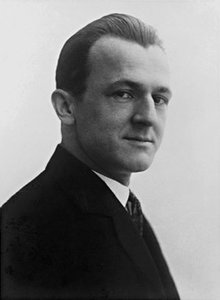
George Grosz
1893 - 1959 , Allemagne
En bref
- Artistes Influents: ['Édouard von Grützner']
- Date De Décès: 6 juillet 1959
- Date De Naissance: 26 juillet 1893
- Lieu De Naissance: Berlin, Allemagne
- Mouvement Artistique: Dadaïsme, Nouvelle Objectivité
- Nationalité: Allemand, Américain
- Nom Complet: George Grosz
- Oeuvres Notables:
- La Fosse
- L'Agitateur
- Les Piliers de la Société
- Cain ou Hitler en Enfer
Articles similaires

OriginalUniqueArt.com F.A.Q.: Elevate Your Decor with Premium Textured Giclée Prints
Discover the distinction of OriginalUniqueArt.com premium textured Giclée prints. Expertly crafted with archival 12-color pigments and museum-grade substrates, our prints offer unparalleled vividness for the discerning collector seeking luxury, durability, and timeless elegance.


