Aperçu en situation
 Partager
 Partager
 Détails
 Guide imprimable

 Télécharger
 Articles similaires
 Radiographie
 Voir le diaporama
 Statistiques
Mug


 Afficher la suite
Giclées et impressions d'art
Impressions giclées ou sur toile de qualité musée, avec une production rapide et des finitions au choix. ( Acheter la peinture faite à la main Passer au format image numérique)




P118B €10

P118H €10

P118W €10

P438Z €10

P508JH €12

P508YH €12

P805H €10

P805Z €10

P919BZ €10

P919G €10

P919XJ €10

P959ZH €10

P968JZ €12

W106C €8

W218G €10

W218JH €8

W218Y €10

W307PJ €10

W316G €10

W316PJ €8

W316Y €10

W398PJ €8

W4111J €10

W500HY €15

W500JH €15

W692G €12

W849H €8

W940BG €15

W953PJ €8




Choisissez parmi nos formats prédéfinis qui respectent les proportions originales de l’œuvre.

Saisissez la largeur et la hauteur souhaitées pour qu'elles s'adaptent à votre cadre ou à votre mur. Une impression ne peut être que découpée, elle ne peut jamais être agrandie au-delà de l'image originale ; ainsi, un format de forme différente entraînera la perte d'une partie de l'image. Nous vous envoyons une maquette numérique pour approbation avant toute impression. L'image présentée sur cette page ne montre pas le recadrage réel — seule la maquette le permet.
Livraison dans le monde entier () en 2 semaines au lieu des 4/5 semaines habituelles. (22 octobre)

Livraison express gratuite dans le monde entier

Toile de lin de haute qualité

Assurance transport complète

Garantie de remboursement des droits de douane

Garantie de fidélité des couleurs

Garantie de retour de 100 jours (uniquement en cas de défaut)

Garantie de remboursement à 100%

Tarifs dégressifs sur quantité
 L'option verre n'est disponible que pour les dimensions inférieures à 110 cm.

Mug
Giclées et impressions d'art
Format de la reproduction
-


Prix total final
€ 70
George Edgar Ohr : L'Explorateur Audacieux de la Forme et du Texture
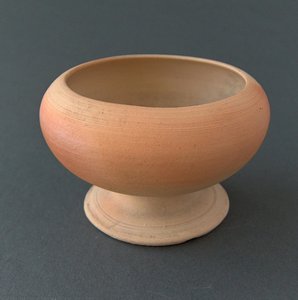
La photographie présente une vue rapprochée d’une tasse en céramique, une œuvre artistique plutôt qu’un objet utilitaire. Elle est dominée par le noir avec une texture distinctive ondulée enveloppant son corps et s’étendant jusqu'à l’ rebord. Elle repose sur une surface blanche simple, créant un contraste saisissant qui souligne la forme et la texture de la tasse. Cette œuvre fascinante incarne parfaitement le style unique du "Mad Potter of Biloxi". La composition est centrée sur la tasse, occupant la majeure partie du cadre. L'angle est légèrement élevé, offrant une vue claire du manche et du motif ondulé. Le fond est minimaliste et dépourvu de distractions, attirant toute l’attention sur l’objet lui-même. Cette approche esthétique reflète la philosophie artistique d'Ohr : privilégier les éléments essentiels pour exprimer une émotion ou une idée puissante. La palette chromatique est dominée par le noir et le blanc. Des nuances subtiles dans le glaçage noir créent profondeur et mettent en évidence la texture, évoquant les paysages désertiques du Mississippi où Ohr trouva son inspiration initiale. Cette simplicité visuelle est une caractéristique essentielle de l'œuvre d’Ohr, témoignant de sa maîtrise de la couleur comme moyen d'expression artistique. Les lignes horizontales sont créées par les ondulations qui entourent la tasse, offrant un rythme visuel dynamique et renforçant la forme cylindrique. Cette esthétique rappelle les formes organiques trouvées dans la nature environnante, une autre source constante d’inspiration pour l’artiste. La texture est au cœur de cette œuvre : les ondulations superficielles sont sculpturées avec soin pour créer une impression tactile remarquable. Cette technique innovante était révolutionnaire à son époque et annonce les tendances futuristes du mouvement artistique américain abstrait expressionniste. La photographie utilise un éclairage doux et diffus, minimisant les ombres fortes et assurant une illumination uniforme de la surface de la tasse. Cette lumière douce permet de mettre en valeur la texture sans créer de reflets gênants, créant une atmosphère calme et contemplative qui invite à l’appréciation esthétique. Comme beaucoup d'autres œuvres originales d'Ohr, cette reproduction offre une expérience sensorielle riche et pleine d'émotion. Cette tasse représente bien le travail artistique du "Mad Potter of Biloxi". Elle témoigne de son refus des conventions établies et de sa volonté constante de repousser les limites de la céramique traditionnelle. Une pièce rare et précieuse pour tous ceux qui souhaitent célébrer l’esprit pionnier d'une artiste exceptionnelle.Questions et réponses
L'œuvre « Mug » se trouve-t-elle dans le pays de son créateur ?
Non - l'œuvre est conservée à l'étranger. « Mug » est conservée en United States, tandis que George Edgar Ohr (Le Fou Potier de Biloxi) est né(e) en États-Unis.
Comment puis-je découvrir des œuvres d'art proches de «Mug» de George Edgar Ohr (Le Fou Potier de Biloxi) ?
La page Œuvres similaires de «Mug» de George Edgar Ohr (Le Fou Potier de Biloxi) présente des œuvres similaires.
Quelle origine nationale sous-tend le Abstract Expressionism de « Mug » ?
«Mug» relie le mouvement Abstract Expressionism à États-Unis par le biais du lieu de naissance de son créateur.
Biographie de l'artiste
George Edgar Ohr: The Singular Vision of Biloxi
George Edgar Ohr, a name synonymous with innovation and eccentricity in the world of American ceramics, was born on July 12, 1857, in the coastal city of Biloxi, Mississippi. His parents, German immigrants seeking new opportunities, instilled in him a strong work ethic and perhaps a touch of the Old World’s artistic sensibility. However, it was the unique environment of Biloxi – a melting pot of cultures and a source of readily available clay – that truly nurtured his burgeoning talent. Ohr wasn’t simply a potter; he was an explorer of form, texture, and glaze, relentlessly pushing the boundaries of what ceramic art could be. He embraced the moniker “Mad Potter of Biloxi,” not as a dismissal, but as a proud declaration of his unconventional approach and unwavering dedication to artistic freedom.
Early Influences and Artistic Awakening
Ohr’s journey into ceramics began somewhat serendipitously. After a restless youth spent trying various trades in New Orleans, he found himself apprenticed to Joseph Fortune Meyer, a potter with connections to the Arts & Crafts movement. This apprenticeship provided Ohr with a solid foundation in traditional techniques, but it was his subsequent travels – a sixteen-state tour of American potteries – that ignited his creative spark. He absorbed diverse methods and styles, yet he wasn’t content to merely replicate; he sought to transcend convention. He returned to Biloxi determined to forge his own path, establishing his “Biloxi Art and Novelty Pottery” where he could fully realize his artistic vision. The clay from the nearby Tchoutacabouffa River became his medium, and his hands, his instruments of transformation.
A Revolution in Clay: Technique and Innovation
Ohr’s work stands apart due to its radical departure from prevailing ceramic norms. While many potters focused on functionality and symmetrical forms, Ohr embraced asymmetry, distortion, and a deliberate rejection of perfection. He pioneered techniques like twisting, crumpling, folding, and stretching the clay while still wet, creating vessels that seemed to defy gravity and challenge expectations. His glazes were equally experimental – vibrant, unpredictable, and often resembling molten metal or iridescent jewels. He wasn’t interested in simply decorating pottery; he was sculpting with color and light. He thinned his walls to an almost impossible degree, achieving a delicacy rarely seen in ceramics. This daring approach, combined with his unique glazes, resulted in pieces that were both visually stunning and structurally audacious. His work foreshadowed the abstract expressionist movement decades before it fully emerged, demonstrating a willingness to prioritize form and emotion over representational accuracy.
Years of Isolation and Rediscovery
Despite his innovative spirit, Ohr struggled for recognition during his lifetime. The public wasn’t always ready for his radical designs, and he often found himself at odds with prevailing tastes. Frustrated by the lack of appreciation and unwilling to compromise his artistic integrity, he ceased production around 1910, meticulously packing away thousands of pieces in his studio. He requested that his family leave the collection untouched for fifty years after his death, believing that future generations would be more receptive to his work. Sadly, Ohr passed away on April 7, 1918, during the influenza pandemic, largely unknown outside of Biloxi. It wasn’t until the late 1960s and early 1970s that his genius was finally recognized. James Carpenter, an antiques dealer, discovered the hidden trove of pottery and began to champion Ohr's work, introducing it to a wider audience. The rediscovery sparked a renewed interest in American ceramics and cemented Ohr’s place as one of the most important figures in American ceramic history.
Legacy and Enduring Influence
Today, George Edgar Ohr is celebrated as one of the most influential artists of his era. His uncompromising vision—a refusal to conform to artistic conventions—continues to inspire contemporary creators. Ohr’s contribution transcends mere craftsmanship; he fundamentally altered perceptions of beauty and challenged established aesthetic standards. He demonstrated that true artistic expression requires courage, independence, and an unwavering commitment to one’s own creative impulses. The “Mad Potter of Biloxi” may have been ahead of his time, but his legacy persists—a testament to the transformative power of artistic innovation and a beacon for those who dare to forge their own distinctive path.

George Edgar Ohr (Le Fou Potier de Biloxi)
1857 - 1918 , États-Unis
En bref
- Artistic Movement Or Style: Expressionnisme abstrait
- Artists Or Movements Influenced By This Artist: ['Henry Portman']
- Artists Who Influenced This Artist: Joseph Fortune Meyer
- Date Of Birth: 12 juillet 1857
- Date Of Death: 7 avril 1918
- Full Name: George Edgar Ohr
- Nationality: Américain
- Notable Artworks:
- Mug
- Teapot
- Bowl
- Creamer
- Place Of Birth: Biloxi, États-Unis
Articles connexes
The Art of Ceramics: A Guide to Mastery, Texture, and Timeless Form for the Discerning Collector
Explore the profound elegance of ceramic art. From master glazes to sculptural forms, our expert guide offers discerning collectors deep insights into the mastery, texture, and timeless value of fine ceramics for sophisticated collections and luxury interiors.

Georges Braque : Les 25 Œuvres Maîtresses du Cubisme et de la Modernité | OriginalUniqueArt
Plongez dans l'univers de Georges Braque avec les 25 œuvres incontournables du cubisme. Découvrez l'histoire, les techniques et l'impact de ce maître de l'art moderne. Reproductions d'art exceptionnelles sur OriginalUniqueArt.com.

The Alchemy of Clay: A Collector's Guide to the Mastery, Texture, and Timeless Form of Ceramic Art
Discover the profound beauty of ceramic art. Our expert guide explores the alchemy of clay, texture, and glaze, offering collectors deep insights into mastering earth and fire to create timeless, sculptural masterpieces for any curated collection.
George Stubbs: Anatomical Precision & Romantic Vision in 18th-Century British Art
Explore the captivating world of George Stubbs, the 18th-century master renowned for his anatomical precision & Romantic animal paintings. Discover his legacy and investment potential.

Georges Seurat : Les 25 Œuvres Maîtresses du Pointillisme | OriginalUniqueArt
Plongez dans l'univers lumineux de Georges Seurat ! Découvrez les 25 œuvres majeures du pointillisme, de 'Un dimanche après-midi à l'Île de la Grande Jatte' aux 'Poseuses'. Reproductions d'art exceptionnelles et inspiration déco sur OriginalUniqueArt.com.