

 Aperçu en situation
 Envoyer
 Partager
 Détails de l'œuvre

 Télécharger
 Articles similaires
 Radiographie
 Diaporama
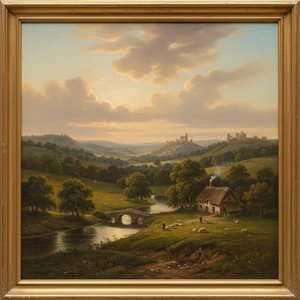
Landscape with a Ruined Tower
 Oil On Canvas
- WallArt
- Romantic Pastoral
 100.0 x 125.0 cm
 National Trust
 Lire la suite
Giclées et impressions d'art
Impressions giclées ou sur toile de qualité musée, avec une production rapide et des finitions au choix. ( Commander la reproduction peinte à la main Télécharger l'image haute résolution)




P118B $10

P118H $10

P118W $10

P438Z $10

P508JH $12

P508YH $12

P805H $10

P805Z $10

P919BZ $10

P919G $10

P919XJ $10

P959ZH $10

P968JZ $12

W106C $8

W218G $10

W218JH $8

W218Y $10

W307PJ $10

W316G $10

W316PJ $8

W316Y $10

W398PJ $8

W4111J $10

W500HY $15

W500JH $15

W692G $12

W849H $8

W940BG $15

W953PJ $8




Choisissez parmi nos formats prédéfinis qui respectent les proportions originales de l’œuvre.

Vous pouvez saisir vos propres dimensions pour vous adapter à un cadre ou à un espace spécifique. Si la taille sélectionnée ne correspond pas aux proportions de l'image originale, nous recadrerons l'œuvre ou étendrons l'image avec une bordure en miroir ou une couleur unie. Une maquette numérique vous sera envoyée pour approbation avant le début de la production.
Veuillez noter que l'aperçu à l'écran ne reflète pas le recadrage ou l'extension réelle. Seule la maquette montrera avec précision la composition finale.
Bien que des tailles personnalisées soient disponibles, nous vous recommandons de choisir une dimension dans la liste prédéfinie afin de préserver les proportions originales.
Livraison dans le monde entier () en 2 semaines au lieu des 4/5 semaines habituelles. (21 août)

Livraison express gratuite dans le monde entier

Toile de lin de qualité supérieure

Assurance transport complète

Garantie de remboursement des droits de douane

Garantie de fidélité des couleurs

Politique de retour de 60 jours (uniquement en cas de défaut)

Garantie de remboursement à 100%

Offre de tarifs dégressifs
 L'option verre n'est disponible que pour les dimensions inférieures à 110 cm.

Landscape with a Ruined Tower
Giclées et impressions d'art
Format de la reproduction
-


Prix total
$ 80
Description de la pièce
George Barret the Elder’s “Landscape with a Ruined Tower”: A Vision of English Pastoral
“Landscape with a Ruined Tower,” painted circa 1762-1784 by George Barret the Elder, is more than just a depiction of a rural scene; it's a carefully constructed meditation on time, memory, and the fading grandeur of the English countryside. Barret, an Irish artist who established himself as a leading figure in London’s art world, masterfully captures a moment suspended between decay and enduring beauty, reflecting the philosophical currents of his era – particularly the influence of Edmund Burke's exploration of the sublime.
The painting immediately draws the eye to the imposing ruin itself: a weathered tower rising from a gently sloping hillside, partially obscured by a dense copse of trees. Its stones, rendered in muted ochres and browns, speak of centuries spent exposed to the elements, hinting at forgotten histories and lost power. The tower isn’t merely a structural element; it's a potent symbol – a visual representation of decline, yet simultaneously imbued with an undeniable sense of solemn dignity. This deliberate juxtaposition is central to Barret’s artistic vision.
A Painterly Echo of Burke’s Sublime
Barret’s approach to landscape painting was profoundly shaped by Edmund Burke's philosophical treatise, *A Philosophical Enquiry into the Origin of Our Ideas of the Sublime and Beautiful*. Burke argued that experiences of awe and terror – what he termed the “sublime” – could be found not just in dramatic events but also in the contemplation of vastness, decay, and solitude. Barret translates this philosophical concept onto canvas with remarkable skill.
Notice how the artist employs atmospheric perspective—the subtle blurring of distant elements to create a sense of depth and recession. The hazy blue sky, punctuated by wisps of cloud, contributes to the painting’s overall mood of melancholy and contemplation. The careful use of light and shadow further emphasizes the tower's weathered state, highlighting its vulnerability against the backdrop of the seemingly eternal landscape. This isn’t a vibrant celebration of nature; it’s an exploration of its quieter, more profound aspects.
Details of Technique and Composition
Barret was initially influenced by engravings of classical Italianate scenes, reworking them with his own distinctive style. The composition is carefully balanced, drawing the eye towards the tower while simultaneously establishing a sense of spaciousness. The placement of the trees, the gentle curve of the hillside, and the distant body of water all contribute to this harmonious arrangement.
The artist’s brushwork is remarkably controlled, particularly in rendering the textures of stone and foliage. He employs a delicate layering technique—thin glazes of paint applied over dry underlayers—to achieve a luminous quality that captures the subtle nuances of light and shadow. The details are meticulously observed, from the individual stones of the tower to the leaves rustling in the breeze. This attention to detail elevates the painting beyond mere representation, transforming it into a carefully considered work of art.
Symbolism and Emotional Resonance
Beyond its technical merits, “Landscape with a Ruined Tower” resonates deeply on an emotional level. The ruined tower evokes a sense of loss—the passing of time, the decline of empires, and the inevitable decay of all things. Yet, it also possesses a certain beauty in its weathered state, suggesting that even in ruin, there is still value to be found.
The painting invites us to contemplate our own mortality and the fleeting nature of existence. It’s a poignant reminder that beauty can be discovered not only in moments of triumph but also in the quiet contemplation of decay. It's a timeless image, speaking to universal themes of memory, loss, and the enduring power of the natural world – making it a compelling subject for collectors and interior designers seeking pieces with depth and emotional resonance.
Biographie de l'artiste
George Barret Sr.: Vie et Héritage
- Né: Entre 1728 et 1732 à Libertyville, en Irlande, fils d'un marchand de tissus.
- Initialement apprenti couturier avant de découvrir son talent artistique.
- A commencé une formation au dessin formelle à l’Académie de Robert West à Dublin vers 1747, parrainé par la Royal Dublin Society.
- Ensuite, a enseigné le dessin dans la même académie, démontrant des promesses et un talent précoce.
- Une amitié marquante avec Edmund Burke, nouée pendant les études de Burke au Trinity College de Dublin, s'avérera cruciale plus tard dans sa vie.
Développement Artistique Précoce et Influences
- Les premières peintures de Barret comportaient souvent des paysages classiques et des figures mythologiques.
- Influencé par: Les écrits philosophiques d'Edmund Burke, en particulier *A Philosophical Enquiry into the Origin of Our Ideas of the Sublime and Beautiful*, qui ont informé son approche artistique du paysage.
- Il a initialement travaillé en retravaillant les gravures de scènes italiennes classiques par des artistes comme Claude Lorrain, démontrant une solide base dans les styles établis.
- Malgré la représentation de paysages italiens, il n'existe aucune preuve qu'il se soit jamais rendu en Italie lui-même.
Déménagement à Londres et Ascension
- En 1762, Barret a déménagé à Londres pour rechercher de plus grandes opportunités artistiques.
- A rapidement obtenu une reconnaissance en tant qu'artiste paysagiste de premier plan de la période.
- Exposé à la Society of Artists of Great Britain et a attiré le mécénat de collectionneurs d’art éminents.
- Réalisation Clé: En 1768, Barret faisait partie des membres fondateurs qui ont quitté la Society of Artists pour établir la Royal Academy – un moment décisif dans l'histoire de l'art britannique.
Style et Thèmes Artistiques
- Le style de Barret a évolué des paysages italianisés idéalisés vers des représentations plus naturalistes des paysages anglais et irlandais.
- Il a voyagé à travers l’Angleterre, le Pays de Galles, l'Écosse et l'Irlande, entreprenant des commandes et capturant la beauté de paysages variés.
- Les thèmes courants comprenaient des vues idylliques, une campagne pittoresque, des cascades (comme son célèbre *The Powerscourt Waterfall*), et des représentations topographiques de propriétés seigneuriales.
- Ses peintures comportaient souvent des personnages dans le paysage, ajoutant un sens de l'échelle et du récit.
Vie ultérieure et Mécanat
- A souffert d’asthme, ce qui l'a conduit à déménager à Westbourne Green en 1772 pour des raisons de santé.
- Malgré les revenus substantiels, il était décrit comme “insouciant” avec l’argent et faisait parfois face à des difficultés financières.
- Soutien Continu: Edmund Burke est resté un ami fidèle et a aidé Barret financièrement et professionnellement.
- En 1782, Burke a recommandé Barret pour le poste de Maître Peintre du Chelsea Hospital, qu'il a occupé jusqu'à sa mort en 1784.
Héritage et Importance Historique
- Bien que sa veuve et ses enfants aient été laissés dans la misère à sa mort, la Royal Academy a fourni une petite pension.
- Le travail de Barret représente une transition significative dans la peinture de paysage britannique, passant de l'imitation classique à un style national plus distinctif.
- Ses peintures fournissent des aperçus précieux des paysages et de la vie aristocratique du XVIIIe siècle.
- De nombreuses œuvres sont désormais conservées dans des collections prestigieuses, notamment la National Gallery of Ireland et le Yale Center for British Art.

George Barret
1732 - 1784 , Irlande
L'essentiel de l'artiste
- Artistic Movement Or Style: Romantisme
- Artists Who Influenced This Artist: ['Claude Lorrain']
- Date Of Birth: Vers 1732
- Date Of Death: 1784
- Full Name: George Barret l'Ancien
- Nationality: Irlandais
- Notable Artworks:
- La Cascade de Powerscourt
- Vue du lac district
- Paysage boisé avec figures
- Place Of Birth (City And Country): Libertyville, Irlande
Articles connexes

Georges Braque : Les 25 Œuvres Maîtresses du Cubisme et de la Modernité | OriginalUniqueArt
Plongez dans l'univers de Georges Braque avec les 25 œuvres incontournables du cubisme. Découvrez l'histoire, les techniques et l'impact de ce maître de l'art moderne. Reproductions d'art exceptionnelles sur OriginalUniqueArt.com.
George Barret the Elder: Pioneering British Pastoral Painting & Landscape's Rise
Explore the life & art of George Barret Sr., a pioneer of British pastoral painting. Discover his influence on Romantic landscape art, patronage, and collecting tips from OriginalUniqueArt.

Georges Seurat : Les 25 Œuvres Maîtresses du Pointillisme | OriginalUniqueArt
Plongez dans l'univers lumineux de Georges Seurat ! Découvrez les 25 œuvres majeures du pointillisme, de 'Un dimanche après-midi à l'Île de la Grande Jatte' aux 'Poseuses'. Reproductions d'art exceptionnelles et inspiration déco sur OriginalUniqueArt.com.
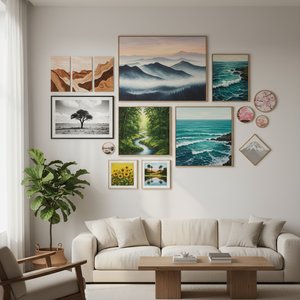
Top 10 Paysages Iconiques : Voyage Artistique & Décoration d'Intérieur
Découvrez les 10 plus beaux paysages de l'histoire de l'art : Monet, Van Gogh et bien d'autres. Explorez leur technique unique et trouvez l'inspiration pour votre décoration intérieure avec OriginalUniqueArt.com. Œuvres exceptionnelles à découvrir !

Idyllic Visions: Exploring the Pastoral Scene in Art History – From Arcadia to Modern Interpretations
Explore the captivating history of pastoral art from classical Arcadia to modern masterpieces. Discover key artists like Millet & Cole at OriginalUniqueArt. Find serene landscape paintings for your home.



