

 Envoyer
 Partager
 Détails de l'œuvre

 Télécharger
 Articles similaires
 Diaporama
Boschi Di Stefano Home: Studio


 Lire la suite
Reproduction à l'huile faite à la main
Huile sur toile peinte à la main, avec cadre et dimensions personnalisés, réalisée sur commande par nos artistes. ( Commander l'impression Télécharger l'image haute résolution)




































Choisissez parmi nos formats prédéfinis qui respectent les proportions originales de l’œuvre.

Vous pouvez saisir vos propres dimensions pour l'adapter à un cadre ou à un espace spécifique. Si la taille sélectionnée ne correspond pas aux proportions de l'image d'origine, nous recadrerons l'œuvre ou prolongerons la peinture avec des éléments peints à la main supplémentaires. Une maquette numérique vous sera envoyée pour approbation avant le début de la production.
Veuillez noter que l'aperçu à l'écran ne reflète pas le recadrage ou l'extension réels. Seule la maquette montrera fidèlement la composition finale.
Bien que des tailles personnalisées soient disponibles, nous vous recommandons de sélectionner une dimension dans la liste prédéfinie afin de préserver les proportions d'origine.
Après la commande, l’équipe OriginalUniqueArt.com contactera le client par e-mail pour recueillir ses instructions et lui fournira une maquette d’aperçu
Livraison dans le monde entier () en 3 à 4 semaines au lieu des 5 semaines habituelles. (22 août). Aucun compromis sur la qualité.

Livraison express gratuite dans le monde entier

Toile de lin de qualité supérieure

Assurance transport complète

Garantie de remboursement des droits de douane

Garantie de fidélité des couleurs

Politique de retour de 60 jours (uniquement en cas de défaut)

Garantie de remboursement à 100%

Offre de tarifs dégressifs
 L'option verre n'est disponible que pour les dimensions inférieures à 110 cm.

Boschi Di Stefano Home: Studio
Technique de reproduction
Format de la reproduction
-


Prix total
$ 300
Description de l'œuvre
Subject and Setting
The photograph captures a quiet, intimate studio in the Boschi di Stefano home, where Gabriele Carelli’s hand‑painted reproductions find their place. A modest table sits at the center, surrounded by three chairs that hint at a gathering of artists or patrons. The walls are adorned with Carelli’s own landscape canvases, each one echoing the rolling hills and luminous skies he once painted in Sicily and Greece. A vase, a book, a bowl, and a clock punctuate the scene, suggesting both everyday life and the disciplined rhythm of creative work.Artistic Style and Technique
Carelli’s technique marries meticulous realism with an almost lyrical softness that invites the eye to linger. In this studio setting, his landscapes are rendered in delicate washes of ochre and sea‑foam green, their edges softened by a subtle glazing that gives depth without harsh contrast. The black‑and‑white photograph emphasizes texture: the grain of canvas, the worn wood of the table, the faint shadows cast by the clock’s hands. This interplay between light and shadow mirrors Carelli’s own practice of layering translucent pigments to achieve atmospheric effects.Historical Context and Symbolism
Created in 1982, the image reflects a period when Italian art was revisiting its Romantic past while embracing contemporary sensibilities. Carelli, born in Naples in 1821, had spent his career traveling with the Duke of Devonshire, absorbing Mediterranean vistas that later informed his palette. The studio itself becomes a symbol of continuity: a space where tradition meets modernity, where the artist’s legacy is preserved through reproductions that echo the original landscapes he loved. The clock above the table serves as a quiet reminder of time’s passage—both in Carelli’s life and in the enduring appeal of his work.Emotional Resonance and Interior Design Appeal
For collectors, this photograph offers more than visual beauty; it conveys an atmosphere of contemplative artistry. The gentle arrangement of objects invites viewers to imagine themselves within the scene, perhaps sketching beside a window or sipping tea while admiring a landscape that feels both familiar and distant. For interior designers, the composition provides a versatile reference: the muted tones and balanced layout can inspire wall treatments, furniture placement, or curated art displays that evoke warmth, creativity, and timeless elegance. Whether displayed in a modern loft or a classic study, Carelli’s studio becomes a focal point that enriches any space with its quiet, enduring charm.Biographie de l'artiste
Early Life and Artistic Foundations
Gabriele Carelli, an Italian painter born in Naples in 1821, entered a world steeped in artistic tradition. His lineage played a pivotal role in shaping his early life and career; he was the son of Raffaele Carelli, another esteemed artist associated with the School of Posillipo – a loosely organized group of painters dedicated to capturing the evocative beauty of the Italian landscape. From a young age, Gabriele’s artistic development was profoundly influenced by his father's expertise and established practices. This familial connection provided him with an invaluable foundation, immersing him in the techniques and sensibilities that would later define his own distinctive style. His formative years were spent absorbing the nuances of painting and observation within the vibrant artistic atmosphere of Naples, a city renowned for its rich cultural heritage and tradition of artistic excellence.Artistic Style and Travels
Gabriele Carelli’s artistic signature lies primarily in his captivating landscape paintings. He possessed a remarkable ability to blend genre scenes with his naturalistic depictions, creating works that were both visually stunning and imbued with narrative depth. A significant chapter in his artistic journey unfolded during his extensive travels across Europe, particularly during the 1840s and 1850s. Accompanying the 6th Duke of Devonshire on tours through Sicily, Greece, Asia Minor, and Constantinople, Carelli meticulously documented these diverse landscapes with a series of watercolors. These journeys broadened his artistic horizons immeasurably, exposing him to an astonishing array of terrains, cultures, and visual experiences – all of which profoundly influenced his subsequent work. The meticulous detail and vibrant colors evident in his travel sketches demonstrate a keen eye for observation and a deep appreciation for the beauty of the world around him.Notable Works and Recognition
Carelli’s artistic output includes several notable works that stand as testaments to his skill and vision. “Inside the Sacristy of the Church of S. Maria del Parto with a Monument to Jacopo Sannazzaro,” housed in the Palace of Capodimonte in Naples, exemplifies his ability to capture both architectural detail and human drama within a single composition. Similarly, his watercolor rendition of the ruins of Paestum, also residing in the Palazzo di Capodimonte, showcases his mastery of light and shadow, conveying the timeless grandeur of ancient sites. Throughout his career, Carelli’s work was exhibited extensively in Naples and London, gaining him recognition among discerning art enthusiasts. However, it was his association with Queen Victoria that truly elevated his status within the British artistic community. The Queen became a devoted patron, commissioning watercolor views of England, Italy, and France – works that now form an integral part of the Royal Collection at Osborne House and Windsor Castle.The School of Posillipo and Legacy
Gabriele Carelli’s artistic trajectory is inextricably linked to the School of Posillipo. This influential group of painters, centered in Naples during the 19th century, championed a distinctive approach to landscape painting – one characterized by a focus on capturing the essence of the Italian countryside with an emphasis on light, color, and atmosphere. The School’s members, including Carelli, rejected the rigid academic traditions of the time, embracing a more expressive and subjective style. Their work reflected a deep connection to their homeland and a profound appreciation for its natural beauty. As a member of this esteemed group, Carelli contributed significantly to the development of landscape painting in Italy, leaving behind a legacy of evocative and enduring works that continue to resonate with viewers today. He passed away in 1900, but his artistic spirit lives on through his paintings, which offer a glimpse into a bygone era of Italian art and travel.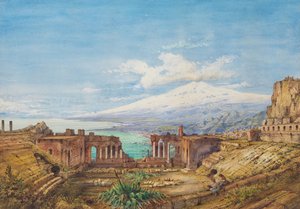
Gabriele Carelli
1821 - 1900 , Italie
L'essentiel de l'artiste
- Artistic Movement Or Style: École de Posillipo
- Artists Or Movements Influenced By This Artist: ['École de Posillipo']
- Artists Who Influenced This Artist: ['Raffaele Carelli']
- Date Of Birth: 1821 Naples, Italie
- Date Of Death: 1900 Menton, France
- Full Name: Gabriele Carelli
- Nationality: Italien
- Notable Artworks:
- Intérieur sacristie
- Ruines Paestum
- Place Of Birth: Naples, Italie
Articles connexes

Dante Gabriel Rossetti : Les 25 Œuvres Maîtresses du Préraphaélisme à Redécouvrir
Plongez dans l'univers fascinant de Dante Gabriel Rossetti ! Découvrez les 25 œuvres majeures du préraphaélisme : symbolisme, poésie et beauté victorienne. Reproductions d'art exceptionnelles sur OriginalUniqueArt.com.

Evoking Nature's Sublime: A Comprehensive Exploration of 19th-Century Landscape Painting
Explore the captivating world of 19th-century landscape painting! Discover renowned artists like Friedrich & Monet, key movements, and find the perfect artwork to bring nature's serenity into your home. Expert insights at OriginalUniqueArt.

Les 10 Chefs-d'œuvre du Paysage Romantique : Artistes et Décor d'Intérieur
Plongez dans l'émotion du Romantisme avec les 10 plus beaux paysages de Friedrich, Turner & Delacroix. Découvrez leur histoire et trouvez l'inspiration déco idéale sur OriginalUniqueArt.com !

Évocations de lieux : Un voyage historique à travers l'art du paysage
Explorez l'histoire fascinante de la peinture de paysage à travers les chefs-d'œuvre du Romantisme. Découvrez Friedrich, Turner et Aivazovski et laissez-vous inspirer par la beauté sauvage et le sublime. Reproduction d'art de qualité chez OriginalUniqueArt.

Constable : Les 25 Chefs-d'Œuvre du Maître Anglais | OriginalUniqueArt
Plongez dans l'univers de John Constable avec les 25 œuvres incontournables du maître anglais. Découvrez l'histoire, la technique et l'émotion derrière ses paysages romantiques. Reproductions de qualité muséale sur OriginalUniqueArt.com.

