- Accueil

- Reproduction de peinture à l'huile
- fritz nansen
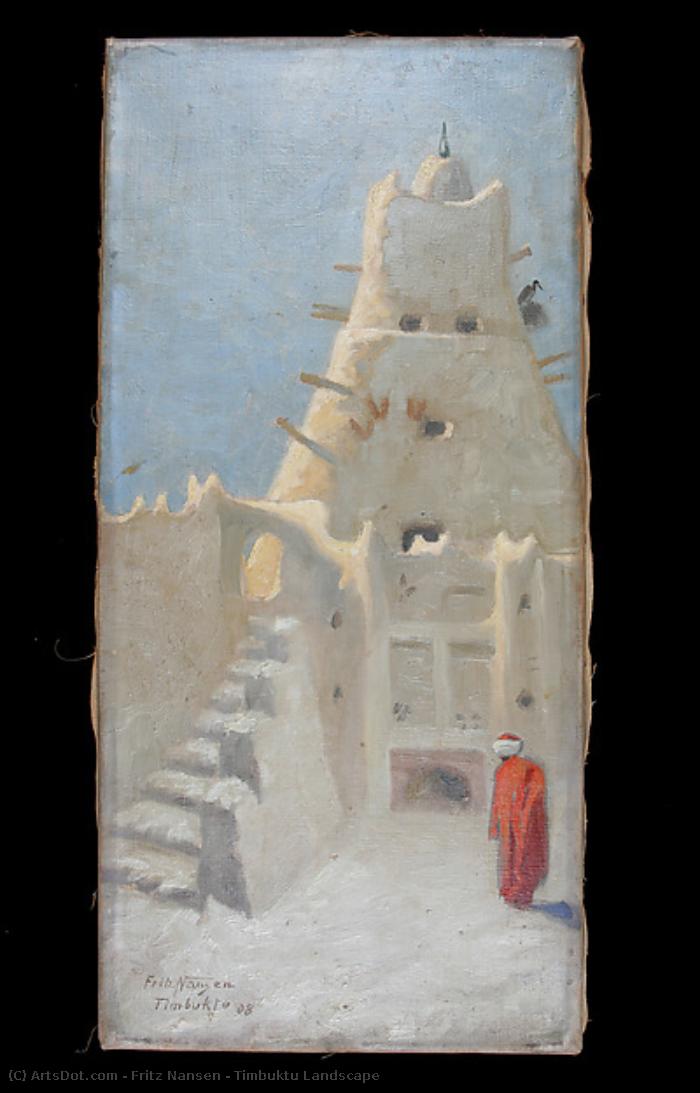
- Timbuktu Landscape
 Commander l'impression Acheter l'image haute résolution
 Partager
 Partager
 Détails de l'œuvre
 Ajouter aux favoris

 Télécharger
 Articles similaires
 Radiographie
 Diaporama
Timbuktu Landscape
 1908
1908 60.0 x 33.0 cm
 Afficher la suite
Reproduction à l'huile faite à la main
Huile sur toile peinte à la main, avec cadre et dimensions personnalisés, réalisée sur commande par nos artistes.




































Choisissez parmi nos formats prédéfinis qui respectent les proportions originales de l’œuvre.

Vous pouvez saisir vos propres dimensions pour l'adapter à un cadre ou à un espace spécifique. Si la taille sélectionnée ne correspond pas aux proportions de l'image d'origine, nous recadrerons l'œuvre ou prolongerons la peinture avec des éléments peints à la main supplémentaires. Une maquette numérique vous sera envoyée pour approbation avant le début de la production.
Veuillez noter que l'aperçu à l'écran ne reflète pas le recadrage ou l'extension réels. Seule la maquette montrera fidèlement la composition finale.
Bien que des tailles personnalisées soient disponibles, nous vous recommandons de sélectionner une dimension dans la liste prédéfinie afin de préserver les proportions d'origine.
Après la commande, l’équipe OriginalUniqueArt.com contactera le client par e-mail pour obtenir ses instructions et lui fournira une maquette d’aperçu.
Livraison dans le monde entier () en 3 à 4 semaines au lieu des 5 semaines habituelles. (23 juillet). Aucune concession sur la qualité.

Livraison express gratuite dans le monde entier

Toile de lin de haute qualité

Assurance transport complète

Garantie de remboursement des frais de douane

Garantie de fidélité des couleurs

Politique de retour de 60 jours (uniquement en cas de défaut)

Garantie de remboursement à 100%

Réduction sur les achats groupés
 L'option verre n'est disponible que pour les dimensions inférieures à 110 cm.

Timbuktu Landscape
Technique de reproduction
Format de reproduction
-


Prix total final
-
Description de l'œuvre
Biographie de l'artiste
Fritz Nansen: Explorer, Scientist, Humanitarian, and Rector
Fridtjof Nansen was a Norwegian explorer, scientist, diplomat, humanitarian, artist, and rector—a polymath whose life spanned from 1861 to 1930. He wasn’t merely an adventurer; he possessed a profound intellectual curiosity that drove him to unravel the mysteries of the Arctic wilderness and champion the cause of refugees worldwide. His artistic pursuits, though often overshadowed by his scientific endeavors, reveal a sensitive soul attuned to the beauty of nature and imbued with a humanist spirit.- Early Life & Education: Born in Bergen, Norway, Nansen’s fascination with science began early on. He excelled academically, earning degrees in mathematics and physics from Oslo University before delving into geology and zoology. His passion for skiing—a sport he mastered at a young age—would become an integral part of his adventurous spirit and would foreshadow his groundbreaking expeditions.
- The Ski Expedition & Early Arctic Exploration: Nansen’s fame began with the 1888 ski expedition across Greenland, where he led a team to demonstrate that Greenland was not a single ice sheet but comprised of numerous smaller glaciers. This daring feat cemented his reputation as an innovator and challenged prevailing scientific dogma. He meticulously documented his observations, laying the groundwork for future Arctic research.
- The Fram Expedition (1893-96): Perhaps Nansen’s most iconic achievement was the *Fram* expedition—a perilous voyage to reach the North Pole aboard a specially designed polar ship. Driven by unwavering determination and fueled by his conviction that the Arctic ice drifts could be harnessed for scientific observation, he defied skepticism and successfully navigated through treacherous conditions. The expedition yielded invaluable data on glacial movement and contributed significantly to understanding the Arctic environment.
- Diplomatic Career & Refugee Advocacy: Following the *Fram* expedition, Nansen transitioned into diplomacy, serving as Norway’s ambassador to Sweden and later to Belgium. However, his humanitarian instincts remained paramount. Recognizing the plight of displaced persons after World War I—particularly Armenian refugees—he spearheaded the creation of the Nansen Passport system—a revolutionary initiative that granted legal status and identity to stateless individuals traveling internationally.
- Later Life & Artistic Pursuits: Nansen continued his scientific research throughout his life, focusing on ethnology, nutrition, oceanography, meteorology, zoology, marine biology, geology, and anthropology. He also served as Rector of Oslo University from 1925 to 1928, fostering a vibrant intellectual atmosphere and championing the importance of education. Notably, he gifted Edvard Munch’s *The Scream* painting to Oslo University—a testament to his appreciation for art and its ability to convey profound emotion. His legacy extends beyond scientific breakthroughs; it embodies courage, compassion, and an unwavering commitment to human dignity.

fritz nansen
Germany
En bref
- Artistic Movement Or Style: Early 20th Century Art
- Artists Or Movements Influenced By This Artist:
- Realism
- Symbolism
- Artists Who Influenced This Artist: ['Edvard Munch']
- Date Of Birth: October 10, 1861
- Date Of Death: May 13, 1930
- Full Name: Fridtjof Nansen
- Nationality: Norwegian
- Notable Artworks: ['Timbuktu Landscape']
- Place Of Birth: Store Frøen, Germany

