

 Aperçu en situation
 Partager
 Partager
 Détails

 Télécharger
 Articles similaires
 Radiographie
 Voir le diaporama
 Statistiques
In the Tropics


 Afficher la suite
Giclées et impressions d'art
Impressions giclées ou sur toile de qualité musée, avec une production rapide et des finitions au choix. ( Acheter la peinture faite à la main Passer au format image numérique)




P118B $10

P118H $10

P118W $10

P438Z $10

P508JH $12

P508YH $12

P805H $10

P805Z $10

P919BZ $10

P919G $10

P919XJ $10

P959ZH $10

P968JZ $12

W106C $8

W218G $10

W218JH $8

W218Y $10

W307PJ $10

W316G $10

W316PJ $8

W316Y $10

W398PJ $8

W4111J $10

W500HY $15

W500JH $15

W692G $12

W849H $8

W940BG $15

W953PJ $8




Choisissez parmi nos formats prédéfinis qui respectent les proportions originales de l’œuvre.

Vous pouvez saisir vos propres dimensions pour vous adapter à un cadre ou à un espace spécifique. Si la taille sélectionnée ne correspond pas aux proportions de l'image originale, nous recadrerons l'œuvre ou étendrons l'image avec une bordure en miroir ou une couleur unie. Une maquette numérique vous sera envoyée pour approbation avant le début de la production.
Veuillez noter que l'aperçu à l'écran ne reflète pas le recadrage ou l'extension réelle. Seule la maquette montrera avec précision la composition finale.
Bien que des tailles personnalisées soient disponibles, nous vous recommandons de choisir une dimension dans la liste prédéfinie afin de préserver les proportions originales.
Livraison dans le monde entier () en 2 semaines au lieu des 4/5 semaines habituelles. (16 septembre)

Livraison express gratuite dans le monde entier

Toile de lin de haute qualité

Assurance transport complète

Garantie de remboursement des droits de douane

Garantie de fidélité des couleurs

Garantie de retour de 100 jours (uniquement en cas de défaut)

Garantie de remboursement à 100%

Tarifs dégressifs sur quantité
 L'option verre n'est disponible que pour les dimensions inférieures à 110 cm.

In the Tropics
Giclées et impressions d'art
Format de la reproduction
-


Prix total final
$ 80
A Vision of Tropical Paradise: Frederic Edwin Church’s “In the Tropics”
Frederic Edwin Church's "In the Tropics," painted in 1856, isn’t merely a landscape; it’s an immersive experience, a portal to a world teeming with vibrant life and dramatic grandeur. This monumental canvas, now housed within the Smithsonian American Art Museum, captures the essence of South America – specifically, the region along the Rio Magdalena in Colombia – through Church's masterful command of light, color, and scale. More than just a depiction of scenery, it’s a testament to the Romantic movement’s fascination with nature’s power and beauty, imbued with a profound sense of awe and spiritual connection. The painting immediately draws the viewer into its depths, utilizing a strong perspective that guides the eye along the winding river towards the imposing snow-capped peaks in the distance – a deliberate strategy designed to evoke both the immensity of the landscape and the feeling of being utterly dwarfed by it.The Language of Light and Color
Church’s technique is characterized by an almost obsessive attention to detail, meticulously rendered through layers of oil paint that create a remarkable sense of texture and depth. He employed a technique known as “luminism,” popularized during this period, which prioritized capturing the effects of light on surfaces rather than simply depicting objects in their true colors. Notice how the sunlight filters through the dense foliage, casting dappled shadows across the riverbanks and illuminating the textures of the rocks and vegetation with an ethereal glow. The color palette is dominated by warm hues – rich golds, deep browns, vibrant oranges, and hints of turquoise – creating a sense of warmth and inviting tranquility despite the painting’s imposing scale. Church masterfully utilizes atmospheric perspective, subtly lightening and desaturating distant elements to further enhance the illusion of depth and distance, mimicking how our eyes naturally perceive landscapes from afar. The careful blending of colors and the subtle gradations of light contribute significantly to the painting's overall luminosity and realism.A Romantic Vision Rooted in Scientific Observation
“In the Tropics” emerged during a pivotal moment in American art history – the rise of the Hudson River School, a movement that championed the depiction of America’s natural landscapes with unprecedented detail and emotional intensity. Church’s work was deeply influenced by the writings of Alexander von Humboldt, a German naturalist who advocated for a scientific approach to understanding nature. Humboldt's emphasis on the interconnectedness of all things – science, art, and spirituality – resonated profoundly with Church, who sought to capture not just the visual beauty of the tropics but also its underlying order and harmony. The painting reflects this intellectual curiosity through its meticulous observation of detail, from the individual leaves on the palm trees to the textures of the rocks and mountains. It’s a testament to the belief that art could be both aesthetically pleasing and intellectually stimulating.Symbolism and Emotional Resonance
Beyond its technical brilliance, “In the Tropics” is rich in symbolic meaning. The towering mountain range represents majesty, endurance, and perhaps even the divine—a powerful symbol of nature's strength and timelessness. The winding river symbolizes life’s flow, connecting the viewer to the heart of the landscape. The small figure near the riverbank serves as a poignant reminder of humanity’s place within this vast and awe-inspiring world – a tiny speck against the backdrop of immense natural beauty. The painting evokes a powerful sense of wonder, humility, and connection with nature—a feeling that transcends mere visual appreciation. It invites contemplation on our relationship to the environment and our own smallness in the face of creation’s grandeur.A Legacy of Grandeur
“In the Tropics” remains one of Frederic Edwin Church's most celebrated works, a cornerstone of American landscape painting. Its scale, technical mastery, and evocative imagery continue to captivate audiences today. Reproductions of this iconic masterpiece offer a remarkable opportunity to bring its breathtaking beauty into any space, transforming interiors into portals to a world of tropical splendor and reminding us of the enduring power of nature’s majesty. It's a piece that speaks volumes about the Romantic spirit and the profound connection between art, science, and the human soul.Biographie de l'artiste
Premières années et formation
Frédéric Edwin Church, figure marquante de l’école du fleuve Hudson des peintres américains de paysages, est né le 4 mai 1826 à Hartford, dans le Connecticut. Il était un descendant direct de Richard Church, un pionnier puritain venu d'Angleterre avec Thomas Hooker lors du voyage initial à travers la nature sauvage vers ce qui allait devenir Hartford, dans le Connecticut. La richesse de sa famille lui a permis de poursuivre son intérêt pour l’art dès son plus jeune âge. À dix-huit ans, Church est devenu l'élève de Thomas Cole, un artiste né en Grande-Bretagne et fondateur de l’école du fleuve Hudson, à Catskill, dans le New York. Cet apprentissage de deux ans a jeté les bases du succès futur de Church en tant que peintre de paysages.Style artistique et influences
Les peintures de Church se caractérisent par leur emphase sur le détail réaliste, la lumière dramatique et les vues panoramiques. Il était influencé par Alexander von Humboldt, un explorateur et scientifique prussien, et son œuvre reflète le romantisme de l’époque. Le style de Church se caractérise par l'utilisation de lignes horizontales basses, une prédominance du ciel et des « coups de pinceau cachés », qui créent une surface picturale lisse et réaliste.Œuvres notables et expositions
- Le Cœur des Andes (1859), un paysage monumental de l'École du Rhin. Admirez le détail et la luminosité époustouflants dans ce chef-d’œuvre, évoquant émerveillement et beauté naturelle.
- Crépuscule dans le Désert, une œuvre magistrale de l'École du Rhin, riche en couleurs vives et reflétant l’exceptionnalisme américain.
- Étude pour 'Sous les Chutes du Niagara'. Admirez la puissance et la beauté des chutes, capturées avec réalisme romantique.
Héritage et impact
Church était un artiste prolifique qui a présenté certaines de ses œuvres majeures lors d'expositions en une seule œuvre pour un public payant et souvent ravi à New York. Son influence sur la peinture américaine de paysages est indéniable, et son travail continue d’être célébré pour sa beauté et son importance historique.- Explorez les peintures de Church au New-York Historical Society ou à la National Gallery de Washington, D.C.
- Découvrez d’autres œuvres de Church sur OriginalUniqueArt.com
- Lisez la biographie de Church sur fredericedwinchurch.org
- Apprenez-en davantage sur l’école du fleuve Hudson et ses artistes notables sur OriginalUniqueArt.com

Frederic Edwin Church
1826 - 1900 , États-Unis d'Amérique
En bref
- Artistes Influents:
- Thomas Cole
- Alexander von Humboldt
- Date De Décès: 7 avril 1900
- Date De Naissance: 4 mai 1826
- Lieu De Naissance: Hartford, États-Unis
- Mouvement Artistique: École de la rivière Hudson
- Nationalité: Américaine
- Nom Complet: Frederic Edwin Church
- Oeuvres Notables:
- The Oxbow
- Vue du mont Holyoke
- Le Cœur des Andes
- Crépuscule dans le désert
Articles similaires
Wild & Untamed: The High-Impact Energy of American Romanticism and the Hudson River School
Experience the raw power of American Romanticism. Explore the high-impact energy of the Hudson River School through premium, hand-painted oil reproductions that capture the sublime beauty and untamed spirit of the American wilderness for discerning collectors.

L'École du fleuve Hudson : 10 chefs-d'œuvre incontournables pour sublimer votre intérieur
Plongez dans l'univers grandiose de l'École du fleuve Hudson ! Découvrez 10 chefs-d'œuvre emblématiques de Thomas Cole, Frederic Church et Albert Bierstadt. Inspirez votre décoration intérieure avec ces paysages américains romantiques. Explorez la collection complète sur OriginalUniqueArt.com.
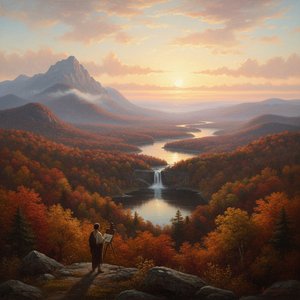
L'École du fleuve Hudson : Romantisme américain et exploration d'un paysage national
Explorez l'École du fleuve Hudson : un mouvement artistique américain majeur célébrant la nature et le sublime. Découvrez ses peintres emblématiques, son histoire et son héritage durable avec OriginalUniqueArt.
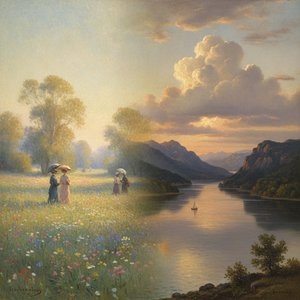
Capturing the Light: A Journey Through the Soul of American Impressionism and the Hudson River School
Explore the luminous beauty of American Impressionism and the Hudson River School. Discover a curated journey through light, landscape, and history, celebrating the enduring legacy of masters through exquisite, hand-painted oil reproductions for the discerning art lover.
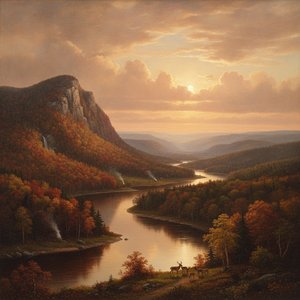
The Hudson River School: A Definitive Guide to America's Romantic Landscape Tradition
Explore the profound legacy of the Hudson River School. Discover how masters like Thomas Cole captured the American sublime through Romanticism and Luminism. A definitive guide for art historians and collectors seeking to understand America's wild beauty.


