
 Aperçu en situation
 Envoyer
 Partager
 Détails de l'œuvre
 Guide
Guide

 Télécharger l'image
 Articles similaires
 Radiographie
 Diaporama
 Questions et réponses
 Statistiques
The Spring

- 70.0 x 68.0 cm


 Lire la suite
Giclées et impressions d'art
Impressions giclées ou sur toile de qualité musée, avec une production rapide et des finitions au choix. ( Commander la reproduction peinte à la main Passer au format numérique)




P118B €10

P118H €10

P118W €10

P438Z €10

P508JH €12

P508YH €12

P805H €10

P805Z €10

P919BZ €10

P919G €10

P919XJ €10

P959ZH €10

P968JZ €12

W106C €8

W218G €10

W218JH €8

W218Y €10

W307PJ €10

W316G €10

W316PJ €8

W316Y €10

W398PJ €8

W4111J €10

W500HY €15

W500JH €15

W692G €12

W849H €8

W940BG €15

W953PJ €8




Choisissez parmi nos formats prédéfinis qui respectent les proportions originales de l’œuvre.

Saisissez la largeur et la hauteur souhaitées pour qu'elles s'adaptent à votre cadre ou à votre mur. Une impression peut être recadrée, mais jamais agrandie au-delà de l'image originale ; ainsi, un format de forme différente entraînera la perte d'une partie de l'image. Nous vous envoyons une maquette numérique pour approbation avant toute impression. L'image présentée sur cette page ne montre pas le recadrage réel — seule la maquette le permet.
Livraison dans le monde entier () en 2 semaines au lieu des 4/5 semaines habituelles. (4 novembre)

Livraison express gratuite dans le monde entier

Toile de lin de qualité supérieure

Assurance transport complète

Garantie de remboursement des droits de douane

Garantie de fidélité des couleurs

Politique de retour de 100 jours (uniquement en cas de défaut)

Garantie de remboursement à 100%

Offre de tarifs dégressifs
 L'option verre n'est disponible que pour les dimensions inférieures à 110 cm.

The Spring
Giclées et impressions d'art
Format de la reproduction
-


Prix total
€ 72
A Vision of Rebirth: The Ethereal Essence of Franz Ritter von Stuck
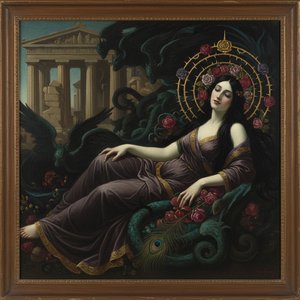
In the delicate interplay of light and shadow within The Spring, one finds more than a mere depiction of a season; one encounters a profound visual poem. Completed in 1902, this masterpiece by the German Symbolist master Franz Ritter von Stuck serves as an immersive gateway into the soul of renewal. The painting presents a young woman, poised with a grace that feels both ancient and immediate, bathed in an ethereal glow that seems to emanate from within the canvas itself. As she rests amidst the skeletal beauty of bare branches, her presence acts as a catalyst for life, signaling the transition from winter's slumber to the vibrant awakening of the natural world. For the discerning collector or interior designer, this work offers a rare emotional depth, bringing a sense of serene vitality and timeless elegance to any curated space.
The composition is a masterful study in Symbolist intrigue and Impressionistic sensitivity. Stuck utilizes a shallow perspective that draws the viewer into an intimate encounter with the subject, focusing our gaze on the soft contours of her face and the lush texture of her flowing hair. The organic lines of the surrounding flora mirror the natural curves of the female form, creating a rhythmic harmony that suggests an unbreakable bond between humanity and the earth. While the painting is anchored in the symbolic traditions of the late 19th century, Stuck’s technique breathes with a modern vitality; his use of impasto—the thick, tactile application of oil paint—builds a rich surface that captures the fleeting nuances of light. This textural depth ensures that the artwork remains dynamic, shifting in character as light hits the canvas from different angles.
Symbolism and the Language of Nature
Every element within The Spring is laden with intentional meaning, designed to evoke a sense of abundance and purity. The subject’s nudity is not merely an aesthetic choice but a profound symbol of vulnerability and an unadorned connection to the primordial world. This theme of innocence is further enriched by the presence of plump grapes held within her grasp, a classical motif representing fertility, plenty, and the cyclical nature of life. Against a backdrop of hazy azure skies and muted earth tones, these symbols resonate with a quiet power, inviting contemplation on the eternal cycles of growth and decay.
For those seeking to integrate fine art into a sophisticated interior, this piece provides a versatile emotional anchor. Its palette—a harmonious blend of cool blues, verdant greens, and warm browns—complements both contemporary minimalist settings and more opulent, classical decors. The painting does not merely occupy a wall; it transforms an environment, infusing it with a dreamlike atmosphere that encourages stillness and reflection. To possess a reproduction of such a significant work is to invite the spirit of the Belle Époque into the modern home, celebrating a moment in art history where myth, nature, and human emotion converged in perfect, luminous balance.
Questions et réponses
«The Spring» de Franz Ritter von Stuck est-il une œuvre lumineuse ou sombre ?
« The Spring » présente une luminosité globale de balanced, avec une luminance de Gentle Luminance.
Où puis-je trouver des statistiques concernant «The Spring» de Franz Ritter von Stuck ?
Les statistiques concernant «The Spring» de Franz Ritter von Stuck sont disponibles sur la page Statistiques de l'œuvre : nombre de visites mensuelles, consultations des autres œuvres de l'artiste, ainsi que la répartition des visiteurs récents par pays et par langue.
À qui offrir "The Spring" en cadeau, et pour quelle occasion ?
«The Spring» de Franz Ritter von Stuck est recommandé comme cadeau pour Seasonal Gift, particulièrement pour Accent. Une reproduction de l'œuvre peut être offerte en cadeau.
Biographie de l'artiste
Franz Ritter von Stuck : Une Vie dans l'Art
Franz Ritter von Stuck (1863-1928) était un peintre, sculpteur, graveur et architecte allemand très influent. Il est une figure centrale du mouvement symboliste et a contribué de manière significative à la transition de l’historicisme du XIXe siècle vers l’art moderne.
Jeunesse et Formation
Né le 23 février 1863, à Tettenweis, en Bavière (Allemagne), la vie de Stuck dans sa jeunesse était imprégnée de traditions rurales. Il avait initialement l'intention de suivre les traces de son père en tant que bûcheron, mais il a démontré un talent précoce pour l’art. Sa formation artistique formelle a commencé à l’Kunstgewerbeschule (École des Beaux-Arts) de Munich de 1878 à 1881, où il étudia sous la direction de Ferdinand Barth. Il a ensuite poursuivi ses études à l'Académie des Beaux-Arts de Munich (1882-1884), où il a été influencé par Arnold Böcklin, dont les peintures mythologiques et évocatrices ont profondément marqué la direction artistique de Stuck.
Ascension au rang de figure importante et développement artistique
Stuck a rapidement gagné une reconnaissance pour ses œuvres dramatiques et souvent sensuelles. Son succès est venu avec Le Gardien du Paradis (1889), exposé au Palais de Verre de Munich, lui valant une médaille d'or. Ce tableau présentait son style émergent – un mélange de précision classique, de sujets mythologiques et de sous-tons symbolistes. En 1892, il a cofondé la Secession de Munich, un groupe d’artistes qui s’est séparé des conventions artistiques conservatrices pour promouvoir l’art moderne. La même année, il a créé sa première sculpture, L'Athlète. L'année suivante, Le Péché (1893) a consolidé sa réputation de maître du tableau symboliste.
Thèmes et influences clés
Les œuvres de Stuck se caractérisent par plusieurs thèmes récurrents :
- Mythologie : Il s'est souvent inspiré des mythes grecs, romains et bibliques, imaginant ces récits avec un style personnel et souvent dramatique.
- Sensualité et la femme fatale : Ses peintures présentent souvent des figures féminines puissantes et séductrices – notamment Salome – incarnant les thèmes du désir, du danger et de l'ambiguïté morale.
- Influences classiques : La technique méticuleuse de Stuck et son accent sur la précision anatomique reflètent une profonde appréciation pour l’art classique.
Au-delà de Böcklin, Stuck a été influencé par les Préraphaélites et le travail de Gustave Moreau. Il, à son tour, a profondément influencé les générations suivantes d'artistes.
Enseignement et reconnaissance
En 1895, Stuck a commencé à enseigner la peinture à l’Académie de Munich, devenant un instructeur très respecté. Parmi ses étudiants notables figurent Paul Klee, Hans Purrmann et Josef Albers. Son influence s'est étendue au-delà de l'enseignement technique ; il a encouragé ses étudiants à explorer leurs visions artistiques individuelles. Il a été investi chevalier le 9 décembre 1905, devenant “Ritter von Stuck”, témoignant de sa prestige grandissante. Il a reçu de nombreuses distinctions et honneurs dans toute l’Europe.
Principales réalisations et œuvres notables
- Le Printemps (1886) : Une représentation vibrante de la saison, présentant sa maîtrise précoce de la couleur et de la composition.
- La Dissonance (1893) : Une représentation troublante d'une femme jouant du violon, incarnant le tourment émotionnel.
- Salomé (versions diverses) : Peut-être son œuvre la plus célèbre, représentant l’histoire biblique avec une sensualité et une profondeur psychologique frappantes.
- L'Athlète (1892) : Une sculpture puissante démontrant ses compétences en matière de forme tridimensionnelle.
Signification historique et héritage
Franz von Stuck a joué un rôle crucial dans la formation du mouvement symboliste en Allemagne. Son œuvre a comblé le fossé entre la tradition académique et l’expérimentation artistique moderne. Il était souvent surnommé “Le Prince de l'Art” pendant sa vie, reflétant sa vaste popularité et son influence. Sa Villa Stuck à Munich, maintenant un musée, témoigne de sa vie et de son œuvre, offrant des aperçus de sa vision artistique et du milieu culturel de la fin du XIXe et du début du XXe siècle en Allemagne. Son héritage continue d’inspirer les artistes et les amateurs d'art aujourd'hui.

Franz Ritter von Stuck
1863 - 1928 , Allemagne
L'essentiel de l'artiste
- Artistic Movement Or Style: Symbolisme
- Artists Or Movements Influenced By This Artist:
- Paul Klee
- Wassily Kandinsky
- Artists Who Influenced This Artist:
- Arnold Böcklin
- Gustave Moreau
- Date Of Birth: 23 février 1863
- Date Of Death: 30 août 1928
- Full Name: Franz Ritter von Stuck
- Nationality: Allemand
- Notable Artworks:
- Le Gardien du paradis
- Salome
- Le Péché
- L'Athlète
- Place Of Birth: Tettenweis, Allemagne
Articles connexes

L'Huile sur Toile : Exploration Historique et Technique d'un Médium Artistique Intemporel
Explorez l'histoire fascinante de la peinture à l'huile, des techniques ancestrales aux maîtres flamands comme Van Eyck. Découvrez les secrets des pigments, liants et glacis pour comprendre cet art intemporel.
Franz von Stuck: Symbolism, Decadence & the Pursuit of Ideal Beauty
Explore the captivating world of Franz von Stuck, a leading Symbolist painter. Discover his mythological masterpieces, decadent themes, & investment potential. Expert analysis for discerning collectors.

The Enduring Legacy of Oil on Canvas: Technique, History & Aesthetic Impact
Explore the rich history & techniques of oil painting – from Renaissance masters to Impressionism. Discover pigments, layering methods, and why this timeless medium endures. Expert insights for artists & art enthusiasts.

The Enduring Power of Painting: A Historical & Contemporary Exploration of Form and Emotion
Explore the rich history & enduring techniques of oil painting with OriginalUniqueArt. Discover masterpieces, learn about art collecting, and find authentic handmade reproductions crafted by skilled artists.

The Enduring Allure of the Nude: A Historical & Artistic Exploration of the Human Form
Explore the captivating history of nude art! Discover iconic paintings & artists from classical to modern eras. Uncover symbolism, techniques & find museum-quality reproductions at OriginalUniqueArt.


