Aperçu en situation
 Envoyer
 Partager
 Détails de l'œuvre
 Guide
Guide

 Télécharger l'image
 Articles similaires
 Radiographie
 Diaporama
 Q&A
Q&A Statistiques
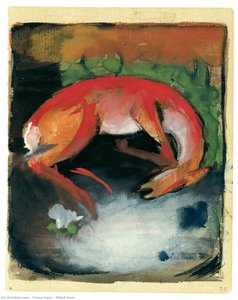
Les Vaches Qui Se Battent
 Huile sur toile
- Décoration murale
- Expressionism
 1911
1911- Époque moderne
 83.0 x 135.0 cm
 Lire la suite
Giclées et impressions d'art
Impressions giclées ou sur toile de qualité musée, avec une production rapide et des finitions au choix. ( Commander la reproduction peinte à la main Passer au format numérique)




P118B €10

P118H €10

P118W €10

P438Z €10

P508JH €12

P508YH €12

P805H €10

P805Z €10

P919BZ €10

P919G €10

P919XJ €10

P959ZH €10

P968JZ €12

W106C €8

W218G €10

W218JH €8

W218Y €10

W307PJ €10

W316G €10

W316PJ €8

W316Y €10

W398PJ €8

W4111J €10

W500HY €15

W500JH €15

W692G €12

W849H €8

W940BG €15

W953PJ €8




Choisissez parmi nos formats prédéfinis qui respectent les proportions originales de l’œuvre.

Saisissez la largeur et la hauteur souhaitées pour qu'elles s'adaptent à votre cadre ou à votre mur. Une impression peut être recadrée, mais jamais agrandie au-delà de l'image originale ; ainsi, un format de forme différente entraînera la perte d'une partie de l'image. Nous vous envoyons une maquette numérique pour approbation avant toute impression. L'image présentée sur cette page ne montre pas le recadrage réel — seule la maquette le permet.
Livraison dans le monde entier () en 2 semaines au lieu des 4/5 semaines habituelles. (31 octobre)

Livraison express gratuite dans le monde entier

Toile de lin de qualité supérieure

Assurance transport complète

Garantie de remboursement des droits de douane

Garantie de fidélité des couleurs

Politique de retour de 100 jours (uniquement en cas de défaut)

Garantie de remboursement à 100%

Offre de tarifs dégressifs
 L'option verre n'est disponible que pour les dimensions inférieures à 110 cm.

Les Vaches Qui Se Battent
Giclées et impressions d'art
Format de la reproduction
-


Prix total
€ 71
L'Équilibre Fragile : Une Exploration de la Force et de la Douleur dans "Fighting Cows" de Franz Marc
Franz Marc’s “Fighting Cows” (1911) transcends the simple depiction of livestock in a field; it plunges us directly into the heart of Expressionist emotion. This oil on canvas, measuring 83 x 135 cm, is not merely a landscape painting but a visceral exploration of tension, conflict, and the primal forces that govern existence. Marc, a pivotal figure in the Der Blaue Reiter movement, masterfully employs bold colors and deliberately distorted forms to convey an intensity rarely found in traditional depictions of rural life.
The composition immediately draws the eye to the central trio of cows. Each animal is positioned with deliberate asymmetry – one head lowered, legs splayed, suggesting a moment of vulnerability or impending action; another stands upright, facing right, radiating a quiet strength; and the third, on the far right, mirrors this posture but turns its gaze in a different direction. This arrangement isn’t accidental; it creates a dynamic equilibrium, a visual representation of opposing forces locked in a silent struggle. The lush green field, rendered with thick impasto strokes, provides a vibrant backdrop to this unfolding drama, emphasizing both the beauty and the inherent danger of the natural world.
La Palette de l'Âme : Symbolisme et Technique Expressionniste
Marc’s masterful use of color is central to understanding “Fighting Cows.” He abandons realistic representation in favor of a symbolic language. The dominant reds, blues, and greens aren’t chosen for their literal accuracy but for the emotions they evoke. Red, frequently associated with earth and vitality, dominates the foreground cow, hinting at its raw power and potential aggression. Blue, representing masculinity and spirituality, is subtly interwoven throughout the composition, suggesting a deeper connection to the bovine essence. The strategic use of yellow – a blend of blue and red – in the background adds complexity, symbolizing the struggle between the material world and the spiritual realm, mirroring Marc’s own philosophical explorations.
Technically, Marc employs a technique characteristic of Expressionism: loose brushstrokes, flattened forms, and an emphasis on conveying feeling over precise detail. The paint is applied with visible energy, creating a sense of movement and immediacy. This deliberate roughness contrasts sharply with the polished surfaces often associated with academic painting, further reinforcing the work’s emotional intensity. The thick application of paint also creates texture, inviting the viewer to engage physically with the artwork.
Un Reflet de l'Âge : Contexte Historique et Influence Artistique
“Fighting Cows” was painted during a period of profound social and artistic upheaval in Germany. The rise of Expressionism reflected a growing disillusionment with traditional values and a desire to express subjective experience through art. Marc’s work aligns perfectly with this movement, rejecting the objective representation favored by earlier generations of artists. His exploration of animal symbolism – particularly its connection to spirituality – was deeply influenced by his own spiritual quest and his belief in the inherent wisdom of the natural world.
Marc's influence extended far beyond his immediate circle. He shared a close relationship with Vasily Kandinsky, another key figure in the Der Blaue Reiter movement, and their collaborative efforts helped to shape the course of modern art. Artists like August Macke, who also worked closely with Marc, were profoundly impacted by his bold use of color and his exploration of emotional themes. The legacy of “Fighting Cows” can be seen in the work of numerous artists who followed, demonstrating its enduring power and relevance.
Une Reproduction d'Exception : Capturer l'Essence de l'Oeuvre Original
OriginalUniqueArt is proud to offer meticulously hand-painted reproductions of Franz Marc’s “Fighting Cows,” capturing every nuance of color, texture, and emotion. Our skilled artists replicate Marc’s distinctive style with the utmost care, ensuring that each reproduction faithfully reflects the spirit and intensity of the original painting. Available in a range of sizes, our reproductions are perfect for collectors, interior designers, or anyone seeking to bring this iconic work of art into their home.
Each reproduction is created on high-quality canvas using archival pigments, guaranteeing its longevity and vibrancy for generations to come. We offer framing options to complement your décor, allowing you to fully appreciate the beauty and power of “Fighting Cows.” Explore our selection today and experience the magic of Marc’s vision firsthand.
Questions et réponses
Quelle palette de couleurs utilise "Les Vaches Qui Se Battent" ?
Les couleurs de "Les Vaches Qui Se Battent" forment une palette Sombre et profond. Cette classification décrit les familles de couleurs dominantes.
«Les Vaches Qui Se Battent» est-il l'une des œuvres les plus populaires de Franz Marc ?
« Les Vaches Qui Se Battent » est classé comme Iconique.
Quelle est l'intensité des couleurs dans «Les Vaches Qui Se Battent» de Franz Marc ?
Les couleurs de «Les Vaches Qui Se Battent» de Franz Marc présentent une intensité Vif.
Biographie de l'artiste
Franz Marc : Un Pionnier de l'Expressionnisme Allemand
Jeunesse et Éducation
- Franz Moritz Wilhelm Marc est né le 8 février 1880 à Munich, en Allemagne.
- Son père, Wilhelm Marc, était peintre de paysages qui a initialement influencé les inclinations artistiques de son fils.
- Marc a brièvement envisagé la théologie avant de se consacrer à l'art, étudiant à l'Académie des Beaux-Arts de Munich après avoir fréquenté l'Université de Munich.
- Ses premières études comprenaient la copie d'anciens maîtres et l’exploration de diverses techniques artistiques.
Développement Artistique et Influences
- Initialement, les œuvres de Marc ont été influencées par l'Impressionnisme et les styles de peinture académiques.
- Un moment décisif est venu lors de ses visites à Paris où il a rencontré les œuvres de Vincent van Gogh, profondément impactant son utilisation de la couleur et de l’expression émotionnelle.
- Il a expérimenté différents groupes artistiques tels que la Neue Künstlervereinigung München avant de co-fonder Der Blaue Reiter.
- L'œuvre de Robert Delaunay a également influencé l'exploration des formes abstraites et des couleurs vives de Marc.
Der Blaue Reiter et Œuvres Clés
- En 1911, Marc co-fonde Der Blaue Reiter (Le Cavalier Bleu) avec Wassily Kandinsky, un journal et un groupe d'artistes qui sont devenus centraux du mouvement expressionniste allemand.
- Ce groupe recherchait le sens spirituel dans l'art et rejetait les conventions artistiques traditionnelles.
- Œuvres notables de cette période comprennent :
- Le Tigre (1912) – présentant son style évolué et son utilisation symbolique des animaux.
- Cerf Rouge (1912) - démontrant un intérêt croissant pour les sujets animaliers.
- La Tour des Chevaux Bleus, Les Renards et le Destin des Animaux (1913) – représentant la culmination de sa vision artistique.
Thèmes et Style Artistique
- L'art de Marc est caractérisé par ses couleurs vives, ses formes simplifiées et sa représentation symbolique des animaux.
- Il croyait que les animaux possédaient une pureté et une connexion spirituelle à la nature que les humains avaient perdues.
- Son utilisation de la couleur n'était pas simplement descriptive mais expressive, transmettant des émotions et des états intérieurs.
- Il cherchait à représenter l’essence de ses sujets plutôt que des représentations réalistes.
Première Guerre Mondiale et Fin Tragique
- Avec le déclenchement de la Première Guerre mondiale en 1914, Marc a été incorporé dans l'armée allemande.
- Malgré sa demande d'exemption en raison de son statut artistique, il a servi comme cavalier.
- Il est décédé tragiquement le 4 mars 1916, lors de la bataille de Verdun.
- Sa mort a interrompu une carrière prometteuse mais a assuré sa place dans l'histoire de l'art.
Héritage et Importance Historique
- L'œuvre de Franz Marc reste très influente pour son utilisation expressive de la couleur, son imaginaire symbolique et sa profondeur spirituelle.
- Il est considéré comme une figure clé dans le développement de l’Expressionnisme Allemand et un précurseur de l'art abstrait.
- Ses peintures sont exposées dans les grands musées du monde entier, notamment le Lenbachhaus à Munich, qui conserve une vaste collection de son œuvre.
- La vision artistique de Marc continue d’inspirer les artistes et de captiver les publics aujourd’hui.

Franz Marc
1880 - 1916 , Allemagne
L'essentiel de l'artiste
- Artistes Influents:
- Vincent van Gogh
- Robert Delaunay
- Date De Décès: 4 mars 1916
- Date De Naissance: 8 février 1880
- Influences Artistiques: ['Art abstrait']
- Lieu De Naissance: Munich, Allemagne
- Mouvement Artistique: Expressionnisme allemand
- Nationalité: Allemand
- Nom Complet: Franz Marc
- Œuvres Notables:
- Le Tigre
- Cerf Rouge
- La Tour des Chevaux Bleus
- Les Renards et le Destin
Articles connexes

Expressionnisme Allemand : 10 Chefs-d'œuvre Révolutionnaires à Découvrir | OriginalUniqueArt
Plongez au cœur de l'Expressionnisme Allemand avec OriginalUniqueArt. Découvrez 10 chefs-d'œuvre de Kandinsky, Munch et Kirchner. Explorez l'histoire, les couleurs et l'émotion derrière ces tableaux iconiques. Reproductions de qualité muséale disponibles sur OriginalUniqueArt.com
Animalia : L'empreinte durable des animaux dans l'art et le design d'intérieur
Explorez l'histoire fascinante de la représentation animale dans l'art et le design d'intérieur. Découvrez le symbolisme, les tendances et comment intégrer l'image animale chez vous avec .

Franz Marc: Expressionism, Spirituality & the Animal Symbolism of a Modern Master
Explore the profound world of Franz Marc's Expressionist paintings. Discover his spiritual connection to animals, innovative use of color, and lasting impact on modern art history. Learn more at OriginalUniqueArt.

Les 10 Chefs-d'œuvre Dominés par le Bleu Ardoise : Art, Histoire & Décor
Plongez dans l'univers fascinant des 10 plus beaux tableaux dominés par le bleu ardoise. Découvrez l'histoire, les artistes et les techniques de ces chefs-d'œuvre impressionnistes et contemporains. Inspirez votre décoration intérieure avec !
The Allure of Azure: Exploring the Symbolic & Aesthetic Depths of Blue in Art History
Explore the rich history of blue in art! Discover its symbolism, from ancient pigments to modern masterpieces by Kandinsky & Seurat. Uncover the psychological impact and cultural meanings behind this captivating hue.