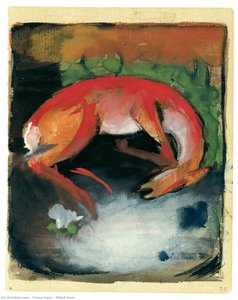
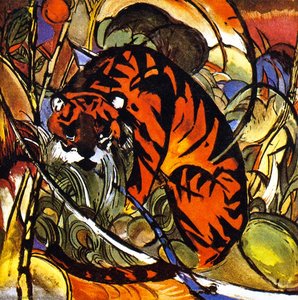
Aperçu en situation
 Partager
 Partager
 Détails
 Guide imprimable

 Télécharger
 Articles similaires
 Radiographie
 Voir le diaporama
 Statistiques
Formes de Combat
 Huile sur toile
- Art mural
- German Expressionism
 1914
1914 91.0 x 131.0 cm
 Bayerische Staatsgemaldesammlungen
 Afficher la suite
Giclées et impressions d'art
Impressions giclées ou sur toile de qualité musée, avec une production rapide et des finitions au choix. ( Acheter la peinture faite à la main Passer au format image numérique)




P118B €10

P118H €10

P118W €10

P438Z €10

P508JH €12

P508YH €12

P805H €10

P805Z €10

P919BZ €10

P919G €10

P919XJ €10

P959ZH €10

P968JZ €12

W106C €8

W218G €10

W218JH €8

W218Y €10

W307PJ €10

W316G €10

W316PJ €8

W316Y €10

W398PJ €8

W4111J €10

W500HY €15

W500JH €15

W692G €12

W849H €8

W940BG €15

W953PJ €8




Choisissez parmi nos formats prédéfinis qui respectent les proportions originales de l’œuvre.

Saisissez la largeur et la hauteur souhaitées pour qu'elles s'adaptent à votre cadre ou à votre mur. Une impression ne peut être que découpée, elle ne peut jamais être agrandie au-delà de l'image originale ; ainsi, un format de forme différente entraînera la perte d'une partie de l'image. Nous vous envoyons une maquette numérique pour approbation avant toute impression. L'image présentée sur cette page ne montre pas le recadrage réel — seule la maquette le permet.
Livraison dans le monde entier () en 2 semaines au lieu des 4/5 semaines habituelles. (18 octobre)

Livraison express gratuite dans le monde entier

Toile de lin de haute qualité

Assurance transport complète

Garantie de remboursement des droits de douane

Garantie de fidélité des couleurs

Garantie de retour de 100 jours (uniquement en cas de défaut)

Garantie de remboursement à 100%

Tarifs dégressifs sur quantité
 L'option verre n'est disponible que pour les dimensions inférieures à 110 cm.

Formes de Combat
Giclées et impressions d'art
Format de la reproduction
-


Prix total final
€ 70
L'Étreinte des Formes : Une Exploration de l'Âme à Travers la Couleur
Franz Marc’s Fighting Forms, painted in 1914, isn’t merely a depiction of conflict; it’s an immersion into the turbulent heart of a generation grappling with impending doom. Created during a period of immense social and political unrest, this seminal work embodies the core tenets of Expressionism – a movement driven by raw emotion and a desire to transcend objective reality. Marc, a founding member of the influential “Der Blaue Reiter” (The Blue Rider) group, sought to capture not just what he saw, but how he *felt*, channeling his anxieties about the looming war into a visual language both intensely personal and profoundly universal.
The painting immediately commands attention with its audacious palette. Dominating the composition are searing reds and stark blacks, colors traditionally associated with violence, aggression, and the unknown. These powerful hues aren’t deployed haphazardly; they represent opposing forces locked in a perpetual struggle – a visual metaphor for the societal tensions simmering beneath the surface of Europe at the time. Interwoven within this dramatic interplay are hints of blue, suggesting a fragile hope or perhaps a yearning for spiritual solace amidst the chaos. The forms themselves are deliberately abstracted, dissolving into swirling masses that evoke movement and dynamism, mirroring the feeling of an unstoppable force.
La Technique et l'Expression du Corps
Marc’s masterful command of oil on canvas is evident in every brushstroke. He employs a loose, gestural technique – a hallmark of Expressionism – prioritizing emotional impact over meticulous realism. The paint seems to vibrate with energy, the colors blending and colliding in a way that suggests both chaos and controlled intensity. Notice how he builds up layers of pigment, creating a palpable sense of depth and texture. This isn’t simply a painting; it's an embodiment of feeling, rendered through the physicality of the medium itself. The dynamic composition, with its swirling shapes, creates a visual rhythm that draws the viewer into the heart of the conflict.
Symbolisme et Résonances Historiques
Beyond the immediate depiction of struggle, Fighting Forms is rich in symbolic meaning. Marc’s frequent use of animal figures – often imbued with spiritual significance – elevates the work beyond a mere representation of human conflict. Animals, particularly horses and birds, were seen by Marc as embodying primal instincts and a connection to nature, offering a pathway to understanding deeper truths. The abstract forms can be interpreted as representing not just individuals battling one another, but also fundamental forces at play in the universe – perhaps even the struggle between life and death, creation and destruction. Considering its creation in 1914, just before the outbreak of World War I, the painting serves as a poignant premonition of the horrors to come, reflecting Marc’s deep-seated anxieties about humanity's capacity for violence.
Un Héritage Durable et une Réplique Captivante
Fighting Forms remains a powerfully evocative work of art, continuing to resonate with audiences today. Franz Marc’s unique ability to distill complex emotions into abstract forms has profoundly influenced generations of artists. A reproduction of this painting offers a remarkable opportunity to bring this intense and thought-provoking artwork into your home or office space. OriginalUniqueArt.com offers meticulously crafted hand-painted reproductions that faithfully capture the original's vibrant colors, dynamic brushwork, and emotional depth. Whether you are an art enthusiast, collector, or interior designer seeking a piece with undeniable impact, a reproduction of Fighting Forms is sure to be a captivating addition to your collection – a testament to the enduring power of artistic expression.
Questions et réponses
Quelle atmosphère et quelle émotion se dégagent de « Formes de Combat » ?
Dans « Formes de Combat », une atmosphère Dramatique accompagne une émotion Tension sous-jacente.
Quelle place occupe « Formes de Combat » parmi les thèmes récurrents de Franz Marc ?
Les thèmes récurrents de Franz Marc incluent van gogh, spiritual seeking, blue rider, expressionism roots, war anxiety, impending conflict, animal symbolism, primal forces ; « Formes de Combat » se concentre sur conflict, red, black, animals, anxiety, war, forms, symbolism.
Quelle émotion «Formes de Combat» de Franz Marc dégage-t-il ?
«Formes de Combat» est associé à un sentiment Tension sous-jacente. La tonalité émotionnelle décrit l'impression que dégage l'œuvre.
Biographie de l'artiste
Franz Marc : Un Pionnier de l'Expressionnisme Allemand
Jeunesse et Éducation
- Franz Moritz Wilhelm Marc est né le 8 février 1880 à Munich, en Allemagne.
- Son père, Wilhelm Marc, était peintre de paysages qui a initialement influencé les inclinations artistiques de son fils.
- Marc a brièvement envisagé la théologie avant de se consacrer à l'art, étudiant à l'Académie des Beaux-Arts de Munich après avoir fréquenté l'Université de Munich.
- Ses premières études comprenaient la copie d'anciens maîtres et l’exploration de diverses techniques artistiques.
Développement Artistique et Influences
- Initialement, les œuvres de Marc ont été influencées par l'Impressionnisme et les styles de peinture académiques.
- Un moment décisif est venu lors de ses visites à Paris où il a rencontré les œuvres de Vincent van Gogh, profondément impactant son utilisation de la couleur et de l’expression émotionnelle.
- Il a expérimenté différents groupes artistiques tels que la Neue Künstlervereinigung München avant de co-fonder Der Blaue Reiter.
- L'œuvre de Robert Delaunay a également influencé l'exploration des formes abstraites et des couleurs vives de Marc.
Der Blaue Reiter et Œuvres Clés
- En 1911, Marc co-fonde Der Blaue Reiter (Le Cavalier Bleu) avec Wassily Kandinsky, un journal et un groupe d'artistes qui sont devenus centraux du mouvement expressionniste allemand.
- Ce groupe recherchait le sens spirituel dans l'art et rejetait les conventions artistiques traditionnelles.
- Œuvres notables de cette période comprennent :
- Le Tigre (1912) – présentant son style évolué et son utilisation symbolique des animaux.
- Cerf Rouge (1912) - démontrant un intérêt croissant pour les sujets animaliers.
- La Tour des Chevaux Bleus, Les Renards et le Destin des Animaux (1913) – représentant la culmination de sa vision artistique.
Thèmes et Style Artistique
- L'art de Marc est caractérisé par ses couleurs vives, ses formes simplifiées et sa représentation symbolique des animaux.
- Il croyait que les animaux possédaient une pureté et une connexion spirituelle à la nature que les humains avaient perdues.
- Son utilisation de la couleur n'était pas simplement descriptive mais expressive, transmettant des émotions et des états intérieurs.
- Il cherchait à représenter l’essence de ses sujets plutôt que des représentations réalistes.
Première Guerre Mondiale et Fin Tragique
- Avec le déclenchement de la Première Guerre mondiale en 1914, Marc a été incorporé dans l'armée allemande.
- Malgré sa demande d'exemption en raison de son statut artistique, il a servi comme cavalier.
- Il est décédé tragiquement le 4 mars 1916, lors de la bataille de Verdun.
- Sa mort a interrompu une carrière prometteuse mais a assuré sa place dans l'histoire de l'art.
Héritage et Importance Historique
- L'œuvre de Franz Marc reste très influente pour son utilisation expressive de la couleur, son imaginaire symbolique et sa profondeur spirituelle.
- Il est considéré comme une figure clé dans le développement de l’Expressionnisme Allemand et un précurseur de l'art abstrait.
- Ses peintures sont exposées dans les grands musées du monde entier, notamment le Lenbachhaus à Munich, qui conserve une vaste collection de son œuvre.
- La vision artistique de Marc continue d’inspirer les artistes et de captiver les publics aujourd’hui.

Franz Marc
1880 - 1916 , Allemagne
En bref
- Artistes Influents:
- Vincent van Gogh
- Robert Delaunay
- Date De Décès: 4 mars 1916
- Date De Naissance: 8 février 1880
- Influences Artistiques: ['Art abstrait']
- Lieu De Naissance: Munich, Allemagne
- Mouvement Artistique: Expressionnisme allemand
- Nationalité: Allemand
- Nom Complet: Franz Marc
- Œuvres Notables:
- Le Tigre
- Cerf Rouge
- La Tour des Chevaux Bleus
- Les Renards et le Destin
Articles similaires

Kandinsky : Les 25 Œuvres Maîtresses d'un Pionnier de l'Art Abstrait | OriginalUniqueArt
Plongez dans l'univers vibrant de Kandinsky ! Découvrez les 25 œuvres majeures du pionnier de l'art abstrait. Explorez son expressionnisme, ses couleurs audacieuses et l'histoire fascinante derrière chaque tableau. Reproductions d'exception sur OriginalUniqueArt.com.

Expressionnisme Abstrait : Les 10 Chefs-d'Œuvre Incontournables pour Décorer avec Art et Histoire
Plongez au cœur de l'Expressionnisme Abstrait avec ! Découvrez les 10 œuvres majeures de Pollock, Rothko et De Kooning. Histoire, techniques & inspiration déco. Explorez la collection complète en ligne.

Expressionnisme Allemand : 10 Chefs-d'œuvre Révolutionnaires à Découvrir | OriginalUniqueArt
Plongez au cœur de l'Expressionnisme Allemand avec OriginalUniqueArt. Découvrez 10 chefs-d'œuvre de Kandinsky, Munch et Kirchner. Explorez l'histoire, les couleurs et l'émotion derrière ces tableaux iconiques. Reproductions de qualité muséale disponibles sur OriginalUniqueArt.com

Abstraction Géométrique : Les 10 Chefs-d'œuvre qui ont Marqué l'Histoire de l'Art
Plongez au cœur de l'abstraction géométrique avec OriginalUniqueArt.com ! Découvrez les 10 œuvres majeures de Mondrian, Malevitch et Kandinsky qui ont révolutionné l'art moderne. Inspirez votre décoration intérieure avec des reproductions de tableaux exceptionnelles. Explorez la collection en ligne !
Mark Rothko : Les 25 Œuvres Maîtresses de l'Abstraction Coloriste | OriginalUniqueArt
Plongez dans l'univers émotionnel de Mark Rothko avec les 25 œuvres clés du maître de l'abstraction. Découvrez l'histoire, la technique et le pouvoir des couleurs de ces tableaux iconiques. Reproductions d'art de qualité musée sur OriginalUniqueArt.com