

 Aperçu en situation
 Partager
 Partager
 Détails
 Guide imprimable

 Télécharger
 Articles similaires
 Radiographie
 Voir le diaporama
 Statistiques
Tango
 Oil On Canvas
- WallArt
- Expressionism
 1909
1909- Modern
 30.0 x 30.0 cm
 Afficher la suite
L’œuvre d'art présentée sur cette page est protégée par le droit d'auteur, ce qui signifie que nous ne pouvons légalement créer ou vendre de reproduction identique. Cette protection est appliquée en vertu d'accords internationaux tels que la Convention de Berne et par les lois nationales, notamment celles énoncées par le Loi américaine sur le droit d'auteur - Titre 17.
En tant qu'alternative respectueuse et légale, nous proposons des œuvres d'art personnalisées, peintes à la main et inspirées de l'original. Nos artistes talentueux et professionnels étudient avec soin le style, l'ambiance et l'essence artistique de l'œuvre originale pour créer une pièce nouvelle et unique qui évoque la même émotion — tout en restant une création originale en soi.
Cette méthode est pleinement conforme aux réglementations sur le droit d'auteur car elle ne repose pas sur la copie ou la duplication de l'œuvre protégée. Il s'agit plutôt d'une réinterprétation créative — une nouvelle peinture qui s'inspire de l'original sans pour autant lui être identique.
Reproduction à l'huile faite à la main
Huile sur toile peinte à la main, avec cadre et dimensions personnalisés, réalisée sur commande par nos artistes. ( Passer au format impression Passer au format image numérique)




P118B €10

P118H €10

P118W €10

P438Z €10

P508JH €12

P508YH €12

P805H €10

P805Z €10

P919BZ €10

P919G €10

P919XJ €10

P959ZH €10

P968JZ €12

W106C €8

W218G €10

W218JH €8

W218Y €10

W307PJ €10

W316G €10

W316PJ €8

W316Y €10

W398PJ €8

W4111J €10

W500HY €15

W500JH €15

W692G €12

W849H €8

W940BG €15

W953PJ €8




Choisissez parmi nos formats prédéfinis qui respectent les proportions originales de l’œuvre.

Saisissez la largeur et la hauteur souhaitées, pour s'adapter à votre cadre ou à votre mur. Cette œuvre est peinte à la main ; ainsi, pour un format de forme différente, l'artiste peut peindre un peu plus autour du tableau ou réduire légèrement les bords — c'est vous qui choisissez. Nous vous envoyons une maquette numérique pour approbation avant que la peinture ne commence. L'image présentée sur cette page ne reflète pas le résultat réel — seule la maquette le fait.
Après la commande, l’équipe OriginalUniqueArt.com contactera le client par e-mail pour recueillir ses instructions et lui fournira une maquette d’aperçu
Livraison dans le monde entier () en 3 à 4 semaines au lieu des 5 semaines habituelles. (21 octobre). Aucun compromis sur la qualité.

Livraison express gratuite dans le monde entier

Toile de lin de haute qualité

Assurance transport complète

Garantie de remboursement des droits de douane

Garantie de fidélité des couleurs

Garantie de retour de 100 jours (uniquement en cas de défaut)

Garantie de remboursement à 100%

Tarifs dégressifs sur quantité
 L'option verre n'est disponible que pour les dimensions inférieures à 110 cm.

Tango
Technique de reproduction
Format de la reproduction
-


Prix total final
€ 262
A Dance with Color: František Kupka's "Tango"
František Kupka’s “Tango,” painted in 1909, is more than just a depiction of a dancer; it’s a visceral embodiment of movement, emotion, and the nascent explorations of abstraction that would forever alter the course of modern art. This vibrant canvas, measuring 30 x 30 cm, pulsates with an energy that immediately draws the viewer into its swirling depths, echoing the dynamism of the tango itself – a dance synonymous with passion and abandon.
- Expressionist Roots: The artwork’s bold style firmly roots it within the Expressionist movement, heavily influenced by the vibrant color palettes and gestural brushwork championed by artists like Henri Matisse. However, “Tango” transcends simple imitation, possessing a uniquely Kupka-esque intensity.
- A Fragmented Reality: Kupka deliberately dismantles traditional notions of perspective and realism. Depth is suggested not through meticulous spatial rendering but through the strategic layering of color blocks and overlapping forms, creating an illusionistic space that feels both fragmented and intensely present.
- The Power of Color: The saturated reds and oranges dominating the composition aren’t merely decorative; they are deliberately employed to evoke a powerful emotional response. This non-naturalistic use of color – characteristic of Fauvism – prioritizes expressive impact over accurate representation, mirroring the raw energy of the dance.
Technique and Materials: A Layered Exploration
“Tango” showcases Kupka’s masterful technique, built upon a foundation of oil paints applied with a deliberate impasto method. Thick strokes of paint are layered upon one another, creating a richly textured surface that invites close inspection. The visible brushwork isn't simply a stylistic choice; it actively contributes to the artwork’s sense of movement and spontaneity. This layering technique, combined with the loose, gestural lines, conveys a feeling of immediacy – as if the artist were capturing the fleeting moment of the dancer’s performance directly on canvas.
- Impasto Technique: The thick application of paint (impasto) adds significant tactile dimension to the artwork.
- Oil Paints on Canvas: The use of oil paints, a standard medium for Kupka at this time, allowed for rich color saturation and layering capabilities.
Symbolism and Context: A Spiritual Quest
Beyond its immediate visual impact, “Tango” resonates with deeper symbolic meanings. The dancer’s pose – caught in mid-movement – suggests a state of vulnerability and abandon, while the swirling lines evoke a sense of unrestrained energy. Kupka, deeply influenced by spiritual currents of his time, was engaged in a profound quest to represent not just what he saw but also what he *felt*. This work reflects his desire to capture an essence—a moment of pure emotion—rather than simply documenting a physical form.
Historical Context: Painted in 1909, “Tango” sits at the crucial juncture between Impressionism and early abstraction. Kupka’s work foreshadowed many of the developments that would characterize the 20th-century avant-garde, solidifying his position as a pioneer of abstract art.Emotional Impact and Artistic Significance
"Tango" is not merely a beautiful image; it's an experience. The artwork’s raw energy, vibrant colors, and dynamic composition create a powerful emotional resonance that continues to captivate viewers today. This piece represents a pivotal moment in the development of modern art, showcasing Kupka’s innovative approach to form, color, and movement. A hand-painted reproduction offers a unique opportunity to bring this seminal work into your space, allowing you to appreciate its beauty and significance firsthand.
Questions et réponses
Comment "Tango" équilibre-t-il l'ombre et la lumière ?
«Tango» de František Kupka présente une luminosité de deep_shadow, avec une luminance de Dark.
Qui a créé « Tango », et en quelle année ?
František Kupka a réalisé « Tango » en 1909.
En quelle année et dans quel mouvement "Tango" a-t-elle été réalisée ?
« Tango » a été créé en 1909, s'inscrivant dans le mouvement Expressionism. La date et le mouvement ancrent l'œuvre dans l'histoire de l'art.
Biographie de l'artiste
Premières années et formation
František Kupka, un peintre et artiste graphique tchèque renommé, est né le 23 septembre 1871 à Opočno, en Bohême orientale, dans la région d'Autriche-Hongrie. De 1889 à 1892, il a étudié à l'Académie des beaux-arts de Prague, se concentrant sur les thèmes historiques et patriotiques. Par la suite, il s'est inscrit à l'Académie des beaux-arts de Vienne, où il s'est spécialisé dans les sujets symboliques et allégoriques.Évolution artistique et influences
Le style artistique de Kupka a évolué du réalisme vers une abstraction pure, influencé par son implication avec la théosophie et la philosophie orientale. En 1894, il s'est installé à Paris, fréquentant brièvement l'académie Julian et étudiant auprès de Jean-Pierre Laurens à l'École des beaux-arts.Œuvres notables et contributions
- La Colorée (65 x 54 cm, Musée Solomon R. Guggenheim, New York, États-Unis), une représentation abstraite d'un nu féminin, mettant en valeur le mode de représentation figurative audacieux de Kupka.
- Autour d'un point (Musée d'Art moderne de Paris), une œuvre qui s'écarte des frontières habituelles de Kupka, présentant des bordures définies et explorant les théories de la lumière et de la couleur.
Expositions et héritage
Kupka a été un membre fondateur d'abstraction-création en 1931. Son travail a été inclus dans l'exposition "Cubisme et art abstrait" au Museum of Modern Art à New York City en 1936. Une rétrospective de son œuvre a eu lieu à la galerie Mánes à Prague en 1946.- Découvrez les œuvres de František Kupka sur OriginalUniqueArt
- Explorez Ms. Kupka entre vertical (expressionnisme abstrait)
- Découvrez plus de détails sur la vie et l'œuvre de František Kupka sur Wikipedia : Wikipedia
Musées présentant les œuvres de František Kupka
- Musée Solomon R. Guggenheim (New York, États-Unis)
- Le Musée d'Art moderne de Paris (Paris, France)
- Galerie Mánes (Prague, République tchèque)

František Kupka
1871 - 1957 , République tchèque
En bref
- Artistes Influents: ['Karl Wilhelm Diefenbach']
- Date De Décès: 24 juin 1957
- Date De Naissance: 23 septembre 1871
- Influences Artistiques: ['Abstraction-Création']
- Lieu De Naissance: Opava, République tchèque
- Mouvement Artistique: Cubisme orphique, abstraction
- Nationalité: Tchèque
- Nom Complet: František Kupka
- Oeuvres Notables:
- The Colored One
- Around a Point
Articles connexes

Abstraction Géométrique : Les 10 Chefs-d'œuvre qui ont Marqué l'Histoire de l'Art
Plongez au cœur de l'abstraction géométrique avec OriginalUniqueArt.com ! Découvrez les 10 œuvres majeures de Mondrian, Malevitch et Kandinsky qui ont révolutionné l'art moderne. Inspirez votre décoration intérieure avec des reproductions de tableaux exceptionnelles. Explorez la collection en ligne !

Au-Delà de la Représentation : Exploration du Paysage Émotionnel de l'Expressionnisme Abstrait
Explorez l'univers fascinant de l'Expressionnisme Abstrait avec OriginalUniqueArt. Analyse approfondie des maîtres (Pollock, Rothko, De Kooning) et conseils d'experts pour collectionner ces œuvres emblématiques. Découvrez une sélection unique.

Expressionnisme Abstrait : Les 10 Chefs-d'Œuvre Incontournables pour Décorer avec Art et Histoire
Plongez au cœur de l'Expressionnisme Abstrait avec ! Découvrez les 10 œuvres majeures de Pollock, Rothko et De Kooning. Histoire, techniques & inspiration déco. Explorez la collection complète en ligne.
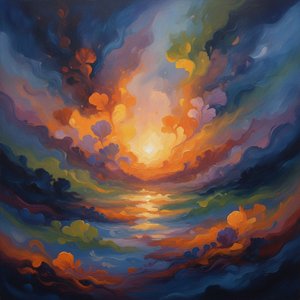
The Soul of Color: A Journey into the Emotional Resonance of Lyrical Abstraction
Embark on a cultural journey through Lyrical Abstraction. Explore how masters like Kandinsky used color and motion to translate emotion into visual poetry. Discover the profound beauty of abstract expressionism and learn to curate emotional resonance in your own art collection.

Kandinsky : Les 25 Œuvres Maîtresses d'un Pionnier de l'Art Abstrait | OriginalUniqueArt
Plongez dans l'univers vibrant de Kandinsky ! Découvrez les 25 œuvres majeures du pionnier de l'art abstrait. Explorez son expressionnisme, ses couleurs audacieuses et l'histoire fascinante derrière chaque tableau. Reproductions d'exception sur OriginalUniqueArt.com.


