Aperçu en situation
 Envoyer
 Partager
 Détails de l'œuvre

 Télécharger
 Articles similaires
 Radiographie
 Diaporama
Girl Reading


 Lire la suite
Reproduction à l'huile faite à la main
Huile sur toile peinte à la main, avec cadre et dimensions personnalisés, réalisée sur commande par nos artistes. ( Commander l'impression Télécharger l'image haute résolution)




P118B $10

P118H $10

P118W $10

P438Z $10

P508JH $12

P508YH $12

P805H $10

P805Z $10

P919BZ $10

P919G $10

P919XJ $10

P959ZH $10

P968JZ $12

W106C $8

W218G $10

W218JH $8

W218Y $10

W307PJ $10

W316G $10

W316PJ $8

W316Y $10

W398PJ $8

W4111J $10

W500HY $15

W500JH $15

W692G $12

W849H $8

W940BG $15

W953PJ $8




Choisissez parmi nos formats prédéfinis qui respectent les proportions originales de l’œuvre.

Vous pouvez saisir vos propres dimensions pour l'adapter à un cadre ou à un espace spécifique. Si la taille sélectionnée ne correspond pas aux proportions de l'image d'origine, nous recadrerons l'œuvre ou prolongerons la peinture avec des éléments peints à la main supplémentaires. Une maquette numérique vous sera envoyée pour approbation avant le début de la production.
Veuillez noter que l'aperçu à l'écran ne reflète pas le recadrage ou l'extension réels. Seule la maquette montrera fidèlement la composition finale.
Bien que des tailles personnalisées soient disponibles, nous vous recommandons de sélectionner une dimension dans la liste prédéfinie afin de préserver les proportions d'origine.
Après la commande, l’équipe OriginalUniqueArt.com contactera le client par e-mail pour recueillir ses instructions et lui fournira une maquette d’aperçu
Livraison dans le monde entier () en 3 à 4 semaines au lieu des 5 semaines habituelles. (21 août). Aucun compromis sur la qualité.

Livraison express gratuite dans le monde entier

Toile de lin de qualité supérieure

Assurance transport complète

Garantie de remboursement des droits de douane

Garantie de fidélité des couleurs

Politique de retour de 60 jours (uniquement en cas de défaut)

Garantie de remboursement à 100%

Offre de tarifs dégressifs
 L'option verre n'est disponible que pour les dimensions inférieures à 110 cm.

Girl Reading
Technique de reproduction
Format de la reproduction
-


Prix total
$ 300
Description de l'œuvre
A Moment of Quiet Reflection: Frank Duveneck’s “Girl Reading”
Frank Duveneck's "Girl Reading," painted in 1876, isn’t merely a portrait; it’s a carefully constructed tableau of domesticity and intellectual pursuit. The painting immediately draws the viewer into a scene of serene contemplation – a young woman lost within the pages of her book, bathed in a soft, diffused light that speaks to both intimacy and a certain melancholy. Duveneck, a remarkably prolific artist whose life was tragically cut short at the age of 71, masterfully captures this quiet moment, imbuing it with an emotional resonance that transcends its simple subject matter.
The composition is deceptively straightforward. The girl, dressed in a vibrant crimson gown – a bold and striking color choice for the era – sits poised on what appears to be a small stool or bench. Her posture suggests both comfort and concentration; her hand rests lightly upon the book, while her gaze is utterly absorbed by its contents. The dark shawl draped across her shoulders and the matching hat contribute to a sense of understated elegance and perhaps a touch of reserve. The background, rendered in muted browns and greens, serves as a subtle counterpoint to the girl’s vivid attire, directing the eye back to her central figure.
Impressionistic Realism: A Delicate Balance
Duveneck's style is often described as “impressionistic realism,” a term that perfectly encapsulates his approach. He skillfully blends elements of both movements – the loose brushstrokes and emphasis on capturing fleeting moments characteristic of Impressionism, with the meticulous detail and accurate representation favored by Realists. Notice how he uses broken color to create an atmospheric effect, particularly in the dappled light filtering through an unseen window. The paint isn’t blended smoothly; instead, it's applied in short, visible strokes that give the scene a sense of immediacy and vitality. This technique allows him to convey not just what he *sees*, but also how he *feels* about what he sees – a subtle emotional layering that elevates the painting beyond a simple likeness.
The artist’s use of light is particularly noteworthy. It's not harsh or dramatic, but rather soft and diffused, creating a sense of warmth and intimacy. This gentle illumination highlights the girl’s face and hands, drawing attention to her engagement with the book. The shadows are equally deliberate, adding depth and dimension to the scene and subtly hinting at the quiet solitude of the moment.
A Window into 19th-Century Life
"Girl Reading" offers a poignant glimpse into the domestic life of mid-19th century America. The painting reflects a time when education, particularly for women, was increasingly valued, though still often limited. The girl’s act of reading represents a burgeoning intellectual curiosity and a desire for knowledge – a subtle assertion of agency within a society that frequently confined women to traditional roles. Furthermore, the setting itself—a simple interior space—suggests a life centered around family and home, values deeply rooted in the era.
Considering Duveneck’s own biography adds another layer of meaning. His early life was marked by profound loss – the death of his father at a young age and the subsequent remarriage of his mother. These experiences undoubtedly shaped his artistic vision, imbuing his work with a sense of melancholy and perhaps a yearning for stability and connection. “Girl Reading,” therefore, can be interpreted as an exploration of these themes—a quiet meditation on loss, memory, and the solace found in intellectual pursuits.
Symbolism and Emotional Resonance
Beyond its historical context, "Girl Reading" is rich with symbolic meaning. The book itself represents knowledge, wisdom, and escape – a portal to other worlds and ideas. The girl’s posture suggests introspection and a desire for self-discovery. The crimson dress, while vibrant, also carries connotations of passion and perhaps even vulnerability. Duveneck masterfully uses color and composition to create an atmosphere of quiet contemplation, inviting the viewer to share in the girl's moment of solitude.
Ultimately, “Girl Reading” is a remarkably evocative work that transcends its simple subject matter. It’s a testament to Duveneck’s artistic skill and his ability to capture not just the physical appearance of his subjects, but also their inner lives. It remains a powerful reminder of the enduring appeal of quiet moments, intellectual pursuits, and the beauty found in the everyday.
Biographie de l'artiste
Premières années et formation
Frank duveneck, figure marquante de la scène artistique américaine, est né le 9 octobre 1848 à Covington, dans le Kentucky. Son père, Bernhard Decker, un immigrant allemand, est décédé alors que Frank n'avait qu'un an, et sa mère a ensuite épousé Joseph duveneck. Cet héritage influencerait considérablement le style artistique de Duveneck. Dès l’âge de 15 ans, Duveneck a commencé à étudier l’art sous la tutelle de Johann Schmitt, un peintre local, et a été placé comme apprenti dans une entreprise allemande de décoration d'églises. Cette première exposition a jeté les bases de son succès futur.Évolution artistique et œuvres notables
En 1869, Duveneck s’est rendu à Munich pour étudier avec Wilhelm von Diez et Wilhelm Leibl à la Royale Académie de Munich. Cette période a marqué un tournant décisif dans son style, embrassant une approche sombre, réaliste et directe de la peinture. Parmi les œuvres les plus célébrées de Duveneck figurent :- Lady with Fan (1873), qui témoigne de son endettement envers la palette sombre et les coups de pinceau tranchants de Frans Hals.
- Le garçon qui siffle (1872), un autre exemple de son style précoce et expressif.
- L’apprenti cordonnier (1877), peinture à l'huile sur toile, actuellement au Taft Museum of Art de Cincinnati, dans l'Ohio.
Enseignement et héritage
En 1878, Duveneck a ouvert une école à Munich puis plus tard à Polling, en Bavière. Ses élèves, connus sous le nom de « garçons duveneck », comprenaient John Twachtman, Otto Bacher, Julius Rolshoven et John White Alexander. Après son retour en Amérique, Duveneck a enseigné à l'Art Academy de Cincinnati. Parmi ses élèves notables figuraient Ida Holterhoff Holloway, John Christen Johansen, M. Jean McLane, Edward Charles Volkert, Russel Wright, Charles Mills et Herman et Bessie Wessel.Vie ultérieure et décès
Duveneck est décédé le 3 janvier 1919 à Covington, dans le Kentucky. Son œuvre peut être trouvée dans divers musées, dont le Metropolitan Museum of Art de New York, la National Gallery of Art de Washington, D.C., et le Cincinnati Art Museum.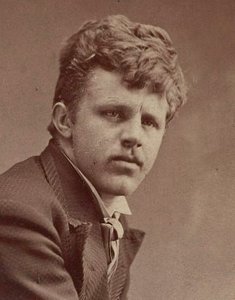
Frank Duveneck
1848 - 1919 , États-Unis d'Amérique
L'essentiel de l'artiste
- Artistes Influents:
- Frans Hals
- Gustave Courbet
- Date De Décès: 3 janvier 1919
- Date De Naissance: 9 octobre 1848
- Influence Sur Les Artistes:
- John Twachtman
- Otto Bacher
- Lieu De Naissance: Covington, États-Unis
- Mouvement Artistique: Réalisme américain
- Nationalité: Américaine
- Nom Complet: Frank Duveneck
- Oeuvres Notables:
- Lady with Fan (1873)
- The Whistling Boy (1872)
- The Cobbler's Apprentice (1877)
Articles connexes

Romantic Realism's Finest: 10 Masterpieces for Your Home | OriginalUniqueArt
Explore 10 defining masterpieces of Romantic Realism! Discover Courbet, Millet & Daumier's powerful paintings—capturing emotion and social realities. Find museum-quality reproductions for your home at OriginalUniqueArt.com.
Réalisme en Peinture : Top 10 des Œuvres Maîtresses à Redécouvrir
Plongez au cœur du réalisme en peinture ! Découvrez 10 œuvres majeures de Courbet, Millet et autres maîtres. Explorez l'histoire, les techniques & trouvez l'inspiration déco sur OriginalUniqueArt.com.

Échos de la Société : Explorer l'Héritage Durable du Réalisme Social dans l'Art
Explorez l'héritage durable du réalisme social dans l'art ! Découvrez Courbet, Manet, Sekoto et bien d'autres artistes engagés. Analyse approfondie et reproductions haute qualité sur OriginalUniqueArt.
Realism in Art: A Professional Guide to Authentic Detail and Lifelike Masterpieces for Large-Scale Interior Projects
Master the use of Realism in professional interiors. This expert guide explores 19th-century masterpieces, offering procurement managers and designers technical insights into selecting authentic, hand-painted oil reproductions for high-end hotel and corporate projects.
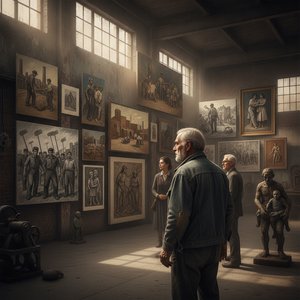
The Raw Truth: A Definitive Guide to the Power and Legacy of Social Realism Art
Explore the profound impact of Social Realism. Discover how masters like Courbet rejected idealism to capture the raw, socio-political truths of the working class through powerful, unvarnished art history and enduring visual critique.