Format du texte

() ·

Une peinture faite pour vous, à la main

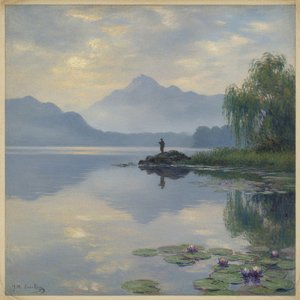
Dusk, Monte Mario, Rome

Reproduction à l'huile faite à la main

Huile sur toile peinte à la main, avec cadre et dimensions personnalisés, réalisée sur commande par nos artistes. ( Passer au format impression Passer au format numérique)

Description de la pièce

Discover "Dusk, Monte Mario, Rome" by François Marius Granet – A breathtaking landscape capturing the Roman sunset's vibrant colors and serene beauty. Explore this masterpiece!

Biographie de l'artiste

Découvrez les tableaux évocateurs de François Marius Granet ! Explorez son style tonal unique et ses œuvres d'inspiration romaine au Musée Granet à Aix-en-Provence.

à partir du ·

Chapitre 1

Quelle dimension choisir ?

Faites glisser pour modifier la taille ; l'image de gauche présente le cadre à sa largeur réelle. Les proportions de l'original sont conservées.

Format standard
sur mesure
CM
INCH

Choisissez parmi nos formats prédéfinis qui respectent les proportions originales de l’œuvre.

largeur
hauteur

Saisissez la largeur et la hauteur souhaitées, pour s'adapter à votre cadre ou à votre mur. Cette œuvre est peinte à la main ; ainsi, pour un format de forme différente, l'artiste peut peindre un peu plus autour du tableau ou réduire légèrement les bords — c'est vous qui choisissez. Nous vous envoyons une maquette numérique pour approbation avant que la peinture ne commence. L'image présentée sur cette page ne reflète pas le résultat réel — seule la maquette le fait.

Chapitre 2

Comment souhaitez-vous qu'il vous soit livré ?

Choisissez le type de bordure pour votre toile tendue

Choisissez votre cadre

Corner sample of the WhiteWrap canvas edge finish, stretched on bois massif bars
Bords blancs €1
Corner sample of the BlurSideWrap canvas edge finish, stretched on bois massif bars
Bords estompés €1
Corner sample of the ExtendedWrap canvas edge finish, stretched on bois massif bars
Bords imprimés €1
Corner sample of the P118B picture frame: polystyrène moulé, 5 cm wide and 3 cm thick
P118B €10
Corner sample of the P118H picture frame: polystyrène moulé, 5 cm wide and 3 cm thick
P118H €10
Corner sample of the P118W picture frame: polystyrène moulé, 5 cm wide and 3 cm thick
P118W €10
Corner sample of the P438Z picture frame: polystyrène moulé, 5.5 cm wide and 3.5 cm thick
P438Z €10
Corner sample of the P508JH picture frame: polystyrène moulé, 7 cm wide and 3.5 cm thick
P508JH €12
Corner sample of the P508YH picture frame: polystyrène moulé, 7 cm wide and 3.5 cm thick
P508YH €12
Corner sample of the P805H picture frame: polystyrène moulé, 5 cm wide and 3.5 cm thick
P805H €10
Corner sample of the P805Z picture frame: polystyrène moulé, 5 cm wide and 3.5 cm thick
P805Z €10
Corner sample of the P919BZ picture frame: polystyrène moulé, 7 cm wide and 3.5 cm thick
P919BZ €10
Corner sample of the P919G picture frame: polystyrène moulé, 7 cm wide and 3.5 cm thick
P919G €10
Corner sample of the P919XJ picture frame: polystyrène moulé, 7 cm wide and 3.5 cm thick
P919XJ €10
Corner sample of the P959ZH picture frame: polystyrène moulé, 5 cm wide and 3 cm thick
P959ZH €10
Corner sample of the P968JZ picture frame: polystyrène moulé, 6 cm wide and 4 cm thick
P968JZ €12
Corner sample of the W106C picture frame: bois massif, 5 cm wide and 3 cm thick
W106C €8
Corner sample of the W218G picture frame: bois massif, 5 cm wide and 3 cm thick
W218G €10
Corner sample of the W218JH picture frame: bois massif, 5 cm wide and 3 cm thick
W218JH €8
Corner sample of the W218Y picture frame: bois massif, 5 cm wide and 3 cm thick
W218Y €10
Corner sample of the W307PJ picture frame: bois massif, 6 cm wide and 3 cm thick
W307PJ €10
Corner sample of the W316G picture frame: bois massif, 6 cm wide and 3 cm thick
W316G €10
Corner sample of the W316PJ picture frame: bois massif, 6 cm wide and 3 cm thick
W316PJ €8
Corner sample of the W316Y picture frame: bois massif, 6 cm wide and 3 cm thick
W316Y €10
Corner sample of the W398PJ picture frame: bois massif, 5 cm wide and 3 cm thick
W398PJ €8
Corner sample of the W4111J picture frame: bois massif, 6.5 cm wide and 3.5 cm thick
W4111J €10
Corner sample of the W500HY picture frame: bois massif, 7 cm wide and 5 cm thick
W500HY €15
Corner sample of the W500JH picture frame: bois massif, 7 cm wide and 5 cm thick
W500JH €15
Corner sample of the W692G picture frame: bois massif, 8 cm wide and 4 cm thick
W692G €12
Corner sample of the W849H picture frame: bois massif, 5 cm wide and 3 cm thick
W849H €8
Corner sample of the W940BG picture frame: bois massif, 7.5 cm wide and 4.5 cm thick
W940BG €15
Corner sample of the W953PJ picture frame: bois massif, 6 cm wide and 3.5 cm thick
W953PJ €8
Corner sample of the H24-GOLD picture frame: bois sculpté et apprêté au gesso, 10 cm wide and 6 cm thick
H24-GOLD €30
Corner sample of the H24-SILVER picture frame: bois sculpté et apprêté au gesso, 10 cm wide and 6 cm thick
H24-SILVER €30
Corner sample of the H36-GOLD picture frame: bois sculpté et apprêté au gesso, 15 cm wide and 6.5 cm thick
H36-GOLD €45
Corner sample of the H36-SILVER picture frame: bois sculpté et apprêté au gesso, 15 cm wide and 6.5 cm thick
H36-SILVER €45
Aperçu du cadre
Sous cadre

Baguette : . Dimensions hors tout avec le cadre : .

Chapitre 3

Qui le peint, et y a-t-il des modifications à apporter ?

Exemples de personnalisation possibles : Remplacer le visage par la photo du client ; Ajouter un animal (ex: remplacer le chat par un chien) ; Inclure un message caché en arrière-plan ; Modifier le paysage ou les éléments de l'arrière-plan.
Après la commande, l'équipe de OriginalUniqueArt.com contactera le client par e-mail pour obtenir ses instructions et lui fournir un aperçu de la maquette

Livraison dans le monde entier () en 3 à 4 semaines au lieu des 5 semaines habituelles. (6 novembre). Aucun compromis sur la qualité.

Chapitre 4

Les dernières touches

Une plaque nominative, comme au musée ?

Détails de la plaque en bronze gravée

This elegant plaque features the artist's name and the title of the artwork, finely engraved for a timeless presentation.

It is made from bronze with a refined, elegant finish. The text is precisely laser-engraved for a sharp and permanent result. Measuring 9x2 cm, the plaque is compact yet easy to read. It's built to be durable and scratch-resistant, offering a professional, museum-quality look. Mounting is simple thanks to the included adhesive backing.

Détails de la plaque en acrylique transparent

The plaque includes essential engraved details such as the artist's name, the title of the artwork, the date it was created, the type of media used-like oil on canvas or watercolor-a brief description of the piece, and a QR code that links to the complete artwork information.

It is crafted from clear acrylic, offering a sleek, modern appearance. The text is UV-engraved in black to ensure strong visual contrast. With a size of 10x15 cm, it ensures optimal readability. It comes equipped with two metal hooks for secure wall mounting. The plaque is designed to be weather-resistant, making it suitable for various environments, and it includes interactive features that work seamlessly with smartphone scanning.

Détails de la plaque en acrylique noir

This elegant plaque includes engraved information such as the artist's name, the title of the artwork, the date it was created, the type of media used (like oil on canvas or watercolor), a short description of the artwork, and a QR code for quick access to more information.

The plaque itself is made from refined black acrylic with a premium finish. The text is laser-engraved in white for high contrast and readability. Its size is 10x15 cm, designed to be easy to read. It comes with two metal hooks for professional mounting. The design is sleek and fits any interior style. It is also weather-resistant and durable, with built-in digital integration for mobile compatibility.

Un vernis protecteur ?

Pour quand en avez-vous besoin ?

Chapitre 5

Votre tableau, tel que vous l'avez commandé

Dusk, Monte Mario, Rome

Technique de reproduction

Format de la reproduction

-

Artiste de prestige

Plus de détails, de finesse et un temps de production accru

-

Cadre de reproduction

-

-

Pour les œuvres ou reproductions dont un côté mesure plus de 105 cm (environ 41 pouces), le cadre sera expédié sous forme de kit démonté. Cette méthode garantit une livraison sécurisée et prévient tout dommage pendant le transport.

Assemblage professionnel requis - ce produit n'est pas destiné au bricolage (DIY).
Le kit doit être assemblé et la toile tendue par un encadreur professionnel expérimenté, en utilisant de la colle à bois (non fournie), une pince à tendre la toile et des serre-joints pour maintenir les traverses d'équerre pendant le séchage de la colle. Un assemblage incorrect ou une tension inégale de la toile peut endommager l'œuvre de manière irréversible et n'est pas couvert par notre garantie.

  • Toutes les baguettes en bois massif sont incluses, découpées avec précision à la taille requise.

  • À assembler avec les vis fournies, ainsi qu'avec de la colle à bois pour les assemblages d'angles (non fournie), à prévoir par votre encadreur.

  • L'utilisation d'outils professionnels est requise et non incluse : une pince à tendre la toile (tendeur) et des serre-joints pour maintenir les baguettes bien d'équerre pendant le séchage de la colle.

Important :
L'assemblage des angles nécessite de la colle à bois, les barres doivent être maintenues avec des serre-joints jusqu'au séchage complet de la colle, et le tendage de la toile sur le châssis assemblé nécessite une pince à tendre la toile. Aucun de ces éléments n'est inclus dans le kit. Veuillez consulter un encadreur professionnel expérimenté avant de commander ce format.

Cartel

-

-

Vernis de protection

Vernis brillant (intensifie les couleurs, protège de la lumière et de l'humidité)

-

Personnaliser mon œuvre

Exemples de personnalisation : remplacer le visage par une photo du client ; ajouter un animal de compagnie (par exemple, remplacer un chat par un chien) ; inclure un message caché en arrière-plan ; modifier le paysage ou les éléments d'arrière-plan.

-

Livraison urgente

Livraison dans le monde entier () en 3 à 4 semaines au lieu des 5 semaines habituelles. (6 novembre). Aucune concession sur la qualité.

-

Livraison express

Livraison dans le monde entier () sous 5 semaines. (13 novembre).

Inclus

Prix total

€ 268

Prix total € 268

L'option verre n'est disponible que pour les dimensions inférieures à 110 cm.

Inclus avec chaque commande

  • Livraison express gratuite dans le monde entier
  • Toile de lin de qualité supérieure
  • Assurance transport complète
  • Garantie de remboursement des droits de douane
  • Garantie de fidélité des couleurs
  • Politique de retour de 100 jours (uniquement en cas de défaut)
  • Garantie de remboursement à 100%
  • Offre de tarifs dégressifs

The Ephemeral Majesty of Twilight

François Marius Granet’s “Dusk, Monte Mario, Rome” isn't merely a landscape; it’s a captured moment, a distillation of light and atmosphere that speaks to the profound beauty of fleeting time. Painted in 1804, during the brief window after sunset when color still clings stubbornly to the sky, this work transports us to the Pincian Hill overlooking Rome, offering a vista both familiar and imbued with an almost melancholic grace. The scene unfolds before us – a cityscape bathed in the last vestiges of daylight, punctuated by the subtle forms of buildings rising from the valley below. It’s a tableau that simultaneously celebrates the grandeur of the Eternal City and acknowledges its inherent transience.

Granet's genius lies not just in his technical skill—evident in the delicate rendering of clouds and the precise depiction of architectural details—but also in his ability to evoke an emotional response. The painting isn’t a literal representation; it’s a carefully constructed memory, filtered through the artist’s sensibility. The muted palette – dominated by shades of rose, lavender, and grey – creates a sense of quiet contemplation, inviting us to linger in this moment of suspended animation. There's an almost palpable stillness, as if time itself has slowed down within the frame.

A Roman Perspective: Monte Mario and the Academy

To understand “Dusk, Monte Mario,” we must first grasp the significance of its location. Monte Mario, a small hill overlooking Rome, held a strategic importance for centuries, serving as a defensive position and later becoming the site of the Villa Medici – the seat of the French Academy in 1803. This association with the Académie Française imbues the painting with an air of intellectual curiosity and artistic patronage. Granet, a student of David at the Louvre, was deeply influenced by the Neoclassical ideals prevalent during this period, yet he possessed a unique ability to infuse his work with a distinctly Romantic sensibility.

The vantage point from the Pincian Hill – where Granet positioned himself – offered an unparalleled view of Rome. This elevated perspective allowed him to capture not only the city’s physical form but also its atmospheric qualities, creating a sense of depth and spaciousness that is characteristic of his work. The composition itself—with the cityscape receding into the distance—mirrors the classical tradition of landscape painting, while simultaneously conveying a feeling of intimacy and personal observation.

The Language of Light: Technique and Style

Granet’s mastery of light is truly remarkable. He employs a technique known as “tonalism,” characterized by subtle gradations of tone and color rather than sharp contrasts. This approach creates a remarkably luminous effect, particularly in the depiction of the sky. The clouds are rendered with an almost ethereal quality, their edges softly blurred and imbued with a delicate sheen. The artist’s use of oil on cardboard is notable; this medium allowed for a remarkable level of detail and control, enabling him to capture the nuances of light and shadow with exceptional precision.

Furthermore, Granet's style can be described as Romantic Neoclassicism – blending the structured forms and classical subject matter favored by his teacher David with the emotional intensity and atmospheric effects associated with the Romantic movement. This fusion results in a work that is both intellectually stimulating and emotionally resonant.

A Legacy of Memory: The Painting’s Journey

“Dusk, Monte Mario, Rome” holds a fascinating history, having passed through the hands of Granet's pupil, Baptistin Martin, and subsequently descended within his family. This lineage adds another layer of intrigue to the painting’s story, suggesting that it represents not just an artistic achievement but also a cherished heirloom—a tangible link to a bygone era. The work is now part of the Thaw Collection at the Metropolitan Museum of Art, a testament to its enduring beauty and historical significance.

Reproductions of this captivating scene offer a remarkable opportunity to bring Granet’s evocative vision into your own space. Whether adorning a grand salon or a cozy study, “Dusk, Monte Mario, Rome” serves as a poignant reminder of the fleeting nature of beauty and the enduring power of memory.

Questions et réponses

Où devrait être accrochée une reproduction de «Dusk, Monte Mario, Rome» de François Marius Granet ?

Le format Landscape de «Dusk, Monte Mario, Rome» de François Marius Granet est idéal pour une Living Room. Le format et l'espace s'associent pour définir l'emplacement parfait d'une reproduction.

Quelle est la situation du droit d'auteur pour «Dusk, Monte Mario, Rome» de François Marius Granet ?

«Dusk, Monte Mario, Rome» de François Marius Granet est dans le dans le domaine public - ses droits d'auteur sont tombés dans le domaine public. La durée du droit d'auteur court à partir du décès de l'artiste, survenu en 1849.

Quelle est la technique et les dimensions de «Dusk, Monte Mario, Rome» de François Marius Granet ?

«Dusk, Monte Mario, Rome» a été réalisé en Oil On Paper et mesure 20 x 31 cm dans sa forme originale.

En savoir plus sur cette peinture

Aperçu en situation Visualiser en RA Passer au format impression Passer au format numérique Envoyer
Détails de l'œuvre Guide Ajouter aux favoris Télécharger l'image Articles similaires Radiographie Diaporama Questions et réponses Statistiques

En chiffres

  • 1804l'année de création
  • 29cadres au choix
  • formats standards, dans leurs propres proportions
  • 5semaines de travail et de livraison
François Marius Granet

François Marius Granet

1775 - 1849, France

Informations clés sur François Marius Granet

  • Artistes Qui Ont Influencé Cet Artiste: ['David']
  • Date De Décès: 1849
  • Date De Naissance: 17 décembre 1775
  • Lieu De Naissance: Aix-en-Provence, France
  • Mouvement Artistique Ou Style: Peinture tonale
  • Nationalité: Français
  • Nom Complet: François Marius Granet
  • Œuvres Notables:
    • Chœur des Capucins
    • Stella peignant une Madone
    • Sodoma à l'hôpital
    • Rachat de prisonniers
    • Mort de Poussin

Biographie de l'artiste

Jeunesse et Débuts Artistiques

François Marius Granet, né à Aix-en-Provence le 17 décembre 1775, émergea d'un milieu modeste. Son père était un simple bâtisseur, une existence éloignée du monde de l'art qui allait finalement passionner son fils. Déjà enfant, Granet manifestait un ardent désir artistique, poussant ses parents à lui trouver des maîtres—d'abord auprès d'un artiste italien de passage, puis dans une école gratuite dirigée par M. Constantin, peintre paysagiste respecté. Cette première exposition posa les fondations de ses futures entreprises, bien que ce soient ses expériences durant les années tumultueuses de la Révolution française qui façonnèrent en premier lieu sa vision artistique. En 1793, Granet rejoignit les volontaires d'Aix lors du siège de Toulon, non comme soldat mais comme décorateur dans l'arsenal. Cette période lui conféra des compétences pratiques et un aperçu direct des réalités du conflit—un thème qui imprégnera subtilement son œuvre ultérieure. Une rencontre décisive avec le jeune Comte de Forbin se révéla transformatrice ; sur invitation de Forbin, Granet fit le voyage à Paris en 1797, entrant au prestigieux atelier de Jacques-Louis David.

L'Atelier de David et le Couvent des Capucins

Le style néoclassique rigoureux de David influença d'abord Granet, mais ce dernier commença rapidement à tracer sa propre voie. Il obtint une cellule dans l'ancien couvent des Capucins—un lieu autrefois utilisé pour imprimer les assignats révolutionnaires—qui était devenu un havre pour les artistes. C'est là, au milieu du jeu de lumière et d'ombre dans les corridors antiques, que Granet conçut ce qui allait devenir l'œuvre maîtresse de sa vie : « Le Chœur des Capucins ». Il se consacra à cette peinture avec un engagement inébranlable, la revisitant et la perfectionnant à maintes reprises au fil des décennies. Le couvent lui-même devint plus qu'un simple atelier ; ce fut un environnement qui impacta profondément sa sensibilité artistique. Contrairement à beaucoup de ses contemporains qui se concentraient sur les grands récits historiques ou les portraits d'élite, Granet trouva beauté et sens dans la quiétude austère de la vie monastique, explorant l'interaction entre architecture, lumière et présence humaine. Cette focalisation n'était pas seulement esthétique ; elle reflétait un intérêt plus profond pour la spiritualité et le passage du temps.

Années Romaines et Développement de la Peinture Tonaliste

En 1802, Granet s'embarqua pour une longue résidence à Rome, une période cruciale pour sa maturation artistique. Il y resta jusqu'en 1819, s'immergeant dans le patrimoine classique de la ville et absorbant son atmosphère de grandeur et de déclin. C'est durant ces années qu'il développa pleinement son style tonal distinctif—une technique caractérisée par des gradations subtiles de lumière et d'ombre, privilégiant les effets atmosphériques au détriment du détail précis. Ses peintures romaines, telles que « Stella peignant une Madone sur son mur de prison » (1810) et « Sodome à l'hôpital » (1815), témoignent de cette approche évolutive. Il n'était pas intéressé par la recréation d'événements historiques avec exactitude photographique ; au contraire, il cherchait à capturer la résonance émotionnelle d'une scène à travers des tons et des compositions savamment orchestrés. Les figures de ses œuvres semblent souvent intégrées au décor architectural, presque comme si elles en étaient une extension faite de pierre et de plâtre. Cet accent mis sur le ton devint sa signature, le distinguant des autres artistes de son époque.

Carrière Tardive et Héritage

De retour à Paris en 1819, Granet continua d'affiner son style unique, produisant une série d'œuvres majeures incluant « Basilique Basse de St François d'Assise » (1823) et « Le Rachat des Prisonniers » (1831). Il fut nommé directeur de l'Académie française à Rome en 1829, un témoignage de sa réputation grandissante. Ses peintures accordèrent constamment la priorité à l'atmosphère et à la profondeur émotionnelle plutôt qu'à la clarté narrative. Même les œuvres aux thèmes historiques ou religieux—comme « Mort de Poussin » (1834)—étaient traitées comme des occasions d'explorer les effets tonaux et l'espace architectural. Le dévouement de Granet au ton suscita parfois des critiques ; certains trouvèrent son œuvre manquant d'intensité dramatique, mais il demeura ferme dans sa vision artistique. Il était un maître dans l'art de créer une ambiance et d'évoquer un sentiment de contemplation tranquille. François Marius Granet mourut en 1849, laissant derrière lui un corpus d'œuvres qui continue de captiver les spectateurs par sa beauté subtile et sa sensibilité singulière. Son influence se lit dans les œuvres ultérieures des artistes ayant exploré des thèmes similaires de spiritualité, d'atmosphère et de jeu entre lumière et architecture. Le Musée Granet à Aix-en-Provence, fondé après son décès, constitue un hommage durable à sa vie et à ses réalisations artistiques, abritant nombre de ses peintures les plus importantes et offrant aux visiteurs un aperçu du monde de ce remarquable peintre français.

Informations clés

  • Artist: François Marius Granet
  • Location: The Morgan Library & Museum
  • Movement: Roman School
  • Dimensions: 8 x 12.5 in (203 x 311 mm)
  • Year: 1804
  • Influences:
    • David
    • Capuchin monks

Quiz d'art

Chaque question ne comporte qu'une seule bonne réponse.

Question 1:
What is the primary subject depicted in ‘Dusk, Monte Mario, Rome’?
Question 2:
According to the description, how quickly could François Marius Granet have completed this painting?
Question 3:
Where are most of François Marius Granet’s oil studies located?
Question 4:
What architectural feature is prominently featured in the painting’s foreground?
Question 5:
What is the significance of the descent of the sun in this painting?