
 Aperçu en situation
 Envoyer
 Partager
 Détails de l'œuvre

 Télécharger
 Articles similaires
 Radiographie
 Diaporama
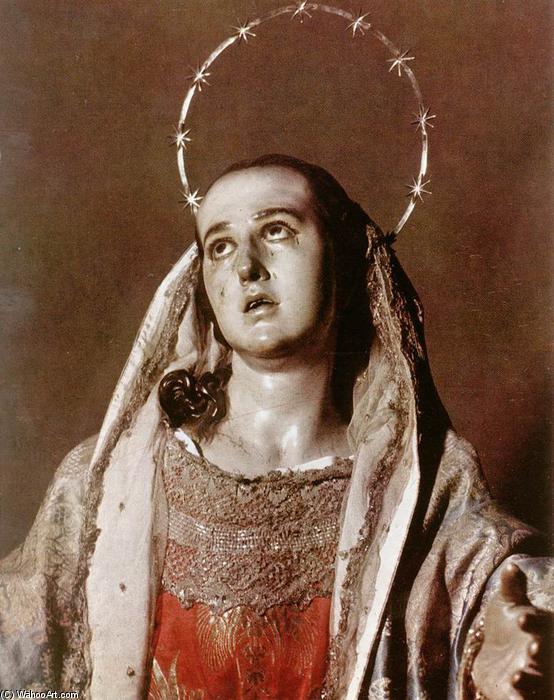
Dolorosa


 Lire la suite
Giclées et impressions d'art
Impressions giclées ou sur toile de qualité musée, avec une production rapide et des finitions au choix. ( Commander la reproduction peinte à la main Télécharger l'image haute résolution)




































Choisissez parmi nos formats prédéfinis qui respectent les proportions originales de l’œuvre.

Vous pouvez saisir vos propres dimensions pour vous adapter à un cadre ou à un espace spécifique. Si la taille sélectionnée ne correspond pas aux proportions de l'image originale, nous recadrerons l'œuvre ou étendrons l'image avec une bordure en miroir ou une couleur unie. Une maquette numérique vous sera envoyée pour approbation avant le début de la production.
Veuillez noter que l'aperçu à l'écran ne reflète pas le recadrage ou l'extension réelle. Seule la maquette montrera avec précision la composition finale.
Bien que des tailles personnalisées soient disponibles, nous vous recommandons de choisir une dimension dans la liste prédéfinie afin de préserver les proportions originales.
Livraison dans le monde entier () en 2 semaines au lieu des 4/5 semaines habituelles. (14 août)

Livraison express gratuite dans le monde entier

Toile de lin de qualité supérieure

Assurance transport complète

Garantie de remboursement des droits de douane

Garantie de fidélité des couleurs

Politique de retour de 60 jours (uniquement en cas de défaut)

Garantie de remboursement à 100%

Offre de tarifs dégressifs
 L'option verre n'est disponible que pour les dimensions inférieures à 110 cm.

Dolorosa
Giclées et impressions d'art
Format de la reproduction
-


Prix total
$ 80
Biographie de l'artiste
Francisco Salzillo: The Soul of Baroque Murcia
Francisco Salzillo y Alcaraz (12 May 1707 – 2 March 1783) was a Spanish sculptor, arguably the most representative image-maker of the 18th century and one of Spain’s greatest masters of the Baroque. He dedicated his entire artistic life to religious themes, primarily polychromed wood sculptures intended for processions commemorating Christ's Passion—particularly Semana Santa Murcia—creating hundreds of pieces that are dispersed throughout the Region of Murcia and some neighboring provinces. His legacy extends beyond mere craftsmanship; Salzillo embodies a profound connection between art and faith, reflecting the spiritual fervor of his time and cementing his place as an icon of Murcian artistic heritage. The devastation wrought by the Spanish Civil War (1936–1939) tragically erased many of Salzillo’s masterpieces, leaving only fragments of his extraordinary oeuvre to inspire awe and admiration.Early Life and Training
Born in Murcia to Nicolás Salzillo, a Neapolitan sculptor who had established a studio producing religious statues, Francisco Salzillo received his formative artistic education from his father's influence. This exposure to classical sculpture—particularly the works of Bernini—would profoundly shape Salzillo’s stylistic sensibilities. At the age of twenty he completed the statue of Saint Ignatius Loyola for Montepulciano Dominican Monastery, marking his debut as a sculptor and demonstrating an early aptitude for capturing emotion and conveying spiritual depth. This monumental undertaking showcased Salzillo's unparalleled technical skill and artistic vision, embodying the Baroque ideal of portraying religious figures with profound emotional resonance. Following his father’s death in 1727, Francisco assumed responsibility for managing the Salzillo family workshop alongside his brothers and sisters, fostering a tradition of artistic excellence that would endure throughout his life.The Founding of Academia Salzillo
Recognizing the importance of nurturing talent and disseminating knowledge, Salzillo established a small academy in Murcia in 1765. Though plagued by internal divisions among its memb- Despite these challenges, the Academia Salzillo served as a catalyst for artistic innovation and contributed to the broader cultural landscape of Murcian society.
- Salzillo actively mentored young sculptors and championed artistic dialogue, solidifying his reputation as a visionary leader within the artistic community.
Salzillo's Artistic Style: Baroque Humanism
Francisco Salzillo distinguished himself from many of his contemporaries through his unwavering devotion to Baroque aesthetics—characterized by dramatic lighting, opulent ornamentation, and an emphasis on emotional expression. Unlike sculptors focused solely on idealized forms, Salzillo imbued his figures with palpable humanity, capturing the nuances of human emotion and conveying profound spiritual contemplation. His sculptures are renowned for their realism, achieved through meticulous observation and skillful manipulation of materials—primarily polychromed wood—resulting in works that resonate powerfully with viewers. The technique of *estofado*, whereby surfaces were gilded and painted with vibrant colors using a complex layering process, exemplifies Salzillo’s mastery of artistic craftsmanship and elevates his sculptures to levels of sublime beauty. He skillfully blended classical influences with Murcian traditions, creating artworks that are both intellectually stimulating and emotionally captivating.Major Achievements and Legacy
Salzillo's magnum opus remains the monumental *Dolorosa*—a polychromed wooden sculpture depicting Mary Magdalene weeping over Christ’s corpse—commissioned for the Iglesia de Jesús in Murcia. This ambitious undertaking showcased Salzillo’s unparalleled technical skill and artistic vision, capturing the pathos of grief with breathtaking precision. Similarly impressive is his Nativity Scene (*Belén*) housed in the Museo Salzillo, which comprises 556 figurines meticulously crafted from wood, clay, and card—a testament to Salzillo's dedication to portraying biblical narratives with profound emotional resonance. Furthermore, Salzillo’s sculptures adorn churches throughout Murcia and Albacete, including St Peter’s Cathedral and the Capuchin Monastery, establishing him as a dominant force in Murcian Baroque art. His influence extends beyond his own lifetime, inspiring subsequent generations of sculptors and shaping the artistic identity of Murcia—a region forever associated with Salzillo's enduring legacy. He is remembered not merely for his technical prowess but also for his unwavering commitment to conveying spiritual truth through artistic expression.
Francisco Salzillo
1707 - 1783 , Espagne
L'essentiel de l'artiste
- Artistic Movement Or Style: Baroque
- Artists Or Movements Influenced By This Artist: ['Rococo']
- Artists Who Influenced This Artist:
- Juan Martínez Montañés
- Gregorio Fernández
- Date Of Birth: 1707
- Date Of Death: 1783
- Full Name: Francisco Salzillo y Alcaraz
- Nationality: Espagnol
- Notable Artworks:
- El Belén
- Dolorosa
- Place Of Birth: Murcia, Espagne
Articles connexes

Goya : 25 Chefs-d'Œuvre Inoubliables d'un Maître de l'Âme
Plongez au cœur de l'œuvre inégalable de Goya ! Découvrez 25 chefs-d’œuvre emblématiques, des portraits saisissants aux scènes dramatiques. Explorez la vie et l'art du maître espagnol avec OriginalUniqueArt.com – reproductions d'art de qualité musée et inspirations déco.

The Golden Age Reforged: Dramatic Realism & Religious Zeal in Spanish Baroque Art
Explore the dramatic world of Spanish Baroque art! Discover masters like Zurbarán & the powerful influence of religious zeal on painting techniques – a guide for collectors and enthusiasts.

Capturing Light and Soul: A Journey Through the Dramatic Mastery of Spanish Baroque Art
Explore the profound beauty of the Spanish Golden Age. From Velázquez's light to Zurbarán's devotion, discover the dramatic mastery and spiritual depth of Spanish Baroque masterpieces through our expert art history journey.

The Dramatic Flourish: Exploring the Baroque Movement's Enduring Legacy in Art History
Explore the dramatic world of Baroque art! Discover iconic artists like Caravaggio & Rubens, defining techniques, and its lasting impact on art history. Expert insights for collectors & enthusiasts at OriginalUniqueArt.

Francisco de Zurbarán: Mysticism, Realism & the Golden Age of Spanish Painting
Explore the captivating world of Francisco de Zurbarán, a master of Spanish Baroque painting. Discover his dramatic tenebrism, religious masterpieces like 'La Porciúncula,' and lasting influence on art history.

