Aperçu en situation
 Envoyer
 Partager
 Détails de l'œuvre

 Télécharger
 Articles similaires
 Radiographie
 Diaporama
Vol
 Romantisme
 1794
1794 69.0 x 107.0 cm
 Lire la suite
Reproduction à l'huile faite à la main
Huile sur toile peinte à la main, avec cadre et dimensions personnalisés, réalisée sur commande par nos artistes. ( Commander l'impression Télécharger l'image haute résolution)




P118B $10

P118H $10

P118W $10

P438Z $10

P508JH $12

P508YH $12

P805H $10

P805Z $10

P919BZ $10

P919G $10

P919XJ $10

P959ZH $10

P968JZ $12

W106C $8

W218G $10

W218JH $8

W218Y $10

W307PJ $10

W316G $10

W316PJ $8

W316Y $10

W398PJ $8

W4111J $10

W500HY $15

W500JH $15

W692G $12

W849H $8

W940BG $15

W953PJ $8




Choisissez parmi nos formats prédéfinis qui respectent les proportions originales de l’œuvre.

Vous pouvez saisir vos propres dimensions pour l'adapter à un cadre ou à un espace spécifique. Si la taille sélectionnée ne correspond pas aux proportions de l'image d'origine, nous recadrerons l'œuvre ou prolongerons la peinture avec des éléments peints à la main supplémentaires. Une maquette numérique vous sera envoyée pour approbation avant le début de la production.
Veuillez noter que l'aperçu à l'écran ne reflète pas le recadrage ou l'extension réels. Seule la maquette montrera fidèlement la composition finale.
Bien que des tailles personnalisées soient disponibles, nous vous recommandons de sélectionner une dimension dans la liste prédéfinie afin de préserver les proportions d'origine.
Après la commande, l’équipe OriginalUniqueArt.com contactera le client par e-mail pour recueillir ses instructions et lui fournira une maquette d’aperçu
Livraison dans le monde entier () en 3 à 4 semaines au lieu des 5 semaines habituelles. (21 août). Aucun compromis sur la qualité.

Livraison express gratuite dans le monde entier

Toile de lin de qualité supérieure

Assurance transport complète

Garantie de remboursement des droits de douane

Garantie de fidélité des couleurs

Politique de retour de 60 jours (uniquement en cas de défaut)

Garantie de remboursement à 100%

Offre de tarifs dégressifs
 L'option verre n'est disponible que pour les dimensions inférieures à 110 cm.

Vol
Technique de reproduction
Format de la reproduction
-


Prix total
$ 350
Description de l'œuvre
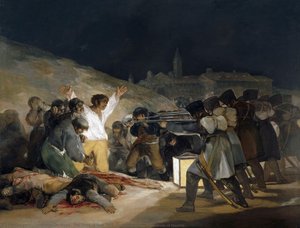
Une scène de tourment : Dévoiler “Le Vol” de Goya
La *“Vol”* de Francisco de Goya, peinte en 1794, est une œuvre viscérale et troublante qui incarne l’esprit turbulent de son temps. Mesurant 69 x 107 cm, ce tableau à huile n'est pas simplement une représentation d'un événement ; c'est une expérience émotionnelle brute, rendue avec une technique magistrale et un poids symbolique profond. Il constitue un exemple puissant de la transition de Goya vers les thèmes plus sombres qui allaient définir sa carrière ultérieure.Sujet & Contexte Historique
Le récit précis derrière *“Le Vol”* reste débattu, ce qui ajoute à son attrait énigmatique. Bien que le titre suggère un acte de vol, la scène transcende un simple événement criminel. Les érudits pensent qu'il représente probablement une confrontation violente – peut-être une attaque de bandits ou même une représentation symbolique du bouleversement social pendant une période d’agitation politique et sociale en Espagne. Goya assistait de première main à l'augmentation des tensions menant à la Guerre d'Indépendance espagnole, et ce tableau peut être vu comme un présage de la violence à venir. La date de création de l'œuvre se situe dans un moment crucial – entre son rôle de peintre de cour profitant du mécénat royal et son accroissement de désillusion envers les structures de pouvoir.Style & Technique : Une Vision Romantique
*“Le Vol”* est fermement ancré dans le style Romantique, accordant la priorité à l’intensité émotionnelle et à l’expression individuelle plutôt qu'à une adhésion stricte aux formes classiques. La technique de Goya se caractérise par :- Impasto: Des couches épaisses de peinture appliquées créent une surface tactile et renforcent l'effet dramatique.
- Pinceaux lâches: Des coups de pinceau expressifs et tourbillonnants transmettent le mouvement, le chaos et un sentiment d’immédiateté.
- Éclairage dramatique (Chiaroscuro): Des contrastes saisissants entre la lumière et l'ombre attirent l'attention sur la figure centrale et amplifient l'impact émotionnel. Une illumination blanche éclatante traverse les ténèbres, soulignant la vulnérabilité au milieu de la violence.
- Perspective aplatie: Cette technique contribue à une atmosphère claustrophobique, attirant le spectateur au cœur du combat.
Symbolisme & Impact Émotionnel
*“Le Vol”* est riche en signification symbolique. Les figures déformées suggèrent une perte d'humanité, tandis que la composition tourbillonnante évoque un sentiment de désorientation et de chaos. La figure centrale, baignée de lumière, pourrait représenter l’innocence ou la vulnérabilité prise au piège d'un conflit plus vaste. Le tableau exprime puissamment les thèmes suivants :- Mort & Désespoir: La scène est imprégnée d'un sentiment palpable de mortalité.
- Souffrance Humaine: Goya n’hésite pas à représenter la brutalité et le désarroi du conflit.
- Lutte Contre le Destin: Le tableau peut être interprété comme une métaphore de la lutte de l'humanité contre des forces accablantes, qu'elles soient politiques, sociales ou existentielles.
Biographie de l'artiste
The Spanish Soul: A Journey Through the Life and Art of Francisco Goya y Lucientes
Francisco José de Goya y Lucientes, a name synonymous with both the grandeur of Old Master tradition and the unsettling premonitions of modern art, remains one of history’s most compelling and enigmatic figures. Born in 1746 in the small village of Fuendetodos, Spain, his journey from aspiring provincial artist to court painter, and ultimately, to a visionary chronicler of human suffering and societal decay, is a testament to both his extraordinary talent and the turbulent times he inhabited. Goya’s early training began at age fourteen under José Luzán y Martinez, laying a foundation in traditional techniques before he moved to Madrid and refined his skills with Anton Raphael Mengs, then the dominant artistic force at the Spanish court. This initial period instilled in him a mastery of form and composition, evident in his early commissions – designs for tapestries that showcased lively scenes of everyday life, reflecting a Rococo sensibility tempered by a distinctly Spanish realism. Marriage to Josefa Bayeu, sister of another painter within the royal circle, further cemented his position within the artistic establishment. These early works, while charming and skillfully executed, offered little hint of the profound emotional depth and unsettling darkness that would come to define his later oeuvre.From Royal Commissions to Visions of Turmoil
Goya’s ascent through the ranks of the Spanish court was steady. He became a painter to the Royal Chamber in 1786, securing a stream of portrait commissions from the aristocracy and royalty. These portraits are remarkable not merely for their technical brilliance – Goya possessed an uncanny ability to capture likeness with unflinching honesty – but also for their psychological insight. He didn’t simply paint what his sitters *looked* like; he revealed something of their character, their vulnerabilities, and even their hidden anxieties. However, beneath the veneer of courtly success, a transformation was brewing within Goya. In 1793, a severe illness left him profoundly deaf, an event that irrevocably altered his perception of the world and, consequently, his art. This affliction plunged him into a period of intense introspection and isolation, severing his connection to the social life he once enjoyed and forcing him inward, towards a darker, more subjective reality. The shift in his artistic style was dramatic. Gone were the bright colors and cheerful scenes; in their place emerged a brooding palette, loose brushwork, and compositions charged with emotional intensity. He began to explore themes of madness, violence, and the irrational, foreshadowing the anxieties that would grip Europe in the coming decades.The Caprichos, Disasters, and Black Paintings: A Descent into Darkness
This period of artistic ferment culminated in some of Goya’s most iconic works. Los Caprichos, a series of eighty etchings published in 1799, are a scathing satire of Spanish society – its follies, superstitions, and moral corruption laid bare with unflinching wit and biting irony. The images are grotesque yet captivating, populated by witches, monsters, and caricatures of the aristocracy, all rendered with a masterful command of etching techniques. But it was The Disasters of War, created between 1810 and 1820, that truly cemented Goya’s reputation as a fearless chronicler of human suffering. These harrowing etchings depict the brutality of the Peninsular War – the atrocities committed by both sides, the starvation, the despair, and the utter devastation wrought upon the Spanish people. They are not heroic depictions of battle; they are unflinching portrayals of its horrors, devoid of any romanticism or glorification. Perhaps most unsettling of all were The Black Paintings, a series of fourteen murals Goya painted directly onto the walls of his house, “Quinta del Sordo” (the Deaf Man’s Villa), between 1819 and 1823. These works – including the terrifying *Saturn Devouring His Son* and the haunting *Asmodea* – are a descent into the darkest recesses of the human psyche, expressing themes of despair, madness, and existential dread with unparalleled intensity.Legacy: A Bridge Between Worlds
In 1824, disillusioned by political unrest in Spain, Goya sought exile in Bordeaux, France, where he continued to work until his death in 1828. His final years were marked by a renewed focus on printmaking, culminating in the *La Tauromaquia* series, which explored the spectacle and brutality of bullfighting. Francisco Goya’s legacy is immense and far-reaching. He stands as a pivotal figure in art history, bridging the gap between the Old Masters and the modern movement. His influence can be seen in the works of countless artists who followed – from Édouard Manet and Pablo Picasso to Francis Bacon – all drawn to his expressive brushwork, psychological depth, and willingness to confront uncomfortable truths. He challenged artistic conventions, embraced innovation, and dared to explore the darker aspects of human experience, leaving behind a body of work that continues to resonate with audiences today. Goya wasn’t merely painting pictures; he was holding up a mirror to society, forcing us to confront our own flaws and vulnerabilities, and reminding us of the enduring power – and fragility – of the human spirit.
Francisco José de Goya y Lucientes
1746 - 1828 , Espagne
L'essentiel de l'artiste
- Artistic Movement Or Style: Romancier
- Artists Who Influenced This Artist:
- Velázquez
- Rembrandt
- Mengs
- Date Of Birth: 30 mars 1746
- Date Of Death: 16 avril 1828
- Full Name: Francisco José de Goya y Lucientes
- Nationality: Espagnol
- Notable Artworks:
- Los Caprichos
- Les Désastres de la guerre
- La Maja nue
- Saturne dévorant son fils
- Place Of Birth: Fuendetodos, Espagne
Articles connexes

Goya : 25 Chefs-d'Œuvre Inoubliables d'un Maître de l'Âme
Plongez au cœur de l'œuvre inégalable de Goya ! Découvrez 25 chefs-d’œuvre emblématiques, des portraits saisissants aux scènes dramatiques. Explorez la vie et l'art du maître espagnol avec OriginalUniqueArt.com – reproductions d'art de qualité musée et inspirations déco.

Demandes professionnelles
APS ofrece reproducciones de bellas artes y encargos personalizados desde 2004. Confían en nosotros corporaciones, hoteles y coleccionistas selectos para obras de arte de calidad museística, servicio discreto y soluciones artísticas completas. ¡Póngase en contacto con nosotros para obtener un presupuesto personalizado!
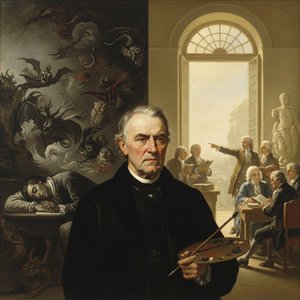
Francisco de Goya : Entre Ténèbres et Lumière – Exploration d'un Génie Romantique
Explorez la vie et l'œuvre fascinante de Francisco Goya, maître du romantisme espagnol. Découvrez ses peintures emblématiques, des Caprices aux Peintures Noires, et son impact durable sur l'art moderne. Analyse approfondie et contexte historique.

À propos de nous
Découvrez notre univers artistique ! Nous mettons l’art de renommée mondiale à portée de main grâce à une sélection pointue, des créations sur mesure et des conseils personnalisés. Apprécié des particuliers et des professionnels depuis plus de 20 ans.

Romantic Realism's Finest: 10 Masterpieces for Your Home | OriginalUniqueArt
Explore 10 defining masterpieces of Romantic Realism! Discover Courbet, Millet & Daumier's powerful paintings—capturing emotion and social realities. Find museum-quality reproductions for your home at OriginalUniqueArt.com.