Aperçu en situation
 Partager
 Partager
 Détails
 Guide imprimable

 Télécharger
 Articles similaires
 Radiographie
 Voir le diaporama
 Statistiques
L'Aquelarre

 Afficher la suite
Giclées et impressions d'art
Impressions giclées ou sur toile de qualité musée, avec une production rapide et des finitions au choix. ( Acheter la peinture faite à la main Passer au format image numérique)




P118B $10

P118H $10

P118W $10

P438Z $10

P508JH $12

P508YH $12

P805H $10

P805Z $10

P919BZ $10

P919G $10

P919XJ $10

P959ZH $10

P968JZ $12

W106C $8

W218G $10

W218JH $8

W218Y $10

W307PJ $10

W316G $10

W316PJ $8

W316Y $10

W398PJ $8

W4111J $10

W500HY $15

W500JH $15

W692G $12

W849H $8

W940BG $15

W953PJ $8




Choisissez parmi nos formats prédéfinis qui respectent les proportions originales de l’œuvre.

Vous pouvez saisir vos propres dimensions pour vous adapter à un cadre ou à un espace spécifique. Si la taille sélectionnée ne correspond pas aux proportions de l'image originale, nous recadrerons l'œuvre ou étendrons l'image avec une bordure en miroir ou une couleur unie. Une maquette numérique vous sera envoyée pour approbation avant le début de la production.
Veuillez noter que l'aperçu à l'écran ne reflète pas le recadrage ou l'extension réelle. Seule la maquette montrera avec précision la composition finale.
Bien que des tailles personnalisées soient disponibles, nous vous recommandons de choisir une dimension dans la liste prédéfinie afin de préserver les proportions originales.
Livraison dans le monde entier () en 2 semaines au lieu des 4/5 semaines habituelles. (26 septembre)

Livraison express gratuite dans le monde entier

Toile de lin de haute qualité

Assurance transport complète

Garantie de remboursement des droits de douane

Garantie de fidélité des couleurs

Garantie de retour de 100 jours (uniquement en cas de défaut)

Garantie de remboursement à 100%

Tarifs dégressifs sur quantité
 L'option verre n'est disponible que pour les dimensions inférieures à 110 cm.

L'Aquelarre
Giclées et impressions d'art
Format de la reproduction
-


Prix total final
$ 80
Witches' Sabbath 1 : Une Vision Dramatique du Romantisme Espagnol
Francisco de Goya’s 'Witches' Sabbath 1' stands as a chilling testament to the Romantic spirit and Goya’s profound engagement with social anxieties of his time. Painted in 1798 using oil on canvas, this monumental artwork transcends mere depiction; it plunges viewers into a realm of superstition, terror, and moral indictment—a deliberate provocation against the oppressive grip of the Inquisition.Le Contexte du Romantisme et la Critique de l’Inquisition
Le mouvement romantique espagnol, marqué par une fascination pour le surnaturel et une sensibilité exacerbée aux émotions humaines, trouva chez Goya un moyen puissant d'exprimer sa révolte contre les pratiques religieuses injustes et les procès arbitraires qu'étaient les sabbats de sorcières. Cette lutte pour la liberté intellectuelle et spirituelle se reflète directement dans l’œuvre, où le peintre utilise les éléments gothiques et les couleurs sombres pour créer une atmosphère oppressante et inquiétante. Il était essentiel à Goya de dénoncer les abus du pouvoir religieux et politique, tout en faisant appel aux instincts primitifs et aux sentiments les plus profonds de son époque.Composition et Symbolisme : Une Danse Macabre au Couvre
La composition du tableau est remarquable pour sa dynamique et son souci d'équilibre. Au centre se trouve une pyramide inversée représentant le démon, une créature grotesque et humanoïde enveloppée dans une couronne de feuilles d’érable, symbole de puissance et de résistance. Il domine une foule de femmes décharnées et affamées, dont certaines sont liées à des poteaux et suspendues au ciel – une référence directe aux pratiques de torture utilisées lors des procès inquisitoriaux. Cette scène est ponctuée par la présence de nouveaux-nés morts ou mourrants, représentant les victimes innocentes du fanatisme religieux. Les détails minutieux et les couleurs vives contribuent à renforcer l'effet dramatique et à provoquer une réaction émotionnelle chez le spectateur.Technique et Détails Obsessionnels : Une Réplique Exceptionnelle
Goya maîtrisait parfaitement la peinture à l’huile, utilisant des coups de pinceau larges et énergiques pour donner au tableau une texture riche et palpable. Il accordait une attention particulière aux détails, notamment aux expressions faciales des personnages et aux effets d'éclairage atmosphérique. Cette maîtrise technique est essentielle pour saisir pleinement la puissance émotionnelle du tableau et pour reproduire fidèlement les nuances de couleur originales. Une reproduction haute qualité permet de découvrir les subtilités de l’œuvre et de ressentir son impact esthétique profond.Un Héritage Artistique Durable : Au Musée Girodet Montargis
La peinture est aujourd'hui conservée au Musée Girodet Montargis, où elle fascine les visiteurs avec sa beauté sombre et son caractère troublant. Cette œuvre emblématique du romantisme espagnol continue d’inspirer artistes et chercheurs, témoignant de la richesse et de la diversité du patrimoine artistique français. Pour apprécier pleinement la puissance émotionnelle et intellectuelle de 'Witches' Sabbath 1', il est conseillé de consulter des études historiques approfondies et des reproductions numériques haute résolution.- Painting by 'Francisco De Goya' | Francisco De Goya: Witches' sabbath 1 (Romanticism, Oil)
- Painting by 'Francisco De Goya' | Francisco De Goya: The Witches' Sabbath (44 x 31 cm, Fundacion Lazaro Galdiano (Spain), Oil On Canvas)
- Painting by 'Francisco De Goya' | Francisco De Goya: Flight of the witches (Romanticism, Oil)
- Painting by 'Francisco De Goya' | Francisco De Goya: The Clothed Maja (La Maja Vestida) (Romanticism, Oil)
Biographie de l'artiste
The Spanish Soul: A Journey Through the Life and Art of Francisco Goya y Lucientes
Francisco José de Goya y Lucientes, a name synonymous with both the grandeur of Old Master tradition and the unsettling premonitions of modern art, remains one of history’s most compelling and enigmatic figures. Born in 1746 in the small village of Fuendetodos, Spain, his journey from aspiring provincial artist to court painter, and ultimately, to a visionary chronicler of human suffering and societal decay, is a testament to both his extraordinary talent and the turbulent times he inhabited. Goya’s early training began at age fourteen under José Luzán y Martinez, laying a foundation in traditional techniques before he moved to Madrid and refined his skills with Anton Raphael Mengs, then the dominant artistic force at the Spanish court. This initial period instilled in him a mastery of form and composition, evident in his early commissions – designs for tapestries that showcased lively scenes of everyday life, reflecting a Rococo sensibility tempered by a distinctly Spanish realism. Marriage to Josefa Bayeu, sister of another painter within the royal circle, further cemented his position within the artistic establishment. These early works, while charming and skillfully executed, offered little hint of the profound emotional depth and unsettling darkness that would come to define his later oeuvre.From Royal Commissions to Visions of Turmoil
Goya’s ascent through the ranks of the Spanish court was steady. He became a painter to the Royal Chamber in 1786, securing a stream of portrait commissions from the aristocracy and royalty. These portraits are remarkable not merely for their technical brilliance – Goya possessed an uncanny ability to capture likeness with unflinching honesty – but also for their psychological insight. He didn’t simply paint what his sitters *looked* like; he revealed something of their character, their vulnerabilities, and even their hidden anxieties. However, beneath the veneer of courtly success, a transformation was brewing within Goya. In 1793, a severe illness left him profoundly deaf, an event that irrevocably altered his perception of the world and, consequently, his art. This affliction plunged him into a period of intense introspection and isolation, severing his connection to the social life he once enjoyed and forcing him inward, towards a darker, more subjective reality. The shift in his artistic style was dramatic. Gone were the bright colors and cheerful scenes; in their place emerged a brooding palette, loose brushwork, and compositions charged with emotional intensity. He began to explore themes of madness, violence, and the irrational, foreshadowing the anxieties that would grip Europe in the coming decades.The Caprichos, Disasters, and Black Paintings: A Descent into Darkness
This period of artistic ferment culminated in some of Goya’s most iconic works. Los Caprichos, a series of eighty etchings published in 1799, are a scathing satire of Spanish society – its follies, superstitions, and moral corruption laid bare with unflinching wit and biting irony. The images are grotesque yet captivating, populated by witches, monsters, and caricatures of the aristocracy, all rendered with a masterful command of etching techniques. But it was The Disasters of War, created between 1810 and 1820, that truly cemented Goya’s reputation as a fearless chronicler of human suffering. These harrowing etchings depict the brutality of the Peninsular War – the atrocities committed by both sides, the starvation, the despair, and the utter devastation wrought upon the Spanish people. They are not heroic depictions of battle; they are unflinching portrayals of its horrors, devoid of any romanticism or glorification. Perhaps most unsettling of all were The Black Paintings, a series of fourteen murals Goya painted directly onto the walls of his house, “Quinta del Sordo” (the Deaf Man’s Villa), between 1819 and 1823. These works – including the terrifying *Saturn Devouring His Son* and the haunting *Asmodea* – are a descent into the darkest recesses of the human psyche, expressing themes of despair, madness, and existential dread with unparalleled intensity.Legacy: A Bridge Between Worlds
In 1824, disillusioned by political unrest in Spain, Goya sought exile in Bordeaux, France, where he continued to work until his death in 1828. His final years were marked by a renewed focus on printmaking, culminating in the *La Tauromaquia* series, which explored the spectacle and brutality of bullfighting. Francisco Goya’s legacy is immense and far-reaching. He stands as a pivotal figure in art history, bridging the gap between the Old Masters and the modern movement. His influence can be seen in the works of countless artists who followed – from Édouard Manet and Pablo Picasso to Francis Bacon – all drawn to his expressive brushwork, psychological depth, and willingness to confront uncomfortable truths. He challenged artistic conventions, embraced innovation, and dared to explore the darker aspects of human experience, leaving behind a body of work that continues to resonate with audiences today. Goya wasn’t merely painting pictures; he was holding up a mirror to society, forcing us to confront our own flaws and vulnerabilities, and reminding us of the enduring power – and fragility – of the human spirit.
Francisco José de Goya y Lucientes
1746 - 1828 , Espagne
En bref
- Artistic Movement Or Style: Romancier
- Artists Who Influenced This Artist:
- Velázquez
- Rembrandt
- Mengs
- Date Of Birth: 30 mars 1746
- Date Of Death: 16 avril 1828
- Full Name: Francisco José de Goya y Lucientes
- Nationality: Espagnol
- Notable Artworks:
- Los Caprichos
- Les Désastres de la guerre
- La Maja nue
- Saturne dévorant son fils
- Place Of Birth: Fuendetodos, Espagne
Articles similaires
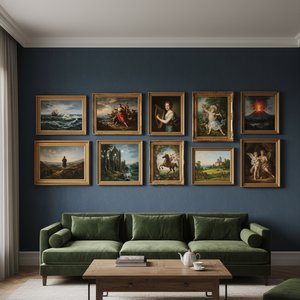
Romantisme : Les 10 Chefs-d'œuvre Incontournables pour une Déco Inspirée
Plongez au cœur du Romantisme avec les 10 œuvres majeures de Delacroix, Goya et Turner. Découvrez l'histoire, la technique & l'émotion derrière ces chefs-d'œuvre. Reproductions d'art exceptionnelles sur
Francisco de Goya : Entre Ténèbres et Lumière – Exploration d'un Génie Romantique
Explorez la vie et l'œuvre fascinante de Francisco Goya, maître du romantisme espagnol. Découvrez ses peintures emblématiques, des Caprices aux Peintures Noires, et son impact durable sur l'art moderne. Analyse approfondie et contexte historique.
The Evocative Brushstroke: Exploring Emotion, Individuality & the Sublime in Romanticism's Artistic Landscape
Explore the passionate world of Romanticism! Discover masterpieces by Friedrich & Goya, delve into the sublime, and understand the movement's lasting impact on art history. Expert analysis & insights at OriginalUniqueArt.

Mastering the Shadows: A Journey Through the Chiaroscuro and Soul of Iconic Spanish Painting
Embark on a sophisticated exploration of Spanish art history, from the chiaroscuro mastery of Velázquez to the profound shadows of Goya. Discover how the dramatic light and emotional depth of Spain's greatest masters continue to inspire collectors and connoisseurs today.

Goya : 25 Chefs-d'Œuvre Inoubliables d'un Maître de l'Âme
Plongez au cœur de l'œuvre inégalable de Goya ! Découvrez 25 chefs-d’œuvre emblématiques, des portraits saisissants aux scènes dramatiques. Explorez la vie et l'art du maître espagnol avec OriginalUniqueArt.com – reproductions d'art de qualité musée et inspirations déco.