Aperçu en situation
 Partager
 Partager
 Détails
 Guide imprimable

 Télécharger
 Articles similaires
 Radiographie
 Voir le diaporama
 Statistiques
L'Annonce
 Acrylique sur toile
- Art mural
- Romanticism
 1785
1785 280.0 x 177.0 cm
 Afficher la suite
Giclées et impressions d'art
Impressions giclées ou sur toile de qualité musée, avec une production rapide et des finitions au choix. ( Acheter la peinture faite à la main Passer au format image numérique)




P118B $10

P118H $10

P118W $10

P438Z $10

P508JH $12

P508YH $12

P805H $10

P805Z $10

P919BZ $10

P919G $10

P919XJ $10

P959ZH $10

P968JZ $12

W106C $8

W218G $10

W218JH $8

W218Y $10

W307PJ $10

W316G $10

W316PJ $8

W316Y $10

W398PJ $8

W4111J $10

W500HY $15

W500JH $15

W692G $12

W849H $8

W940BG $15

W953PJ $8




Choisissez parmi nos formats prédéfinis qui respectent les proportions originales de l’œuvre.

Vous pouvez saisir vos propres dimensions pour vous adapter à un cadre ou à un espace spécifique. Si la taille sélectionnée ne correspond pas aux proportions de l'image originale, nous recadrerons l'œuvre ou étendrons l'image avec une bordure en miroir ou une couleur unie. Une maquette numérique vous sera envoyée pour approbation avant le début de la production.
Veuillez noter que l'aperçu à l'écran ne reflète pas le recadrage ou l'extension réelle. Seule la maquette montrera avec précision la composition finale.
Bien que des tailles personnalisées soient disponibles, nous vous recommandons de choisir une dimension dans la liste prédéfinie afin de préserver les proportions originales.
Livraison dans le monde entier () en 2 semaines au lieu des 4/5 semaines habituelles. (27 septembre)

Livraison express gratuite dans le monde entier

Toile de lin de haute qualité

Assurance transport complète

Garantie de remboursement des droits de douane

Garantie de fidélité des couleurs

Garantie de retour de 100 jours (uniquement en cas de défaut)

Garantie de remboursement à 100%

Tarifs dégressifs sur quantité
 L'option verre n'est disponible que pour les dimensions inférieures à 110 cm.

L'Annonce
Giclées et impressions d'art
Format de la reproduction
-


Prix total final
$ 80
La Genèse d’une Évocation Romantique
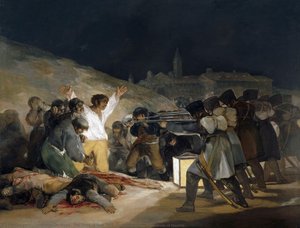
Francisco de Goya, figure emblématique du XVIIIe et XIXe siècle espagnol, nous offre avec "L'Annonciation" (1785) bien plus qu’une simple représentation religieuse. C’est une plongée audacieuse dans l’émotion, un dialogue subtil entre la révélation divine et la vulnérabilité humaine. Ce tableau, conservé au Musée du Prado à Madrid, témoigne d'un artiste en pleine transformation, oscillant entre les conventions de la peinture de cour et une sensibilité nouvelle, préfigurant le romantisme. L’œuvre ne se limite pas à narrer un épisode biblique central – l’annonce à Marie de sa future maternité divine – mais explore la complexité des sentiments et la puissance d'un moment de grâce. Goya, loin de la rigueur classique, privilégie une atmosphère palpable, où la lumière et l’ombre se rencontrent pour créer un effet dramatique et presque mystique.
La composition est immédiatement dynamique. L’ange Gabriel, figure lumineuse et sereine, s'avance vers Marie, dont le visage exprime à la fois surprise et une profonde humilité. Le décor, bien que discret, n’est pas neutre ; il suggère un espace intime, presque confiné, accentuant l’intimité du moment. L’arrière-plan, peu défini, ne cherche pas à distraire le regard du spectateur de la scène centrale, mais contribue à renforcer l'impression d'un lieu sacré et de solitude spirituelle.
L'Artiste et son Temps : Goya au Cœur du Changement
Francisco de Goya est un artiste paradoxal. Né en 1746, il a débuté sa carrière comme peintre de cour à Madrid, produisant des portraits raffinés pour la royauté espagnole. Cependant, son œuvre évolue rapidement au cours de sa vie, marquée par les bouleversements politiques et sociaux de son époque – la Guerre d’Indépendance, la Révolution française, le règne de Ferdinand VII. "L'Annonciation", datant de 1785, représente une période charnière dans son parcours artistique. On y perçoit déjà les prémices du style unique qui allait le définir : une attention particulière à l’expression des émotions, un usage audacieux de la lumière et de l’ombre, et une volonté d'explorer des thèmes plus profonds et moins conventionnels.
Il est important de noter que Goya a été l'un des premiers artistes à expérimenter avec les techniques de gravure sur bois. Cette maîtrise de l'imagerie en noir et blanc a influencé son approche de la peinture, notamment dans ses séries d’estampes comme "Les Désastres de la Guerre". Cette double compétence artistique témoigne de sa curiosité intellectuelle et de sa capacité à s'adapter aux nouvelles tendances du monde de l'art.
Symbolisme et Émotion : Une Invitation au Contemplatif
Au-delà de son récit biblique, "L'Annonciation" est riche en symboles. La posture humble de Marie, agenouillée devant l’ange, exprime sa soumission à la volonté divine et sa confiance dans le plan de Dieu. L’ange Gabriel, lui, incarne la lumière et la révélation. La palette chromatique, dominée par des tons doux et chaleureux – beiges, ocres, bleus pâles – contribue à créer une atmosphère de sérénité et de contemplation. Goya utilise le clair-obscur pour accentuer les contrastes entre la lumière divine qui émane de l’ange et l’ombre qui enveloppe Marie, soulignant ainsi la nature transcendante de l'événement.
L'œuvre invite à une réflexion sur la foi, la maternité, et le mystère de la création. Elle est un témoignage poignant de la capacité de l'art à exprimer les émotions les plus profondes et à nous connecter à des vérités universelles. La composition, la lumière, les couleurs, tout concourt à créer une expérience visuelle intense et mémorable.
Reproductions d’Art : Revivre la Magie de Goya
OriginalUniqueArt.com est fière de vous proposer des reproductions de haute qualité de "L'Annonciation" de Francisco de Goya. Nos artisans peintres reproduisent méticuleusement chaque détail, en utilisant les mêmes techniques et matériaux que l’artiste original. Nous nous engageons à préserver la richesse des couleurs, la texture du pinceau et l’émotion brute de cette œuvre emblématique. Que vous souhaitiez enrichir votre collection d'art ou créer une ambiance particulière dans votre intérieur, nos reproductions vous offriront une expérience authentique et immersive. Découvrez notre sélection de tailles et formats pour trouver la reproduction parfaite qui correspond à vos besoins et à votre style.
Biographie de l'artiste
The Spanish Soul: A Journey Through the Life and Art of Francisco Goya y Lucientes
Francisco José de Goya y Lucientes, a name synonymous with both the grandeur of Old Master tradition and the unsettling premonitions of modern art, remains one of history’s most compelling and enigmatic figures. Born in 1746 in the small village of Fuendetodos, Spain, his journey from aspiring provincial artist to court painter, and ultimately, to a visionary chronicler of human suffering and societal decay, is a testament to both his extraordinary talent and the turbulent times he inhabited. Goya’s early training began at age fourteen under José Luzán y Martinez, laying a foundation in traditional techniques before he moved to Madrid and refined his skills with Anton Raphael Mengs, then the dominant artistic force at the Spanish court. This initial period instilled in him a mastery of form and composition, evident in his early commissions – designs for tapestries that showcased lively scenes of everyday life, reflecting a Rococo sensibility tempered by a distinctly Spanish realism. Marriage to Josefa Bayeu, sister of another painter within the royal circle, further cemented his position within the artistic establishment. These early works, while charming and skillfully executed, offered little hint of the profound emotional depth and unsettling darkness that would come to define his later oeuvre.From Royal Commissions to Visions of Turmoil
Goya’s ascent through the ranks of the Spanish court was steady. He became a painter to the Royal Chamber in 1786, securing a stream of portrait commissions from the aristocracy and royalty. These portraits are remarkable not merely for their technical brilliance – Goya possessed an uncanny ability to capture likeness with unflinching honesty – but also for their psychological insight. He didn’t simply paint what his sitters *looked* like; he revealed something of their character, their vulnerabilities, and even their hidden anxieties. However, beneath the veneer of courtly success, a transformation was brewing within Goya. In 1793, a severe illness left him profoundly deaf, an event that irrevocably altered his perception of the world and, consequently, his art. This affliction plunged him into a period of intense introspection and isolation, severing his connection to the social life he once enjoyed and forcing him inward, towards a darker, more subjective reality. The shift in his artistic style was dramatic. Gone were the bright colors and cheerful scenes; in their place emerged a brooding palette, loose brushwork, and compositions charged with emotional intensity. He began to explore themes of madness, violence, and the irrational, foreshadowing the anxieties that would grip Europe in the coming decades.The Caprichos, Disasters, and Black Paintings: A Descent into Darkness
This period of artistic ferment culminated in some of Goya’s most iconic works. Los Caprichos, a series of eighty etchings published in 1799, are a scathing satire of Spanish society – its follies, superstitions, and moral corruption laid bare with unflinching wit and biting irony. The images are grotesque yet captivating, populated by witches, monsters, and caricatures of the aristocracy, all rendered with a masterful command of etching techniques. But it was The Disasters of War, created between 1810 and 1820, that truly cemented Goya’s reputation as a fearless chronicler of human suffering. These harrowing etchings depict the brutality of the Peninsular War – the atrocities committed by both sides, the starvation, the despair, and the utter devastation wrought upon the Spanish people. They are not heroic depictions of battle; they are unflinching portrayals of its horrors, devoid of any romanticism or glorification. Perhaps most unsettling of all were The Black Paintings, a series of fourteen murals Goya painted directly onto the walls of his house, “Quinta del Sordo” (the Deaf Man’s Villa), between 1819 and 1823. These works – including the terrifying *Saturn Devouring His Son* and the haunting *Asmodea* – are a descent into the darkest recesses of the human psyche, expressing themes of despair, madness, and existential dread with unparalleled intensity.Legacy: A Bridge Between Worlds
In 1824, disillusioned by political unrest in Spain, Goya sought exile in Bordeaux, France, where he continued to work until his death in 1828. His final years were marked by a renewed focus on printmaking, culminating in the *La Tauromaquia* series, which explored the spectacle and brutality of bullfighting. Francisco Goya’s legacy is immense and far-reaching. He stands as a pivotal figure in art history, bridging the gap between the Old Masters and the modern movement. His influence can be seen in the works of countless artists who followed – from Édouard Manet and Pablo Picasso to Francis Bacon – all drawn to his expressive brushwork, psychological depth, and willingness to confront uncomfortable truths. He challenged artistic conventions, embraced innovation, and dared to explore the darker aspects of human experience, leaving behind a body of work that continues to resonate with audiences today. Goya wasn’t merely painting pictures; he was holding up a mirror to society, forcing us to confront our own flaws and vulnerabilities, and reminding us of the enduring power – and fragility – of the human spirit.
Francisco José de Goya y Lucientes
1746 - 1828 , Espagne
En bref
- Artistic Movement Or Style: Romancier
- Artists Who Influenced This Artist:
- Velázquez
- Rembrandt
- Mengs
- Date Of Birth: 30 mars 1746
- Date Of Death: 16 avril 1828
- Full Name: Francisco José de Goya y Lucientes
- Nationality: Espagnol
- Notable Artworks:
- Los Caprichos
- Les Désastres de la guerre
- La Maja nue
- Saturne dévorant son fils
- Place Of Birth: Fuendetodos, Espagne
Articles similaires
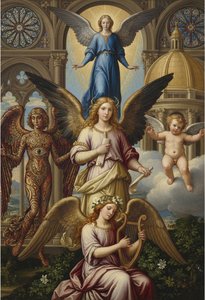
Divine Beauty: A Curated Guide to the Celestial Majesty of Angelic Figures in Art History
Explore the profound beauty of angelic figures in art history. From Renaissance masterpieces to celestial symbolism, our expert guide offers a sophisticated journey through the divine imagery of the Old Masters for discerning collectors and art enthusiasts.

The Enduring Legacy of Oil on Canvas: Technique, History & Aesthetic Impact
Explore the rich history & techniques of oil painting – from Renaissance masters to Impressionism. Discover pigments, layering methods, and why this timeless medium endures. Expert insights for artists & art enthusiasts.

Messagers Célestes : Exploration Historique et Artistique des Anges dans la Peinture
Explorez l'histoire fascinante des anges dans la peinture, de Byzance à la Renaissance. Découvrez le symbolisme religieux et les chefs-d'œuvre de Fra Angelico, Mantegna et autres maîtres. Analyse approfondie et reproductions d'art exceptionnelles.

Celestial Messengers: A Comprehensive Exploration of Angelic Representation in Art History
Explore the captivating history of angels in art! Discover symbolism, iconic Renaissance masterpieces & renowned artists. Expert insights for art lovers & collectors at OriginalUniqueArt.

Goya : 25 Chefs-d'Œuvre Inoubliables d'un Maître de l'Âme
Plongez au cœur de l'œuvre inégalable de Goya ! Découvrez 25 chefs-d’œuvre emblématiques, des portraits saisissants aux scènes dramatiques. Explorez la vie et l'art du maître espagnol avec OriginalUniqueArt.com – reproductions d'art de qualité musée et inspirations déco.