

 Aperçu en situation
 Partager
 Partager
 Détails
 Guide imprimable

 Télécharger
 Articles similaires
 Radiographie
 Voir le diaporama
 Statistiques
Breasts
 Oil On Canvas
- WallArt
- Surrealism
 1927
1927- Modern
 99.0 x 75.0 cm
 Afficher la suite
Reproduction à l'huile faite à la main
Huile sur toile peinte à la main, avec cadre et dimensions personnalisés, réalisée sur commande par nos artistes. ( Passer au format impression Passer au format image numérique)




P118B €10

P118H €10

P118W €10

P438Z €10

P508JH €12

P508YH €12

P805H €10

P805Z €10

P919BZ €10

P919G €10

P919XJ €10

P959ZH €10

P968JZ €12

W106C €8

W218G €10

W218JH €8

W218Y €10

W307PJ €10

W316G €10

W316PJ €8

W316Y €10

W398PJ €8

W4111J €10

W500HY €15

W500JH €15

W692G €12

W849H €8

W940BG €15

W953PJ €8




Choisissez parmi nos formats prédéfinis qui respectent les proportions originales de l’œuvre.

Saisissez la largeur et la hauteur souhaitées, pour s'adapter à votre cadre ou à votre mur. Cette œuvre est peinte à la main ; ainsi, pour un format de forme différente, l'artiste peut peindre un peu plus autour du tableau ou réduire légèrement les bords — c'est vous qui choisissez. Nous vous envoyons une maquette numérique pour approbation avant que la peinture ne commence. L'image présentée sur cette page ne reflète pas le résultat réel — seule la maquette le fait.
Après la commande, l’équipe OriginalUniqueArt.com contactera le client par e-mail pour recueillir ses instructions et lui fournira une maquette d’aperçu
Livraison dans le monde entier () en 3 à 4 semaines au lieu des 5 semaines habituelles. (25 octobre). Aucun compromis sur la qualité.

Livraison express gratuite dans le monde entier

Toile de lin de haute qualité

Assurance transport complète

Garantie de remboursement des droits de douane

Garantie de fidélité des couleurs

Garantie de retour de 100 jours (uniquement en cas de défaut)

Garantie de remboursement à 100%

Tarifs dégressifs sur quantité
 L'option verre n'est disponible que pour les dimensions inférieures à 110 cm.

Breasts
Technique de reproduction
Format de la reproduction
-


Prix total final
€ 263
A Surrealist Dreamscape: Unveiling Picabia's Breasts
In the pantheon of early 20th-century avant-garde, few works possess the unsettling magnetism of Francis Picabia’s 1927 masterpiece, Breasts. This oil on canvas is not merely a painting but a window into a fractured reality, where the boundaries between the human form and the animal kingdom dissolve into a dreamlike haze. At first glance, the viewer is confronted by a striking figure: a woman with skin of an ethereal blue hue, her gaze framed by glasses that lend her an intellectual, yet otherworldly, presence. As she sits within a composition that defies traditional logic, she holds her breasts in a gesture that is simultaneously intimate and provocative, inviting a deep meditation on femininity, vulnerability, and the subconscious mind.
The technique employed by Picabia serves to heighten this sense of psychological depth. Through his masterful use of color and form, he blends a certain startling realism with the fluid, nonsensical logic of Surrealism. The vibrant, cool tones of the woman's skin contrast sharply with the surrounding elements, creating a visual tension that keeps the eye wandering through the canvas. This is not a static portrait; it is a living, breathing hallucination. For the collector or interior designer, this piece offers a profound focal point—a conversation starter that commands attention through its sheer audacity and the way it challenges the viewer to find meaning within the unexpected.
Symbolism and the Dadaist Legacy
To understand Breasts, one must navigate the turbulent waters of the Dada and Surrealist movements in which Picabia was a central provocateur. The painting is rich with symbolic layers that speak to the artist's restless spirit. The inclusion of animals—dogs prowling the periphery and a bird perched in the upper corner—serves to disrupt the human-centric narrative, suggesting a primal, interconnected existence where instinct and intellect collide. These creatures act as anchors to a wilder, more untamed reality, mirroring the way Picabia himself moved between different artistic identities, from Cubism to the Machine Age aesthetic.
The blue skin of the protagonist acts as a powerful symbol of alienation and transformation, stripping away the mundane warmth of humanity to reveal something more cosmic or perhaps more ghostly. This otherworldly appearance, paired with the surrealist juxtaposition of objects, creates an emotional impact that oscillates between fascination and unease. It is a work that captures the zeitgeist of a post-war era searching for new truths amidst the ruins of old certainties. For those seeking to adorn a space with art that possesses intellectual weight and historical significance, this reproduction offers a rare opportunity to possess a fragment of the revolutionary spirit of 1927.
An Essential Addition to the Modern Collection
For the discerning art lover, acquiring a high-quality reproduction of such a significant work is an act of preserving history. The intricate details of Picabia's brushwork—the way light catches the edges of the glasses and the soft texture of the blue skin—are meticulously captured in this hand-painted oil on canvas. It serves as more than just decoration; it is an infusion of avant-garde energy into a contemporary setting. Whether placed in a minimalist gallery-style living room or a sophisticated study, Breasts brings with it a sense of mystery and a profound connection to the lineage of modern art history.
Integrating such a piece into an interior design scheme allows for a bold expression of taste. It pairs exquisitely with modern furniture that emphasizes clean lines, providing a stark, beautiful contrast to the painting's complex, surrealist imagery. As a testament to Francis Picabia’s enduring influence, this artwork remains a vital, breathing part of the art world, offering endless layers of interpretation for generations of viewers to discover.
Questions et réponses
Quels sont les pseudonymes ou autres noms sous lesquels Francis Picabia est connu ?
D'autres noms répertoriés pour Francis Picabia, créateur de « Breasts », incluent François-Marie Martinez de Picabia.
Les couleurs de «Breasts» de Francis Picabia sont-elles saturées ou atténuées ?
La palette de « Breasts » présente une saturation Subtle Color.
Quel usage et quel espace sont recommandés pour «Breasts» de Francis Picabia ?
« Breasts » est suggéré pour Conversation, et l'espace recommandé est un(e) Coworking.
Biographie de l'artiste
Premières années et débuts artistiques
Francis Picabia, peintre d'avant-garde français, poète et typographe, est né le 22 janvier 1879 à Paris. Son père, d’origine cubano-espagnole, était attaché à la légation cubaine à Paris. Cette diversité culturelle influencera plus tard son style artistique. La vie précoce de Picabia a été marquée par une tragédie lorsque sa mère est décédée des suites de la tuberculose. Il a été élevé par son père, qui encourageait ses aspirations artistiques. À 20 ans, Picabia vivait déjà de son art et, après avoir hérité d'une somme importante de sa mère, il est devenu l'un des artistes les plus riches de son époque.Évolution artistique
- Période impressionniste (1903-1908) : Influencé par l’impressionnisme, Picabia s’est concentré sur des sujets tels que les paysages parisiens et les rives de fleuve. Les critiques ont remis en question son originalité, ce qui l'a conduit à rechercher une nouvelle approche.
- Période cubiste (1909) : Picabia a rejoint le groupe de Puteaux, se liant d’amitié avec Marcel Duchamp et Guillaume Apollinaire. Cela a marqué un tournant important vers le cubisme.
- Proto-dada (1913) : Picabia a assisté à l'Armory Show à New York, exposant son travail aux côtés d'autres artistes modernistes. Cette période a vu l’émergence de ses compositions planaires abstraites uniques.
Œuvres notables et associations
Picabia a été associé à plusieurs mouvements artistiques majeurs du XXe siècle, notamment l'impressionnisme, le cubisme, le dadaïsme et brièvement au surréalisme. Ses œuvres témoignent d’une exploration constante de nouvelles formes d’expression et d’un rejet des conventions établies. Il a collaboré avec des figures clés de l'avant-garde artistique et littéraire de son époque, contribuant à façonner le paysage culturel du XXe siècle.Influence et héritage
Le style innovant de Picabia, caractérisé par l’utilisation de couleurs vibrantes et de formes abstraites, a laissé une marque indélébile sur l'art moderne. Sa période proto-dada, en particulier, témoigne de son esprit pionnier, qui continue d’inspirer les artistes aujourd’hui. Son œuvre complexe et polymorphe a ouvert la voie à de nouvelles explorations artistiques et a contribué à élargir les frontières de l'expression créative. Picabia est reconnu comme une figure majeure de l'art du XXe siècle, dont l'influence se fait encore sentir dans le monde contemporain.
Francis Picabia
1879 - 1953 , France
En bref
- Artistes Influents:
- Pissarro
- Sisley
- Toulouse-Lautrec
- Date De Décès: 30 novembre 1953
- Date De Naissance: 22 janvier 1879
- Lieu De Naissance: Paris, France
- Mouvement Artistique:
- Cubisme
- Dadaïsme
- Surréalisme
- Nationalité: Française
- Nom Complet: Francis Picabia
- Œuvres Notables:
- Amorous Parade
- Caoutchouc
Articles connexes
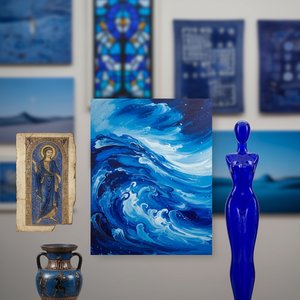
The Allure of Azure: Exploring the Symbolic & Aesthetic Depths of Blue in Art History
Explore the rich history of blue in art! Discover its symbolism, from ancient pigments to modern masterpieces by Kandinsky & Seurat. Uncover the psychological impact and cultural meanings behind this captivating hue.
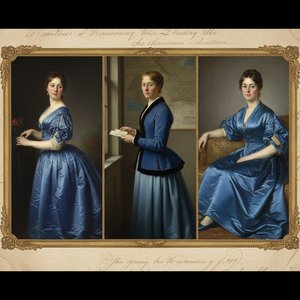
Azure Visions: Exploring Representations of the Blue Dress in Western Art History
Explore the rich history of the blue dress in Western art! Discover its symbolism, from Renaissance masterpieces to modern interpretations by artists like Martin & Schiele. Uncover cultural meanings and artistic techniques.

Francis Picabia: Dada's Provocateur – Reassessing Mechanical Forms & Mystical Undercurrents
Explore the revolutionary art of Francis Picabia – Dada's enigmatic provocateur. Discover his mechanical forms, hidden symbolism & lasting influence on modern art. Expert analysis for collectors.

Les 10 Chefs-d'œuvre Dominés par le Bleu Ardoise : Art, Histoire & Décor
Plongez dans l'univers fascinant des 10 plus beaux tableaux dominés par le bleu ardoise. Découvrez l'histoire, les artistes et les techniques de ces chefs-d'œuvre impressionnistes et contemporains. Inspirez votre décoration intérieure avec !
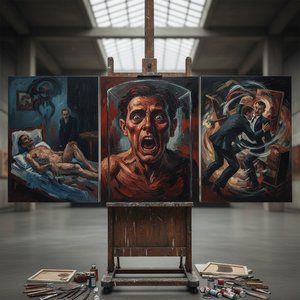
Francis Bacon : Les 25 Œuvres Maîtresses d'un Art Viscéral | OriginalUniqueArt
Plongez dans l'univers viscéral de Francis Bacon à travers ses 25 œuvres les plus emblématiques. Découvrez l'histoire, la technique et l'émotion derrière chaque chef-d'œuvre expressionniste. Retrouvez des reproductions de qualité musée pour sublimer votre intérieur sur OriginalUniqueArt.com


