
 Aperçu en situation
 Envoyer
 Partager
 Détails de l'œuvre

 Télécharger
 Articles similaires
 Radiographie
 Diaporama
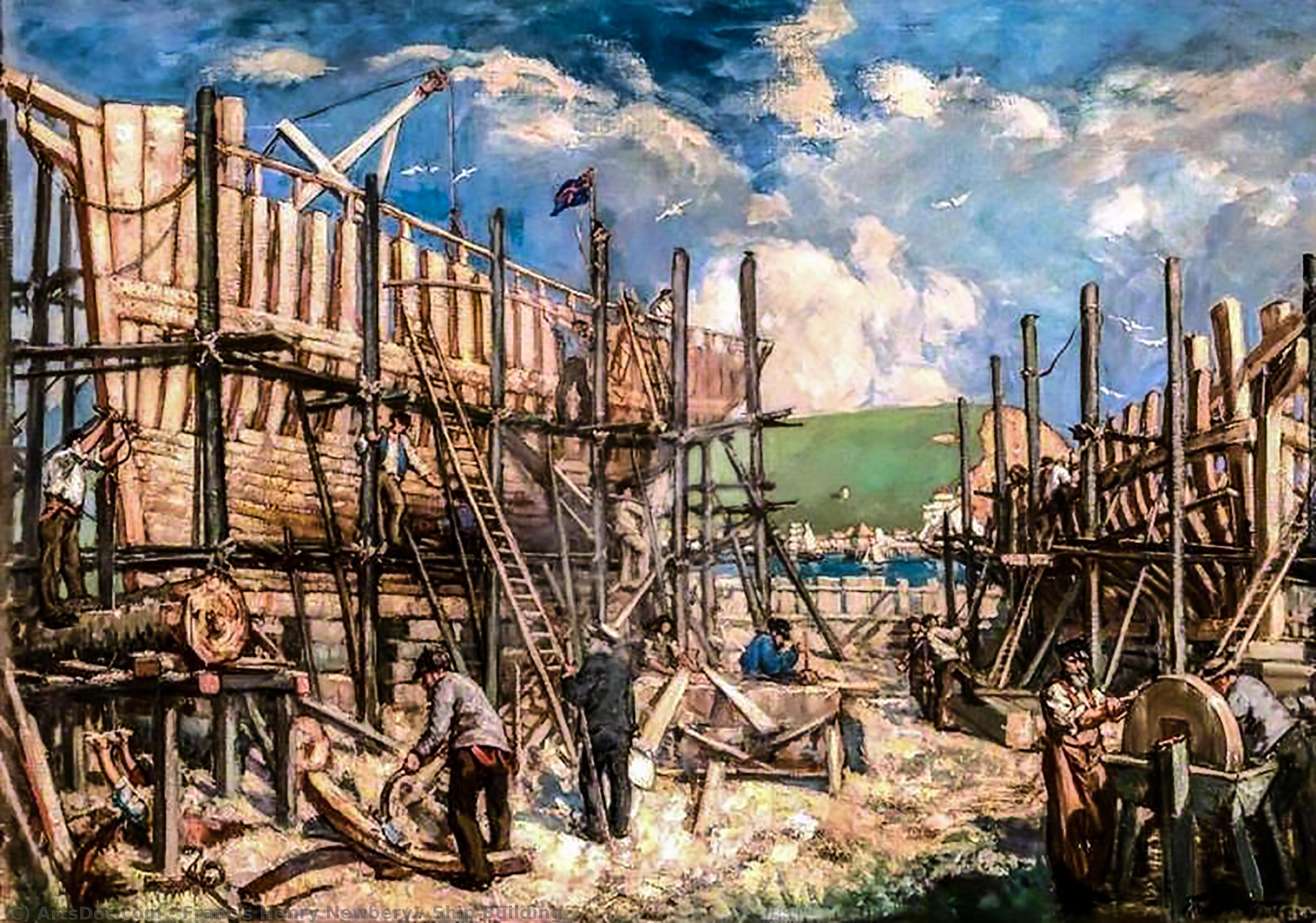
Ship Building
 1927
1927 120.0 x 170.0 cm
 Lire la suite
Reproduction à l'huile faite à la main
Huile sur toile peinte à la main, avec cadre et dimensions personnalisés, réalisée sur commande par nos artistes. ( Commander l'impression Télécharger l'image haute résolution)




































Choisissez parmi nos formats prédéfinis qui respectent les proportions originales de l’œuvre.

Vous pouvez saisir vos propres dimensions pour l'adapter à un cadre ou à un espace spécifique. Si la taille sélectionnée ne correspond pas aux proportions de l'image d'origine, nous recadrerons l'œuvre ou prolongerons la peinture avec des éléments peints à la main supplémentaires. Une maquette numérique vous sera envoyée pour approbation avant le début de la production.
Veuillez noter que l'aperçu à l'écran ne reflète pas le recadrage ou l'extension réels. Seule la maquette montrera fidèlement la composition finale.
Bien que des tailles personnalisées soient disponibles, nous vous recommandons de sélectionner une dimension dans la liste prédéfinie afin de préserver les proportions d'origine.
Après la commande, l’équipe OriginalUniqueArt.com contactera le client par e-mail pour recueillir ses instructions et lui fournira une maquette d’aperçu
Livraison dans le monde entier () en 3 à 4 semaines au lieu des 5 semaines habituelles. (14 août). Aucun compromis sur la qualité.

Livraison express gratuite dans le monde entier

Toile de lin de qualité supérieure

Assurance transport complète

Garantie de remboursement des droits de douane

Garantie de fidélité des couleurs

Politique de retour de 60 jours (uniquement en cas de défaut)

Garantie de remboursement à 100%

Offre de tarifs dégressifs
 L'option verre n'est disponible que pour les dimensions inférieures à 110 cm.

Ship Building
Technique de reproduction
Format de la reproduction
-


Prix total
$ 300
Biographie de l'artiste
Francis Henry Newbery: Shaping Scottish Art Through Visionary Leadership
Francis Henry Newbery (1855 – 1946) stands as a pivotal figure in the history of British art education and Glasgow Style painting, leaving an indelible mark on Scotland’s artistic landscape. Born in Devon to shoemaker William Newbery and Eliza (née Treloar), his early life instilled a grounding in craftsmanship alongside a burgeoning passion for visual arts—a duality that would profoundly shape his career trajectory. He pursued formal schooling in Bridport, Dorset, earning qualifications as both a teacher and an art master, experiences which honed his pedagogical skills and deepened his understanding of artistic principles. A scholarship to London’s Slade School of Art in 1881 propelled him into the heart of London’s artistic milieu where he cultivated connections with prominent artists like James Guthrie and John Lavery. These formative years nurtured his artistic sensibilities and solidified his commitment to fostering creativity within young minds. Recognizing the importance of practical training alongside theoretical knowledge, Newbery championed a revolutionary approach at Glasgow School of Art—establishing it as one of the first UK art schools to prioritize practising artists over certificated instructors. This bold decision fostered an environment where innovation thrived and encouraged students to explore their individual artistic voices. His leadership at Glasgow School of Art between 1885 and 1917 cemented his legacy as a transformative educator and visionary director. Crucially, he collaborated closely with Charles Rennie Mackintosh on the design of the school’s iconic building—a testament to his belief in architectural harmony and artistic collaboration. Mackintosh's influence extended beyond the physical structure; Newbery actively promoted Mackintosh’s distinctive Glasgow Style, nurturing a generation of artists who embraced its geometric forms and decorative motifs. Furthermore, he instituted craft workshops and introduced embroidery classes, recognizing the value of diverse artistic disciplines and empowering students to develop multifaceted skills. Newbery’s own painting style aligned with the Glasgow Boys movement—a group of young Scottish painters who championed Impressionism and plein air painting techniques. He produced evocative landscapes and portraits imbued with a sensitivity to light and color, reflecting his profound connection to the Dorset countryside where he resided in Corfe Castle during his retirement years. Continuing to paint until 1932, Newbery remained dedicated to artistic expression until his death on December 18, 1946. His contribution to art education and his role in shaping Glasgow Style—a movement that redefined British decorative arts—solidifies his place as a cornerstone of Scottish artistic heritage.- Notable Works: “The Lady of the Carnation,” “Herbert Fitton Stockdale,” “The Spirit of Bridport, Dorset”
- Influences: Whistler, Barbizon School, Impressionism
- Achievements: Director of Glasgow School of Art; Collaborator with Charles Rennie Mackintosh; Champion of Scottish Artists

francis henry newbery
1855 - 1946
L'essentiel de l'artiste
- Artistic Movement Or Style: Glasgow Style
- Artists Or Movements Influenced By This Artist: ['Mackintosh Designs']
- Artists Who Influenced This Artist:
- James Guthrie
- John Lavery
- Date Of Birth: 1855
- Date Of Death: 1946
- Full Name: Francis Henry Newbery
- Nationality: British
- Notable Artworks:
- The Lady of the Carnation
- Herbert Fitton Stockdale
- The Spirit of Bridport
- Place Of Birth: Devon, England

