

 Aperçu en situation
 Envoyer
 Partager
 Détails de l'œuvre
 Guide
Guide

 Télécharger l'image
 Articles similaires
 Radiographie
 Diaporama
 Q&A
Q&A Statistiques
triptyque, mai - juin, 1973 b

 Lire la suite
L’œuvre d'art présentée sur cette page est protégée par le droit d'auteur, ce qui signifie que nous ne pouvons légalement créer ou vendre de reproduction identique. Cette protection est appliquée en vertu d'accords internationaux tels que la Convention de Berne et par les lois nationales, notamment celles énoncées par le Loi américaine sur le droit d'auteur - Titre 17.
Cette méthode est pleinement conforme aux réglementations sur le droit d'auteur car elle ne repose pas sur la copie ou la duplication de l'œuvre protégée. Il s'agit plutôt d'une réinterprétation créative — une nouvelle peinture qui s'inspire de l'original sans pour autant lui être identique.
Giclées et impressions d'art
Impressions giclées ou sur toile de qualité musée, avec une production rapide et des finitions au choix. ( Commander la reproduction peinte à la main Passer au format numérique)




P118B €10

P118H €10

P118W €10

P438Z €10

P508JH €12

P508YH €12

P805H €10

P805Z €10

P919BZ €10

P919G €10

P919XJ €10

P959ZH €10

P968JZ €12

W106C €8

W218G €10

W218JH €8

W218Y €10

W307PJ €10

W316G €10

W316PJ €8

W316Y €10

W398PJ €8

W4111J €10

W500HY €15

W500JH €15

W692G €12

W849H €8

W940BG €15

W953PJ €8




Choisissez parmi nos formats prédéfinis qui respectent les proportions originales de l’œuvre.

Saisissez la largeur et la hauteur souhaitées pour qu'elles s'adaptent à votre cadre ou à votre mur. Une impression peut être recadrée, mais jamais agrandie au-delà de l'image originale ; ainsi, un format de forme différente entraînera la perte d'une partie de l'image. Nous vous envoyons une maquette numérique pour approbation avant toute impression. L'image présentée sur cette page ne montre pas le recadrage réel — seule la maquette le permet.
Livraison dans le monde entier () en 2 semaines au lieu des 4/5 semaines habituelles. (29 octobre)

Livraison express gratuite dans le monde entier

Toile de lin de qualité supérieure

Assurance transport complète

Garantie de remboursement des droits de douane

Garantie de fidélité des couleurs

Politique de retour de 100 jours (uniquement en cas de défaut)

Garantie de remboursement à 100%

Offre de tarifs dégressifs
 L'option verre n'est disponible que pour les dimensions inférieures à 110 cm.

triptyque, mai - juin, 1973 b
Giclées et impressions d'art
Format de la reproduction
-


Prix total
€ 71
A Vision of Grief and Isolation: Examining Francis Bacon’s ‘Triptych, May-June 1973’
Francis Bacon's 'Triptych, May-June 1973,' housed in the Tate Modern collection, stands as a monumental testament to the artist’s unflinching exploration of human emotion—specifically grief and isolation. Completed in 1973, shortly after Jessie Lightfoot’s death, it represents arguably Bacon's most emotionally resonant work, capturing a profound sense of despair within its unsettling visual language. The triptych is comprised of three canvases joined horizontally, each depicting a figure contorted in agony—a man with his head bowed downwards, a woman with her torso turned away from the viewer, and a shadowy form seemingly emerging from a doorway. These figures are rendered in thick, viscous oil paint, employing Bacon’s signature technique of layering brushstrokes to create an almost sculptural surface texture. The palette is dominated by deep reds—particularly crimson—which pulsate with visceral energy and symbolize blood, pain, and vulnerability.- Style: Expressionist – Bacon eschewed representational accuracy in favor of conveying subjective experience, prioritizing emotional intensity over visual realism.
- Technique: Thick Impasto – Bacon’s masterful use of impasto—applying paint thickly onto the canvas—creates a palpable physicality that mirrors the psychological torment depicted within the artwork. The textured surface invites contemplation and emphasizes the artist's deliberate manipulation of materiality.
- Symbolism: The Red Walls – Bacon’s use of red walls symbolizes confinement and repression, mirroring the psychological imprisonment experienced by the figures within the canvases.
- Doorways: Recurring doorways represent transitions—both physical and metaphorical—suggesting a yearning for escape from pain and isolation but ultimately highlighting the inescapable reality of suffering.
Exploring the Visceral Landscape: Bacon’s Influence on Modern Art
Francis Bacon's groundbreaking approach to painting—characterized by his rejection of traditional conventions and his unwavering commitment to emotional expression—established him as a pivotal figure in the development of modern art. Prior to Bacon, artists largely adhered to academic standards of representation, prioritizing accuracy over feeling; Bacon decisively shattered these boundaries, ushering in an era where subjective experience reigned supreme. His influence extends far beyond his own canvases, shaping the artistic sensibilities of subsequent generations and inspiring countless artists to embrace experimentation and vulnerability.- Key Innovations: Bacon’s technique of layering impasto—creating textured surfaces through thick applications of paint—challenged established methods and paved the way for new approaches to materiality.
- Conceptual Shift: He fundamentally altered artistic thinking by prioritizing psychological exploration over visual realism, demonstrating that art could convey profound emotion without resorting to literal depiction.
The Legacy of Isolation: Bacon’s Enduring Relevance Today
Despite being created over fifty years ago, ‘Triptych, May-June 1973,’ and Bacon's broader artistic vision retain an astonishing degree of relevance in contemporary art discourse. The themes explored within the triptych—grief, isolation, vulnerability—remain profoundly resonant with audiences grappling with anxieties about identity, connection, and mortality in an increasingly fragmented world. Bacon’s uncompromising honesty—his refusal to sugarcoat difficult truths—continues to inspire artists who strive for authenticity and emotional depth.- Contemporary Resonance: The exploration of psychological trauma and the depiction of distorted figures speaks directly to anxieties prevalent in contemporary society regarding mental health and societal pressures.
- Artistic Inspiration: Bacon’s influence can be seen in the work of numerous artists who embrace experimentation, challenge conventions, and prioritize emotional expression—demonstrating the enduring power of his artistic legacy.
A Masterpiece Revisited: Examining Bacon’s Technique Through Time
Analyzing Bacon's technique reveals a remarkable consistency across his oeuvre—a dedication to layering impasto, manipulating color palettes, and employing symbolic imagery that transcends stylistic trends. The meticulous attention to detail—the painstaking creation of textured surfaces and the deliberate positioning of figures within complex compositions—underscores Bacon’s unwavering commitment to artistic excellence. Studying ‘Triptych, May-June 1973,’ alongside his other seminal works—such as ‘Three Studies After Lucian Freud’—provides invaluable insight into the artist's stylistic evolution and reveals recurring motifs that define his distinctive visual language.- Recurring Motifs: The use of distorted figures, fragmented landscapes, and symbolic doorways—elements found throughout Bacon’s paintings—demonstrates a deliberate artistic strategy aimed at conveying psychological anguish.
- Influence on Subsequent Artists: Bacon's technique has served as inspiration for countless artists who strive to achieve textural richness and emotional intensity—solidifying his position as a foundational figure in modern art history.
Where to Find Authentic Reproductions: Bringing Bacon’s Vision Home
Collectors and interior designers seeking to experience the visceral beauty of Francis Bacon's art can find high-quality reproductions at reputable art dealers and online platforms like OriginalUniqueArt.com. Selecting a museum-grade print—produced using archival inks on premium canvas—ensures that the artwork retains its vibrancy and integrity for generations to come. Consider framing options that complement the painting’s mood—dark wood frames enhance the dramatic atmosphere of ‘Triptych, May-June 1973,’ while lighter tones offer a subtle contrast to the intense reds and textures of the canvas. Explore OriginalUniqueArt.com's extensive collection for stunning prints and canvases – discover the transformative power of Bacon’s art in your home!Questions et réponses
De quel type d'œuvre s'agit-il pour «triptyque, mai - juin, 1973 b» de Francis Bacon ?
Dans le catalogue, «triptyque, mai - juin, 1973 b» de Francis Bacon est répertorié sous la catégorie Décoration murale. Cette classification permet de découvrir des œuvres similaires.
«triptyque, mai - juin, 1973 b» de Francis Bacon est-il une œuvre lumineuse ou sombre ?
Les valeurs enregistrées pour «triptyque, mai - juin, 1973 b» de Francis Bacon sont : une luminosité de ombres profondes, une luminance de Ombre douce.
« triptyque, mai - juin, 1973 b » est-il représentatif de l'œuvre habituelle de Francis Bacon ?
Parmi les thèmes récurrents de Francis Bacon — horreur psychologique, échos du surréalisme, angoisse existentielle, réflexion sur le traumatisme, héritage de bacon — « triptyque, mai - juin, 1973 b » met l'accent sur douleur, deuil, isolement, obscurité, traumatisme, anatomie, symbolisme.
Biographie de l'artiste
**jeunesse et carrière**
francis bacon, peintre figurative irlandais né en Grande-Bretagne, est né le 28 octobre 1909 à Dublin, en Irlande. Sa jeunesse a été marquée par une série de déménagements en raison de la recherche de sa famille d'un climat approprié pour la santé de sa mère. Cette enfance itinérante influencera plus tard l'approche de Bacon à l'art.**style artistique et thèmes**
Bacon est réputé pour ses images audacieuses, émotionnellement chargées et souvent grotesques. Ses figures abstraites sont généralement isolées dans des espaces géométriques, comme des cages, sur fond de fonds plats et sans intérêt. Ce style unique a été à la fois salué et critiqué par les critiques d'art.- portrait of isabel rawsthorne standing in a street in soho, œuvre emblématique présentant la capacité de Bacon à capturer l'essence de ses sujets dans un environnement apparemment abstrait.
- number vii from eight studies for a portrait, illustrant l'exploration de la forme humaine par l'artiste à travers une série d'études.
**influences et héritage**
Le travail de Bacon a été influencé par diverses sources, notamment les autoportraits de maria helena vieira da silva et l'expressionnisme abstrait de piet mondrian. Son héritage continue d'inspirer de nouvelles générations d'artistes, son style audacieux et sans compromis constituant une pierre angulaire de l'art moderne.**expositions et collections notables**
- the museum fine art society (United Kingdom), qui a présenté les œuvres de Bacon aux côtés d'autres artistes britanniques de renom. - nationalgalerie (Norway), présentant une collection exhaustive d'art européen, y compris des œuvres de Bacon. **Œuvres clés et collections:** - francis bacon: portrait of isabel rawsthorne standing in a street in soho - francis bacon: number vii from eight studies for a portrait **Musées et galeries d'art:** - the museum fine art society (United Kingdom) - nationalgalerie (Norway)**Conclusion**
La vie tumultueuse de Francis Bacon et son approche innovante de la peinture figurative ont laissé une marque indélébile sur le monde de l'art. Son héritage, caractérisé par des images audacieuses et émotionnellement chargées, continue d'influencer les artistes contemporains et de susciter la curiosité du public. **Recommandations de lecture:** - biographie de francis bacon - wikipedia: francis bacon (artiste)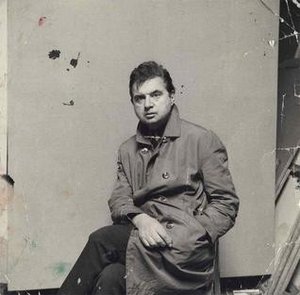
Francis Bacon
1909 - 1992 , Irlande
L'essentiel de l'artiste
- Artistes Influents:
- Pablo Picasso
- Egon Schiele
- Maria Helena Vieira da Silva
- Diego Velázquez
- Date De Décès: 1992
- Date De Naissance: 28 octobre 1909
- Influences Artistiques: ['Expressionnisme post-moderne']
- Lieu De Naissance: Dublin, Irlande
- Mouvement Artistique: Expressionnisme figuratif
- Nationalité: Irlandais-Britannique
- Nom Complet: Francis Bacon
- Oeuvres Notables:
- Trois études pour figures
- Portrait d'Isabel Rawsthorne
- Étude après Velázquez
- George Dyer dans un miroir
Articles connexes

Surrealist Expressionism: A Visual Journey Through Dream Logic and Raw Emotion
Dive into the visceral world of Surrealist Expressionism. Explore how dream logic meets raw emotion through a visual journey of iconic techniques, post-war history, and bold aesthetics to transform your modern space with high-impact, unforgettable art.

Crimson Threads of Narrative: Exploring Symbolism & Representation in Artworks Featuring the Red Dress
Explore the rich symbolism of the red dress in art history! From ancient power displays to iconic portraits like Cézanne’s 'Madame Cezanne', discover the cultural and artistic significance behind this captivating color. Expert analysis & insights.
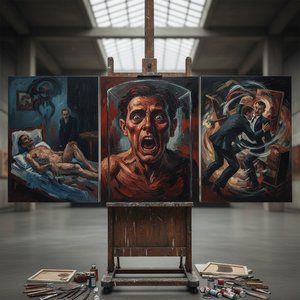
Francis Bacon : Les 25 Œuvres Maîtresses d'un Art Viscéral | OriginalUniqueArt
Plongez dans l'univers viscéral de Francis Bacon à travers ses 25 œuvres les plus emblématiques. Découvrez l'histoire, la technique et l'émotion derrière chaque chef-d'œuvre expressionniste. Retrouvez des reproductions de qualité musée pour sublimer votre intérieur sur OriginalUniqueArt.com
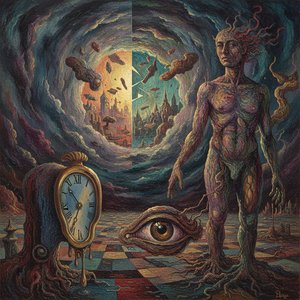
Beyond Reality: The Dreamlike Power of Surrealist Expressionism and the Subconscious Mind
Explore the profound depths of Surrealist Expressionism. Discover how masters like Dalí used dream logic and subconscious imagery to redefine reality through emotionally resonant, museum-quality art.

Surrealist Expressionism: A Definitive Guide to the Intersection of Dream Logic and Raw Emotion
Explore the profound history of Surrealist Expressionism. Discover how artists blended dream logic with raw emotion to navigate post-war trauma through masterful, evocative imagery and psychological depth.


