- Accueil

- Reproduction de peinture à l'huile
- Francis Bacon
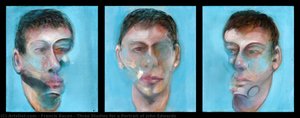
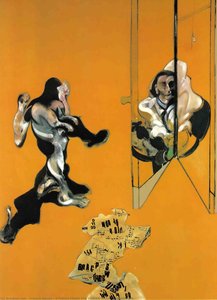
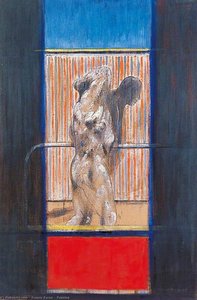
- Study for Three Heads, right panel,

 Preview
 Commander l'impression Acheter l'image haute résolution
 Partager
 Partager
 Détails de l'œuvre
 Ajouter aux favoris

 Télécharger
 Articles similaires
 Radiographie
 Diaporama
Study for Three Heads, right panel,


 Afficher la suite
Reproduction à l'huile faite à la main
Huile sur toile peinte à la main, avec cadre et dimensions personnalisés, réalisée sur commande par nos artistes.




P118B $10

P118H $10

P118W $10

P438Z $10

P508JH $12

P508YH $12

P805H $10

P805Z $10

P919BZ $10

P919G $10

P919XJ $10

P959ZH $10

P968JZ $12

W106C $8

W218G $10

W218JH $8

W218Y $10

W307PJ $10

W316G $10

W316PJ $8

W316Y $10

W398PJ $8

W4111J $10

W500HY $15

W500JH $15

W692G $12

W849H $8

W940BG $15

W953PJ $8




Choisissez parmi nos formats prédéfinis qui respectent les proportions originales de l’œuvre.

Vous pouvez saisir vos propres dimensions pour l'adapter à un cadre ou à un espace spécifique. Si la taille sélectionnée ne correspond pas aux proportions de l'image d'origine, nous recadrerons l'œuvre ou prolongerons la peinture avec des éléments peints à la main supplémentaires. Une maquette numérique vous sera envoyée pour approbation avant le début de la production.
Veuillez noter que l'aperçu à l'écran ne reflète pas le recadrage ou l'extension réels. Seule la maquette montrera fidèlement la composition finale.
Bien que des tailles personnalisées soient disponibles, nous vous recommandons de sélectionner une dimension dans la liste prédéfinie afin de préserver les proportions d'origine.
Après la commande, l’équipe OriginalUniqueArt.com contactera le client par e-mail pour obtenir ses instructions et lui fournira une maquette d’aperçu.
Livraison dans le monde entier () en 3 à 4 semaines au lieu des 5 semaines habituelles. (25 juillet). Aucune concession sur la qualité.

Livraison express gratuite dans le monde entier

Toile de lin de haute qualité

Assurance transport complète

Garantie de remboursement des frais de douane

Garantie de fidélité des couleurs

Politique de retour de 60 jours (uniquement en cas de défaut)

Garantie de remboursement à 100%

Réduction sur les achats groupés
 L'option verre n'est disponible que pour les dimensions inférieures à 110 cm.

Study for Three Heads, right panel,
Technique de reproduction
Format de reproduction
-


Prix total final
-
Description de l'œuvre
A Study in Discomfort: Exploring Francis Bacon’s “Study for Three Heads”
The painting "Study for Three Heads," created by Francis Bacon in 1962, stands as a chilling testament to the artist's preoccupation with psychological torment and the grotesque beauty of decay. Held within the William S. Paley Collection at MoMA, this monumental triptych – measuring approximately 35.9 x 30.8 cm (each panel) – immediately confronts the viewer with an unsettling visage: a man’s face rendered in stark black and white, dominated by an aggressively open mouth that seems to emit a silent scream.- Style & Technique: Bacon's signature style is characterized by visceral abstraction—a deliberate rejection of representational accuracy in favor of conveying emotion through distorted forms and expressive brushstrokes. The painting eschews traditional perspective, opting instead for a flattened surface that intensifies the sense of claustrophobia and disorientation. Thick impasto – heavily textured paint application – contributes to the palpable physicality of the canvas, mirroring the artist’s fascination with bodily vulnerability.
- Historical Context: Produced in the aftermath of World War II, “Study for Three Heads” reflects the pervasive anxieties surrounding trauma and existential dread that gripped Europe during the period. Bacon himself experienced considerable personal hardship throughout his life—including a devastating diagnosis of cancer—and these experiences undoubtedly fueled his artistic explorations into themes of suffering and mortality.
Symbolism: Faces Fractured, Humanity Exposed
The central figure’s gaping maw isn't merely an anatomical detail; it serves as a potent symbol of repressed emotion—a desperate attempt to articulate the unbearable pain of existence. Bacon deliberately fragmented the face into multiple planes, mirroring the shattered psyche and highlighting the disintegration of identity under pressure. The two flanking faces – positioned subtly in the background – represent not simply additional figures but rather embodiments of opposing forces battling for dominance within the individual’s inner turmoil. They symbolize rationality versus instinct, order versus chaos—elements perpetually vying for control over human consciousness.- Color Palette: The monochrome palette—primarily black and white—amplifies the painting's emotional impact by stripping away any distractions of color. This deliberate restriction focuses attention on the textures and distortions of form, emphasizing the artist’s commitment to conveying psychological states rather than visual realism.
Emotional Resonance: A Portrait of Painful Truth
“Study for Three Heads” transcends mere depiction; it compels viewers to confront uncomfortable truths about human nature—the inevitability of suffering, the fragility of selfhood, and the terrifying beauty of decay. Bacon’s masterful manipulation of form and texture evokes a visceral response—a feeling of unease and vulnerability that lingers long after viewing the artwork. It's a painting that refuses easy interpretation, demanding contemplation and prompting reflection on the darker recesses of human experience.- Interior Design Considerations: When incorporating reproductions of Bacon’s work into interior spaces, consider pairing it with complementary textures—such as linen or wool—to create a dialogue between surfaces. The painting's stark monochrome palette can serve as an anchor for more vibrant hues, offering a striking contrast that stimulates visual interest.
Concluding Thoughts: Bacon’s Legacy of Emotional Intensity
Francis Bacon’s “Study for Three Heads” remains one of the most arresting and disturbing images in modern art—a haunting reminder of the artist's unwavering dedication to exploring the darkest corners of human consciousness. Its enduring power lies not only in its technical brilliance but also in its profound emotional resonance, cementing Bacon’s place as a pioneer of expressive abstraction and an unparalleled interpreter of psychological torment.Biographie de l'artiste
**jeunesse et carrière**
francis bacon, peintre figurative irlandais né en Grande-Bretagne, est né le 28 octobre 1909 à Dublin, en Irlande. Sa jeunesse a été marquée par une série de déménagements en raison de la recherche de sa famille d'un climat approprié pour la santé de sa mère. Cette enfance itinérante influencera plus tard l'approche de Bacon à l'art.**style artistique et thèmes**
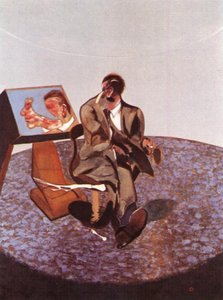
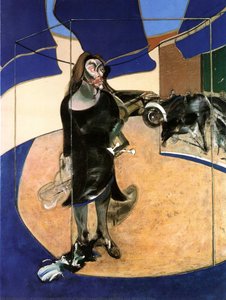
Bacon est réputé pour ses images audacieuses, émotionnellement chargées et souvent grotesques. Ses figures abstraites sont généralement isolées dans des espaces géométriques, comme des cages, sur fond de fonds plats et sans intérêt. Ce style unique a été à la fois salué et critiqué par les critiques d'art.- portrait of isabel rawsthorne standing in a street in soho, œuvre emblématique présentant la capacité de Bacon à capturer l'essence de ses sujets dans un environnement apparemment abstrait.
- number vii from eight studies for a portrait, illustrant l'exploration de la forme humaine par l'artiste à travers une série d'études.
**influences et héritage**
Le travail de Bacon a été influencé par diverses sources, notamment les autoportraits de maria helena vieira da silva et l'expressionnisme abstrait de piet mondrian. Son héritage continue d'inspirer de nouvelles générations d'artistes, son style audacieux et sans compromis constituant une pierre angulaire de l'art moderne.**expositions et collections notables**
- the museum fine art society (United Kingdom), qui a présenté les œuvres de Bacon aux côtés d'autres artistes britanniques de renom. - nationalgalerie (Norway), présentant une collection exhaustive d'art européen, y compris des œuvres de Bacon. **Œuvres clés et collections:** - francis bacon: portrait of isabel rawsthorne standing in a street in soho - francis bacon: number vii from eight studies for a portrait **Musées et galeries d'art:** - the museum fine art society (United Kingdom) - nationalgalerie (Norway)**Conclusion**
La vie tumultueuse de Francis Bacon et son approche innovante de la peinture figurative ont laissé une marque indélébile sur le monde de l'art. Son héritage, caractérisé par des images audacieuses et émotionnellement chargées, continue d'influencer les artistes contemporains et de susciter la curiosité du public. **Recommandations de lecture:** - biographie de francis bacon - wikipedia: francis bacon (artiste)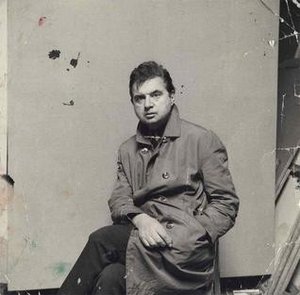
Francis Bacon
1909 - 1992 , Irlande
En bref
- Artistes Influents:
- Pablo Picasso
- Egon Schiele
- Maria Helena Vieira da Silva
- Diego Velázquez
- Date De Décès: 1992
- Date De Naissance: 28 octobre 1909
- Influences Artistiques: ['Expressionnisme post-moderne']
- Lieu De Naissance: Dublin, Irlande
- Mouvement Artistique: Expressionnisme figuratif
- Nationalité: Irlandais-Britannique
- Nom Complet: Francis Bacon
- Oeuvres Notables:
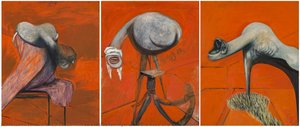
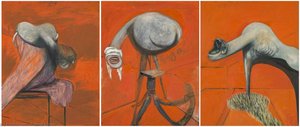
- Trois études pour figures
- Portrait d'Isabel Rawsthorne
- Étude après Velázquez
- George Dyer dans un miroir
Articles connexes
Francis Bacon : Les 25 Œuvres Maîtresses d'un Art Viscéral | OriginalUniqueArt
Plongez dans l'univers viscéral de Francis Bacon à travers ses 25 œuvres les plus emblématiques. Découvrez l'histoire, la technique et l'émotion derrière chaque chef-d'œuvre expressionniste. Retrouvez des reproductions de qualité musée pour sublimer votre intérieur sur OriginalUniqueArt.com
L'Angoisse Existentielle de Francis Bacon : Traumatisme, Forme et la Condition de l'Après-Guerre
Explorez l'œuvre poignante de Francis Bacon : traumatisme, expressionnisme et la condition humaine après-guerre. Analyse approfondie, influences artistiques et héritage durable. Découvrez son univers unique.

Mannerism Unveiled: Exploring the Sophisticated Mastery of Elegant Distortion
Unveil the captivating world of Mannerism. Our expert analysis explores the transition from Renaissance harmony to the profound, elegant distortions of masters like El Greco, offering deep insights into one of art history's most influential and enigmatic eras.

Max Beckmann : Explorer le Trauma et la Modernité à Travers un Regard Déformé
Explorez l'œuvre poignante de Max Beckmann et son exploration du trauma à travers un regard expressionniste unique. Analyse approfondie, contexte historique et héritage artistique.
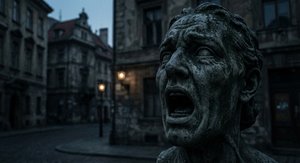
Le Cri Viscéral d'une Nation : Exploration de l'Émotion et de la Distortion dans l'Expressionnisme Allemand
Explorez l'Expressionnisme allemand avec OriginalUniqueArt : Kirchner, Die Brücke, Der Blaue Reiter… Analyse approfondie des chefs-d'œuvre et de leur impact émotionnel. Reproductions de haute qualité disponibles.