() ·

A painting made for you, by hand

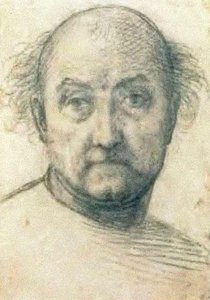
Prophet Job

Reproduction à l'huile faite à la main

Huile sur toile peinte à la main, avec cadre et dimensions personnalisés, réalisée sur commande par nos artistes. ( Passer au format impression Passer au format numérique)

Description de la pièce

Fra Bartolomeo's 'Prophet Job' (1516) is a poignant High Renaissance masterpiece depicting faith and suffering. Explore the iconic image of Job’s resilience through art history.

Biographie de l'artiste

Découvrez Fra Bartolomeo (1472-1517), maître florentin de la Haute Renaissance ! Admirez son art religieux serein, ses drapés magistraux et son influence profonde sur Raphaël.

from ·

Chapter 1

How large should it be?

Slide to change the size; the picture on the left shows the frame at its real width. The proportions of the original are kept.

Format standard
sur mesure
CM
INCH

Choisissez parmi nos formats prédéfinis qui respectent les proportions originales de l’œuvre.

largeur
hauteur

Saisissez la largeur et la hauteur souhaitées, pour s'adapter à votre cadre ou à votre mur. Cette œuvre est peinte à la main ; ainsi, pour un format de forme différente, l'artiste peut peindre un peu plus autour du tableau ou réduire légèrement les bords — c'est vous qui choisissez. Nous vous envoyons une maquette numérique pour approbation avant que la peinture ne commence. L'image présentée sur cette page ne reflète pas le résultat réel — seule la maquette le fait.

Chapter 2

How should it arrive?

Choose the edges of the stretched canvas

Choose your frame

Corner sample of the WhiteWrap canvas edge finish, stretched on bois massif bars
White €1
Corner sample of the BlurSideWrap canvas edge finish, stretched on bois massif bars
Blurside €1
Corner sample of the ExtendedWrap canvas edge finish, stretched on bois massif bars
Extended €1
Corner sample of the P118B picture frame: polystyrène moulé, 5 cm wide and 3 cm thick
P118B €10
Corner sample of the P118H picture frame: polystyrène moulé, 5 cm wide and 3 cm thick
P118H €10
Corner sample of the P118W picture frame: polystyrène moulé, 5 cm wide and 3 cm thick
P118W €10
Corner sample of the P438Z picture frame: polystyrène moulé, 5.5 cm wide and 3.5 cm thick
P438Z €10
Corner sample of the P508JH picture frame: polystyrène moulé, 7 cm wide and 3.5 cm thick
P508JH €12
Corner sample of the P508YH picture frame: polystyrène moulé, 7 cm wide and 3.5 cm thick
P508YH €12
Corner sample of the P805H picture frame: polystyrène moulé, 5 cm wide and 3.5 cm thick
P805H €10
Corner sample of the P805Z picture frame: polystyrène moulé, 5 cm wide and 3.5 cm thick
P805Z €10
Corner sample of the P919BZ picture frame: polystyrène moulé, 7 cm wide and 3.5 cm thick
P919BZ €10
Corner sample of the P919G picture frame: polystyrène moulé, 7 cm wide and 3.5 cm thick
P919G €10
Corner sample of the P919XJ picture frame: polystyrène moulé, 7 cm wide and 3.5 cm thick
P919XJ €10
Corner sample of the P959ZH picture frame: polystyrène moulé, 5 cm wide and 3 cm thick
P959ZH €10
Corner sample of the P968JZ picture frame: polystyrène moulé, 6 cm wide and 4 cm thick
P968JZ €12
Corner sample of the W106C picture frame: bois massif, 5 cm wide and 3 cm thick
W106C €8
Corner sample of the W218G picture frame: bois massif, 5 cm wide and 3 cm thick
W218G €10
Corner sample of the W218JH picture frame: bois massif, 5 cm wide and 3 cm thick
W218JH €8
Corner sample of the W218Y picture frame: bois massif, 5 cm wide and 3 cm thick
W218Y €10
Corner sample of the W307PJ picture frame: bois massif, 6 cm wide and 3 cm thick
W307PJ €10
Corner sample of the W316G picture frame: bois massif, 6 cm wide and 3 cm thick
W316G €10
Corner sample of the W316PJ picture frame: bois massif, 6 cm wide and 3 cm thick
W316PJ €8
Corner sample of the W316Y picture frame: bois massif, 6 cm wide and 3 cm thick
W316Y €10
Corner sample of the W398PJ picture frame: bois massif, 5 cm wide and 3 cm thick
W398PJ €8
Corner sample of the W4111J picture frame: bois massif, 6.5 cm wide and 3.5 cm thick
W4111J €10
Corner sample of the W500HY picture frame: bois massif, 7 cm wide and 5 cm thick
W500HY €15
Corner sample of the W500JH picture frame: bois massif, 7 cm wide and 5 cm thick
W500JH €15
Corner sample of the W692G picture frame: bois massif, 8 cm wide and 4 cm thick
W692G €12
Corner sample of the W849H picture frame: bois massif, 5 cm wide and 3 cm thick
W849H €8
Corner sample of the W940BG picture frame: bois massif, 7.5 cm wide and 4.5 cm thick
W940BG €15
Corner sample of the W953PJ picture frame: bois massif, 6 cm wide and 3.5 cm thick
W953PJ €8
Corner sample of the H24-GOLD picture frame: bois sculpté et apprêté au gesso, 10 cm wide and 6 cm thick
H24-GOLD €30
Corner sample of the H24-SILVER picture frame: bois sculpté et apprêté au gesso, 10 cm wide and 6 cm thick
H24-SILVER €30
Corner sample of the H36-GOLD picture frame: bois sculpté et apprêté au gesso, 15 cm wide and 6.5 cm thick
H36-GOLD €45
Corner sample of the H36-SILVER picture frame: bois sculpté et apprêté au gesso, 15 cm wide and 6.5 cm thick
H36-SILVER €45
Aperçu du cadre
Sous cadre

Moulding: . Overall size with the frame: .

Chapter 3

Who paints it, and should anything change?

Examples of what can be changed: Replace face with customer photo; Add pet (e.g., replace cat with dog); Include hidden message in background; Change background landscape or elements.
After order, OriginalUniqueArt.com team will email client for instructions and provide a mockup preview

Livraison dans le monde entier () en 3 à 4 semaines au lieu des 5 semaines habituelles. (1 novembre). Aucun compromis sur la qualité.

Chapter 4

The finishing touches

A nameplate, as in a museum?

Détails de la plaque en bronze gravée

This elegant plaque features the artist's name and the title of the artwork, finely engraved for a timeless presentation.

It is made from bronze with a refined, elegant finish. The text is precisely laser-engraved for a sharp and permanent result. Measuring 9x2 cm, the plaque is compact yet easy to read. It's built to be durable and scratch-resistant, offering a professional, museum-quality look. Mounting is simple thanks to the included adhesive backing.

Détails de la plaque en acrylique transparent

The plaque includes essential engraved details such as the artist's name, the title of the artwork, the date it was created, the type of media used-like oil on canvas or watercolor-a brief description of the piece, and a QR code that links to the complete artwork information.

It is crafted from clear acrylic, offering a sleek, modern appearance. The text is UV-engraved in black to ensure strong visual contrast. With a size of 10x15 cm, it ensures optimal readability. It comes equipped with two metal hooks for secure wall mounting. The plaque is designed to be weather-resistant, making it suitable for various environments, and it includes interactive features that work seamlessly with smartphone scanning.

Détails de la plaque en acrylique noir

This elegant plaque includes engraved information such as the artist's name, the title of the artwork, the date it was created, the type of media used (like oil on canvas or watercolor), a short description of the artwork, and a QR code for quick access to more information.

The plaque itself is made from refined black acrylic with a premium finish. The text is laser-engraved in white for high contrast and readability. Its size is 10x15 cm, designed to be easy to read. It comes with two metal hooks for professional mounting. The design is sleek and fits any interior style. It is also weather-resistant and durable, with built-in digital integration for mobile compatibility.

A protective varnish?

When do you need it?

Chapter 5

Your painting, as you ordered it

Prophet Job

Technique de reproduction

Format de la reproduction

-

Artiste de prestige

Plus de détails, de finesse et un temps de production accru

-

Cadre de reproduction

-

-

Pour les œuvres ou reproductions dont un côté mesure plus de 105 cm (environ 41 pouces), le cadre sera expédié sous forme de kit démonté. Cette méthode garantit une livraison sécurisée et prévient tout dommage pendant le transport.

Assemblage professionnel requis - ce produit n'est pas destiné au bricolage (DIY).
Le kit doit être assemblé et la toile tendue par un encadreur professionnel expérimenté, en utilisant de la colle à bois (non fournie), une pince à tendre la toile et des serre-joints pour maintenir les traverses d'équerre pendant le séchage de la colle. Un assemblage incorrect ou une tension inégale de la toile peut endommager l'œuvre de manière irréversible et n'est pas couvert par notre garantie.

  • Toutes les baguettes en bois massif sont incluses, découpées avec précision à la taille requise.

  • À assembler avec les vis fournies, ainsi qu'avec de la colle à bois pour les assemblages d'angles (non fournie), à prévoir par votre encadreur.

  • L'utilisation d'outils professionnels est requise et non incluse : une pince à tendre la toile (tendeur) et des serre-joints pour maintenir les baguettes bien d'équerre pendant le séchage de la colle.

Important :
L'assemblage des angles nécessite de la colle à bois, les barres doivent être maintenues avec des serre-joints jusqu'au séchage complet de la colle, et le tendage de la toile sur le châssis assemblé nécessite une pince à tendre la toile. Aucun de ces éléments n'est inclus dans le kit. Veuillez consulter un encadreur professionnel expérimenté avant de commander ce format.

Cartel

-

-

Vernis de protection

Vernis brillant (intensifie les couleurs, protège de la lumière et de l'humidité)

-

Personnaliser mon œuvre

Exemples de personnalisation : remplacer le visage par une photo du client ; ajouter un animal de compagnie (par exemple, remplacer un chat par un chien) ; inclure un message caché en arrière-plan ; modifier le paysage ou les éléments d'arrière-plan.

-

Livraison urgente

Livraison dans le monde entier () en 3 à 4 semaines au lieu des 5 semaines habituelles. (1 novembre). Aucune concession sur la qualité.

-

Livraison express

Livraison dans le monde entier () sous 5 semaines. (8 novembre).

Inclus

Prix total

€ 267

Prix total € 267

L'option verre n'est disponible que pour les dimensions inférieures à 110 cm.

Included with every order

  • Livraison express gratuite dans le monde entier

  • Toile de lin de qualité supérieure
  • Assurance transport complète
  • Garantie de remboursement des droits de douane
  • Garantie de fidélité des couleurs
  • Politique de retour de 100 jours (uniquement en cas de défaut)
  • Garantie de remboursement à 100%
  • Offre de tarifs dégressifs

The Prophet Job: A Testament of Faith in Fra Bartolomeo’s Florence

Fra Bartolomeo's "Prophet Job," painted circa 1516, is more than just a depiction of biblical narrative; it’s a profound meditation on suffering, faith, and the enduring power of human resilience. Created during a pivotal moment in Florentine art – bridging the late Renaissance with the burgeoning Mannerism – this oil-on-panel masterpiece offers a glimpse into the artist's deeply considered worldview and his masterful command of both religious iconography and humanist ideals. The painting resides within the Galleria dell’Accademia di Firenze, a testament to its enduring artistic merit.

At first glance, the scene is remarkably serene. A solitary figure, identified as Job, occupies a simple stone pedestal, bathed in a diffused light that suggests both divine presence and quiet contemplation. He's rendered with an almost sculptural quality – his posture conveys a dignified acceptance of fate, while his face, etched with sorrow yet radiating inner strength, speaks volumes about the weight he carries. The rich crimson robes, meticulously detailed, contrast sharply with the muted tones of the background, drawing immediate attention to Job’s central role within the composition. The artist's use of color is restrained but deliberate, emphasizing the solemnity and gravity of the subject matter.

A Renaissance Synthesis: Style and Technique

Fra Bartolomeo’s style in “Prophet Job” represents a harmonious blend of influences – elements of early Florentine Renaissance painting, particularly from his apprenticeship with Cosimo Rosselli, combined with the more contemplative spirit fostered by his later embrace of Dominican monasticism. The composition is carefully balanced, adhering to classical principles of perspective and proportion, yet imbued with a distinctly humanistic sensibility. Noticeably, there’s an absence of dramatic gestures or overtly emotional expressions; Job's sorrow isn’t presented through outward displays but rather through the subtle lines of his face and the stillness of his posture.

Technically, Bartolomeo demonstrates remarkable skill in rendering drapery – a hallmark of his style. The folds of Job’s robes cascade with an almost sculptural grace, creating a sense of volume and movement that belies the painting's static nature. His use of light is equally masterful, subtly illuminating key elements while maintaining a harmonious overall atmosphere. The background, rendered in atmospheric perspective, recedes into a hazy distance, further emphasizing Job’s isolation and his connection to the divine.

Symbolism and Theological Depth

Beyond its aesthetic qualities, “Prophet Job” is rich in symbolic meaning. The choice of Job as the subject reflects the broader theological concerns of the era – questions about justice, suffering, and God’s relationship to humanity. The setting—a simple stone pedestal—suggests a stripping away of worldly comforts and a focus on spiritual matters. The scroll held by Job, bearing the phrase “ipse erit salvator meus” (“He also shall be my salvation”), underscores his unwavering faith in God's ultimate redemption.

Furthermore, the painting’s composition subtly alludes to biblical themes of testing and endurance. Job’s ordeal mirrors the trials faced by other righteous figures in the Old Testament, highlighting the universality of human suffering and the importance of maintaining faith in times of adversity. The inclusion of two figures in the background—one standing behind Job and another further back on the right—adds a layer of mystery, perhaps suggesting the presence of angels or divine messengers observing Job’s plight.

A Legacy of Serenity: Impact and Reproduction

“Prophet Job” endures as one of Fra Bartolomeo's most celebrated works, admired for its profound emotional depth, technical mastery, and enduring spiritual resonance. It exemplifies the artist’s ability to translate complex theological concepts into a visually compelling and emotionally engaging experience. Today, reproductions of this iconic painting offer art lovers and interior designers alike an opportunity to bring a touch of Renaissance serenity and contemplative beauty into their homes or spaces.

When selecting a reproduction, consider the level of detail and the quality of materials used. A faithful reproduction will capture the nuances of Bartolomeo’s original technique – the subtle gradations of color, the delicate rendering of drapery, and the overall sense of quiet contemplation that defines this timeless masterpiece.

Questions et réponses

Comment la palette de «Prophet Job» de Fra Bartolomeo est-elle décrite ?

La palette de «Prophet Job» de Fra Bartolomeo est décrite comme étant Dark. Il s'agit d'une description concise des couleurs de l'œuvre.

Quelle palette et quelle couleur dominante définissent "Prophet Job" ?

L'identité chromatique de «Prophet Job» de Fra Bartolomeo : une palette Dark, dominée par le Espresso (#3c211b).

Quelle est la saturation des couleurs de «Prophet Job» de Fra Bartolomeo ?

«Prophet Job» de Fra Bartolomeo présente une saturation Clear Color Presence.

More about this painting

Aperçu en situation Visualiser en RA Passer au format impression Passer au format numérique Envoyer
Détails de l'œuvre Guide Ajouter aux favoris Télécharger l'image Articles similaires Radiographie Diaporama Q&A Statistiques

In numbers

  • 1516the year it was painted
  • 29frames to choose from
  • standard sizes, in its own proportions
  • 5weeks to paint and deliver it
Fra Bartolomeo

Fra Bartolomeo

1472 - 1517, Italie

Quick facts about Fra Bartolomeo

  • Artistes Influents:
    • Cosimo Rosselli
    • Raphael
  • Date De Décès: 31 octobre 1517
  • Date De Naissance: 28 mars 1472
  • Influence Sur Les Artistes: ['Raphael']
  • Lieu De Naissance: Prato, Italie
  • Mouvement Artistique: Haute Renaissance
  • Nationalité: Italienne
  • Nom Complet: Fra Bartolomeo
  • Oeuvres Notables:
    • Vision de St Bernard
    • Portrait de Savonarola

Biographie de l'artiste

Première Vie et Formation (1472-1499)

  • Naissance : Baccio della Porta, le 28 mars 1472, à Savignano di Prato, en Toscane.
  • Surnom : Il a reçu le surnom de "Baccio della Porta" en raison de la proximité de sa maison avec la porte de San Pier Gattolini.
  • Apprentissage : En 1483 ou 1484, il a commencé un apprentissage dans l'atelier de Cosimo Rosselli, un peintre florentin renommé pour ses fresques. Cette formation fondamentale lui a exposé aux techniques et styles artistiques de la Renaissance.
  • Collaboration avec Mariotto Albertinelli : À partir de 1490 ou 1491, Fra Bartolomeo a collaboré étroitement avec Mariotto Albertinelli, un autre artiste florentin. Leur partenariat a donné lieu à des commandes partagées et à un échange mutuel d'idées artistiques.

Influence de Savonarola et Conversion Religieuse (1498-1503)

  • Influence Savaronolienne : À la fin des années 1490, Fra Bartolomeo a été profondément influencé par les sermons et les enseignements de Fra Girolamo Savonarola. La dénonciation de Savonarola de ce qu'il considérait comme un art contemporain vaniteux et corrompu a considérablement affecté la perspective artistique de Bartolomeo.
  • Portrait de Savonarola : Une œuvre clé de cette période est son célèbre portrait de Savonarola (1498), qui se trouve maintenant au Museo Nazionale di San Marco, à Florence. Cette peinture reste une représentation visuelle importante du réformateur.
  • Frère Dominicain : En 1500, profondément affecté par les enseignements de Savonarola, Bartolomeo a renoncé à la peinture et est devenu un frère dominicain au Convent de San Marco. Il y est resté pendant plusieurs années, se consacrant à la vie religieuse.

Retour à la Peinture et Style de la Haute Renaissance (1504-1517)

  • Reprise de la Peinture : En 1504, à la demande de ses supérieurs, Fra Bartolomeo a repris la peinture, devenant le chef de l'atelier du monastère.
  • Vision de St Bernard : Une œuvre clé de cette période est la "Vision de St Bernard" (1507), qui exemplifie son style idéalisé de la Haute Renaissance en développement. Cette pièce, bien que maintenant dans un mauvais état, a été très influente et aurait impressionné un jeune Raphael.
  • Amitié avec Raphael : Bartolomeo a noué une amitié étroite avec Raphael lors de la visite de l'artiste à Florence. Ils se sont mutuellement influencés ; Bartolomeo a appris la perspective auprès de Raphael, tandis qu'il lui a transmis des compétences en coloration et en drapé.
  • Développement du Style : Son style a évolué, incorporant des éléments de lumière et de ses effets sur les formes, probablement inspiré par l'influence de Raphael. Il est noté pour ses petites figures, drapées élégamment, et son habile utilisation de la lumière et de l'ombre.

Œuvres Majeures et Contributions Artistiques

  • Retables : Fra Bartolomeo a produit de nombreux retables au cours de sa carrière, notamment des œuvres commandées à Venise (Sainte Marie-Madeleine et Sainte Catherine de Sienne), à Lucques (Madone et Enfant avec Saints) et à Besançon (retable pour la cathédrale).
  • Fresques : Il a créé des fresques pour divers endroits, y compris le couvent dominicain du Pian di Mugnone près de Fiesole.
  • Premières Esquisses de Paysage : Fra Bartolomeo est reconnu comme un pionnier dans l'art du paysage, produisant certaines des premières esquisses de paysages purs d'Italie. Ces dessins témoignent d'un intérêt précoce pour la capture des paysages naturels.
  • Fresco Noli Me Tangere : Sa dernière œuvre était une fresque de "Noli Me Tangere" (Ne me touchez pas) également au Pian di Mugnone.

Héritage et Importance Historique

  • Influence sur Raphael : L'influence de Fra Bartolomeo sur Raphael est indéniable, contribuant au développement de l'art de la Haute Renaissance.
  • Pionnier de l'Art du Paysage : Ses esquisses de paysage sont considérées comme révolutionnaires pour leur époque, annonçant les développements ultérieurs dans la peinture de paysage.
  • Dévotion Religieuse et Expression Artistique : Il a combiné de manière unique une profonde dévotion religieuse avec des compétences artistiques, créant des œuvres qui servaient à la fois des objectifs spirituels et esthétiques.
  • Transition de la Renaissance Précoce à la Haute Renaissance : La carrière de Fra Bartolomeo représente une transition du style florentin antérieur vers les formes idéalisées et les compositions équilibrées de la Haute Renaissance.
  • Décès : Il est décédé à Florence le 31 octobre 1517.

Informations clés

  • Location: Galleria dell'Accademia
  • Artist: Fra Bartolomeo
  • Notable elements: Scroll with text
  • Medium: Oil on panel
  • Title: Prophet Job
  • Artistic style: Religious painting

Quiz d'art

Chaque question ne comporte qu'une seule bonne réponse.

Question 1:
What is the primary subject depicted in Fra Bartolomeo’s ‘Prophet Job’?
Question 2:
In what year was ‘Prophet Job’ painted, according to historical records?
Question 3:
The image shows a figure in red robes. What is the significance of this color choice?
Question 4:
Fra Bartolomeo’s style in ‘Prophet Job’ is best described as:
Question 5:
The painting ‘Prophet Job’ was originally commissioned for which chapel?