
 Preview
 Commander l'impression Acheter l'image haute résolution
 Partager
 Partager
 Détails de l'œuvre
 Ajouter aux favoris

 Télécharger
 Articles similaires
 Radiographie
 Diaporama
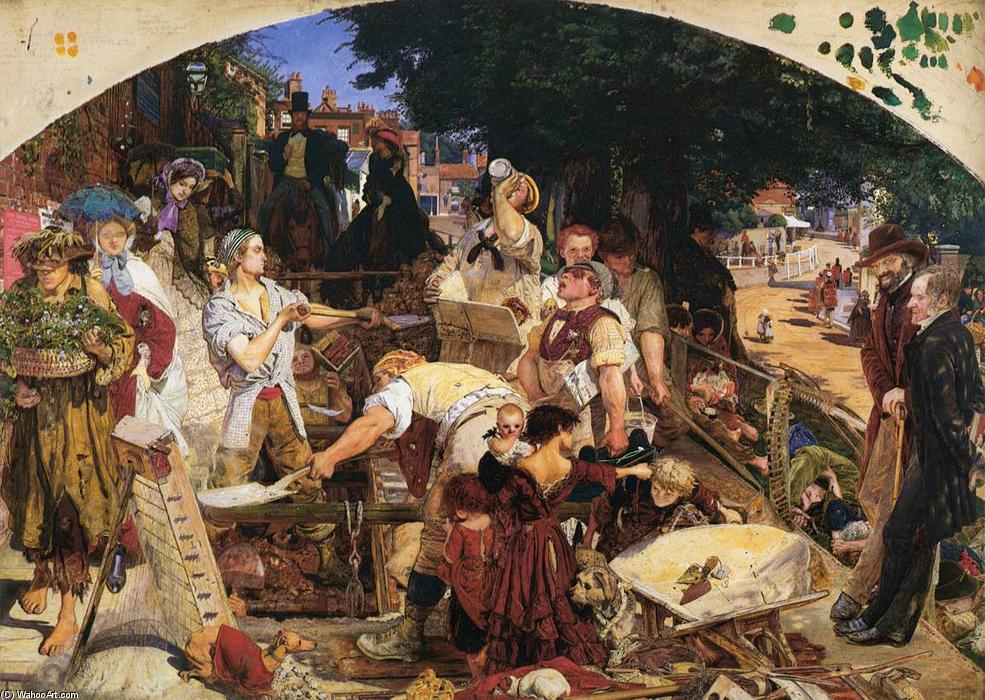
Work
 Oil On Canvas
- WallArt
- Pre-Raphaelite Revival
 1852
1852 137.0 x 197.0 cm
 Galerie d'Art de la Ville
 Afficher la suite
Reproduction à l'huile faite à la main
Huile sur toile peinte à la main, avec cadre et dimensions personnalisés, réalisée sur commande par nos artistes.




P118B $10

P118H $10

P118W $10

P438Z $10

P508JH $12

P508YH $12

P805H $10

P805Z $10

P919BZ $10

P919G $10

P919XJ $10

P959ZH $10

P968JZ $12

W106C $8

W218G $10

W218JH $8

W218Y $10

W307PJ $10

W316G $10

W316PJ $8

W316Y $10

W398PJ $8

W4111J $10

W500HY $15

W500JH $15

W692G $12

W849H $8

W940BG $15

W953PJ $8




Choisissez parmi nos formats prédéfinis qui respectent les proportions originales de l’œuvre.

Vous pouvez saisir vos propres dimensions pour l'adapter à un cadre ou à un espace spécifique. Si la taille sélectionnée ne correspond pas aux proportions de l'image d'origine, nous recadrerons l'œuvre ou prolongerons la peinture avec des éléments peints à la main supplémentaires. Une maquette numérique vous sera envoyée pour approbation avant le début de la production.
Veuillez noter que l'aperçu à l'écran ne reflète pas le recadrage ou l'extension réels. Seule la maquette montrera fidèlement la composition finale.
Bien que des tailles personnalisées soient disponibles, nous vous recommandons de sélectionner une dimension dans la liste prédéfinie afin de préserver les proportions d'origine.
Après la commande, l’équipe OriginalUniqueArt.com contactera le client par e-mail pour obtenir ses instructions et lui fournira une maquette d’aperçu.
Livraison dans le monde entier () en 3 à 4 semaines au lieu des 5 semaines habituelles. (23 juillet). Aucune concession sur la qualité.

Livraison express gratuite dans le monde entier

Toile de lin de haute qualité

Assurance transport complète

Garantie de remboursement des frais de douane

Garantie de fidélité des couleurs

Politique de retour de 60 jours (uniquement en cas de défaut)

Garantie de remboursement à 100%

Réduction sur les achats groupés
 L'option verre n'est disponible que pour les dimensions inférieures à 110 cm.

Work
Technique de reproduction
Format de reproduction
-


Prix total final
-
Description de l'œuvre
Ford Madox Brown’s “Work”: A Symphony of Labor and Salvation
Ford Madox Brown's "Work," completed between 1852 and 1865, isn’t merely a depiction of a bustling Victorian street scene; it’s a profound meditation on the very nature of labor, morality, and the spiritual condition of an era grappling with rapid industrialization. This monumental oil painting, now residing in the Manchester City Art Gallery, stands as a testament to Brown's Pre-Raphaelite vision—a fusion of meticulous realism, vibrant color, and deeply embedded social commentary. The canvas explodes with activity, yet within this apparent chaos lies a carefully orchestrated narrative designed to provoke reflection on the value of honest toil and its connection to divine grace.
The scene unfolds in Hampstead Heath, capturing a group of navvies – laborers constructing a new water supply system—engaged in their arduous task. Brown’s genius lies not just in his technical mastery but in his ability to imbue these figures with dignity and humanity. He avoids the typical romanticized portrayal of manual labor often found in earlier works; instead, he presents them as complex individuals, each contributing to a larger communal effort. The composition is dominated by a semi-circular arrangement, drawing the viewer’s eye towards a central female figure, arguably representing both the Virgin Mary and a symbol of domestic virtue. Surrounding her are a diverse cast—a young couple struggling to feed their child, an unemployed haymaker, a pious middle-class woman distributing temperance tracts, and even a skeptical aristocrat observing the scene from horseback.
A Pre-Raphaelite Vision: Color, Detail, and Symbolism
Brown’s artistic approach is deeply rooted in the Pre-Raphaelite movement's core tenets. He employs a remarkably rich and vibrant palette—a departure from the muted tones often associated with academic painting—to capture the intensity of sunlight and the textures of clothing and skin. The meticulous detail, evident in every brushstroke, invites close scrutiny, revealing an astonishing level of observation and technical skill. The figures are rendered with a heightened sense of realism, yet imbued with a symbolic weight that elevates the scene beyond a simple snapshot of daily life.
Symbolism permeates “Work.” The bright sunlight, for instance, isn’t merely atmospheric; it represents divine illumination—a metaphorical light guiding the laborers towards salvation through honest labor. The placement of figures within the composition is deliberate, creating a visual hierarchy that underscores Brown's moral argument. The central female figure acts as a focal point, connecting the earthly realm of labor with the spiritual realm of grace. Even seemingly mundane details, such as the discarded temperance leaflet or the broken wheelbarrow, carry symbolic weight, highlighting the social injustices and inequalities prevalent in Victorian England.
Historical Context: Industrialization and Moral Reform
“Work” was painted during a period of profound social and economic upheaval. The rise of industrialization had transformed Britain into an empire fueled by factories and railways, but it also created immense poverty, overcrowding, and social unrest. The Pre-Raphaelites, including Brown, sought to challenge the prevailing artistic conventions and address pressing social issues through their art. They were influenced by thinkers like Thomas Carlyle, who argued that labor was a moral imperative—a means of achieving spiritual fulfillment. Carlyle’s ideas resonated deeply with Brown, informing his depiction of work as a pathway to salvation.
The painting reflects the broader intellectual and religious currents of the time. The Victorian era witnessed a resurgence of interest in biblical themes and a renewed emphasis on Christian morality. Brown's decision to depict laborers—often marginalized and ignored by mainstream society—as potential heroes underscores this shift in values. He suggests that true nobility lies not in wealth or status, but in the dedication and perseverance required to earn one’s livelihood through honest work.
Emotional Resonance: A Timeless Message
“Work” continues to resonate with viewers today because of its enduring message about the dignity of labor and the importance of social justice. The painting's raw energy, vibrant colors, and complex symbolism create a powerful emotional experience—one that challenges us to consider our own relationship to work, community, and spirituality. It’s a reminder that even in the midst of hardship and struggle, there is inherent value in contributing to something larger than oneself.
Reproductions of “Work” offer a remarkable opportunity to bring this masterpiece into your home or office—a visual testament to the enduring power of art to inspire reflection and promote social awareness. Each brushstroke captures not just a scene, but an entire era’s anxieties and aspirations, making it a truly timeless addition to any collection.
Biographie de l'artiste
Premières années et carrière
Ford Madox Brown, peintre britannique, est né le 16 avril 1821 à Calais, en France. Son enfance fut marquée par des déménagements fréquents entre logements dans le Pas-de-Calais et chez des proches dans le Kent, ce qui limita ses opportunités éducatives. Cependant, il a montré un talent artistique dès son plus jeune âge, notamment en copiant de vieilles gravures de maîtres.Style artistique et œuvres notables
Les peintures de Brown se caractérisent par leurs couleurs vives et leur réalisme, représentant souvent des sujets historiques et moraux. Son œuvre la plus notable est sans doute Work (1852-1865), une peinture qui met en valeur son style graphique distinctif et à l'imitation de Hogarth. Les fresques de Manchester, une série de douze œuvres peintes pour le town hall de Manchester, sont un autre exemple notable de l’art de Brown. Ces fresques dépeignent l’histoire mancunienne et sont considérées comme certains des plus beaux exemples d’art prérraphaélite.- Work (1852-1865): Cette œuvre majeure illustre son style unique, combinant réalisme et narration morale.
- Fresques de Manchester: Ces fresques monumentales pour le town hall de Manchester sont un témoignage de sa capacité à raconter des histoires complexes à travers l'art mural.
Influence et héritage
Brown était conseiller et ami de membres du groupe prérraphaélite, un ensemble qu’il a influencé par son style artistique. Son travail a été largement reconnu, et il est considéré comme l'un des pionniers de l'art prérraphaélite.- The Pinch of Poverty de Thomas Benjamin Kennington, un artiste associé, témoigne de l’influence du style de Brown sur d’autres artistes.
- Son propre travail, comme The Last of England (peinture), démontre sa capacité à capturer l'essence des sujets historiques et moraux.
Vie personnelle et dernières années
Brown s'est marié deux fois : d’abord avec Elizabeth Bromley en 1841, décédée en 1846, puis avec Emily Hill en 1853, qui est également décédée en 1890. Il a eu cinq enfants, dont Lucy Madox Brown et Catherine Madox Brown.Conclusion
L'héritage de Ford Madox Brown en tant que pionnier de l’art prérraphaélite est indéniable. Son influence sur la communauté artistique et ses œuvres notables continuent d’être célébrées, faisant de lui une figure importante dans l’histoire de l’art britannique.
Ford Madox Brown
1821 - 1893 , France
En bref
- Artistes Influents: ['William Hogarth']
- Date De Naissance: 16 avril 1821
- Influence Sur Les Artistes: ['Thomas Benjamin Kennington']
- Lieu De Naissance: Calais, France
- Mouvement Artistique: Prérraphaélisme
- Nationalité: Britannique
- Nom Complet: Ford Madox Brown
- Œuvres Notables:
- Work (1852-1865)
- Les fresques de Manchester
- Le dernier de l'Angleterre
Articles connexes

Anthony Frederick Sandys: Pre-Raphaelite Vision & Victorian Aesthetic Exploration
Discover the captivating Pre-Raphaelite world of Anthony Frederick Sandys (1829-1904). Explore his mythological scenes, portraits & Victorian artistry. Learn about his influences and lasting legacy.
R.A. Benjamin Williams: Victorian Genre Painting & Social Commentary
Explore the captivating world of Benjamin Williams Leader's Victorian genre paintings. Discover his mastery of naturalism, social commentary & lasting influence on British art. Expert insights at OriginalUniqueArt.

Sir John Everett Millais: Pre-Raphaelite Rebellion & Victorian Narrative Detail
Explore the revolutionary art of Sir John Everett Millais & the Pre-Raphaelite Brotherhood. Discover their radical realism, symbolic narratives, and lasting impact on Victorian aesthetics. A deep dive into 19th-century masterpieces.

Edmund Blair Leighton: Victorian Romance & Narrative Painting's Golden Age
Explore the captivating world of Edmund Blair Leighton, Victorian master of romantic narrative painting. Discover his iconic works & Pre-Raphaelite influences at OriginalUniqueArt.
John Collier: Pre-Raphaelite Realism & Victorian Psychological Portraiture
Explore the captivating world of John Collier, a leading Pre-Raphaelite painter renowned for his psychologically insightful Victorian portraits. Discover his masterpieces and lasting artistic legacy.



