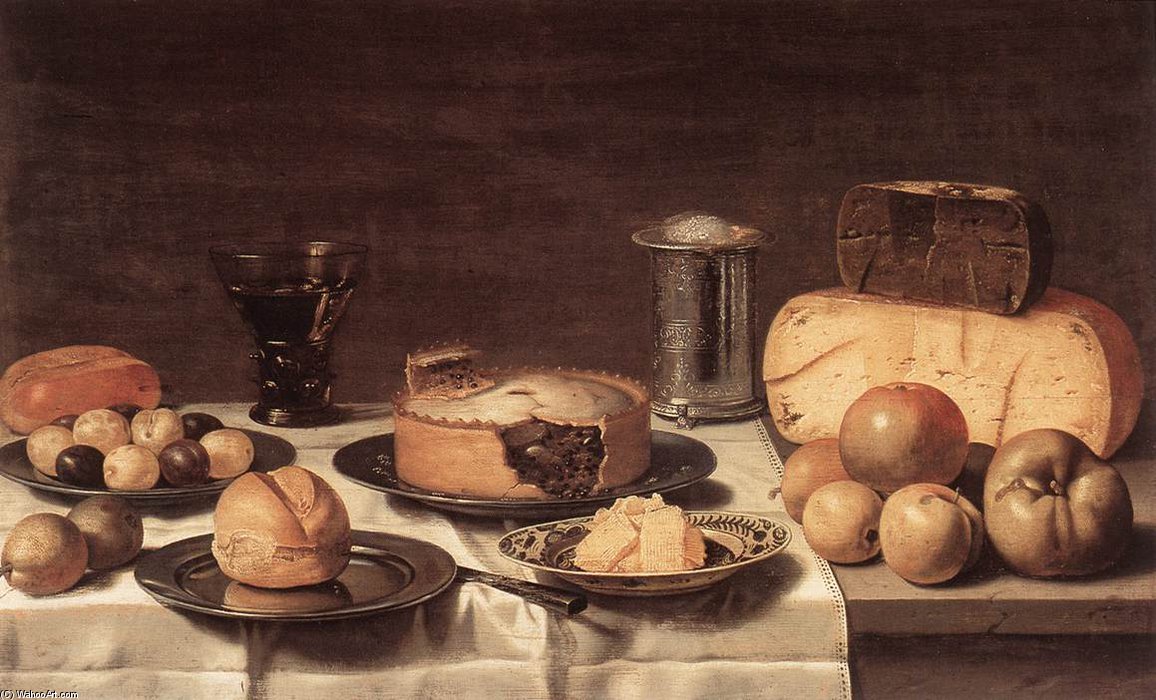
Breakfast
Giclée / Impression d'art
Impression giclée ou sur toile de qualité musée, avec une production rapide et des finitions au choix.
Choisissez parmi nos formats prédéfinis qui respectent les proportions originales de l’œuvre.
Vous pouvez saisir vos propres dimensions pour vous adapter à un cadre ou à un espace spécifique. Si la taille sélectionnée ne correspond pas aux proportions de l'image originale, nous recadrerons l'œuvre ou étendrons l'image avec une bordure en miroir ou une couleur unie. Une maquette numérique vous sera envoyée pour approbation avant le début de la production.
Veuillez noter que l'aperçu à l'écran ne reflète pas le recadrage ou l'extension réelle. Seule la maquette montrera avec précision la composition finale.
Bien que des tailles personnalisées soient disponibles, nous vous recommandons de choisir une dimension dans la liste prédéfinie afin de préserver les proportions originales.
Livraison dans le monde entier () en 2 semaines au lieu des 4/5 semaines habituelles. (18 juillet)
Livraison express gratuite dans le monde entier
Toile de lin de haute qualité
Assurance transport complète
Garantie de remboursement des frais de douane
Garantie de fidélité des couleurs
Politique de retour de 60 jours (uniquement en cas de défaut)
Garantie de remboursement à 100%
Réduction sur les achats groupés
Breakfast
Giclée / Impression d'art
Format de reproduction
-
Prix total final
-
Biographie de l'artiste
Floris van Schooten: A Master of Dutch Still Life
Floris Gerritsz van Schooten (c. 1585 – November 14, 1656) stands as a pivotal figure in the development of still life painting within the Dutch Golden Age. Often operating behind the scenes of more flamboyant contemporaries, he quietly yet profoundly shaped the genre, reflecting its evolution and absorbing the innovations of Haarlem’s vibrant artistic community. His legacy lies not in revolutionary techniques but in his meticulous observation, skillful rendering, and a deep understanding of how to capture the essence of everyday objects – from humble breakfast spreads to elaborate kitchen scenes – imbued with a subtle sense of vanitas.
Born into a prosperous Catholic family who had migrated from Amsterdam to Haarlem seeking greater religious tolerance in 1612, Floris’s early life was steeped in the traditions of his lineage. His father, Gerrit Jacobsz van Schooten, was a member of this influential family, and his marriage to Rycklant Bol van Zanen, daughter of a prominent beer brewer, provided him with both social standing and a connection to Haarlem's economic heart. This background subtly influenced his subject matter – frequently depicting the bounty of the table, reflecting the wealth and prosperity of the era.
Van Schooten’s artistic journey began within the walls of the St. Luke’s Guild in Haarlem, a crucial institution for training and regulating artists. He quickly ascended through its ranks, eventually becoming Dean in 1639, demonstrating his respect and expertise within the local art world. His career spanned several decades, during which he produced an impressive oeuvre estimated to be around 120 works – a testament to his consistent output and dedication. Remarkably, only one fully signed painting is known: a breakfast still life now housed in the Von der Heydt Museum of Wuppertal, Germany, offering a rare glimpse into the artist’s own intentions.
The Haarlem Influence and Artistic Connections
Van Schooten's artistic development was inextricably linked to the thriving still-life scene of Haarlem. He absorbed the techniques and sensibilities of his contemporaries, particularly the masterful works of Floris van Dyck, Pieter Claesz., and Roelof Koets – all prominent figures within the guild. These artists served as significant influences, shaping his approach to composition, color palettes, and the depiction of textures. Notably, he mirrored the innovations occurring in Haarlem’s still life community, demonstrating a keen awareness of contemporary trends.
His work also reveals an appreciation for earlier masters like Pieter Aertsen and Joachim Beuckelaer, whose large-scale market scenes had established conventions that Van Schooten skillfully adapted. He simplified the complex arrangements of these predecessors, creating a greater sense of order and stability within his compositions. This careful assimilation of influences is a hallmark of his style – he wasn’t an innovator himself, but rather a diligent recorder and interpreter of artistic developments.
Subject Matter and Recurring Motifs
Van Schooten's oeuvre is characterized by its diverse range of still life subjects. He excelled in depicting breakfast pieces, showcasing the sumptuousness of morning meals with carefully arranged ham, cheese, bread, and fruit. Equally adept was he at capturing kitchen scenes – elaborate displays of culinary provisions, reflecting the domestic rhythms of 17th-century Dutch households. Market scenes also featured prominently, offering glimpses into the bustling commerce of Haarlem’s streets.
Recurring motifs punctuated his work, most notably the pairing of ham and cheese. These seemingly simple combinations became a signature element, imbued with symbolic weight – representing abundance, prosperity, and perhaps even mortality (a common theme in vanitas paintings). His meticulous attention to detail—the sheen of polished silver, the texture of ripe fruit, the folds of linen—elevated these everyday objects into captivating works of art.
Legacy and Historical Significance
Despite his relatively modest profile, Floris van Schooten played a crucial role in documenting the evolution of still life painting during the Dutch Golden Age. His works provide invaluable insights into the artistic practices and aesthetic sensibilities of Haarlem’s guild system. Abraham Bredius, a prominent Dutch art historian, recognized the significance of the monogram “F.v.S” or “FVS” as identifying the artist, solidifying his place within the historical record.
His oeuvre serves as a testament to the dynamic artistic landscape of 17th-century Netherlands – a reflection of both established traditions and emerging trends. Through his skillful rendering of everyday objects, Van Schooten offered viewers a poignant meditation on wealth, mortality, and the beauty found in the ordinary.
floris van schooten
1580 - 1656
En bref
- Artistic Movement Or Style: Still life painting
- Artists Or Movements Influenced By This Artist:
- Jacob Samuel Beck
- François Garnier
- Artists Who Influenced This Artist:
- Floris van Dyck
- Pieter Claesz.
- Roelof Koets
- Date Of Birth: 1580
- Date Of Death: 1656
- Full Name: Floris Gerritsz van Schooten
- Nationality: Dutch
- Notable Artworks:
- Breakfast paintings
- Kitchen still lifes
- Fruit pieces
- Place Of Birth: Haarlem, Netherlands

L'option verre n'est disponible que pour les dimensions inférieures à 110 cm.