Menu

() ·

A painting made for you, by hand

Figure study

Reproduction à l'huile faite à la main

Huile sur toile peinte à la main, avec cadre et dimensions personnalisés, réalisée sur commande par nos artistes. ( Passer au format impression Passer au format numérique)

Description de la pièce

Explore Filippo Lippi's masterful pen drawing 'Figure Study,' capturing the contemplative grace of a Renaissance woman amidst classical drapery and subtle shading techniques.

Biographie de l'artiste

Filippo Lippi (1406-1469) : peintre florentin de la Renaissance, célèbre pour ses Madones lyriques, son réalisme et ses compositions novatrices. Influencé par Botticelli, il a façonné l'art du Quattrocento.

from ·

Chapter 1

How large should it be?

Slide to change the size; the picture on the left shows the frame at its real width. The proportions of the original are kept.

Format standard
sur mesure
CM
INCH

Choisissez parmi nos formats prédéfinis qui respectent les proportions originales de l’œuvre.

largeur
hauteur

Saisissez la largeur et la hauteur souhaitées, pour s'adapter à votre cadre ou à votre mur. Cette œuvre est peinte à la main ; ainsi, pour un format de forme différente, l'artiste peut peindre un peu plus autour du tableau ou réduire légèrement les bords — c'est vous qui choisissez. Nous vous envoyons une maquette numérique pour approbation avant que la peinture ne commence. L'image présentée sur cette page ne reflète pas le résultat réel — seule la maquette le fait.

Chapter 2

How should it arrive?

Choose the edges of the stretched canvas

Choose your frame

Corner sample of the WhiteWrap canvas edge finish, stretched on bois massif bars
White €1
Corner sample of the BlurSideWrap canvas edge finish, stretched on bois massif bars
Blurside €1
Corner sample of the ExtendedWrap canvas edge finish, stretched on bois massif bars
Extended €1
Corner sample of the P118B picture frame: polystyrène moulé, 5 cm wide and 3 cm thick
P118B €10
Corner sample of the P118H picture frame: polystyrène moulé, 5 cm wide and 3 cm thick
P118H €10
Corner sample of the P118W picture frame: polystyrène moulé, 5 cm wide and 3 cm thick
P118W €10
Corner sample of the P438Z picture frame: polystyrène moulé, 5.5 cm wide and 3.5 cm thick
P438Z €10
Corner sample of the P508JH picture frame: polystyrène moulé, 7 cm wide and 3.5 cm thick
P508JH €12
Corner sample of the P508YH picture frame: polystyrène moulé, 7 cm wide and 3.5 cm thick
P508YH €12
Corner sample of the P805H picture frame: polystyrène moulé, 5 cm wide and 3.5 cm thick
P805H €10
Corner sample of the P805Z picture frame: polystyrène moulé, 5 cm wide and 3.5 cm thick
P805Z €10
Corner sample of the P919BZ picture frame: polystyrène moulé, 7 cm wide and 3.5 cm thick
P919BZ €10
Corner sample of the P919G picture frame: polystyrène moulé, 7 cm wide and 3.5 cm thick
P919G €10
Corner sample of the P919XJ picture frame: polystyrène moulé, 7 cm wide and 3.5 cm thick
P919XJ €10
Corner sample of the P959ZH picture frame: polystyrène moulé, 5 cm wide and 3 cm thick
P959ZH €10
Corner sample of the P968JZ picture frame: polystyrène moulé, 6 cm wide and 4 cm thick
P968JZ €12
Corner sample of the W106C picture frame: bois massif, 5 cm wide and 3 cm thick
W106C €8
Corner sample of the W218G picture frame: bois massif, 5 cm wide and 3 cm thick
W218G €10
Corner sample of the W218JH picture frame: bois massif, 5 cm wide and 3 cm thick
W218JH €8
Corner sample of the W218Y picture frame: bois massif, 5 cm wide and 3 cm thick
W218Y €10
Corner sample of the W307PJ picture frame: bois massif, 6 cm wide and 3 cm thick
W307PJ €10
Corner sample of the W316G picture frame: bois massif, 6 cm wide and 3 cm thick
W316G €10
Corner sample of the W316PJ picture frame: bois massif, 6 cm wide and 3 cm thick
W316PJ €8
Corner sample of the W316Y picture frame: bois massif, 6 cm wide and 3 cm thick
W316Y €10
Corner sample of the W398PJ picture frame: bois massif, 5 cm wide and 3 cm thick
W398PJ €8
Corner sample of the W4111J picture frame: bois massif, 6.5 cm wide and 3.5 cm thick
W4111J €10
Corner sample of the W500HY picture frame: bois massif, 7 cm wide and 5 cm thick
W500HY €15
Corner sample of the W500JH picture frame: bois massif, 7 cm wide and 5 cm thick
W500JH €15
Corner sample of the W692G picture frame: bois massif, 8 cm wide and 4 cm thick
W692G €12
Corner sample of the W849H picture frame: bois massif, 5 cm wide and 3 cm thick
W849H €8
Corner sample of the W940BG picture frame: bois massif, 7.5 cm wide and 4.5 cm thick
W940BG €15
Corner sample of the W953PJ picture frame: bois massif, 6 cm wide and 3.5 cm thick
W953PJ €8
Corner sample of the H24-GOLD picture frame: bois sculpté et apprêté au gesso, 10 cm wide and 6 cm thick
H24-GOLD €30
Corner sample of the H24-SILVER picture frame: bois sculpté et apprêté au gesso, 10 cm wide and 6 cm thick
H24-SILVER €30
Corner sample of the H36-GOLD picture frame: bois sculpté et apprêté au gesso, 15 cm wide and 6.5 cm thick
H36-GOLD €45
Corner sample of the H36-SILVER picture frame: bois sculpté et apprêté au gesso, 15 cm wide and 6.5 cm thick
H36-SILVER €45
Aperçu du cadre
Sous cadre

Moulding: . Overall size with the frame: .

Chapter 3

Who paints it, and should anything change?

Examples of what can be changed: Replace face with customer photo; Add pet (e.g., replace cat with dog); Include hidden message in background; Change background landscape or elements.
After order, OriginalUniqueArt.com team will email client for instructions and provide a mockup preview

Livraison dans le monde entier () en 3 à 4 semaines au lieu des 5 semaines habituelles. (30 octobre). Aucun compromis sur la qualité.

Chapter 4

The finishing touches

A nameplate, as in a museum?

Détails de la plaque en bronze gravée

This elegant plaque features the artist's name and the title of the artwork, finely engraved for a timeless presentation.

It is made from bronze with a refined, elegant finish. The text is precisely laser-engraved for a sharp and permanent result. Measuring 9x2 cm, the plaque is compact yet easy to read. It's built to be durable and scratch-resistant, offering a professional, museum-quality look. Mounting is simple thanks to the included adhesive backing.

Détails de la plaque en acrylique transparent

The plaque includes essential engraved details such as the artist's name, the title of the artwork, the date it was created, the type of media used-like oil on canvas or watercolor-a brief description of the piece, and a QR code that links to the complete artwork information.

It is crafted from clear acrylic, offering a sleek, modern appearance. The text is UV-engraved in black to ensure strong visual contrast. With a size of 10x15 cm, it ensures optimal readability. It comes equipped with two metal hooks for secure wall mounting. The plaque is designed to be weather-resistant, making it suitable for various environments, and it includes interactive features that work seamlessly with smartphone scanning.

Détails de la plaque en acrylique noir

This elegant plaque includes engraved information such as the artist's name, the title of the artwork, the date it was created, the type of media used (like oil on canvas or watercolor), a short description of the artwork, and a QR code for quick access to more information.

The plaque itself is made from refined black acrylic with a premium finish. The text is laser-engraved in white for high contrast and readability. Its size is 10x15 cm, designed to be easy to read. It comes with two metal hooks for professional mounting. The design is sleek and fits any interior style. It is also weather-resistant and durable, with built-in digital integration for mobile compatibility.

A protective varnish?

When do you need it?

Chapter 5

Your painting, as you ordered it

Figure study

Technique de reproduction

Format de la reproduction

-

Artiste de prestige

Plus de détails, de finesse et un temps de production accru

-

Cadre de reproduction

-

-

Pour les œuvres ou reproductions dont un côté mesure plus de 105 cm (environ 41 pouces), le cadre sera expédié sous forme de kit démonté. Cette méthode garantit une livraison sécurisée et prévient tout dommage pendant le transport.

Assemblage professionnel requis - ce produit n'est pas destiné au bricolage (DIY).
Le kit doit être assemblé et la toile tendue par un encadreur professionnel expérimenté, en utilisant de la colle à bois (non fournie), une pince à tendre la toile et des serre-joints pour maintenir les traverses d'équerre pendant le séchage de la colle. Un assemblage incorrect ou une tension inégale de la toile peut endommager l'œuvre de manière irréversible et n'est pas couvert par notre garantie.

  • Toutes les baguettes en bois massif sont incluses, découpées avec précision à la taille requise.

  • À assembler avec les vis fournies, ainsi qu'avec de la colle à bois pour les assemblages d'angles (non fournie), à prévoir par votre encadreur.

  • L'utilisation d'outils professionnels est requise et non incluse : une pince à tendre la toile (tendeur) et des serre-joints pour maintenir les baguettes bien d'équerre pendant le séchage de la colle.

Important :
L'assemblage des angles nécessite de la colle à bois, les barres doivent être maintenues avec des serre-joints jusqu'au séchage complet de la colle, et le tendage de la toile sur le châssis assemblé nécessite une pince à tendre la toile. Aucun de ces éléments n'est inclus dans le kit. Veuillez consulter un encadreur professionnel expérimenté avant de commander ce format.

Cartel

-

-

Vernis de protection

Vernis brillant (intensifie les couleurs, protège de la lumière et de l'humidité)

-

Personnaliser mon œuvre

Exemples de personnalisation : remplacer le visage par une photo du client ; ajouter un animal de compagnie (par exemple, remplacer un chat par un chien) ; inclure un message caché en arrière-plan ; modifier le paysage ou les éléments d'arrière-plan.

-

Livraison urgente

Livraison dans le monde entier () en 3 à 4 semaines au lieu des 5 semaines habituelles. (30 octobre). Aucune concession sur la qualité.

-

Livraison express

Livraison dans le monde entier () sous 5 semaines. (6 novembre).

Inclus

Prix total

€ 266

Prix total € 266

L'option verre n'est disponible que pour les dimensions inférieures à 110 cm.

Included with every order

  • Livraison express gratuite dans le monde entier
  • Toile de lin de qualité supérieure
  • Assurance transport complète
  • Garantie de remboursement des droits de douane
  • Garantie de fidélité des couleurs
  • Politique de retour de 100 jours (uniquement en cas de défaut)
  • Garantie de remboursement à 100%
  • Offre de tarifs dégressifs

A Study in Contemplation: Filippo Lippi’s Figure Drawing

The artwork presented here—a meticulously rendered pen drawing titled “Figure study”—offers a glimpse into the artistic sensibilities of Filippo di Tommaso Lippi, one of Florence's most celebrated Renaissance masters. Executed around 1452, this piece transcends mere representation; it embodies the humanist ideals that were reshaping European thought during the period and speaks to themes of introspection and idealized beauty—elements deeply rooted in classical tradition.

Historical Context: The Florentine Renaissance

Lippi’s artistic journey unfolded against the backdrop of Florence's burgeoning Renaissance. Following the rediscovery of Classical texts and art, artists like Lippi sought inspiration from ancient Greece and Rome, striving to capture human form with unprecedented accuracy and grace. This fascination with antiquity wasn’t simply aesthetic; it represented a profound shift in worldview—a belief in human potential and an embrace of reason alongside faith—influencing every facet of Florentine culture and artistic production. The drawing itself reflects this intellectual fervor, mirroring the humanist preoccupation with capturing the essence of humanity through observation and disegno (drawing).

Technique: Mastering Line and Tone

The artist’s mastery is evident in his masterful application of pen and ink on paper. Lippi employed a technique characterized by delicate hatching and cross-hatching—methods that allowed him to achieve remarkable tonal variation without resorting to color. These lines, meticulously crafted with varying pressures, create subtle gradations of gray, simulating the textures of skin and drapery with astonishing realism. The artist’s careful attention to detail is further underscored by the use of fine line weights, emphasizing contours and conveying a sense of movement—particularly noticeable in the upward tilt of the woman's left arm as she draws her hair. This technique wasn’t merely about replicating visual appearances; it was about communicating emotion and capturing the psychological state of the subject.

Composition and Symbolism: Ideal Beauty and Inner Reflection

The composition centers around a single female figure positioned prominently within the frame, directing the viewer's gaze directly to her expressive face. Her posture—slightly turned towards the viewer—suggests contemplation and invites us to consider her inner life. The positioning of her arm contributes to this sense of movement and conveys an unspoken yearning for serenity. Symbolically, the drawing aligns with Renaissance ideals of beauty—specifically, the concept of “ideal bellezza,” which prioritized harmony, proportion, and grace. Lippi’s depiction isn't merely a portrait; it’s an exploration of human dignity and spiritual contemplation—themes that resonated deeply within the humanist worldview of his time.

Emotional Impact: A Moment Frozen in Time

Looking at "Figure study," one senses not just visual precision but also palpable emotion. The soft, diffused lighting enhances the drawing's ethereal quality, creating subtle tonal nuances that convey a sense of quietude and introspection. The artist’s skillful rendering captures a fleeting moment—a gesture of repose—that speaks to the universal human desire for peace and contemplation. It is this ability to evoke feeling through visual form that elevates Lippi’s work beyond mere representation, cementing its place as an enduring testament to Renaissance artistic achievement.

Questions et réponses

Où puis-je voir un aperçu de « Figure study » ?

Pour prévisualiser une reproduction de «Figure study» de Filippo Lippi, consultez la page d'aperçu de l'œuvre : Aperçu en situation.

«Figure study» de Filippo Lippi est-il une œuvre célèbre ?

«Figure study» de Filippo Lippi affiche un niveau de popularité Recognized. Cette classification témoigne de la reconnaissance de l'œuvre auprès du public.

Quelle tonalité émotionnelle accompagne le style Renaissance Humanism de « Figure study » ?

«Figure study» dégage une tonalité émotionnelle Reflective au sein du mouvement Renaissance Humanism.

More about this painting

Aperçu en situation Visualiser en RA Passer au format impression Passer au format numérique Envoyer
Détails de l'œuvre Guide Ajouter aux favoris Télécharger l'image Articles similaires Radiographie Diaporama Q&A Statistiques

In numbers

  • 1452the year it was painted
  • 29frames to choose from
  • standard sizes, in its own proportions
  • 5weeks to paint and deliver it
Filippo Lippi

Filippo Lippi

1406 - 1469, Italie

Quick facts about Filippo Lippi

  • Artistic Movement Or Style: Renaissance précoce
  • Artists Or Movements Influenced By This Artist: ['Botticelli']
  • Artists Who Influenced This Artist: ['Masaccio']
  • Date Of Birth: 1406
  • Date Of Death: 1469
  • Full Name: Filippo di Tommaso Lippi
  • Nationality: Italien
  • Notable Artworks:
    • Tarquinia Madonna
    • Annunciazione
  • Place Of Birth: Florence, Italie

Biographie de l'artiste

A Florentine Rebel: The Life and Art of Filippo Lippi

Filippo di Tommaso Lippi, plus communément connu sous le nom de Fra Filippo del Carmine, est une figure aussi brillante que controversée de la Renaissance florentine. Né en 1406 dans un contexte familial modeste – son père était boucher – sa vie fut marquée par des pertes précoces et une trajectoire singulière qui l’amena à embrasser le monachisme carmélite, tout en cultivant une passion dévorante pour la peinture. Son parcours, loin d'être celui d'un simple religieux, est celui d'un artiste rebelle, un homme déchiré entre la foi et les plaisirs terrestres, dont l’œuvre témoigne d’une profonde humanité et d’une sensibilité novatrice.

Early Years and the Carmelite Order

Lippi passa son enfance dans une situation précaire, orphelin à deux ans suite à la mort de sa mère. Il fut confié à son aunt Mona Lapaccia, qui le plaça ensuite auprès des frères du couvent carmélite de Florence. Cette décision, loin d’être un simple arrangement familial, marqua profondément son destin. L'environnement monastique lui offrit une éducation et un accès aux arts qu'il ne pourrait avoir ailleurs. Il y découvrit la beauté des fresques de Masaccio dans la chapelle Brancacci, une expérience qui allait révolutionner sa vision de l’art et le pousser à explorer les possibilités du réalisme et de la lumière. Il s'installa au couvent en 1420 et prit ses vœux carmélites en 1425, devenant ainsi un prêtre. Cette période de vie monastique fut essentielle pour son développement artistique, lui permettant d’affiner sa technique et de développer son propre style, tout en restant confronté aux exigences de la discipline religieuse.



The Influence of Masaccio and the Development of His Style

Lippi fut profondément influencé par le travail de Masaccio, notamment ses fresques dans la chapelle Brancacci. Il admirait particulièrement l'utilisation de la perspective et la manière dont Masaccio donnait vie aux figures humaines. Cette influence se retrouve dans les premières œuvres de Lippi, comme *La Madone de Tarquinia*, où on peut déjà observer un nouvel intérêt pour le réalisme et une attention particulière portée à la représentation du corps humain. Cependant, Lippi ne se contenta pas d'imiter Masaccio ; il développa rapidement son propre style, caractérisé par une grâce lyrique, des couleurs délicates et une profondeur émotionnelle subtile. Il introduisit une intimité nouvelle dans les scènes religieuses, en accordant plus d’importance aux sentiments et aux émotions humaines que à la simple représentation formelle de l'objet divin.

Florentine Commissions and Artistic Flourishing

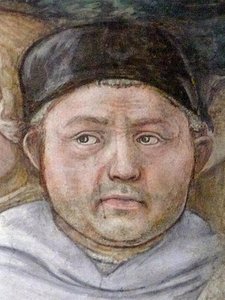
Lippi établit son atelier à Florence, où il reçut de nombreuses commandes prestigieuses de familles influentes comme les Médicis. Il réalisa des œuvres majeures telles que *L’Annonciation et les Sept Saints*, qui témoignent de sa maîtrise de la composition et de ses compétences techniques. *La Couronnement de la Vierge*, achevée en 1441 pour les nonnes de Sant'Ambrogio, est particulièrement remarquable : elle présente une figure à mi-corps, souvent interprétée comme un autoportrait de Lippi lui-même – une affirmation audacieuse de son identité artistique dans le contexte d’une œuvre religieuse. Il continua à explorer les limites de la représentation humaine, intégrant des éléments de la vie quotidienne et des expressions faciales réalistes dans ses tableaux.

Controversy and Personal Life

La vie de Lippi fut loin d'être paisible. Il était souvent impliqué dans des difficultés financières, des litiges juridiques et des accusations de falsification. L’affaire la plus célèbre est sans doute son enlèvement de Lucrezia Buti, une novice du couvent de Prato, avec laquelle il épousa après plusieurs années de scandale et de controverse. Cet acte, choquant pour l'époque, reflète le caractère rebelle de Lippi et sa volonté de défier les normes sociales en quête de bonheur personnel. Malgré ces turbulences, il continua à produire des œuvres d’art de grande qualité, témoignant de son talent indéniable.

Legacy and Influence

Malgré la turbulence de sa vie, Filippo Lippi a laissé une empreinte durable sur l'art de la Renaissance. Il était un peintre très demandé et son atelier devint un foyer pour les futurs maîtres. Parmi ses élèves les plus brillants figurent Sandro Botticelli et Francesco di Pesello (Pesellino), tous deux ayant connu un succès considérable dans leur propre domaine. L’influence de Lippi se retrouve dans la beauté lyrique et l'expression émotionnelle qui caractérisent une grande partie de la peinture florentine du tardo-Quattrocento. Il a comblé le fossé entre le naturalisme précoce de Masaccio et l'esthétique raffinée du Renaissance classique, ouvrant la voie à une nouvelle génération d’artistes pour explorer les possibilités de la forme humaine et de l'émotion. Son aptitude à combiner piété religieuse avec réalisme terrestre, associée à ses compositions innovantes et sa technique experte, a assuré sa place comme l'un des personnages les plus importants et captivants de la Renaissance italienne. Il mourut à Spoleto en 1469, laissant derrière lui un héritage qui continue d’inspirer admiration et émerveillement des siècles plus tard. Son œuvre témoigne du pouvoir de la créativité humaine et de l'attrait durable de la beauté.

Informations clés

  • Year: 1452
  • Title: Figure study
  • Medium: Pen and ink on paper
  • Location: Private Collection
  • Movement: Early Renaissance
  • Dimensions: 292 x 199 cm

Quiz d'art

Chaque question ne comporte qu'une seule bonne réponse.

Question 1:
What artistic movement is Filippo Lippi’s ‘Figure study’ associated with?
Question 2:
The image description mentions a 'soft and diffused' lighting effect. Why is this significant in the context of Renaissance art?
Question 3:
What technique did Lippi employ to create shading and volume in the drawing?
Question 4:
The description notes that the pose of the woman suggests 'introspection or preparation.' What does this imply about Lippi's artistic intentions?
Question 5:
What is the primary stylistic characteristic of ‘Figure study’ according to the text?