

 Aperçu en situation
 Envoyer
 Partager
 Détails de l'œuvre
 Guide
Guide

 Télécharger l'image
 Articles similaires
 Radiographie
 Diaporama
 Q&A
Q&A Statistiques
Ethnographic drawing -
 Ink On Paper
- Ethnographic Drawing
 1900
1900- 19th Century
 61.0 x 43.0 cm
 Musée National d'Éthnologie
 Lire la suite
L’œuvre d'art présentée sur cette page est protégée par le droit d'auteur, ce qui signifie que nous ne pouvons légalement créer ou vendre de reproduction identique. Cette protection est appliquée en vertu d'accords internationaux tels que la Convention de Berne et par les lois nationales, notamment celles énoncées par le Loi américaine sur le droit d'auteur - Titre 17.
Cette méthode est pleinement conforme aux réglementations sur le droit d'auteur car elle ne repose pas sur la copie ou la duplication de l'œuvre protégée. Il s'agit plutôt d'une réinterprétation créative — une nouvelle peinture qui s'inspire de l'original sans pour autant lui être identique.
Giclées et impressions d'art
Impressions giclées ou sur toile de qualité musée, avec une production rapide et des finitions au choix. ( Commander la reproduction peinte à la main Passer au format numérique)




P118B €10

P118H €10

P118W €10

P438Z €10

P508JH €12

P508YH €12

P805H €10

P805Z €10

P919BZ €10

P919G €10

P919XJ €10

P959ZH €10

P968JZ €12

W106C €8

W218G €10

W218JH €8

W218Y €10

W307PJ €10

W316G €10

W316PJ €8

W316Y €10

W398PJ €8

W4111J €10

W500HY €15

W500JH €15

W692G €12

W849H €8

W940BG €15

W953PJ €8




Choisissez parmi nos formats prédéfinis qui respectent les proportions originales de l’œuvre.

Saisissez la largeur et la hauteur souhaitées pour qu'elles s'adaptent à votre cadre ou à votre mur. Une impression peut être recadrée, mais jamais agrandie au-delà de l'image originale ; ainsi, un format de forme différente entraînera la perte d'une partie de l'image. Nous vous envoyons une maquette numérique pour approbation avant toute impression. L'image présentée sur cette page ne montre pas le recadrage réel — seule la maquette le permet.
Livraison dans le monde entier () en 2 semaines au lieu des 4/5 semaines habituelles. (30 octobre)

Livraison express gratuite dans le monde entier

Toile de lin de qualité supérieure

Assurance transport complète

Garantie de remboursement des droits de douane

Garantie de fidélité des couleurs

Politique de retour de 100 jours (uniquement en cas de défaut)

Garantie de remboursement à 100%

Offre de tarifs dégressifs
 L'option verre n'est disponible que pour les dimensions inférieures à 110 cm.

Ethnographic drawing -
Giclées et impressions d'art
Format de la reproduction
-


Prix total
€ 71
A Silent Symphony in Ink
In the delicate intersection of scientific observation and artistic mastery lies Fernando Barbedo Galhano’s 1900 ethnographic drawing of the ‘gabo.’ This monochrome masterpiece serves as more than a mere illustration; it is a profound window into a vanishing world. The subject, a gourd lute from South America, is captured with such meticulous precision that one can almost feel the organic texture of the dried gourd and the tension of the strings. Rendered in grayscale tones against a soft, cream-colored backdrop, the composition possesses a quiet, meditative stillness. Every line serves a purpose, tracing the contours of this indigenous instrument with a reverence that transcends simple documentation, inviting the viewer to contemplate the rhythmic soul of a culture through the silent medium of pen and ink.
The technique employed by Galhano is a testament to the rigorous discipline of early 20th-century ethnographic illustration. Utilizing fine-point pen and ink, the artist achieves a remarkable sense of depth and three-dimensionality through sophisticated hatching and varying line weights. There is a rhythmic quality to the linework that mimics the very music the gabo was designed to produce. The lighting is soft and diffuse, eschewing dramatic shadows in favor of an even, honest illumination that celebrates the structural integrity of the instrument. This realistic, observational style allows the geometric precision of the neck and strings to harmonize with the organic, rounded forms of the gourd, creating a balanced visual experience that is both intellectually stimulating and aesthetically soothing.
For the discerning collector or interior designer, this piece offers a sophisticated touch of historical elegance. Its neutral palette and fine-line detail make it an incredibly versatile addition to a curated space, capable of anchoring a room with its scholarly weight while blending seamlessly into modern, minimalist, or classical settings. Beyond its decorative value, the drawing carries an emotional resonance—a poignant reminder of our shared human heritage and the importance of preserving cultural artifacts. Owning a reproduction of this work is not merely about acquiring art; it is about hosting a piece of history that celebrates the beauty of human ingenuity and the enduring power of ethnographic storytelling.
Questions et réponses
L'artiste Fernando Barbedo Galhano, créateur de « Ethnographic drawing - », est-il connu sous d'autres noms ?
Fernando Barbedo Galhano est également connu sous les noms suivants : Fernando Galhano.
Qui a créé « Ethnographic drawing - » et en quelle année ?
Fernando Barbedo Galhano a réalisé « Ethnographic drawing - » en 1900.
Que représente "Ethnographic drawing -" et quelle atmosphère s'en dégage ?
«Ethnographic drawing -» met en scène indigenous instruments, south american culture, ethnographic art, musical instrument, 1900s illustration, cultural heritage, traditional craftsmanship, et l'atmosphère qui s'en dégage est Nostalgic.
Biographie de l'artiste
Fernando Barbedo Galhano, artiste portugais, a laissé une empreinte indélébile sur le monde de l'art et de l'ethnographie. Né à Porto en 1904 et disparu en 1995, la vie de Galhano fut un témoignage vibrant de ses talents multiples en tant que peintre, chercheur, illustrateur et ethnographe.
Jeunesse et formation
Galhano a entamé son voyage artistique sous la tutelle du maître Artur Loureiro à Porto. Cette formation fondamentale a non seulement affiné ses compétences picturales, mais lui a également inculqué une profonde appréciation des nuances culturelles du Portugal. Sa participation aux expositions du Salão Silva Porto en 1937, 1943, 1946, 1951 et 1954 a davantage consolidé sa présence au sein de la communauté artistique portugaise.Contributions à l'ethnographie
En tant que membre du Centro de Estudos de Etnografia Peninsular en 1948, Galhano a collaboré avec des figures notables telles que Jorge Dias, Ernesto Veiga de Oliveira et Benjamim Pereira. Cet engagement a marqué un tournant décisif dans sa carrière, l'établissant comme l'un des plus grands illustrateurs ethnographiques de son époque. Son œuvre embrasse un large spectre de thèmes, incluant :- les charrettes à bœufs : un témoignage des transports traditionnels portugais.
- l'architecture populaire : documentant l'essence même de l'architecture vernaculaire au Portugal.
- les outils agricoles : mettant en lumière les instruments qui ont façonné le paysage agricole du pays.
- les systèmes de transport, la vannerie, la poterie, la technologie textile et les systèmes de meunerie : offrant un aperçu complet des diverses pratiques culturelles du Portugal.
- la pêche : capturant l'essence de la culture maritime portugaise.
Héritage et impact
L'héritage de Galhano s'étend bien au-delà de son propre temps. En tant que l'un des fondateurs du Museu Nacional de Etnologia à Lisbonne, il a joué un rôle pivot dans la préservation du patrimoine culturel du Portugal. Ses milliers de dessins ne se contentent pas de documenter divers aspects de la culture portugaelle ; ils servent également de fenêtre ouverte sur les anciennes colonies du pays.- L'œuvre de Galhano est un véritable trésor pour les chercheurs comme pour les passionnés d'art, offrant un regard profond sur les complexités de la vie portugaise.
- Ses contributions à l'ethnographie ont été reconnues mondialement, cimentant son statut d'un des artistes les plus influents de son ère.
- L'héritage de Galhano continue d'inspirer les nouvelles générations d'artistes, de chercheurs et d'ethnographes.
Conclusion
La vie de Fernando Barbedo Galhano fut une riche tapisserie mêlant art, recherche et ethnographie. À travers son travail, il a laissé une trace indélébile dans l'histoire de l'art et continue d'inspirer ceux qui marchent sur ses traces.- Explorez davantage les œuvres de Galhano sur https://OriginalUniqueArt.com/@/fernando-barbedo-galhano
- Découvrez le Museu Nacional de Etnologia à Lisbonne et l'histoire de sa fondation sur https://OriginalUniqueArt.com/@@/museu-nacional-de-etnologia-lisbon-portugal
- En savoir plus sur l'illustration ethnographique et sa signification dans le monde de l'art sur https://en.wikipedia.org/wiki/ethnographic_illustration
Références :
- Fernando Barbedo Galhano, Wikipedia.
- Museu Nacional de Etnologia, Lisbonne, Portugal - https://OriginalUniqueArt.com/@@/museu-nacional-de-etnologia-lisbon-portugal
- Centro de Estudos de Etnografia Peninsular, Portugal - https://OriginalUniqueArt.com/@/centro-de-estudos-de-etnografia-peninsular
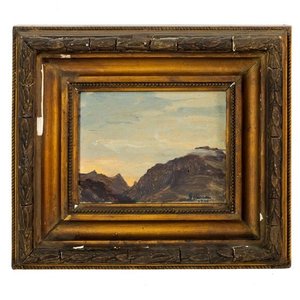
Fernando Barbedo Galhano
1904 - 1995 , Portugal
Articles connexes

The Enduring Power of Line: Exploring Themes & Techniques in Drawing Across Art History
Explore the rich history of drawing! Discover key techniques like linear perspective & iconic artists from the Renaissance to modern times. Enhance your art appreciation with OriginalUniqueArt.

L'Éveil du Trait : L'Art de Sculpter la Lumière par la Ligne et le Clair-Obscur
Explorez la maîtrise du clair-obscur de Ugo da Carpi au Caravage. Plongez dans l'histoire technique du relief et de la lumière.
The Power of Graphite: Mastering Depth, Texture, and Detail in the Art of Pencil Drawing
Explore the profound artistry of graphite drawing. Discover professional techniques for mastering depth, texture, and detail through a lens of art history, from classical sketches to modern masterpieces. Elevate your understanding of the pencil medium with our expert guide.
The Nuances of Graphite: Exploring Emotional Depth & Technical Mastery in Pencil Drawing
Explore the captivating world of graphite drawing! Discover its rich history, master essential techniques like chiaroscuro, and learn how artists evoke emotion through this timeless medium. Expert insights for art enthusiasts.
Frederick Bridgman: Anatomical Mastery & the Evolution of Figure Drawing Instruction
Explore the anatomical mastery of George B. Bridgman & his revolutionary figure drawing techniques. Discover how his methods transformed art instruction and continue to inspire artists today. Learn more at OriginalUniqueArt.