Commander l'impression Acheter l'image haute résolution
 Partager
 Partager
 Détails de l'œuvre
 Ajouter aux favoris

 Télécharger
 Articles similaires
 Radiographie
 Diaporama
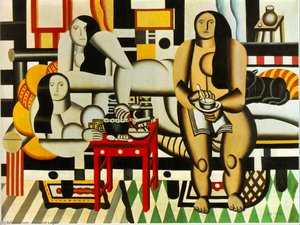
The Lunch

 Afficher la suite
Reproduction à l'huile faite à la main
Huile sur toile peinte à la main, avec cadre et dimensions personnalisés, réalisée sur commande par nos artistes.




P118B $10

P118H $10

P118W $10

P438Z $10

P508JH $12

P508YH $12

P805H $10

P805Z $10

P919BZ $10

P919G $10

P919XJ $10

P959ZH $10

P968JZ $12

W106C $8

W218G $10

W218JH $8

W218Y $10

W307PJ $10

W316G $10

W316PJ $8

W316Y $10

W398PJ $8

W4111J $10

W500HY $15

W500JH $15

W692G $12

W849H $8

W940BG $15

W953PJ $8




Choisissez parmi nos formats prédéfinis qui respectent les proportions originales de l’œuvre.

Vous pouvez saisir vos propres dimensions pour l'adapter à un cadre ou à un espace spécifique. Si la taille sélectionnée ne correspond pas aux proportions de l'image d'origine, nous recadrerons l'œuvre ou prolongerons la peinture avec des éléments peints à la main supplémentaires. Une maquette numérique vous sera envoyée pour approbation avant le début de la production.
Veuillez noter que l'aperçu à l'écran ne reflète pas le recadrage ou l'extension réels. Seule la maquette montrera fidèlement la composition finale.
Bien que des tailles personnalisées soient disponibles, nous vous recommandons de sélectionner une dimension dans la liste prédéfinie afin de préserver les proportions d'origine.
Après la commande, l’équipe OriginalUniqueArt.com contactera le client par e-mail pour obtenir ses instructions et lui fournira une maquette d’aperçu.
Livraison dans le monde entier () en 3 à 4 semaines au lieu des 5 semaines habituelles. (20 juillet). Aucune concession sur la qualité.

Livraison express gratuite dans le monde entier

Toile de lin de haute qualité

Assurance transport complète

Garantie de remboursement des frais de douane

Garantie de fidélité des couleurs

Politique de retour de 60 jours (uniquement en cas de défaut)

Garantie de remboursement à 100%

Réduction sur les achats groupés
 L'option verre n'est disponible que pour les dimensions inférieures à 110 cm.

The Lunch
Technique de reproduction
Format de reproduction
-


Prix total final
-
Description de l'œuvre
A Symphony of Form and Feeling: Exploring Fernand Léger’s “The Lunch”
Fernand Léger's "The Lunch" isn't merely a depiction of a midday meal; it’s a bold declaration of artistic intent—a masterful synthesis of abstraction and observation that encapsulates the anxieties and aspirations of the early 20th century. Painted in 1916, during the tumultuous years of World War I, this artwork transcends its immediate subject matter to become a profound meditation on humanity's relationship with technology and the shifting contours of modern life. Léger, deeply influenced by Cubism’s fragmentation of perspective and Picasso’s exploration of geometric shapes, sought to liberate painting from representational constraints—to convey not what *is* seen but what *feels* like seeing it.The Style and Technique: Geometric Precision Meets Organic Rhythm
At first glance, “The Lunch” appears strikingly austere – dominated by a palette of muted reds, yellows, and blues punctuated by stark white accents. However, beneath this deceptively simple surface lies an intricate network of geometric forms—circles, squares, triangles—that relentlessly dissect the scene into its constituent parts. Léger meticulously renders these shapes with precise lines and planes, mirroring the mechanized precision of the industrial landscape that surrounded him. Yet, despite this rigid formalism, the painting pulsates with a subtle organic rhythm. The woman’s posture, the positioning of the baby, and even the scattered objects on the table contribute to an illusion of movement—a suggestion that these forms are not merely static representations but active participants in the unfolding drama of existence. Léger achieved this effect through layering techniques—applying thin washes of color over thicker undercoats—creating a textured surface that enhances the visual impact without sacrificing geometric clarity.Historical Context: War, Progress, and the Search for Meaning
The painting’s creation coincided with the height of the First World War, a period marked by unprecedented devastation and disillusionment. Léger's artistic response to this crisis wasn’t one of despair but rather of defiant optimism—a conviction that art could offer solace and inspiration amidst the horrors of conflict. He viewed technology not as an instrument of destruction but as a catalyst for transformation—a force capable of reshaping human consciousness and liberating us from the limitations of traditional thought. “The Lunch” embodies this worldview by presenting a simplified, idealized vision of domestic life—a refuge from the chaos of war—while simultaneously confronting viewers with the unsettling implications of industrialization. Léger’s intention was to provoke contemplation about humanity's place in the evolving cosmos.Symbolism: Representing Humanity Amidst Mechanical Forms
The woman and child at the center of “The Lunch” serve as potent symbols of femininity, nurturing, and continuity—representing the enduring values of family and tradition amidst the encroaching dominance of machinery. Léger deliberately contrasts these organic forms with the geometric shapes that surround them—creating a visual dialogue between nature and technology. The scattered objects on the table—the bowl, vase, apple, banana—further amplify this symbolic tension, suggesting that even seemingly mundane elements can hold profound significance. They represent the fragments of everyday life—the building blocks of human experience—that Léger sought to capture in his abstract style.Emotional Impact: A Quiet Assertion of Artistic Vision
Despite its formal rigor, “The Lunch” possesses a remarkable emotional resonance. The painting’s muted colors convey a sense of melancholy and introspection—reflecting the anxieties of wartime but also hinting at an underlying yearning for beauty and harmony. Léger's masterful use of perspective and layering creates a captivating visual experience that draws viewers into the scene—inviting them to contemplate its complexities and appreciate its artistic achievement. Ultimately, “The Lunch” stands as a testament to Léger’s unwavering belief in the transformative power of art—a quiet assertion of vision amidst the clamor of history.Biographie de l'artiste
jeune vie et formation
fernand léger, peintre, sculpteur et cinéaste français, est né le 4 février 1881 à Argentan, Orne, en Normandie inférieure. Son père élevait du bétail, et léger a initialement été formé à l'architecture de 1897 à 1899. Il s’est ensuite installé à Paris en 1900, se débrouillant comme dessinateur architectural.développement artistique
Le travail précoce de léger a été influencé par l'impressionnisme, comme le montrent le jardin de ma mère (mon jardin) (1905). Après avoir fréquenté l'école des beaux-arts et l’académie Julian, il a commencé à travailler sérieusement comme peintre à 25 ans. Son style s'est développé en une forme personnelle de cubisme, que les critiques ont qualifié de "tubisme" pour son accent sur les formes cylindriques.cubisme et le groupe des Puteaux
En 1910, léger a exposé au Salon d’automne aux côtés de jean metzinger et henri le fauconnier. Il a rejoint le groupe des Puteaux, également connu sous le nom de section d’or (la section dorée), avec d'autres artistes tels que francis picabia et marcel duchamp.guerre et son influence sur le travail de léger
Les expériences de léger à la Première Guerre mondiale ont eu un impact significatif sur son œuvre. Pendant son séjour au front, il a produit des croquis d'artillerie, d'avions et de soldats. Sa peinture soldier avec un tuyau (1916) reflète cette période.œuvre ultérieure et héritage
L'œuvre post-guerre de léger, caractérisée par des formes machine-like élégantes, le lia à la tradition de la peinture figurative française. Ses paysages animés de 1921 ont présenté des figures et des animaux dans des formes harmonieuses et rationalisées.- voir les œuvres de fernand léger sur OriginalUniqueArt
- en savoir plus sur fernand léger sur wikipedia
- découvrez le musée national fernand léger (france) avec OriginalUniqueArt
- la femme assise (100 x 81 cm, tubisme)
- élément de machine (cubisme)

Fernand Léger
1881 - 1955 , France
En bref
- Artistes Influents:
- Cézanne
- Impressionnisme
- Date De Décès: 1955
- Date De Naissance: 4 février 1881
- Influences Artistiques: ['Pop Art']
- Lieu De Naissance: Argentan, France
- Mouvement Artistique: Cubisme, Tubisme
- Nationalité: Française
- Nom Complet: Fernand Léger
- Oeuvres Notables:
- La Grande Parade
- Machine Élément
- Femme assise
- Paysages animés
Articles connexes

Willem de Kooning : Abstraction, Geste et Évolution de la Peinture Américaine d'Après-Guerre
Explorez l'évolution artistique de Willem de Kooning et son rôle clé dans l'expressionnisme abstrait américain. Analyse approfondie, influences européennes et héritage durable pour les collectionneurs avertis.
De l'Atelier au Salon : Gestualité, Émotion et Fondements Philosophiques de la Création Abstraite Contemporaine
Explorez les fondements philosophiques et l'évolution de l'abstraction abstraite contemporaine. Analyse approfondie, artistes clés & conseils pour collectionneurs avertis. Découvrez OriginalUniqueArt.
The Dawn of a New Vision: Exploring Early Modernism's Enduring Legacy in Art
Explore the revolutionary world of Early Modernism! Discover key artists like Picasso & Léger, pivotal movements, and lasting philosophical influences. Uncover the seeds of change that shaped 20th-century art.
Cubisme : Les 10 Chefs-d'œuvre Révolutionnaires à Redécouvrir |
Plongez au cœur du cubisme avec ! Découvrez les 10 chefs-d'œuvre de Picasso, Braque et autres artistes révolutionnaires. Reproductions d'art haute qualité pour une décoration intérieure unique. Explorez la collection sur
Top 10 des Chefs-d'œuvre à l'Acrylique qui ont Révolutionné l'Art |
Plongez dans l'univers vibrant des 10 chefs-d'œuvre à l'acrylique qui ont marqué l'histoire de l'art. Découvrez Jackson Pollock, Rothko et autres artistes emblématiques. Reproductions de qualité muséale sur . Explorez la collection !