

 Aperçu en situation
 Partager
 Partager
 Détails

 Télécharger
 Articles similaires
 Radiographie
 Voir le diaporama
 Statistiques
Manufacturers with Aloe
 Acrylic
- WallArt
- Constructivist Suprematism
 1951
1951 165.0 x 200.0 cm
 Afficher la suite
Giclées et impressions d'art
Impressions giclées ou sur toile de qualité musée, avec une production rapide et des finitions au choix. ( Acheter la peinture faite à la main Passer au format image numérique)




P118B $10

P118H $10

P118W $10

P438Z $10

P508JH $12

P508YH $12

P805H $10

P805Z $10

P919BZ $10

P919G $10

P919XJ $10

P959ZH $10

P968JZ $12

W106C $8

W218G $10

W218JH $8

W218Y $10

W307PJ $10

W316G $10

W316PJ $8

W316Y $10

W398PJ $8

W4111J $10

W500HY $15

W500JH $15

W692G $12

W849H $8

W940BG $15

W953PJ $8




Choisissez parmi nos formats prédéfinis qui respectent les proportions originales de l’œuvre.

Vous pouvez saisir vos propres dimensions pour vous adapter à un cadre ou à un espace spécifique. Si la taille sélectionnée ne correspond pas aux proportions de l'image originale, nous recadrerons l'œuvre ou étendrons l'image avec une bordure en miroir ou une couleur unie. Une maquette numérique vous sera envoyée pour approbation avant le début de la production.
Veuillez noter que l'aperçu à l'écran ne reflète pas le recadrage ou l'extension réelle. Seule la maquette montrera avec précision la composition finale.
Bien que des tailles personnalisées soient disponibles, nous vous recommandons de choisir une dimension dans la liste prédéfinie afin de préserver les proportions originales.
Livraison dans le monde entier () en 2 semaines au lieu des 4/5 semaines habituelles. (15 septembre)

Livraison express gratuite dans le monde entier

Toile de lin de haute qualité

Assurance transport complète

Garantie de remboursement des droits de douane

Garantie de fidélité des couleurs

Garantie de retour de 100 jours (uniquement en cas de défaut)

Garantie de remboursement à 100%

Tarifs dégressifs sur quantité
 L'option verre n'est disponible que pour les dimensions inférieures à 110 cm.

Manufacturers with Aloe
Giclées et impressions d'art
Format de la reproduction
-


Prix total final
$ 80
A Symphony of Form and Labor: Exploring Fernand Léger’s “Manufacturers with Aloe”
The painting "Manufacturers with Aloe," executed in 1951 by Fernand Léger, isn't merely a depiction of industrial activity; it’s an ambitious manifesto of artistic innovation—a bold assertion that abstraction could simultaneously honor the tangible realities of the burgeoning twentieth century. Léger, born Joseph Fernand Henri Léger in Argentan, Normandy, possessed a formative experience that profoundly shaped his artistic sensibilities: witnessing firsthand the transformative power of mechanized agriculture and the relentless march toward industrialization. This juxtaposition fueled his desire to translate these observations into a visual language unlike any seen before.- Subject Matter: Léger’s subject is straightforward yet deliberately chosen – a group of men engaged in construction, specifically erecting what appears to be a building or structure. The inclusion of aloe vera plants adds an unexpected element of organic contrast against the geometric precision of the figures and scaffolding.
- Style: Léger's style firmly resides within Constructivism, a movement born from Russia after the October Revolution that championed geometric abstraction as a tool for expressing social progress and rejecting traditional artistic conventions. However, Léger’s approach transcends mere stylistic adherence; he imbues his compositions with an energetic dynamism reminiscent of Cubism, particularly Picasso’s influence.
- Technique: Léger employed a distinctive technique characterized by bold, simplified forms rendered in vibrant hues—primarily reds, yellows, and blues—often applied in thick impasto layers. This textural approach wasn't simply decorative; it served to convey the physicality of labor and the materiality of industrial processes. The artist meticulously crafted each element to emphasize its structural integrity, mirroring the principles of Constructivism’s belief in the primacy of form over illusion.
Historical Context: Embracing Modernity's Visual Language
The painting emerged during a period marked by significant societal shifts—the aftermath of World War I and the rapid expansion of industrial production across Europe. Léger’s artistic vision responded directly to these developments, articulating the anxieties and aspirations of an era grappling with technological advancement and urbanization. Constructivism sought to liberate art from academic constraints and align it with the ideals of socialist realism, aiming to inspire collective action and celebrate the achievements of the proletariat. Léger's work exemplifies this spirit by presenting a stylized representation of human effort—a deliberate rejection of sentimental depictions of rural life—and embracing the geometric language of the machine age.Symbolism Beyond Geometry: Aloe Vera’s Unexpected Presence
While predominantly concerned with geometric abstraction, “Manufacturers with Aloe” incorporates subtle symbolic gestures that enrich its interpretation. The aloe vera plant, a resilient succulent known for its medicinal properties and association with healing and regeneration, stands in stark contrast to the dominant industrial forms. Léger deliberately juxtaposes these elements to suggest an affirmation of life amidst technological progress—a reminder that even as humanity embraces innovation, it must also nurture values like compassion and care. The aloe vera represents a grounding force, anchoring the dynamism of the construction scene within a realm of natural beauty and vitality.Emotional Impact: A Celebration of Collective Effort
Ultimately, “Manufacturers with Aloe” transcends mere visual representation; it communicates an emotional resonance rooted in the humanist values championed by Léger’s artistic contemporaries. The painting captures the spirit of collaboration—the shared purpose and determination evident in the faces and movements of the men involved—inspiring a feeling of optimism and confidence in humanity's capacity to shape its future. Léger’s masterful use of color and texture contributes to this emotive experience, conveying not only the physicality of labor but also the underlying conviction that collective endeavor can achieve remarkable feats of creativity and progress.Biographie de l'artiste
jeune vie et formation
fernand léger, peintre, sculpteur et cinéaste français, est né le 4 février 1881 à Argentan, Orne, en Normandie inférieure. Son père élevait du bétail, et léger a initialement été formé à l'architecture de 1897 à 1899. Il s’est ensuite installé à Paris en 1900, se débrouillant comme dessinateur architectural.développement artistique
Le travail précoce de léger a été influencé par l'impressionnisme, comme le montrent le jardin de ma mère (mon jardin) (1905). Après avoir fréquenté l'école des beaux-arts et l’académie Julian, il a commencé à travailler sérieusement comme peintre à 25 ans. Son style s'est développé en une forme personnelle de cubisme, que les critiques ont qualifié de "tubisme" pour son accent sur les formes cylindriques.cubisme et le groupe des Puteaux
En 1910, léger a exposé au Salon d’automne aux côtés de jean metzinger et henri le fauconnier. Il a rejoint le groupe des Puteaux, également connu sous le nom de section d’or (la section dorée), avec d'autres artistes tels que francis picabia et marcel duchamp.guerre et son influence sur le travail de léger
Les expériences de léger à la Première Guerre mondiale ont eu un impact significatif sur son œuvre. Pendant son séjour au front, il a produit des croquis d'artillerie, d'avions et de soldats. Sa peinture soldier avec un tuyau (1916) reflète cette période.œuvre ultérieure et héritage
L'œuvre post-guerre de léger, caractérisée par des formes machine-like élégantes, le lia à la tradition de la peinture figurative française. Ses paysages animés de 1921 ont présenté des figures et des animaux dans des formes harmonieuses et rationalisées.- voir les œuvres de fernand léger sur OriginalUniqueArt
- en savoir plus sur fernand léger sur wikipedia
- découvrez le musée national fernand léger (france) avec OriginalUniqueArt
- la femme assise (100 x 81 cm, tubisme)
- élément de machine (cubisme)

Fernand Léger
1881 - 1955 , France
En bref
- Artistes Influents:
- Cézanne
- Impressionnisme
- Date De Décès: 1955
- Date De Naissance: 4 février 1881
- Influences Artistiques: ['Pop Art']
- Lieu De Naissance: Argentan, France
- Mouvement Artistique: Cubisme, Tubisme
- Nationalité: Française
- Nom Complet: Fernand Léger
- Oeuvres Notables:
- La Grande Parade
- Machine Élément
- Femme assise
- Paysages animés
Articles similaires

Beyond Form & Color: Geometric Abstraction's Evolution in 20th/21st Century Art
Explore the evolution of geometric abstraction from Cubism to contemporary art. Discover key artists like Malevich & Mondrian, investment insights, and expert collecting advice at OriginalUniqueArt.

Abstraction Géométrique : Les 10 Chefs-d'œuvre qui ont Marqué l'Histoire de l'Art
Plongez au cœur de l'abstraction géométrique avec OriginalUniqueArt.com ! Découvrez les 10 œuvres majeures de Mondrian, Malevitch et Kandinsky qui ont révolutionné l'art moderne. Inspirez votre décoration intérieure avec des reproductions de tableaux exceptionnelles. Explorez la collection en ligne !

Neo-Abstract Art: The High-Impact Evolution of Modern Visual Energy and Geometric Sophistication
Discover the power of Neo-Abstract art. Explore how bold geometric forms and high-impact visual energy are redefining modern design. Learn to curate sophisticated, high-energy spaces with the latest trends in contemporary abstraction and structural color.
L'Âme Industrielle : 10 Chefs-d'œuvre Révélant la Beauté du Monde Moderne | OriginalUniqueArt
Plongez dans l'âme industrielle de 10 chefs-d'œuvre emblématiques ! Découvrez les histoires fascinantes de Van Gogh, Monet et d'autres artistes ayant capturé la beauté brute du monde moderne. Reproductions de qualité musée sur OriginalUniqueArt.com – Explorez la collection en ligne.
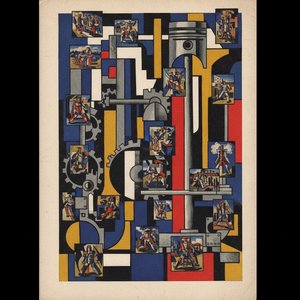
Fernand Léger : Les 25 Œuvres Maîtresses d'un Pionnier du Modernisme | OriginalUniqueArt
Plongez dans l'univers vibrant de Fernand Léger ! Découvrez les 25 œuvres majeures du cubisme et du tubisme, explorant formes géométriques et couleurs audacieuses. Retrouvez des reproductions d'art exceptionnelles sur OriginalUniqueArt.com.


