Aperçu en situation
 Envoyer
 Partager
 Détails de l'œuvre
 Guide
Guide

 Télécharger l'image
 Articles similaires
 Radiographie
 Diaporama
 Q&A
Q&A Statistiques
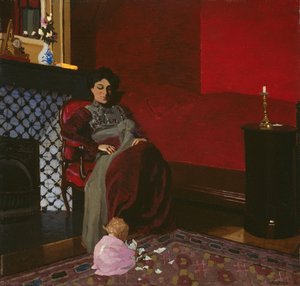
La chambre rouge


 Lire la suite
Giclées et impressions d'art
Impressions giclées ou sur toile de qualité musée, avec une production rapide et des finitions au choix. ( Commander la reproduction peinte à la main Passer au format numérique)




P118B €10

P118H €10

P118W €10

P438Z €10

P508JH €12

P508YH €12

P805H €10

P805Z €10

P919BZ €10

P919G €10

P919XJ €10

P959ZH €10

P968JZ €12

W106C €8

W218G €10

W218JH €8

W218Y €10

W307PJ €10

W316G €10

W316PJ €8

W316Y €10

W398PJ €8

W4111J €10

W500HY €15

W500JH €15

W692G €12

W849H €8

W940BG €15

W953PJ €8




Choisissez parmi nos formats prédéfinis qui respectent les proportions originales de l’œuvre.

Saisissez la largeur et la hauteur souhaitées pour qu'elles s'adaptent à votre cadre ou à votre mur. Une impression peut être recadrée, mais jamais agrandie au-delà de l'image originale ; ainsi, un format de forme différente entraînera la perte d'une partie de l'image. Nous vous envoyons une maquette numérique pour approbation avant toute impression. L'image présentée sur cette page ne montre pas le recadrage réel — seule la maquette le permet.
Livraison dans le monde entier () en 2 semaines au lieu des 4/5 semaines habituelles. (2 novembre)

Livraison express gratuite dans le monde entier

Toile de lin de qualité supérieure

Assurance transport complète

Garantie de remboursement des droits de douane

Garantie de fidélité des couleurs

Politique de retour de 100 jours (uniquement en cas de défaut)

Garantie de remboursement à 100%

Offre de tarifs dégressifs
 L'option verre n'est disponible que pour les dimensions inférieures à 110 cm.

La chambre rouge
Giclées et impressions d'art
Format de la reproduction
-


Prix total
€ 71
Felix Vallotton’s Seated Female Nude: A Study in Minimalism and Psychological Depth
The Seated Female Nude by Félix Vallotton remains an arresting image, encapsulating the spirit of the *fin de siècle* with its stark simplicity and profound psychological resonance. Created in 1897 during Vallotton's formative years as a member of Les Nabis—a group dedicated to rejecting academic conventions and exploring subjective experience—the painting transcends mere representation, delving into themes of vulnerability, contemplation, and unspoken emotion. Its enduring appeal lies not only in its aesthetic qualities but also in the subtle complexities it conveys about human relationships and inner turmoil.The Cloisonnism Style: Bold Forms and Vibrant Color Contrasts
Vallotton’s artistic vision was firmly rooted in the Cloisonnism movement, a stylistic approach championed by artists like Paul Gauguin and Georges Seurat. Unlike Impressionism's focus on capturing fleeting moments of light and color, Cloisonnism prioritized flattened planes of color separated by bold outlines—a technique Vallotton skillfully employed to achieve remarkable visual impact. The dominant hue is a striking crimson red—the couch upon which the woman rests—which sharply contrasts with her pale skin tone. This deliberate juxtaposition serves as a cornerstone of the painting’s expressive power, highlighting the tension between outward appearance and inner state. The artist meticulously crafted this contrast to draw attention to the subject's posture and gaze, inviting viewers to contemplate the unspoken narrative unfolding before them.Composition and Symbolism: A Dialogue Between Silence and Observation
The composition itself is remarkably restrained, centering on a woman seated passively on a red couch. Two figures flank her in the background—one standing slightly to the left, while another occupies the right side of the frame—adding depth without distracting from the central subject. Vallotton’s masterful use of perspective subtly directs the viewer's gaze towards the woman’s face, which is turned downwards, suggesting introspection or perhaps a moment of melancholy. The positioning of her head on the couch’s back reinforces this sense of repose and vulnerability. Furthermore, the absence of overt gesture or facial expression compels viewers to interpret the scene through their own emotional responses—a hallmark of Vallotton's psychological realism.Historical Context: Les Nabis and Their Rebellion Against Tradition
Vallotton’s artistic endeavors were inextricably linked to the broader cultural currents of the *fin de siècle*. Les Nabis, whose members included Gauguin, Bernard Dubois-Garcia, and Émile Bernard, actively challenged the prevailing artistic norms of their time—rejecting academic painting's emphasis on idealized beauty and historical grandeur. Instead, they sought inspiration in Japanese prints and explored themes of everyday life with uncompromising honesty. Vallotton’s exploration of human emotion and psychological complexity aligns perfectly with this rebellious spirit, reflecting a desire to capture the anxieties and uncertainties inherent in the rapidly changing social landscape of the era.Availability and Reproduction: Bringing Vallotton's Vision Home
A similar stylistic sensibility can be observed in Paul Gauguin’s works, notably The Bathers, where bold color palettes and simplified forms contribute to an atmosphere of contemplative stillness. High-quality reproductions of Seated Female Nude are available for purchase on https://OriginalUniqueArt.com/, allowing art enthusiasts and collectors alike to experience Vallotton's masterful technique and evocative imagery firsthand. Explore the beauty and depth of this iconic painting—a testament to the enduring power of minimalist art and psychological exploration.Questions et réponses
Quelle émotion «La chambre rouge» de Félix Vallotton dégage-t-il ?
«La chambre rouge» de Félix Vallotton dégage une tonalité émotionnelle Calme.
«La chambre rouge» de Félix Vallotton utilise-t-il des contrastes marqués ou des harmonies douces ?
Dans « La chambre rouge », un Doux contraste s'allie à une Palette aux tons doux harmonie.
Quelle est la notoriété de « La chambre rouge » au sein du mouvement Cloisonnism Style ?
« La chambre rouge » est répertorié comme étant Reconnue parmi les œuvres du Cloisonnism Style dans le catalogue.
Biographie de l'artiste
Premières années et formation
Félix Édouard Vallotton est né le 28 décembre 1865 à Lausanne, en Suisse. Il a fréquenté le Collège cantonal, obtenant un diplôme d'études classiques en 1882. Cette même année, il s’est installé à Paris pour étudier l'art sous la direction de Jules Joseph Lefebvre et Gustave Boulanger à l'Académie Julian.Style artistique et influences
Les premières peintures de Vallotton, principalement des portraits, sont fermement ancrées dans la tradition académique. Cependant, son style a rapidement évolué, influencé par le post-impressionnisme, le symbolisme et, surtout, la gravure japonaise. Il a mis l'accent sur les contours et les motifs plats, éliminant les dégradés et le modelage produits traditionnellement par le hachurage.Œuvres notables
- Intimités (Intimacies), une série de dix intérieurs publiés en 1898, qui abordent les tensions entre hommes et femmes.
- Les baigneuses au soir d'été (1892–93), aujourd’hui au Kunsthaus de Zurich.
- Lune (1895), au Musée d'Orsay.
Association avec les Nabis et œuvre ultérieure
Dès 1892, Vallotton était affilié aux Nabis, un groupe de jeunes artistes comprenant Pierre Bonnard, Ker-Xavier Roussel, Maurice Denis et Édouard Vuillard. Ses peintures reflétaient le style de ses gravures sur bois, avec des surfaces planes de couleur, des bords durs et une simplification des détails. Il a produit peu de gravures après 1901 et s'est concentré principalement sur la peinture. Ses œuvres ultérieures comprennent des portraits et des nus très aboutis, ainsi que des paysages peints de mémoire.Héritage
L’art graphique de Vallotton a atteint son apogée à la fin des années 1890, largement diffusé dans les périodiques et les livres en Europe comme aux États-Unis. Son influence peut être observée dans l'œuvre d'Edvard Munch, Aubrey Beardsley et Ernst Ludwig Kirchner. Liens clés :
Félix Vallotton
1865 - 1925 , Suisse
L'essentiel de l'artiste
- Artistes Influents:
- Holbein
- Ingres
- Leonardo da Vinci
- Date De Décès: 29 décembre 1925
- Date De Naissance: 28 décembre 1865
- Influence Sur Les Artistes:
- Edvard Munch
- Aubrey Beardsley
- Ernst Ludwig Kirchner
- Lieu De Naissance: Lausanne, Suisse
- Mouvement Artistique: Post-Impressionnisme, Symbolisme
- Nationalité: Suisse/Française
- Nom Complet: Félix Vallotton
- Œuvres Notables:
- Intimités (Intimacies)
- Baignade au soir d'été
- Clair de lune
Articles connexes

Crimson Threads of Narrative: Exploring Symbolism & Representation in Artworks Featuring the Red Dress
Explore the rich symbolism of the red dress in art history! From ancient power displays to iconic portraits like Cézanne’s 'Madame Cezanne', discover the cultural and artistic significance behind this captivating color. Expert analysis & insights.

L'explosion de couleur : les 25 chefs-d'œuvre incontournables d'Henri Matisse
Explorez les 25 chefs-d'œuvre du Fauvisme d'Henri Matisse. Découvrez ces icônes de la couleur sur OriginalUniqueArt.com.

The Eloquent Form: A Historical & Aesthetic Exploration of the Nude in Art
Explore the captivating history of the nude in art! From ancient Greece to modern masters, discover its evolving symbolism, techniques & enduring beauty. Expert insights for collectors and enthusiasts.

The Enduring Allure of the Nude: A Historical & Artistic Exploration of the Human Form
Explore the captivating history of nude art! Discover iconic paintings & artists from classical to modern eras. Uncover symbolism, techniques & find museum-quality reproductions at OriginalUniqueArt.

Maîtriser l'émotion : les 25 chefs-d'œuvre emblématiques de Mark Rothko
Explorez les 25 chefs-d'œuvre de Mark Rothko et l'émotion du Color Field. Découvrez toute la collection sur OriginalUniqueArt.com.