

 Aperçu en situation
 Partager
 Partager
 Détails

 Télécharger
 Articles similaires
 Radiographie
 Voir le diaporama
 Statistiques
Pierrot the Photographer


 Afficher la suite
Acquérez une image numérique haute résolution et optimisée, d'une qualité bien supérieure à l'aperçu en ligne.
Chaque fichier est méticuleusement préparé par nos spécialistes internes à l'aide d'outils avancés et d'une retouche manuelle experte. Nous garantissons que chaque image possède une clarté exceptionnelle, une précision des couleurs irréprochable et un niveau de détail fin.
Le fichier final est livré par e-mail sous 72 heures, optimisé pour une utilisation immédiate dans des contextes professionnels, éditoriaux et d'impression. Il offre la même qualité de confiance que celle utilisée par les plus grands studios de création, éditeurs et galeries.
Image numérique
Téléchargez un fichier haute résolution pour votre usage personnel, l'impression et vos projets créatifs. ( Passer au format impression Acheter la peinture faite à la main)
Inclus avec chaque commande d'image numérique
Livraison numérique experte, garantie.
En choisissant OriginalUniqueArt.com, vous n'obtenez pas seulement une simple image : vous recevez une œuvre numérique sublimée avec professionnalisme, conçue avec précision et accompagnée d'une garantie de satisfaction. Voici tout ce qui accompagne automatiquement votre commande :

Livraison rapide par e-mail
Votre fichier d'image numérique haute résolution vous sera envoyé par e-mail sous 72 heures après votre commande — prêt à un usage immédiat.

Fichier numérique optimisé par l'IA
Votre œuvre d'art bénéficie d'une optimisation professionnelle grâce à des outils d'IA avancés et une retouche manuelle, garantissant un niveau maximal de détail, de clarté et de fidélité chromatique.

Réexpédition gratuite à vie
Vous avez accidentellement supprimé ou perdu votre fichier ? Pas d'inquiétude — nous vous le renverrons gratuitement, quand vous le souhaitez.

Aucuns frais de douane — À jamais
Profitez de votre œuvre d'art instantanément sans frais de douane ni de livraison — les téléchargements numériques sont toujours exonérés de taxes.

Garantie de fidélité des couleurs
Nous garantissons que votre image numérique reproduit les couleurs de l'original aussi fidèlement que possible grâce à des outils professionnels et une gestion rigoureuse des couleurs.

Garantie de satisfaction de 100 jours
Si vous n'êtes pas satisfait de votre image numérique, nous la retoucherons ou vous rembourserons 100% sous 100 jours — sans poser de questions.

Garantie de remboursement à 100%
Pas satisfait ? Obtenez un remboursement intégral dans les 100 jours suivant la réception de votre fichier numérique — sans aucune question posée.

Remises sur les commandes groupées
Achetez 3 images, économisez 10% - Achetez 5, économisez 15% - Achetez 10+, économisez 20%. Idéal pour les projets créatifs, les galeries et les agences.
The Enigmatic Figure: Unveiling “Pierrot the Photographer”
Félix Nadar’s “Pierrot the Photographer,” created in 1854, isn't merely a portrait; it’s a meticulously constructed tableau vivant—a staged scene brimming with quiet observation and subtle commentary on the burgeoning world of photography. The image immediately draws the eye to Pierrot, a figure both familiar and unsettlingly modern, holding a camera poised as if capturing not just a likeness but an essence. He embodies the nascent spirit of the photographer himself – a blend of artist, observer, and documentarian, all wrapped in the playful guise of a traditional clown. The photograph’s power lies not simply in its technical execution, but in the carefully orchestrated narrative it presents, inviting us to contemplate the very nature of representation and identity.
The work's historical context is crucial to understanding its significance. Nadar was a pioneer, pushing against the conventions of portraiture prevalent during the mid-19th century. He rejected the opulent backdrops and theatrical poses favored by his contemporaries, instead opting for natural light and an intimate approach that prioritized capturing the sitter’s personality. “Pierrot the Photographer” exemplifies this shift—a deliberate departure from traditional formality, suggesting a new era of visual storytelling.
A Dance of Light and Shadow: Technical Details & Artistic Choices
Examining the photographic process reveals layers of artistry. “Pierrot the Photographer” was undoubtedly produced using one of the early wet collodion techniques, a demanding method requiring immediate development after exposure. This explains the image’s distinctive grainy texture—a hallmark of photographs from this period—and the subtle variations in tone that contribute to its aged and evocative quality. The careful control of light is particularly noteworthy; diffused illumination creates a soft, almost melancholic atmosphere, highlighting the textures of Pierrot's costume and casting gentle shadows that add depth and dimension.
Nadar’s compositional choices further enhance the photograph’s impact. The tripod, a stark vertical element, anchors the scene while simultaneously creating a sense of formality and precision. Pierrot’s slight tilt of his head—a subtle gesture of engagement—draws us into the frame, inviting us to share in his moment of observation. The two indistinct figures in the background offer a hint of context without disrupting the central focus, suggesting a studio setting and hinting at the collaborative nature of photographic production.
Symbolism & Emotional Resonance: Beyond the Surface
“Pierrot the Photographer” is rich with symbolic meaning. The clown costume itself—a traditional symbol of playfulness and theatricality—contrasts sharply with the seriousness of the act of photography, creating a fascinating tension. The camera becomes an extension of Pierrot’s personality, transforming him into both subject and observer. The image speaks to the evolving role of the photographer in society – moving from mere recorder of reality to active participant in shaping it.
Furthermore, the photograph evokes a sense of nostalgia and timelessness. Its aged appearance—the subtle imperfections and tonal variations—suggests that it has witnessed countless moments, carrying with it the weight of history. “Pierrot the Photographer” is not simply a portrait; it’s a meditation on memory, identity, and the enduring power of visual representation.
A Legacy in Reproduction: Bringing Nadar's Vision to Life
Reproductions of “Pierrot the Photographer” offer a unique opportunity to experience the artistry of Félix Nadar firsthand. The meticulous detail captured in this early photograph—the textures of the costume, the subtle nuances of light and shadow—are faithfully reproduced in high-quality prints, allowing viewers to appreciate the depth and complexity of Nadar’s vision. Whether displayed as a statement piece in a contemporary interior or studied as an historical artifact, this iconic image continues to captivate and inspire.
Biographie de l'artiste
Félix Nadar : Un Pionnier de la Photographie
Jeunesse et Débuts
- Né le: Gaspard-Félix Tournachon, le 5 avril 1820 à Paris (bien que certaines sources suggèrent Lyon).
- Son père, Victor Tournachon, était imprimeur et libraire.
- Il a initialement étudié la médecine mais l'a abandonnée en raison de contraintes financières après le décès de son père.
- Nadar, comme il deviendra connu, a commencé sa carrière comme caricaturiste et romancier, contribuant à divers journaux.
De la Caricature à la Photographie
- Il a commencé à expérimenter avec la photographie vers 1853.
- Il a ouvert son premier studio photographique en 1854 au 113 rue St. Lazare, puis il s'est installé au 35 Boulevard des Capucines en 1860.
- Il a rapidement gagné une reconnaissance pour ses portraits frappants et psychologiquement perspicaces.
- Rejet des Conventions: Nadar a rejeté les décors opulents courants dans la photographie de portrait, préférant la lumière naturelle et se concentrant sur la personnalité du modèle.
Photographie Aérienne Pionnière
- En 1858, Nadar est devenu la première personne à prendre des photographies aériennes en utilisant des ballons.
- Il a surmonté les défis techniques liés au développement de plaques photographiques en altitude en inventant une couverture en coton étanche pour les paniers de ses ballons.
- Il a également pionné l'éclairage artificiel en photographie, notamment dans les Catacombes de Paris.
- Le Géant: Il a fait construire un immense ballon nommé “Le Géant” (Le Géant) en 1863, inspirant Jules Verne’s *Five Weeks in a Balloon*.
Réalisations Majeures et Influences
- Portraiture: Il a photographié de nombreuses personnalités importantes, notamment Victor Hugo, Charles Baudelaire, Sarah Bernhardt et Gustave Courbet.
- Il a établi le premier service postal aérien du monde pendant le Siège de Paris (1870-71) grâce aux vols en ballon.
- Il a accueilli la première exposition impressionniste dans son studio en 1874, offrant une plateforme essentielle aux artistes émergents.
- Il a publié ce qui est considéré comme le premier entretien photographique en 1886, mettant en scène le chimiste Michel Eugène Chevreul.
Vie Tardive et Héritage
- Il a déplacé son studio à Marseille de 1895 à 1909.
- Il est décédé le 20 mars 1910 à Paris et est enterré au cimetière du Père Lachaise.
- Son fils, Paul Nadar, a continué les opérations du studio après sa mort.
- Quand j’étais photographe: Il a publié une autobiographie reflétant sa vie et son travail, offrant des informations précieuses sur la photographie au XIXe siècle.
- Signification Historique: Les techniques innovantes et la vision artistique de Nadar ont profondément influencé le développement de la photographie comme forme d'art. Ses portraits restent des représentations iconiques des cercles intellectuels et artistiques parisiens.
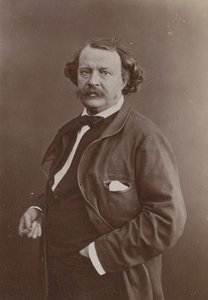
Félix Nadar
1820 - 1910 , France
En bref
- Artistic Movement Or Style: Photographie, Caricature, Impressionnisme
- Artists Or Movements Influenced By This Artist: ['']
- Artists Who Influenced This Artist: ['Jules Verne']
- Date Of Birth: 5 avril 1820
- Date Of Death: 20 mars 1910
- Full Name: Gaspard-Félix Tournachon
- Nationality: Français
- Notable Artworks:
- Portraits de Baudelaire
- Hugo
- Delacroix
- Place Of Birth: Paris (Lyon)