

 Aperçu en situation
 Envoyer
 Partager
 Détails de l'œuvre
 Guide
Guide

 Télécharger l'image
 Articles similaires
 Radiographie
 Diaporama
 Statistiques
Self-Portrait


 Lire la suite
Giclées et impressions d'art
Impressions giclées ou sur toile de qualité musée, avec une production rapide et des finitions au choix. ( Commander la reproduction peinte à la main Passer au format numérique)




P118B €10

P118H €10

P118W €10

P438Z €10

P508JH €12

P508YH €12

P805H €10

P805Z €10

P919BZ €10

P919G €10

P919XJ €10

P959ZH €10

P968JZ €12

W106C €8

W218G €10

W218JH €8

W218Y €10

W307PJ €10

W316G €10

W316PJ €8

W316Y €10

W398PJ €8

W4111J €10

W500HY €15

W500JH €15

W692G €12

W849H €8

W940BG €15

W953PJ €8




Choisissez parmi nos formats prédéfinis qui respectent les proportions originales de l’œuvre.

Saisissez la largeur et la hauteur souhaitées pour qu'elles s'adaptent à votre cadre ou à votre mur. Une impression peut être recadrée, mais jamais agrandie au-delà de l'image originale ; ainsi, un format de forme différente entraînera la perte d'une partie de l'image. Nous vous envoyons une maquette numérique pour approbation avant toute impression. L'image présentée sur cette page ne montre pas le recadrage réel — seule la maquette le permet.
Livraison dans le monde entier () en 2 semaines au lieu des 4/5 semaines habituelles. (27 octobre)

Livraison express gratuite dans le monde entier

Toile de lin de qualité supérieure

Assurance transport complète

Garantie de remboursement des droits de douane

Garantie de fidélité des couleurs

Politique de retour de 100 jours (uniquement en cas de défaut)

Garantie de remboursement à 100%

Offre de tarifs dégressifs
 L'option verre n'est disponible que pour les dimensions inférieures à 110 cm.

Self-Portrait
Giclées et impressions d'art
Format de la reproduction
-


Prix total
€ 70
Introduction
Federico Zuccari, an Italian painter and architect, was born in 1540 and died in 1609. He is considered one of the most important artists of the late Renaissance or Mannerist period. Among his many works, the self-portrait painted in 1575 stands out as a masterpiece of this style.The Self-Portrait
The self-portrait by Federico Zuccari is an oil painting on canvas measuring 56 x 43 cm. It is currently housed in the Galleria degli Uffizi in Florence, Italy. The painting depicts the artist at the age of 35, dressed in a black robe and wearing a white collar. He is shown holding a brush in his right hand and looking directly at the viewer with a serious expression. The self-portrait is characterized by its use of bright colors and bold brushstrokes. The artist's face is rendered in great detail, with particular attention paid to the play of light and shadow on his features. The background of the painting is simple, consisting of a dark brown surface that serves to highlight the figure of the artist.Historical Context
The self-portrait by Federico Zuccari was painted in 1575, during the height of the Mannerist period. This style emerged in Italy in the early 16th century as a reaction against the harmonious and balanced forms of the High Renaissance. Mannerism is characterized by its use of elongated figures, complex compositions, and bright colors. At the time when Zuccari painted his self-portrait, he was already an established artist who had worked on several important projects, including the decoration of the Vatican Palace in Rome. The self-portrait reflects his confidence as a painter and his mastery of the Mannerist style.Significance
The self-portrait by Federico Zuccari is considered one of the most important works of Mannerism. It is a powerful representation of the artist's personality and his artistic vision. The painting also reflects the historical context in which it was created, providing valuable insights into the cultural and artistic trends of the time.Conclusion
The self-portrait by Federico Zuccari is a masterpiece of Mannerism that showcases the artist's skill and vision. It is an essential work for anyone interested in the history of Italian art and the development of the Mannerist style. At https://OriginalUniqueArt.com, we are proud to offer high-quality reproductions of this painting, allowing art lovers to enjoy its beauty and significance from the comfort of their own homes.Other Works by Federico Zuccari
In addition to the self-portrait, Federico Zuccari created many other important works of art. Some of his most famous paintings include:- The Resurrection of Christ: A fresco painted in 1576 for the church of Santa Maria sopra Minerva in Rome.
- The Martyrdom of Saint Peter: A painting executed in 1582 for the Vatican Palace.
- The Triumph of Christianity over Paganism: A fresco painted in 1603 for the church of San Giovanni in Laterano in Rome.
Questions et réponses
Où puis-je acheter une impression de «Self-Portrait» de Federico Zuccaro ?
« Self-Portrait » est disponible en tant que une impression d'art sur toile de coton ou sur papier canvas d'archive. Les commandes s'effectuent sur sa page Tirage d'art fine art, dans le format de votre choix.
Quelle est l'émotion qui se dégage de «Self-Portrait» de Federico Zuccaro ?
«Self-Portrait» est empreint d'un sentiment Reflective. La tonalité émotionnelle décrit l'impression qui se dégage de l'œuvre.
Où peut-on acheter des reproductions peintes à la main de «Self-Portrait» de Federico Zuccaro ?
Les reproductions peintes à la main de «Self-Portrait» de Federico Zuccaro sont disponibles sur ce site : une reproduction à l'huile peinte à la main sur toile de lin, via sa page Reproduction peinte à la main.
Articles connexes

10 chefs-d'œuvre iconiques qui capturent la magie de l'Italie
Explorez 10 chefs-d'œuvre qui célèbrent l'Italie, de la Renaissance de Vinci à l'impressionnisme de Monet. Trouvez l'inspiration pour votre décor avec nos reproductions d'art de qualité musée. Découvrez tous ces chefs-d'œuvre sur OriginalUniqueArt.com.

Les 10 Chefs-d'œuvre Noirs : Peintures Célèbres et Décoration d'Intérieur
Plongez dans l'univers fascinant des 10 plus beaux tableaux noirs de l'histoire de l'art. Découvrez les secrets de Goya, Manet, Rothko et autres maîtres. Inspirez votre décoration intérieure avec !
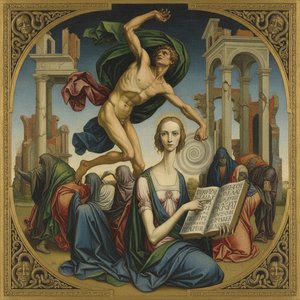
Beyond Perfection: The Dramatic Elegance and Intellectual Tension of Renaissance Mannerism
Explore the captivating world of Renaissance Mannerism. Discover how artists moved beyond High Renaissance harmony into a realm of elegant distortion, psychological tension, and dramatic beauty that bridged the gap to the Baroque era.

10 chefs-d'œuvre iconiques qui capturent l'âme de l'Italie
Explorez 10 chefs-d'œuvre de la Renaissance et de l'impressionnisme qui capturent l'âme de l'Italie. De Vinci à Monet, découvrez l'histoire et l'élégance de ces icônes pour votre décoration. Trouvez vos reproductions de qualité musée sur OriginalUniqueArt.com.

10 chefs-d'œuvre iconiques qui capturent la magie de l'Italie
Plongez dans l'âme de l'Italie à travers 10 chefs-d'œuvre de la Renaissance et de l'Impressionnisme. De Vinci à Monet, explorez des récits d'art éternels et trouvez l'inspiration pour votre décor avec nos reproductions de qualité musée. Explorez la collection sur OriginalUniqueArt.com.