Aperçu en situation
 Envoyer
 Partager
 Détails de l'œuvre
 Guide
Guide

 Télécharger l'image
 Articles similaires
 Radiographie
 Diaporama
 Questions et réponses
 Statistiques
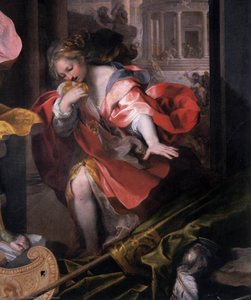
Composition Study (for “Circumcision”, Paris, musée du Louvre)

- 43.0 x 58.0 cm


 Lire la suite
Giclées et impressions d'art
Impressions giclées ou sur toile de qualité musée, avec une production rapide et des finitions au choix. ( Commander la reproduction peinte à la main Passer au format numérique)




P118B €10

P118H €10

P118W €10

P438Z €10

P508JH €12

P508YH €12

P805H €10

P805Z €10

P919BZ €10

P919G €10

P919XJ €10

P959ZH €10

P968JZ €12

W106C €8

W218G €10

W218JH €8

W218Y €10

W307PJ €10

W316G €10

W316PJ €8

W316Y €10

W398PJ €8

W4111J €10

W500HY €15

W500JH €15

W692G €12

W849H €8

W940BG €15

W953PJ €8




Choisissez parmi nos formats prédéfinis qui respectent les proportions originales de l’œuvre.

Saisissez la largeur et la hauteur souhaitées pour qu'elles s'adaptent à votre cadre ou à votre mur. Une impression peut être recadrée, mais jamais agrandie au-delà de l'image originale ; ainsi, un format de forme différente entraînera la perte d'une partie de l'image. Nous vous envoyons une maquette numérique pour approbation avant toute impression. L'image présentée sur cette page ne montre pas le recadrage réel — seule la maquette le permet.
Livraison dans le monde entier () en 2 semaines au lieu des 4/5 semaines habituelles. (4 novembre)

Livraison express gratuite dans le monde entier

Toile de lin de qualité supérieure

Assurance transport complète

Garantie de remboursement des droits de douane

Garantie de fidélité des couleurs

Politique de retour de 100 jours (uniquement en cas de défaut)

Garantie de remboursement à 100%

Offre de tarifs dégressifs
 L'option verre n'est disponible que pour les dimensions inférieures à 110 cm.

Composition Study (for “Circumcision”, Paris, musée du Louvre)
Giclées et impressions d'art
Format de la reproduction
-


Prix total
€ 72
A Window into a Sacred Moment: Federico Barocci’s Composition Study
Federico Fiori Barocci's "Composition Study (for ‘Circumcision’, Paris, musée du Louvre)” isn’t merely a preparatory sketch; it’s a profound distillation of the artist’s vision for a monumental work depicting a pivotal scene from biblical history. Completed around 1590, this drawing offers an intimate glimpse into Barocci's meticulous process and reveals a remarkable sensitivity to light, gesture, and the emotional weight of the subject matter – the Circumcision of Isaac. It’s a piece that transcends its status as a study, becoming a miniature masterpiece in itself, brimming with the artist’s characteristic blend of Renaissance restraint and burgeoning Baroque dynamism.
The Master’s Technique: Pastel and the Dawn of a New Era
Barocci's masterful use of pastel is immediately striking. The delicate washes of color – ranging from soft pinks and blues to earthy browns and ochres – create an ethereal atmosphere, imbuing the scene with a sense of otherworldly grace. Unlike the heavier pigments favored by his predecessors, Barocci embraced the pastel’s ability to capture subtle nuances of light and shadow, producing effects that shimmer and glow. This technique wasn't simply a matter of preference; it was revolutionary. Barocci is widely considered one of the earliest artists to fully exploit the medium’s potential, paving the way for its later adoption by Rubens and other Baroque masters. The drawing itself demonstrates this – the layering of pastel creates an incredible depth and luminosity, capturing the texture of fabrics, skin tones, and even the rough surface of the stone altar.
- Pastel Layering: Barocci’s technique involved building up layers of pastel to achieve complex color gradations.
- Light & Shadow: The subtle shifts in tone create a remarkable sense of volume and depth.
- Emotional Resonance: The soft, luminous quality contributes significantly to the drawing's evocative power.
A Scene of Ritual and Reverence
The composition itself is carefully constructed, guiding the viewer’s eye through the scene with a masterful understanding of perspective and spatial relationships. The figures are arranged in a dynamic yet balanced manner, creating a sense of movement and drama. The central focus is clearly Isaac, bathed in a soft light that highlights his youthful vulnerability. Around him gather the key participants – Abraham, his aged servant, and the sacrificial animal. Note the meticulous detail with which Barocci renders each figure’s expression—a mixture of solemnity, reverence, and perhaps even apprehension. The inclusion of the altar and the surrounding objects subtly reinforces the ritualistic nature of the event.
The drawing's historical context is equally important. It was created during a period of intense religious fervor in Italy, as the Counter-Reformation sought to revitalize Catholic faith. Barocci’s work reflects this spirit, conveying a sense of profound spiritual significance and emotional intensity. The scene itself—the sacrifice of Isaac—is a powerful allegory for obedience, faith, and divine grace.
Beyond the Sketch: A Legacy of Emotion
While intended as a preparatory study, "Composition Study (for ‘Circumcision’, Paris, musée du Louvre)” stands as a testament to Barocci’s artistic genius. It's not just a technical exercise; it’s a deeply felt expression of human emotion and spiritual contemplation. The drawing invites us to step into the artist’s mind and witness his creative process firsthand. Reproductions of this work, skillfully executed in high-quality materials, offer a tangible connection to this remarkable artistic achievement – a window into a sacred moment captured with unparalleled sensitivity and artistry.
Questions et réponses
Quel est le niveau de contraste de «Composition Study (for “Circumcision”, Paris, musée du Louvre)» de Federico Barocci ?
Le contraste clair-obscur de « Composition Study (for “Circumcision”, Paris, musée du Louvre) » est évalué à Serein. Le contraste décrit l'intensité de la différence entre les zones claires et les zones sombres.
Qui est l'auteur de « Composition Study (for “Circumcision”, Paris, musée du Louvre) » et en quelle année a-t-elle été créée ?
Federico Barocci a réalisé « Composition Study (for “Circumcision”, Paris, musée du Louvre) » en 1590.
Où peut-on voir «Composition Study (for “Circumcision”, Paris, musée du Louvre)» de Federico Barocci actuellement ?
«Composition Study (for “Circumcision”, Paris, musée du Louvre)» de Federico Barocci est exposé au Galleria degli Uffizi, Florence, Italy. La mention du musée se rapporte à l'œuvre originale et non aux reproductions.
Biographie de l'artiste
Première Vie et Formation
- Né: Urbino, Italie (1535)
- Décédé: 1612
- Federico Fiori Barocci, peintre et graveur de la Renaissance italienne, est né en 1535 à Urbino, en Italie.
- Son nom original était Federico Fiori, et il a été surnommé "il Baroccio", ce qui signifie un chariot à deux roues tiré par des bœufs dans les dialectes du nord-ouest italien.
- Barocci a reçu sa première formation auprès de son père, Ambrogio Barocci, sculpteur d'une certaine renommée locale.
- Il a ensuite été apprenti auprès du peintre Battista Franco à Urbino. Cette formation a jeté les bases de son succès futur.
Carrière Artistique et Influences
- Le travail de Barocci était très estimé et influent, préfigurant le style baroque de Pierre Paul Rubens.
- Il a travaillé dans l'atelier prestigieux de Taddeo et Federico Zuccari à Rome, où il a été exposé à diverses influences artistiques.
- Son premier ouvrage notable fut une Sainte Marguerite exécutée pour la confrérie du Saint-Sacrement.
- Il a été invité par le pape Pie IV à aider à la décoration du palais des Belvédères du Vatican à Rome, où il a peint la Vierge Marie et l'Enfant, avec plusieurs saints et un plafond en fresque représentant l'Annonciation.
- Le style de Barocci était caractérisé par un mélange d'éléments maniéristes et baroques, comme on le voit dans sa Madone del Popolo (Galerie des Offices, Florence, Italie).
Œuvres Notables et Héritage
- Cinq études de figures masculines et deux de sa propre main et de son bras (Galerie des Offices, Florence, Italie) – témoignent du talent de Barocci pour capturer la forme humaine.
- Étude de composition (pour "Circoncision", Paris, Musée du Louvre) – démontre sa capacité à équilibrer la composition et l'émotion.
- Tête d’homme (pour "L'Appel de Saint André", Bruxelles, Musées royaux des Beaux-Arts de Belgique) – met en valeur l'attention portée aux détails et à l'expression chez Barocci.
- La Nativité (1597 peinture à l’huile au Prado).
- Madone del Popolo (Galerie des Offices, Florence, Italie).
- La Madone du Chat (La Madonna del Gatto)
- L'Annonciation (1582)
Impact Artistique et Contexte Historique
- L'influence de Barocci peut être observée dans le travail de divers artistes, dont Pierre Paul Rubens, qui a été inspiré par la touche dramatique et émotionnelle de Barocci.
- Son héritage continue d’être célébré à travers ses nombreuses œuvres, désormais conservées dans des musées tels que la Galerie des Offices (Florence, Italie) et le Musée du Louvre (Paris, France).
- Barocci est considéré comme un pont entre le maniérisme et le baroque. Son art se caractérise par une élégance raffinée et une profonde spiritualité.
- Il a embrassé de nouvelles approches du dessin, lui permettant de créer des méthodes picturales non orthodoxes. Il était particulièrement attiré par la couleur, utilisant systématiquement des pastels colorés et des huiles dans le processus préparatoire, ce qui en fait l'un des premiers artistes italiens à adopter cette technique.
- Son œuvre témoigne d’une transition importante dans l’art italien, marquant un éloignement du classicisme de la Renaissance et ouvrant la voie aux excès émotionnels et dramatiques du baroque.

Federico Barocci
1535 - 1612 , Italie
L'essentiel de l'artiste
- Artistes Influents: ['Battista Franco']
- Date De Décès: 1612
- Date De Naissance: Vers 1535
- Influences Artistiques: ['Pierre Paul Rubens']
- Lieu De Naissance: Urbino, Italie
- Mouvement Artistique: Renaissance, Baroque
- Nationalité: Italienne
- Nom Complet: Federico Fiori Barocci
- Oeuvres Notables:
- La Nativité
- Madonna del Popolo
- L'Annonciation
- Saint François stigmatisé
- Repos sur la fuite vers Égypte
Articles connexes

Le Drame Baroque : L'Art qui Apporte la Splendeur dans Votre Intérieur
Plongez dans l'univers somptueux du baroque ! Découvrez son histoire, comment l'intégrer à votre intérieur et les œuvres incontournables. : reproductions d'art de qualité supérieure.

The Visceral Stage: Exploring Dramatic Narratives & Emotional Intensity in Baroque Art
Explore the dramatic world of Baroque art! Discover iconic masters like Caravaggio & Rembrandt, their techniques, and the movement's lasting impact. Expert insights for collectors & enthusiasts at OriginalUniqueArt.

L'Éclat du Pastel : Histoire, Technique et Émotion d'un Médium de Lumière
Explorez l'alchimie et l'histoire du pastel, de Carriera à Degas. Plongez dans la magie de ce médium de lumière dès maintenant.

Les 25 chefs-d'œuvre de Léonard de Vinci : l'essence du génie
Explorez les 25 chefs-d'œuvre de Léonard de Vinci et la magie de la Renaissance. Découvrez toute la collection sur OriginalUniqueArt.com.

Les 10 Chefs-d'œuvre Baroques qui ont Révolutionné l'Art |
Plongez au cœur du baroque avec les 10 chefs-d'œuvre de Caravaggio, Rembrandt et Rubens. Découvrez l'histoire fascinante de ces artistes et leurs tableaux célèbres. Reproductions d'art de qualité muséale sur – Explorez la collection !