

 Aperçu en situation
 Partager
 Partager
 Détails
 Guide
Guide

 Télécharger
 Articles similaires
 Radiographie
 Voir le diaporama
 Statistiques
Annunciation
 Oil On Canvas
- WallArt
- Baroque
 1582
1582 248.0 x 170.0 cm
 Pinacoteca Vaticana
 Afficher la suite
Giclées et impressions d'art
Impressions giclées ou sur toile de qualité musée, avec une production rapide et des finitions au choix. ( Acheter la peinture faite à la main Passer au format image numérique)




P118B $10

P118H $10

P118W $10

P438Z $10

P508JH $12

P508YH $12

P805H $10

P805Z $10

P919BZ $10

P919G $10

P919XJ $10

P959ZH $10

P968JZ $12

W106C $8

W218G $10

W218JH $8

W218Y $10

W307PJ $10

W316G $10

W316PJ $8

W316Y $10

W398PJ $8

W4111J $10

W500HY $15

W500JH $15

W692G $12

W849H $8

W940BG $15

W953PJ $8




Choisissez parmi nos formats prédéfinis qui respectent les proportions originales de l’œuvre.

Vous pouvez saisir vos propres dimensions pour vous adapter à un cadre ou à un espace spécifique. Si la taille sélectionnée ne correspond pas aux proportions de l'image originale, nous recadrerons l'œuvre ou étendrons l'image avec une bordure en miroir ou une couleur unie. Une maquette numérique vous sera envoyée pour approbation avant le début de la production.
Veuillez noter que l'aperçu à l'écran ne reflète pas le recadrage ou l'extension réelle. Seule la maquette montrera avec précision la composition finale.
Bien que des tailles personnalisées soient disponibles, nous vous recommandons de choisir une dimension dans la liste prédéfinie afin de préserver les proportions originales.
Livraison dans le monde entier () en 2 semaines au lieu des 4/5 semaines habituelles. (20 septembre)

Livraison express gratuite dans le monde entier

Toile de lin de haute qualité

Assurance transport complète

Garantie de remboursement des droits de douane

Garantie de fidélité des couleurs

Garantie de retour de 100 jours (uniquement en cas de défaut)

Garantie de remboursement à 100%

Tarifs dégressifs sur quantité
 L'option verre n'est disponible que pour les dimensions inférieures à 110 cm.

Annunciation
Giclées et impressions d'art
Format de la reproduction
-


Prix total final
$ 80
A Divine Revelation: The Annunciation by Federico Barocci
Federico Fiori Barocci’s “Annunciation,” painted in 1582-1584 for the chapel of Francesco Maria II della Rovere in the Basilica of Loreto, is more than just a religious depiction; it's a masterful distillation of Renaissance ideals and a harbinger of the Baroque style. This monumental work transcends mere illustration, offering a profound meditation on faith, grace, and the miraculous—a testament to Barocci’s extraordinary skill as both a painter and a storyteller.
The scene unfolds with arresting immediacy: Mary, rendered in exquisite detail with flowing drapery and an expression of serene contemplation, receives the announcement from the radiant Archangel Gabriel. The composition is anchored by a strong vertical axis, drawing the eye upwards towards the celestial background—a swirling expanse of clouds and distant cityscapes that hint at both earthly realities and divine realms. Barocci’s genius lies not just in his technical prowess but in his ability to imbue this pivotal biblical moment with palpable emotion and dramatic tension. The figures are not static; they are caught in a dynamic exchange, their gestures conveying the weight of the revelation.
The Baroque Spark: Light, Movement, and Emotion
Barocci’s style is characterized by a remarkable synthesis of Mannerist elegance and nascent Baroque dynamism. While rooted in the refined compositions of his early training with Taddeo and Federico Zuccari, he boldly introduces elements that foreshadow the dramatic lighting, swirling movement, and heightened emotionality of Rubens and other Baroque masters. Notice particularly the use of *chiaroscuro* – the masterful interplay of light and shadow – which sculpts the figures, creating a sense of volume and depth. The light source, unseen but powerfully felt, emanates from above and to the left, bathing Mary’s face in a golden glow while casting dramatic shadows that heighten the scene's intensity.
The artist employs a sophisticated technique of layering glazes and meticulous brushwork to achieve an astonishing level of realism. The textures of Mary’s garments, the folds of her veil, and even the subtle details of Gabriel’s wings are rendered with breathtaking precision. Yet, this technical mastery never overwhelms the emotional core of the painting. Barocci's use of sfumato—a delicate blurring effect—softens the edges of forms, creating a luminous quality that contributes to the overall sense of ethereal beauty.
Symbolism and Spiritual Resonance
The “Annunciation” is rich in symbolic meaning. The lilies adorning Mary’s hands represent purity and innocence – a potent visual reminder of her virginity and divine grace. Gabriel, depicted with wings outstretched and holding the lily, embodies divine communication and the promise of salvation. Beyond these immediate symbols, the painting speaks to the fundamental themes of faith, humility, and the transformative power of revelation. The distant cityscape, rendered in atmospheric perspective, serves as a reminder of the earthly realm from which Mary’s destiny emerges—a world awaiting redemption through her acceptance of God's will.
A Legacy of Beauty: Reproduction Possibilities
Reproductions of Barocci’s “Annunciation” offer a remarkable opportunity to bring this masterpiece into your home or office. Available in various sizes and mediums, our high-quality reproductions faithfully capture the painting's luminous beauty, dramatic composition, and profound emotional impact. Whether you seek an authentic representation for your collection or a stunning addition to your interior design scheme, our meticulously crafted prints provide a timeless tribute to one of the Renaissance’s most gifted artists. Consider framing options that complement the artwork’s rich palette and dynamic energy – a simple black frame will allow the painting's brilliance to shine, while a more ornate gilded frame can further enhance its regal presence.
Biographie de l'artiste
Première Vie et Formation
- Né: Urbino, Italie (1535)
- Décédé: 1612
- Federico Fiori Barocci, peintre et graveur de la Renaissance italienne, est né en 1535 à Urbino, en Italie.
- Son nom original était Federico Fiori, et il a été surnommé "il Baroccio", ce qui signifie un chariot à deux roues tiré par des bœufs dans les dialectes du nord-ouest italien.
- Barocci a reçu sa première formation auprès de son père, Ambrogio Barocci, sculpteur d'une certaine renommée locale.
- Il a ensuite été apprenti auprès du peintre Battista Franco à Urbino. Cette formation a jeté les bases de son succès futur.
Carrière Artistique et Influences
- Le travail de Barocci était très estimé et influent, préfigurant le style baroque de Pierre Paul Rubens.
- Il a travaillé dans l'atelier prestigieux de Taddeo et Federico Zuccari à Rome, où il a été exposé à diverses influences artistiques.
- Son premier ouvrage notable fut une Sainte Marguerite exécutée pour la confrérie du Saint-Sacrement.
- Il a été invité par le pape Pie IV à aider à la décoration du palais des Belvédères du Vatican à Rome, où il a peint la Vierge Marie et l'Enfant, avec plusieurs saints et un plafond en fresque représentant l'Annonciation.
- Le style de Barocci était caractérisé par un mélange d'éléments maniéristes et baroques, comme on le voit dans sa Madone del Popolo (Galerie des Offices, Florence, Italie).
Œuvres Notables et Héritage
- Cinq études de figures masculines et deux de sa propre main et de son bras (Galerie des Offices, Florence, Italie) – témoignent du talent de Barocci pour capturer la forme humaine.
- Étude de composition (pour "Circoncision", Paris, Musée du Louvre) – démontre sa capacité à équilibrer la composition et l'émotion.
- Tête d’homme (pour "L'Appel de Saint André", Bruxelles, Musées royaux des Beaux-Arts de Belgique) – met en valeur l'attention portée aux détails et à l'expression chez Barocci.
- La Nativité (1597 peinture à l’huile au Prado).
- Madone del Popolo (Galerie des Offices, Florence, Italie).
- La Madone du Chat (La Madonna del Gatto)
- L'Annonciation (1582)
Impact Artistique et Contexte Historique
- L'influence de Barocci peut être observée dans le travail de divers artistes, dont Pierre Paul Rubens, qui a été inspiré par la touche dramatique et émotionnelle de Barocci.
- Son héritage continue d’être célébré à travers ses nombreuses œuvres, désormais conservées dans des musées tels que la Galerie des Offices (Florence, Italie) et le Musée du Louvre (Paris, France).
- Barocci est considéré comme un pont entre le maniérisme et le baroque. Son art se caractérise par une élégance raffinée et une profonde spiritualité.
- Il a embrassé de nouvelles approches du dessin, lui permettant de créer des méthodes picturales non orthodoxes. Il était particulièrement attiré par la couleur, utilisant systématiquement des pastels colorés et des huiles dans le processus préparatoire, ce qui en fait l'un des premiers artistes italiens à adopter cette technique.
- Son œuvre témoigne d’une transition importante dans l’art italien, marquant un éloignement du classicisme de la Renaissance et ouvrant la voie aux excès émotionnels et dramatiques du baroque.

Federico Barocci
1535 - 1612 , Italie
En bref
- Artistes Influents: ['Battista Franco']
- Date De Décès: 1612
- Date De Naissance: Vers 1535
- Influences Artistiques: ['Pierre Paul Rubens']
- Lieu De Naissance: Urbino, Italie
- Mouvement Artistique: Renaissance, Baroque
- Nationalité: Italienne
- Nom Complet: Federico Fiori Barocci
- Oeuvres Notables:
- La Nativité
- Madonna del Popolo
- L'Annonciation
- Saint François stigmatisé
- Repos sur la fuite vers Égypte
Articles similaires

The Dramatic Flourish: Exploring the Baroque Movement's Enduring Legacy in Art History
Explore the dramatic world of Baroque art! Discover iconic artists like Caravaggio & Rubens, defining techniques, and its lasting impact on art history. Expert insights for collectors & enthusiasts at OriginalUniqueArt.

Les 10 Chefs-d'œuvre Baroques qui ont Révolutionné l'Art |
Plongez au cœur du baroque avec les 10 chefs-d'œuvre de Caravaggio, Rembrandt et Rubens. Découvrez l'histoire fascinante de ces artistes et leurs tableaux célèbres. Reproductions d'art de qualité muséale sur – Explorez la collection !

The Visceral Stage: Exploring Dramatic Narratives & Emotional Intensity in Baroque Art
Explore the dramatic world of Baroque art! Discover iconic masters like Caravaggio & Rembrandt, their techniques, and the movement's lasting impact. Expert insights for collectors & enthusiasts at OriginalUniqueArt.

Le Drame Baroque : L'Art qui Apporte la Splendeur dans Votre Intérieur
Plongez dans l'univers somptueux du baroque ! Découvrez son histoire, comment l'intégrer à votre intérieur et les œuvres incontournables. : reproductions d'art de qualité supérieure.
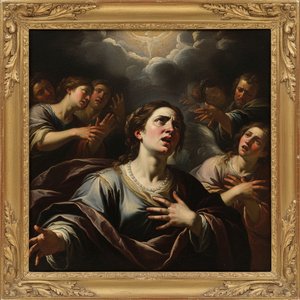
Chiaroscuro and Soul: A Definitive Guide to the Drama and Emotion of Italian Baroque Masterpieces
Embark on a sophisticated journey through Italian Baroque art. Discover the dramatic interplay of light and emotion in Caravaggio’s masterpieces and explore how to bring this timeless grandeur into your collection with expert art insights.


