Flemish Baroque · 1649
Falconry (Jacques D'Arthois, 1649)
Jacques D'Arthois (1613–1686) a réalisé Falconry. Elle date de 1649. Il appartient au mouvement Flemish Baroque. Réalisée en Oil On Canvas. Il est conservé au Collections d'État de Peinture de Bavière à Munich, Allemagne. Ses dimensions sont 135 × 206 cm.
- 1649
- Oil On Canvas
- 135 × 206 cm
- Collections d'État de Peinture de Bavière, Munich

 Aperçu en situation

 Peinture à l'huile faite main
 Envoyer
 Partager
 Fiche pédagogique


 Télécharger l'image
 Articles similaires
 Radiographie
 Diaporama
 Questions et réponses

 Statistiques
Falconry, en bref
- Titre
- Falconry
- Artiste
- Jacques D'Arthois (1613–1686)
- Lieu de naissance de l'artiste
- Bruxelles, Belgique
- Date
- 1649
- Technique
- Oil On Canvas
- Dimensions
- 135 × 206 cm
- Où le voir
- Collections d'État de Peinture de Bavière, Munich, Allemagne
- Mouvement
- Flemish Baroque
- Période
- Early Modern
- Sujet
- people, horse, tree, forest, sky, landscape
Que représente Falconry ?
The Depiction of Falconry by Jacques D' Arthois
In Falconry by Jacques D' Arthois, a classical hunting scene unfolds within a dense, shadowed woodland. The air feels heavy with the anticipation of the chase as figures on horseback and on foot move through a clearing. They push toward a distant landscape, their presence cutting through the thick vegetation. This moment captures the very essence of the pursuit, where the stillness of the forest meets the sudden movement of the hunt. It is a scene that speaks to the ancient connection between nobility and the wild, placing the viewer directly into the heart of the action.
Painted about 1649, the work focuses on the tension inherent in the hunt. The figures navigate the undulating terrain, their forms silhouetted against the light of the clearing. There is a sense of purpose in their movement, a drive that mirrors the natural instincts of the animals involved. The landscape itself seems to participate in the drama, with overhanging trees framing the central activity and directing the eye toward the unfolding event. Nature is not merely a backdrop here; it is an active participant in the pursuit, providing both the stage and the obstacles for the hunters.
The subject matter reaches beyond a simple depiction of sport to touch upon deeper themes of nature and the structured life of the nobility. Every movement in the clearing suggests a world governed by the rules of the hunt and the rhythms of the forest. As the figures advance, the tension of the chase lingers in the air, leaving one to wonder what lies just beyond the next thicket of trees. The scene remains suspended in this state of motion, caught between the quiet of the woods and the sudden energy of the hunt.
Composition and Visual Elements of the Work
The scene unfolds within a dramatic, large-scale landscape where the eye is immediately drawn into the heart of the woods. Massive, dark trees overhang the foreground on both the left and right sides, acting as a natural frame that pushes the viewer's gaze toward the center of the action. These heavy, shadowed branches create a sense of enclosure, making the clearing ahead feel like a stage set for the hunt. In the mid-ground, the stillness of the forest is broken by a group of figures moving through the light. Some ride upon horseback while others travel on foot, all navigating the undulating terrain as they push toward the horizon.
A monochromatic palette of grayscale tones defines the entire vista, stripping away color to focus entirely on the interplay of light and shadow. The light descends from the upper center, casting long, sweeping shadows across the forest floor and highlighting the movement of the hunters. This celestial glow creates a profound sense of depth through atmospheric perspective. As the eye travels toward the background, the distant hills and trees lose their sharp edges, becoming lighter and increasingly less detailed as they recede into the misty distance.
Technique and Material Composition
The scene unfolds through the medium of oil on canvas, where every stroke works to build a sense of tangible reality. The artist employs chiaroscuro to manipulate light and shadow, casting deep, dark tones into the recesses of the foliage to create a profound sense of volume and drama. This interplay of light and dark guides the eye through the woodland, making the figures and the terrain feel heavy and present within the space.
Fine brushwork brings a remarkable level of detail to the surface, allowing the viewer to feel the textures of the natural world. The rough, rugged bark of the overhanging trees in the foreground contrasts sharply with the soft, billowing forms of the clouds drifting through the sky. Even the distant hills benefit from this meticulous application, as atmospheric perspective lightens the landscape to suggest a vast, receding distance. Every element, from the organic curves of the tree trunks to the undulating earth, is rendered with a precision that breathes life into the monochromatic landscape.
The Artistic Style of Jacques D' Arthois
The brushstrokes reveal a man deeply attuned to the quiet rhythms of the forest. In this work, the landscape does not merely exist; it breathes with an idealized harmony that seeks to find peace within the wild. The woods around Brussels provide the essential soul for such scenes, offering a lush, verdant stage where nature feels both untamed and perfectly balanced. Every thicket and clearing seems to hold a sense of stillness, as if the world has paused to observe the movement of the hunt.
A particular mastery emerges in the way the light clings to the organic textures of the woodland. The tree trunks, heavy and ancient, are rendered with a tactile precision that invites the eye to wander over every ridge of bark. There is a specific, delicate skill in the way moss and ivy cling to these wooden pillars, adding layers of life to the stationary giants. These creeping greens and soft textures create a sense of depth, making the forest feel like a living, breathing entity rather than a mere backdrop for the figures passing through it.
The composition relies on a careful interplay between the dense, shadowed foliage of the foreground and the lighter, more open spaces of the mid-ground. This creates a natural rhythm that guides the eye through the thickets. The figures move through the clearing not as intruders, but as part of a larger, harmonious cycle of life. The interplay of light and shadow gives the scene a weight and volume that makes the atmosphere feel palpable, as if the very air of the Belgian countryside is caught within the frame.
The Artistic Influence and Legacy of D' Arthois
The echoes of his brushwork ripple through the history of Flemish landscape painting. As one of the few landscape painters from Brussels during the 17th century, he holds a singular position in the artistic landscape of his time. His presence in the art world is felt through the many hands that seek to replicate his vision. His style is not a solitary note but a melody that many other landscape artists choose to follow, imitating his specific approach to the natural world. This imitation ensures that his aesthetic remains a recurring theme in the evolution of the genre.
His fame does not fade with the passing of centuries. Instead, his reputation remains remembered, a lingering presence in the annals of art history. The way he captures the essence of the woods and the movement of figures creates a standard that others strive to meet. His influence is a quiet, persistent force, shaping how subsequent generations perceive the interplay of light and shadow within a wooded setting. He remains a vital link in the development of the Flemish tradition, leaving a mark that continues to be recognized long after his era has passed.
Dans quel musée se trouve Falconry ?
Collections d'État de Peinture de Bavière
Munich, Allemagne
Un héritage des Collections d'État de Peinture de Bavière Les Collections d'État de Peinture de Bavière, situées à Munich en Allemagne, ont entamé leur histoire institutionnelle en 1799 sous la forme de la Centralgemäldegaleriedirektion. Cette fondation a instauré un cadre pour la préservation de l'art européen qui continue de définir le paysage culturel de la ville. Les origines de la collection remontent au XVIe siècle, avec d'importantes acquisitions datant de l'époque de Guillaume IV (1508-1550).
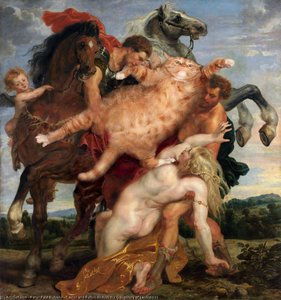


Images haute résolution de Falconry

Domaine public : l'artiste est décédé en 1686.
Autres formats, recadrages et citations →Jacques D'Arthois, Falconry (1649), Collections d'État de Peinture de Bavière. Domaine public
Questions sur Falconry, réponses
Dans quel musée se trouve l'original de « Falconry » ?
«Falconry» de Jacques D'Arthois est exposé au Collections d'État de Peinture de Bavière, Munich, Allemagne. La mention du musée se rapporte à l'œuvre originale et non aux reproductions.
En quelle année «Falconry» de Jacques D'Arthois a-t-il été créé ?
L'œuvre «Falconry» de Jacques D'Arthois date de 1649.
Quelle est la technique utilisée pour «Falconry» de Jacques D'Arthois ?
Jacques D'Arthois a utilisé la technique du Oil On Canvas pour « Falconry ». Cette technique définit la nature matérielle de l'œuvre originale.
Quelles sont les dimensions de l'original «Falconry» de Jacques D'Arthois ?
Les dimensions enregistrées de «Falconry» de Jacques D'Arthois sont 135.0 x 206.0cm. Des reproductions peuvent être commandées dans d'autres formats tout en conservant les mêmes proportions.
Que représente « Falconry » ?
L'œuvre « Falconry » représente people, horse, tree, forest, sky, landscape, clouds.
L'œuvre « Falconry » est-elle dans le domaine public ?
Statut des droits d'auteur pour «Falconry» de Jacques D'Arthois : l'œuvre est dans le dans le domaine public - ses droits d'auteur sont tombés dans le domaine public. Cela détermine si les reproductions de l'image peuvent être réalisées librement.
Qui est l'auteur de "Falconry" ?
« Falconry » est attribué à Jacques D'Arthois.
À quel mouvement artistique appartient «Falconry» de Jacques D'Arthois ?
Le mouvement associé à «Falconry» de Jacques D'Arthois est Flemish Baroque. Cette classification situe l'œuvre parmi des artistes et des œuvres d'art apparentés.
À quelle période de la carrière de Jacques D'Arthois appartient « Falconry » ?
Au cours de la carrière de Jacques D'Arthois, « Falconry » s'inscrit dans la période Mature Period. Cette phase permet de le comparer aux autres œuvres de l'artiste.
À propos de l'artiste, Jacques D'Arthois

1613–1686, Belgique
Jacques D'Arthois
Un maître bruxellois des scènes sylvestres : la vie et l'art de Jacques d’Arthois Jacques d'Arthois, né à Bruxelles en 1613, a émergé durant une période vibrante de l'art flamand—une époque où la peinture de paysage gagnait progressivement en importance aux côtés des traditions établies du portrait et de la peinture d'histoire. Bien qu'il ne soit pas aussi célèbre que certains de ses contemporains, d’Arthois s'est taillé une place de choix grâce à ses représentations méticuleusement détaillées de paysages boisés, peuplés de figures engagées dans la vie quotidienne ou des activités pastorales. Sa carrière s'est déroulée sur fond de bouleversements politiques et religieux, pourtant il a réussi à cultiver un style cohérent qui résonn'ait auprès de mécènes en quête de beauté et de tranquillité dans leur environnement. Apprenti auprès de Jan Mertens en 1625, les détails de sa formation initiale restent quelque peu obscurs ; toutefois, il est manifeste que d'Arthois a rapidement développé une affinité pour le rendu du monde naturel avec une précision remarquable.
À propos de Jacques D'Arthois Œuvres notables de Jacques D'Arthois
Autres œuvres de Jacques D'Arthois
 Groupe familial dans un paysage1645
 Vaste paysage forestier avec Saint Stanislas Kostka1665
 Paysage avec entrée de forêt1650
 Le Gué dans la Forêt1660

Essais sur Falconry
 Les 25 chefs-d'œuvre incontournables de Hugo van der GoesPlongez dans le réalisme de Hugo van der Goes. Découvrez ses 25 chefs-d'œuvre de la Renaissance flamande sur OriginalUniqueArt.com.
 Les 25 chefs-d'œuvre de Charles-François Daubigny : l'âme de la natureExplorez les 25 chefs-d'œuvre de Charles-François Daubigny et l'École de Barbizon. Découvrez ces trésors sur OriginalUniqueArt.com.
 Peintres français de l'école de BarbizonDécouvrez les chefs-d'œuvre de l'école de Barbizon, de Rousseau à Daubigny. Explorez la collection sur OriginalUniqueArt.com.