
 Aperçu en situation
 Partager
 Partager
 Détails
 Guide imprimable

 Télécharger
 Articles similaires
 Radiographie
 Voir le diaporama
 Statistiques
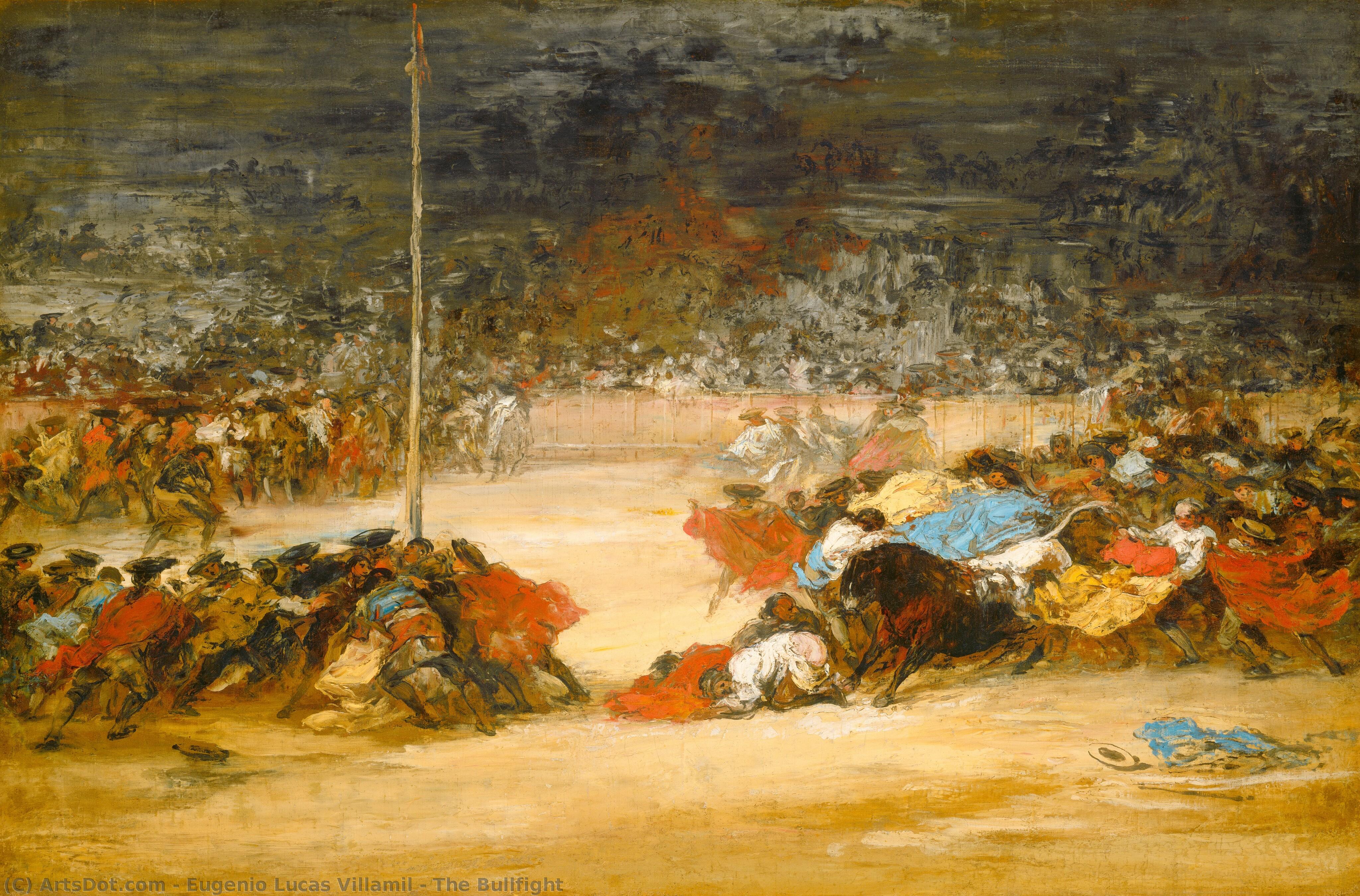
The Bullfight
 1900
1900 97.0 x 135.0 cm
 Afficher la suite
Acquérez une image numérique haute résolution et optimisée, d'une qualité bien supérieure à l'aperçu en ligne.
Chaque fichier est méticuleusement préparé par nos spécialistes internes à l'aide d'outils avancés et d'une retouche manuelle experte. Nous garantissons que chaque image possède une clarté exceptionnelle, une précision des couleurs irréprochable et un niveau de détail fin.
Le fichier final est livré par e-mail sous 72 heures, optimisé pour une utilisation immédiate dans des contextes professionnels, éditoriaux et d'impression. Il offre la même qualité de confiance que celle utilisée par les plus grands studios de création, éditeurs et galeries.
Image numérique
Téléchargez un fichier haute résolution pour votre usage personnel, l'impression et vos projets créatifs. ( Passer au format impression Acheter la peinture faite à la main)
Inclus avec chaque commande d'image numérique
Livraison numérique experte, garantie.
En choisissant OriginalUniqueArt.com, vous n'obtenez pas seulement une simple image : vous recevez une œuvre numérique sublimée avec professionnalisme, conçue avec précision et accompagnée d'une garantie de satisfaction. Voici tout ce qui accompagne automatiquement votre commande :

Livraison rapide par e-mail
Votre fichier d'image numérique haute résolution vous sera envoyé par e-mail sous 72 heures après votre commande — prêt à un usage immédiat.

Fichier numérique optimisé par l'IA
Votre œuvre d'art bénéficie d'une optimisation professionnelle grâce à des outils d'IA avancés et une retouche manuelle, garantissant un niveau maximal de détail, de clarté et de fidélité chromatique.

Réexpédition gratuite à vie
Vous avez accidentellement supprimé ou perdu votre fichier ? Pas d'inquiétude — nous vous le renverrons gratuitement, quand vous le souhaitez.

Aucuns frais de douane — À jamais
Profitez de votre œuvre d'art instantanément sans frais de douane ni de livraison — les téléchargements numériques sont toujours exonérés de taxes.

Garantie de fidélité des couleurs
Nous garantissons que votre image numérique reproduit les couleurs de l'original aussi fidèlement que possible grâce à des outils professionnels et une gestion rigoureuse des couleurs.

Garantie de satisfaction de 100 jours
Si vous n'êtes pas satisfait de votre image numérique, nous la retoucherons ou vous rembourserons 100% sous 100 jours — sans poser de questions.

Garantie de remboursement à 100%
Pas satisfait ? Obtenez un remboursement intégral dans les 100 jours suivant la réception de votre fichier numérique — sans aucune question posée.

Remises sur les commandes groupées
Achetez 3 images, économisez 10% - Achetez 5, économisez 15% - Achetez 10+, économisez 20%. Idéal pour les projets créatifs, les galeries et les agences.
Biographie de l'artiste
A Shadowed Legacy: The Life and Art of Eugenio Lucas Villaamil
Eugenio Lucas Villaamil, born in Madrid in 1858 and passing away in the same city in 1918, occupies a fascinating, often ambiguous position within the landscape of Spanish painting. For years, his name was inextricably linked with that of his father, Eugenio Lucas Velázquez, leading to considerable confusion regarding attribution and recognition. Villaamil wasn’t merely *a son of*, but a painter who developed a distinct style—one deeply rooted in the traditions of Spanish costumbrismo yet imbued with a romantic sensibility all his own. He was sometimes called “The Younger” precisely because disentangling his work from that of his progenitor proved so challenging, and for a long time, he existed partially in his father’s shadow. However, modern scholarship has begun to illuminate Villaamil's unique contributions, revealing an artist who skillfully captured the vibrant life of 19th-century Spain while subtly exploring themes of societal change and national identity.Inherited Brushstrokes: Early Influences and Artistic Formation
Villaamil’s artistic journey began within the intimate confines of his father's studio. Eugenio Lucas Velázquez, a follower in the tradition of Francisco de Goya, instilled in his son not only technical proficiency but also a deep appreciation for Spanish masters like Velázquez, Carreño, and Murillo. This early exposure proved formative; Villaamil inherited a remarkable facility with the brush—a speed and ease that characterized his work throughout his career. He formally studied at the “Escuela Especial de Pintura de Madrid,” honing his skills in preparation for exhibiting at the National Exhibition of Fine Arts shortly after graduation. The influence of his father is undeniable, particularly in Villaamil’s early paintings which often echo Velázquez's style and subject matter. However, even in these initial works, a nascent individuality begins to emerge—a preference for ornate detail and a heightened sense of color that would become hallmarks of his mature style.Aragonese Themes and the Costumbrista Tradition
Villaamil carved out a niche for himself specializing in scenes from Aragon, particularly bullfight depictions. These were not simply representations of spectacle; they were often lavishly detailed narratives brimming with energy and drama. He became renowned for his costumbrista paintings—scenes depicting the customs, traditions, and everyday life of the Spanish people. His works captured the colorful majas and chisperos of Madrid, figures embodying a distinctly Spanish spirit. These scenes resonated deeply with audiences seeking to celebrate their national heritage during a period of significant social and political upheaval. While he drew inspiration from 18th-century tableaus, Villaamil infused them with his own unique perspective—a blend of realism and romanticism that set him apart from his contemporaries. He also undertook commissions for frescoes in the home of José Lázaro Galdiano, now a museum, further demonstrating his versatility and skill.Goya’s Echo and the Question of Attribution
The artist's fascination with Francisco de Goya played a pivotal role in shaping his artistic development. Villaamil created numerous copies of Goya’s paintings from the Museo del Prado and private collections, demonstrating not only technical mastery but also a profound understanding of Goya’s compositional techniques and psychological depth. However, this admiration led to further complications regarding attribution. Some works were mistakenly attributed to Goya himself, highlighting the challenges in distinguishing between the two artists' styles. This confusion persisted for many years, obscuring Villaamil’s individual achievements. Despite his popularity—he was awarded the Order of Charles III—he often remained overshadowed by both his father and the towering figure of Goya.A Lasting Impression: Historical Significance and Modern Reassessment
Eugenio Lucas Villaamil's legacy is one of subtle brilliance, a testament to an artist who skillfully navigated the complexities of tradition and innovation. While he may not have achieved the widespread fame of his father or Goya, his paintings offer a valuable glimpse into 19th-century Spanish life—a vibrant tapestry of customs, traditions, and societal dynamics. Modern scholarship has begun to redress the historical imbalance, recognizing Villaamil as a significant figure in the costumbrista movement and acknowledging his unique artistic voice. His works continue to captivate audiences with their dynamic compositions, rich colors, and evocative depictions of a bygone era. He stands as a reminder that artistic influence is not simply imitation but a complex process of absorption, adaptation, and ultimately, individual expression—a legacy finally emerging from the shadows.
En bref
- Artistic Movement Or Style: Costumbrista, Romanticism
- Artists Who Influenced This Artist: ['Francisco de Goya']
- Date Of Birth: January 14, 1858
- Date Of Death: January 23, 1918
- Full Name: Eugenio Lucas Villaamil
- Nationality: Spanish
- Notable Artworks:
- The Bullfight
- La Fusillade
- Martincho's Folly
- Place Of Birth: Madrid, Spain