Menu

() ·

A painting made for you, by hand

Street, Dresden

Reproduction à l'huile faite à la main

Huile sur toile peinte à la main, avec cadre et dimensions personnalisés, réalisée sur commande par nos artistes. ( Passer au format impression Passer au format numérique)

Description de la pièce

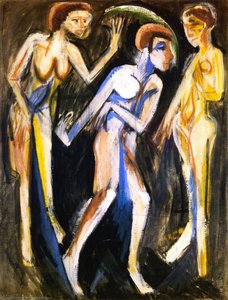
Experience Ernst Ludwig Kirchner's "Street, Dresden" (1908). A vibrant depiction of urban life, capturing the energy and alienation of early 20th-century cityscapes through bold colors & expressive brushstrokes. Hand-painted reproduction available.

Biographie de l'artiste

Ernst Ludwig Kirchner (1880-1938) : figure clé de l'Expressionnisme allemand & cofondateur du Die Brücke. Découvrez ses peintures audacieuses, urbaines et expressives !

from ·

Chapter 1

How large should it be?

Slide to change the size; the picture on the left shows the frame at its real width. The proportions of the original are kept.

Format standard
sur mesure
CM
INCH

Choisissez parmi nos formats prédéfinis qui respectent les proportions originales de l’œuvre.

largeur
hauteur

Saisissez la largeur et la hauteur souhaitées, pour s'adapter à votre cadre ou à votre mur. Cette œuvre est peinte à la main ; ainsi, pour un format de forme différente, l'artiste peut peindre un peu plus autour du tableau ou réduire légèrement les bords — c'est vous qui choisissez. Nous vous envoyons une maquette numérique pour approbation avant que la peinture ne commence. L'image présentée sur cette page ne reflète pas le résultat réel — seule la maquette le fait.

Chapter 2

How should it arrive?

Choose the edges of the stretched canvas

Choose your frame

Corner sample of the WhiteWrap canvas edge finish, stretched on bois massif bars
White €1
Corner sample of the BlurSideWrap canvas edge finish, stretched on bois massif bars
Blurside €1
Corner sample of the ExtendedWrap canvas edge finish, stretched on bois massif bars
Extended €1
Corner sample of the P118B picture frame: polystyrène moulé, 5 cm wide and 3 cm thick
P118B €10
Corner sample of the P118H picture frame: polystyrène moulé, 5 cm wide and 3 cm thick
P118H €10
Corner sample of the P118W picture frame: polystyrène moulé, 5 cm wide and 3 cm thick
P118W €10
Corner sample of the P438Z picture frame: polystyrène moulé, 5.5 cm wide and 3.5 cm thick
P438Z €10
Corner sample of the P508JH picture frame: polystyrène moulé, 7 cm wide and 3.5 cm thick
P508JH €12
Corner sample of the P508YH picture frame: polystyrène moulé, 7 cm wide and 3.5 cm thick
P508YH €12
Corner sample of the P805H picture frame: polystyrène moulé, 5 cm wide and 3.5 cm thick
P805H €10
Corner sample of the P805Z picture frame: polystyrène moulé, 5 cm wide and 3.5 cm thick
P805Z €10
Corner sample of the P919BZ picture frame: polystyrène moulé, 7 cm wide and 3.5 cm thick
P919BZ €10
Corner sample of the P919G picture frame: polystyrène moulé, 7 cm wide and 3.5 cm thick
P919G €10
Corner sample of the P919XJ picture frame: polystyrène moulé, 7 cm wide and 3.5 cm thick
P919XJ €10
Corner sample of the P959ZH picture frame: polystyrène moulé, 5 cm wide and 3 cm thick
P959ZH €10
Corner sample of the P968JZ picture frame: polystyrène moulé, 6 cm wide and 4 cm thick
P968JZ €12
Corner sample of the W106C picture frame: bois massif, 5 cm wide and 3 cm thick
W106C €8
Corner sample of the W218G picture frame: bois massif, 5 cm wide and 3 cm thick
W218G €10
Corner sample of the W218JH picture frame: bois massif, 5 cm wide and 3 cm thick
W218JH €8
Corner sample of the W218Y picture frame: bois massif, 5 cm wide and 3 cm thick
W218Y €10
Corner sample of the W307PJ picture frame: bois massif, 6 cm wide and 3 cm thick
W307PJ €10
Corner sample of the W316G picture frame: bois massif, 6 cm wide and 3 cm thick
W316G €10
Corner sample of the W316PJ picture frame: bois massif, 6 cm wide and 3 cm thick
W316PJ €8
Corner sample of the W316Y picture frame: bois massif, 6 cm wide and 3 cm thick
W316Y €10
Corner sample of the W398PJ picture frame: bois massif, 5 cm wide and 3 cm thick
W398PJ €8
Corner sample of the W4111J picture frame: bois massif, 6.5 cm wide and 3.5 cm thick
W4111J €10
Corner sample of the W500HY picture frame: bois massif, 7 cm wide and 5 cm thick
W500HY €15
Corner sample of the W500JH picture frame: bois massif, 7 cm wide and 5 cm thick
W500JH €15
Corner sample of the W692G picture frame: bois massif, 8 cm wide and 4 cm thick
W692G €12
Corner sample of the W849H picture frame: bois massif, 5 cm wide and 3 cm thick
W849H €8
Corner sample of the W940BG picture frame: bois massif, 7.5 cm wide and 4.5 cm thick
W940BG €15
Corner sample of the W953PJ picture frame: bois massif, 6 cm wide and 3.5 cm thick
W953PJ €8
Corner sample of the H24-GOLD picture frame: bois sculpté et apprêté au gesso, 10 cm wide and 6 cm thick
H24-GOLD €30
Corner sample of the H24-SILVER picture frame: bois sculpté et apprêté au gesso, 10 cm wide and 6 cm thick
H24-SILVER €30
Corner sample of the H36-GOLD picture frame: bois sculpté et apprêté au gesso, 15 cm wide and 6.5 cm thick
H36-GOLD €45
Corner sample of the H36-SILVER picture frame: bois sculpté et apprêté au gesso, 15 cm wide and 6.5 cm thick
H36-SILVER €45
Aperçu du cadre
Sous cadre

Moulding: . Overall size with the frame: .

Chapter 3

Who paints it, and should anything change?

Examples of what can be changed: Replace face with customer photo; Add pet (e.g., replace cat with dog); Include hidden message in background; Change background landscape or elements.
After order, OriginalUniqueArt.com team will email client for instructions and provide a mockup preview

Livraison dans le monde entier () en 3 à 4 semaines au lieu des 5 semaines habituelles. (30 octobre). Aucun compromis sur la qualité.

Chapter 4

The finishing touches

A nameplate, as in a museum?

Détails de la plaque en bronze gravée

This elegant plaque features the artist's name and the title of the artwork, finely engraved for a timeless presentation.

It is made from bronze with a refined, elegant finish. The text is precisely laser-engraved for a sharp and permanent result. Measuring 9x2 cm, the plaque is compact yet easy to read. It's built to be durable and scratch-resistant, offering a professional, museum-quality look. Mounting is simple thanks to the included adhesive backing.

Détails de la plaque en acrylique transparent

The plaque includes essential engraved details such as the artist's name, the title of the artwork, the date it was created, the type of media used-like oil on canvas or watercolor-a brief description of the piece, and a QR code that links to the complete artwork information.

It is crafted from clear acrylic, offering a sleek, modern appearance. The text is UV-engraved in black to ensure strong visual contrast. With a size of 10x15 cm, it ensures optimal readability. It comes equipped with two metal hooks for secure wall mounting. The plaque is designed to be weather-resistant, making it suitable for various environments, and it includes interactive features that work seamlessly with smartphone scanning.

Détails de la plaque en acrylique noir

This elegant plaque includes engraved information such as the artist's name, the title of the artwork, the date it was created, the type of media used (like oil on canvas or watercolor), a short description of the artwork, and a QR code for quick access to more information.

The plaque itself is made from refined black acrylic with a premium finish. The text is laser-engraved in white for high contrast and readability. Its size is 10x15 cm, designed to be easy to read. It comes with two metal hooks for professional mounting. The design is sleek and fits any interior style. It is also weather-resistant and durable, with built-in digital integration for mobile compatibility.

A protective varnish?

When do you need it?

Chapter 5

Your painting, as you ordered it

Street, Dresden

Technique de reproduction

Format de la reproduction

-

Artiste de prestige

Plus de détails, de finesse et un temps de production accru

-

Cadre de reproduction

-

-

Pour les œuvres ou reproductions dont un côté mesure plus de 105 cm (environ 41 pouces), le cadre sera expédié sous forme de kit démonté. Cette méthode garantit une livraison sécurisée et prévient tout dommage pendant le transport.

Assemblage professionnel requis - ce produit n'est pas destiné au bricolage (DIY).
Le kit doit être assemblé et la toile tendue par un encadreur professionnel expérimenté, en utilisant de la colle à bois (non fournie), une pince à tendre la toile et des serre-joints pour maintenir les traverses d'équerre pendant le séchage de la colle. Un assemblage incorrect ou une tension inégale de la toile peut endommager l'œuvre de manière irréversible et n'est pas couvert par notre garantie.

  • Toutes les baguettes en bois massif sont incluses, découpées avec précision à la taille requise.

  • À assembler avec les vis fournies, ainsi qu'avec de la colle à bois pour les assemblages d'angles (non fournie), à prévoir par votre encadreur.

  • L'utilisation d'outils professionnels est requise et non incluse : une pince à tendre la toile (tendeur) et des serre-joints pour maintenir les baguettes bien d'équerre pendant le séchage de la colle.

Important :
L'assemblage des angles nécessite de la colle à bois, les barres doivent être maintenues avec des serre-joints jusqu'au séchage complet de la colle, et le tendage de la toile sur le châssis assemblé nécessite une pince à tendre la toile. Aucun de ces éléments n'est inclus dans le kit. Veuillez consulter un encadreur professionnel expérimenté avant de commander ce format.

Cartel

-

-

Vernis de protection

Vernis brillant (intensifie les couleurs, protège de la lumière et de l'humidité)

-

Personnaliser mon œuvre

Exemples de personnalisation : remplacer le visage par une photo du client ; ajouter un animal de compagnie (par exemple, remplacer un chat par un chien) ; inclure un message caché en arrière-plan ; modifier le paysage ou les éléments d'arrière-plan.

-

Livraison urgente

Livraison dans le monde entier () en 3 à 4 semaines au lieu des 5 semaines habituelles. (30 octobre). Aucune concession sur la qualité.

-

Livraison express

Livraison dans le monde entier () sous 5 semaines. (6 novembre).

Inclus

Prix total

€ 266

Prix total € 266

L'option verre n'est disponible que pour les dimensions inférieures à 110 cm.

Included with every order

  • Livraison express gratuite dans le monde entier
  • Toile de lin de qualité supérieure
  • Assurance transport complète
  • Garantie de remboursement des droits de douane
  • Garantie de fidélité des couleurs
  • Politique de retour de 100 jours (uniquement en cas de défaut)
  • Garantie de remboursement à 100%
  • Offre de tarifs dégressifs

A Fragmented Urban Dream: Ernst Ludwig Kirchner’s “Street, Dresden”

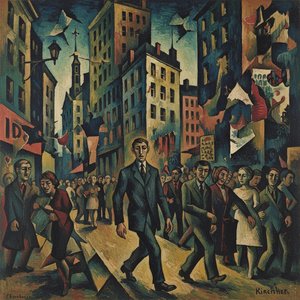
Ernst Ludwig Kirchner's "Street, Dresden," painted in 1908 and later reworked in 1919, isn’t merely a depiction of a city street; it’s a visceral exploration of modern anxiety and the alienation inherent within rapidly changing urban landscapes. This large oil on canvas, measuring 150 x 200 cm, pulsates with an unsettling energy—a feeling that immediately draws the viewer into its chaotic heart. Kirchner, a pivotal figure in the German Expressionist movement, masterfully captures not just the visual reality of Dresden’s Königstrasse but also the psychological state of those who navigated its crowded thoroughfares.

The painting's style is undeniably expressive, moving far beyond traditional academic realism. Kirchner employs bold, flattened forms and jarring color combinations—a deliberate rejection of the naturalistic palette favored by earlier generations. The pinks, oranges, blues, and greens clash dramatically, creating a sense of unease and disorientation. Brushstrokes are loose and agitated, conveying movement and a feeling of urgency. This technique wasn’t simply aesthetic; it was a conscious effort to translate inner turmoil onto the canvas, mirroring the anxieties prevalent in Germany at the turn of the century – a nation grappling with industrialization, social upheaval, and a growing sense of displacement.

The Faces of Modernity

Kirchner’s figures are not individuals; they are fragments, masks representing the anonymous masses swept along by the currents of urban life. Each face is rendered with stark simplicity – often reduced to geometric shapes and simplified features—suggesting a loss of identity within the crowd. The woman in the center, clutching her purse, stares blankly ahead, while others turn away, their backs to the viewer, embodying a profound sense of isolation. Even the little girl, seemingly the most vulnerable figure, is dwarfed by her oversized hat, further emphasizing her detachment and insignificance. The artist deliberately avoids portraying individual personalities, instead focusing on the collective experience of being adrift in a bustling city.

Interestingly, Kirchner’s own letters reveal his personal struggle with loneliness during this period. He described feeling overwhelmed by the faces he encountered, noting that “Completely strange faces pop up as interesting points through the crowd. I am carried along with the current, lacking will.” This internal experience is powerfully translated into the painting's composition and color palette – a visual representation of his own sense of alienation.

A Bridge to Expressionism

“Street, Dresden” exemplifies the core tenets of German Expressionism. The movement sought to express subjective emotions and experiences rather than objective reality. Kirchner’s use of distorted forms, exaggerated colors, and fragmented compositions directly reflects this philosophy. The painting can be seen as a bridge between the anxieties of late 19th-century realism and the emotionally charged landscapes of early 20th-century Expressionism. It's a pivotal work in understanding the movement’s exploration of urban alienation and psychological distress.

Furthermore, Kirchner’s decision to rework the painting in 1919 demonstrates his ongoing engagement with the subject matter. The subtle changes—particularly in the color palette and the arrangement of figures—suggest a deepening of his artistic vision and a continued attempt to capture the complexities of modern urban life. The work's presence in museums like the Kirchner Museum Davos underscores its enduring significance within Expressionist art history.

Bringing “Street, Dresden” into Your Space

A hand-painted reproduction of "Street, Dresden" offers a remarkable opportunity to bring this powerful and evocative artwork into your home or office. OriginalUniqueArt’s meticulous reproductions capture the painting's vibrant colors, dynamic brushstrokes, and emotional intensity with exceptional detail. Whether you are an art collector, an interior designer seeking to create a thought-provoking atmosphere, or simply someone drawn to Kirchner’s unique vision, this reproduction provides a stunning and authentic representation of a seminal work in modern art history.

Questions et réponses

Sous quels autres noms ou pseudonymes Ernst Ludwig Kirchner est-il connu ?

L'artiste Ernst Ludwig Kirchner, créateur de « Street, Dresden », est également connu sous d'autres noms, notamment Kirchner, E.L. Kirchner.

Quelle émotion l'œuvre German Expressionism «Street, Dresden» dégage-t-elle ?

Au sein du mouvement German Expressionism, « Street, Dresden » est empreint d'un ton Mélancolique.

Où peut-on acheter des reproductions peintes à la main de «Street, Dresden» de Ernst Ludwig Kirchner ?

Les reproductions peintes à la main de «Street, Dresden» de Ernst Ludwig Kirchner sont disponibles sur ce site : une reproduction à l'huile peinte à la main sur toile de lin, via sa page Reproduction peinte à la main.

More about this painting

Aperçu en situation Visualiser en RA Passer au format impression Passer au format numérique Envoyer
Détails de l'œuvre Guide Ajouter aux favoris Télécharger l'image Articles similaires Radiographie Diaporama Q&A Statistiques

In numbers

  • 1908the year it was painted
  • 29frames to choose from
  • standard sizes, in its own proportions
  • 5weeks to paint and deliver it
Ernst Ludwig Kirchner

Ernst Ludwig Kirchner

1880 - 1938, Allemagne

Quick facts about Ernst Ludwig Kirchner

  • Artistes Influents:
    • Albrecht Dürer
    • Vincent van Gogh
    • Edvard Munch
  • Date De Décès: 15 juin 1938
  • Date De Naissance: 6 mai 1880
  • Influence Sur Les Artistes: ['Expressionnistes modernes']
  • Lieu De Naissance: Aschaffenburg, Allemagne
  • Mouvement Artistique: Expressionnisme, Die Brücke
  • Nationalité: Allemand
  • Nom Complet: Ernst Ludwig Kirchner
  • Oeuvres Notables:
    • La Rue
    • Danseuse bondissante
    • Autoportrait avec un modèle
    • Femmes dans la rue
    • Scène de rue à Berlin
    • Le Buveur (autoportrait)

Biographie de l'artiste

Ernst Ludwig Kirchner : Vie et Héritage

Jeunesse et Formation

Ernst Ludwig Kirchner, figure centrale de l'Expressionnisme allemand, est né le 6 mai 1880 à Aschaffenburg, en Bavière. Son héritage prussien familial et la lignée huguenote de sa mère ont profondément façonné son identité artistique. Des déménagements fréquents pendant son enfance – dus à la recherche d'emploi par son père – ont conduit Kirchner à fréquenter des écoles à Francfort et Perlen avant de s'installer à Chemnitz lorsque son père a obtenu un poste au collège technique local.

En 1901, Kirchner commence ses études d'architecture à la Königliche Technische Hochschule (École Royale Technique) de Dresde. Cependant, il se dirige rapidement vers la peinture, trouvant l'inspiration dans les œuvres d'artistes comme Albrecht Dürer et développant une vision radicale de l'art aux côtés de son ami Fritz Bleyl.

La Formation du Die Brücke (Le Pont)

Un tournant dans la carrière de Kirchner survient en 1905 lorsqu'il cofonde Die Brücke (“Le Pont”) avec Bleyl, Karl Schmidt-Rottluff et Erich Heckel. Ce groupe visait à combler le fossé entre les styles académiques traditionnels et une forme d'expression plus moderne et chargée d'émotion. Ils ont cherché l'inspiration dans l'art primitif, en particulier de l'Afrique et de l'Océanie, ainsi que dans les œuvres de Vincent van Gogh et Edvard Munch.

Style Artistique et Caractéristiques Principales

Le style artistique de Kirchner se caractérise par ses couleurs audacieuses, ses coups de pinceau expressifs et ses compositions souvent déconcertantes. Il représentait fréquemment des scènes urbaines, dépeignant l'aliénation et les angoisses de la vie moderne au début du XXe siècle en Allemagne. Son œuvre comprend également un nombre important de nus féminins dans des paysages naturels, mettant en valeur sa fascination pour le mouvement et la forme.

  • Palettes de Couleurs Audacieuses : Kirchner employait des couleurs vibrantes, souvent non naturalistes, pour exprimer l'émotion.
  • Travail du Pinceau Expressif : Ses coups de pinceau sont énergiques et visibles, contribuant à l'intensité émotionnelle globale de ses peintures.
  • Formes Distordues : Les figures et les objets sont souvent déformés ou allongés, reflétant une réalité subjective plutôt qu'objective.
  • Thèmes Urbains : De nombreuses œuvres représentent des rues animées et l’impact psychologique de la vie urbaine moderne.

Œuvres Majeures et Réalisations

Parmi les œuvres les plus notables de Kirchner, on trouve :

  • La Rue (1908) – Une représentation emblématique de la vie dans les rues de Berlin, capturant son énergie et son aliénation.
  • Danseuse Sautillante, Gret Palucca (1912) – Met en valeur son intérêt pour le mouvement expressif et la forme humaine.
  • Autoportrait avec un modèle (1910) - Un exemple frappant de son auto-exploration à travers l'art.
  • Cinq Femmes dans la Rue (1913)

Vie Tardive, Défis et Héritage

La vie de Kirchner a été marquée par des tourments personnels. Il a subi un effondrement mental pendant la Première Guerre mondiale et s'est ensuite retiré en Suisse. L'ascension du nazisme a apporté d'autres difficultés ; plus de 600 de ses œuvres ont été confisquées et qualifiées d'"art dégénéré". Confronté à la persécution et au déclin de sa santé, Kirchner s'est tragiquement suicidé à Davos, en Suisse, le 15 juin 1938.

Malgré cette fin tragique, l’héritage d’Ernst Ludwig Kirchner perdure. Il reste une figure centrale de l'Expressionnisme allemand, influençant des générations d'artistes par son style audacieux et ses représentations émotionnellement résonantes de la vie moderne. Son œuvre continue d'être exposée dans les principaux musées du monde et est très recherchée par les collectionneurs.

Influences & Impact

Influencé Par : Albrecht Dürer, Vincent van Gogh, Edvard Munch, Art Primitif (Africain & Océanien)

A Influencé : Le travail de Kirchner a profondément influencé les générations suivantes d'artistes expressionnistes et modernes. Son exploration des thèmes psychologiques et son utilisation innovante de la couleur et de la forme continuent d’inspirer les pratiques artistiques contemporaines.