

 Aperçu en situation
 Partager
 Partager
 Détails
 Guide imprimable

 Télécharger
 Articles similaires
 Radiographie
 Voir le diaporama
 Statistiques
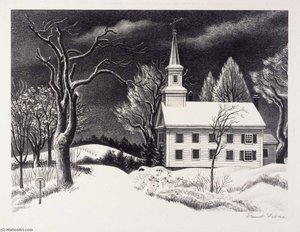
New Snow
 1946
1946 33.0 x 45.0 cm
 Afficher la suite
Acquérez une image numérique haute résolution et optimisée, d'une qualité bien supérieure à l'aperçu en ligne.
Chaque fichier est méticuleusement préparé par nos spécialistes internes à l'aide d'outils avancés et d'une retouche manuelle experte. Nous garantissons que chaque image possède une clarté exceptionnelle, une précision des couleurs irréprochable et un niveau de détail fin.
Le fichier final est livré par e-mail sous 72 heures, optimisé pour une utilisation immédiate dans des contextes professionnels, éditoriaux et d'impression. Il offre la même qualité de confiance que celle utilisée par les plus grands studios de création, éditeurs et galeries.
Image numérique
Téléchargez un fichier haute résolution pour votre usage personnel, l'impression et vos projets créatifs. ( Passer au format impression Acheter la peinture faite à la main)
Inclus avec chaque commande d'image numérique
Livraison numérique experte, garantie.
En choisissant OriginalUniqueArt.com, vous n'obtenez pas seulement une simple image : vous recevez une œuvre numérique sublimée avec professionnalisme, conçue avec précision et accompagnée d'une garantie de satisfaction. Voici tout ce qui accompagne automatiquement votre commande :

Livraison rapide par e-mail
Votre fichier d'image numérique haute résolution vous sera envoyé par e-mail sous 72 heures après votre commande — prêt à un usage immédiat.

Fichier numérique optimisé par l'IA
Votre œuvre d'art bénéficie d'une optimisation professionnelle grâce à des outils d'IA avancés et une retouche manuelle, garantissant un niveau maximal de détail, de clarté et de fidélité chromatique.

Réexpédition gratuite à vie
Vous avez accidentellement supprimé ou perdu votre fichier ? Pas d'inquiétude — nous vous le renverrons gratuitement, quand vous le souhaitez.

Aucuns frais de douane — À jamais
Profitez de votre œuvre d'art instantanément sans frais de douane ni de livraison — les téléchargements numériques sont toujours exonérés de taxes.

Garantie de fidélité des couleurs
Nous garantissons que votre image numérique reproduit les couleurs de l'original aussi fidèlement que possible grâce à des outils professionnels et une gestion rigoureuse des couleurs.

Garantie de satisfaction de 100 jours
Si vous n'êtes pas satisfait de votre image numérique, nous la retoucherons ou vous rembourserons 100% sous 100 jours — sans poser de questions.

Garantie de remboursement à 100%
Pas satisfait ? Obtenez un remboursement intégral dans les 100 jours suivant la réception de votre fichier numérique — sans aucune question posée.

Remises sur les commandes groupées
Achetez 3 images, économisez 10% - Achetez 5, économisez 15% - Achetez 10+, économisez 20%. Idéal pour les projets créatifs, les galeries et les agences.
Composition and Technique
New Snow features a stunning winter landscape, with a church steeple standing tall amidst the snow-covered trees. The black and white color scheme adds a timeless quality to the image, emphasizing the contrast between the architectural details of the church and its surroundings. The artist's use of lithography as a medium allows for a level of detail and texture that is truly remarkable.Artistic Significance
Ernest Fiene's work is characterized by his ability to capture the essence of the American landscape. New Snow is no exception, as it embodies the cultural contributions of Man to Nature. The church, located in an isolated spot at a crossroad in the township of Easton, Conn, is silhouetted against the crisp winter background of snowy hills and struggling barren trees.- The emphasis on purity of line and color in New Snow reflects the artist's fascination with the relationship between architecture and nature.
- The piece has been awarded the "First Purchase Prize" by the Library of Congress in 1946, a testament to its artistic significance.
- New Snow is part of the permanent collection at the Smithsonian American Art Museum, alongside other notable works by Ernest Fiene.
The captivating quality of New Snow lies in its ability to evoke a sense of stillness and contemplation, inviting the viewer to step into the serene winter landscape. As a masterpiece of American art, it continues to inspire and delight audiences to this day.
Biographie de l'artiste
Ernest Fiene: A Precisionist Capturer of Urban Rhythms
Ernest Fiene (1894-1965) wasn’t a name immediately recognized by the public, yet his work quietly documented a pivotal era in American art – the burgeoning dynamism and industrial complexity of New York City during the 1920s and beyond. More than just a chronicler of urban landscapes, Fiene was a master of precisionism, meticulously rendering the city’s steel-and-glass canyons, its bustling streets, and the subtle shifts in light that defined its unique atmosphere. His art offers a compelling glimpse into a rapidly changing world, reflecting both the excitement of modernity and a deep appreciation for the inherent beauty within it. Born in Elberfeld, Germany, Fiene’s early life was shaped by a strong artistic sensibility nurtured by his family. Initially pursuing an engineering career, he found himself drawn to painting, ultimately immigrating to the United States in 1912. His formal training at the National Academy of Design and the Beaux-Arts Institute provided him with foundational skills, but it was his exposure to Robert Henri’s circle – a group championing a more direct and expressive approach to art – that truly ignited his artistic vision. This influence is evident in his early watercolors, characterized by bold colors and a willingness to capture the immediacy of observation. The move to New York City in 1923 marked a crucial turning point, placing him squarely within the heart of America’s artistic capital and exposing him to the burgeoning modernist movement. Fiene's artistic style evolved significantly throughout his career, influenced by Cubist geometry and the principles of precisionism. He began experimenting with flattened planes of color and simplified forms, mirroring the aesthetic sensibilities of artists like Charles Demuth and George Bridgman. This approach allowed him to distill complex urban scenes into their essential elements, creating images that were both visually striking and intellectually engaging. His lithographs, particularly those produced through collaborations with Atelier 17 in Paris, showcased his technical mastery and his ability to translate intricate details onto paper. The Downtown Gallery became a key venue for showcasing these prints, establishing Fiene’s reputation within the New York art scene. Notably, he was commissioned to create murals for public buildings – including one for the Department of the Interior Building in Washington D.C. – demonstrating his growing recognition and artistic ambition.- Key Works: “St. Michael’s in Brooklyn” (1947), a powerful monochrome charcoal drawing; numerous lithographs depicting New York Cityscapes, including views of the Chrysler Building and Grand Central Terminal.
- Technique: Primarily employed precisionism, utilizing geometric forms and flattened planes to capture the essence of urban scenes. His use of light and shadow was particularly masterful, creating a sense of depth and atmosphere within his compositions.
- Influences: Robert Henri’s emphasis on direct observation and expressive color; Cubist principles of simplification and geometric abstraction; the precisionism movement itself, exemplified by artists like Demuth and Bridgman.
Legacy and Historical Significance
Fiene's work is often overlooked in mainstream art history, yet it holds significant value as an example of American modernism during a crucial period. His meticulous attention to detail and his ability to convey the energy of urban life align him with the precisionist movement, which sought to capture the dynamism of industrial America. Furthermore, his murals demonstrate a commitment to public art and a desire to engage with the broader community. His association with Atelier 17 and his work on lithographs for the Associated American Artists helped to disseminate his style and reach a wider audience.- Museum Collections: His works are held in collections at institutions such as the Philbrook Museum of Art in Oklahoma City, showcasing the enduring appeal of his urban landscapes.
- Art Historical Context: Fiene’s work provides valuable insight into the artistic landscape of 1920s and 30s New York, a period marked by rapid industrialization, social change, and artistic experimentation.
ernest fiene
1894 - 1965
En bref
- Artistic Movement Or Style: Precisionism, Graphic Art
- Artists Or Movements Influenced By This Artist: ['Precisionism']
- Artists Who Influenced This Artist: ['Robert Henri']
- Date Of Birth: November 2, 1894
- Date Of Death: August 10, 1965
- Full Name: Ernest Fiene
- Nationality: American
- Notable Artworks:
- St. Michael’s in Brooklyn
- Various NYC cityscapes
- Place Of Birth: Elberfeld, Germany