
 Aperçu en situation
 Partager
 Partager
 Détails
 Guide imprimable

 Télécharger
 Articles similaires
 Radiographie
 Voir le diaporama
 Statistiques
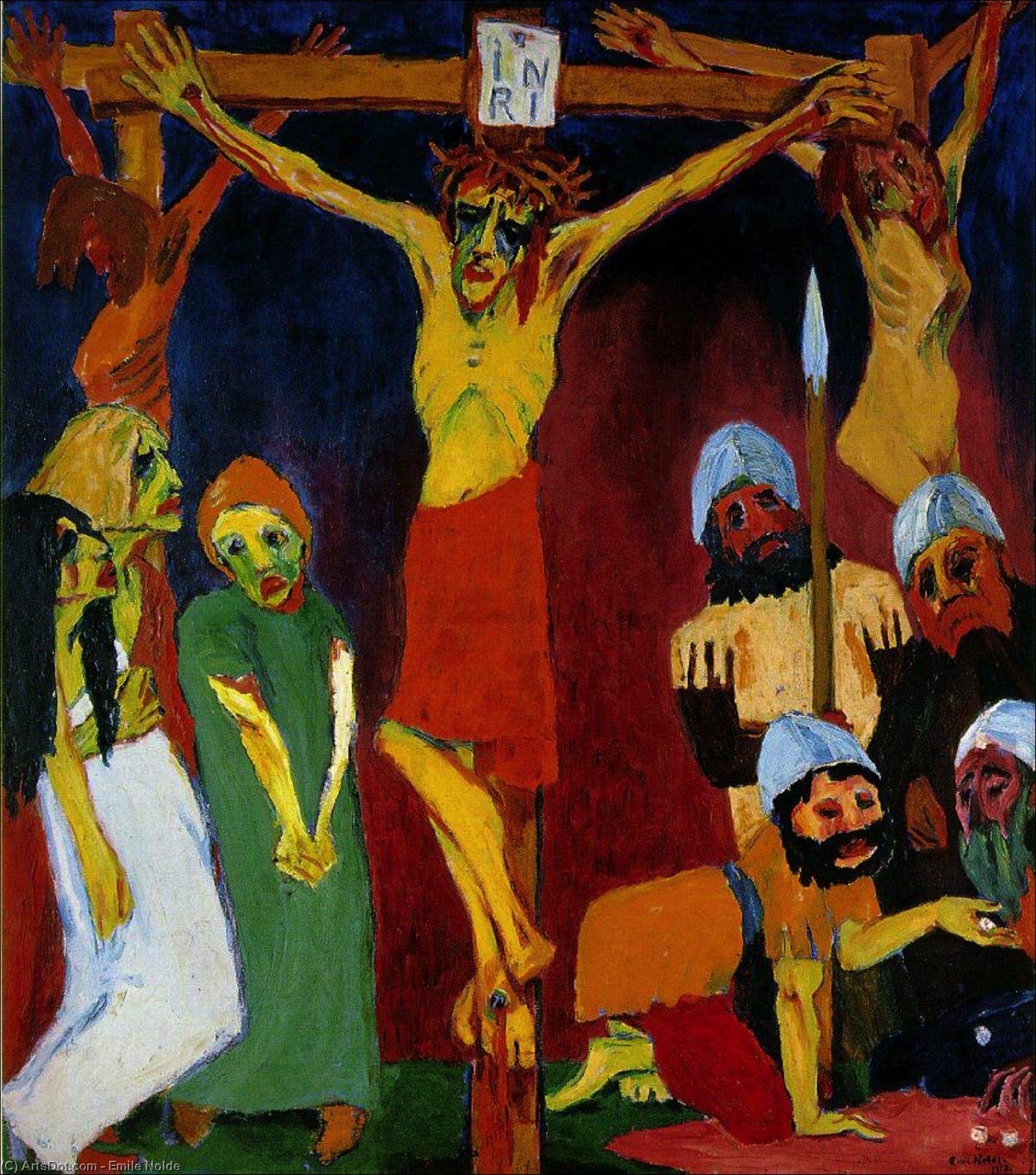
Crucifixion,
 Acrylic On Canvas
- WallArt
- Expressionist Symbolism
 1912
1912- 19th Century
 221.0 x 194.0 cm
 Afficher la suite
Reproduction à l'huile faite à la main
Huile sur toile peinte à la main, avec cadre et dimensions personnalisés, réalisée sur commande par nos artistes. ( Passer au format impression Passer au format image numérique)




P118B €10

P118H €10

P118W €10

P438Z €10

P508JH €12

P508YH €12

P805H €10

P805Z €10

P919BZ €10

P919G €10

P919XJ €10

P959ZH €10

P968JZ €12

W106C €8

W218G €10

W218JH €8

W218Y €10

W307PJ €10

W316G €10

W316PJ €8

W316Y €10

W398PJ €8

W4111J €10

W500HY €15

W500JH €15

W692G €12

W849H €8

W940BG €15

W953PJ €8




Choisissez parmi nos formats prédéfinis qui respectent les proportions originales de l’œuvre.

Type the width and the height you need, to fit your frame or your wall. This is hand-painted, so for a size with a different shape the artist can paint a bit more around the picture, or cut a bit — you choose. We send you a digital mockup to approve before the painting starts. The picture shown on this page does not show the real result — only the mockup does.
Après la commande, l’équipe OriginalUniqueArt.com contactera le client par e-mail pour recueillir ses instructions et lui fournira une maquette d’aperçu
Livraison dans le monde entier () en 3 à 4 semaines au lieu des 5 semaines habituelles. (14 octobre). Aucun compromis sur la qualité.

Livraison express gratuite dans le monde entier

Toile de lin de haute qualité

Assurance transport complète

Garantie de remboursement des droits de douane

Garantie de fidélité des couleurs

Garantie de retour de 100 jours (uniquement en cas de défaut)

Garantie de remboursement à 100%

Tarifs dégressifs sur quantité
 L'option verre n'est disponible que pour les dimensions inférieures à 110 cm.

Crucifixion,
Technique de reproduction
Format de la reproduction
-


Prix total final
€ 260
A Profound Meditation on Suffering: Emil Nolde's Crucifixion (1912)
Emil Nolde’s Crucifixion, painted in 1912, is not merely a depiction of a biblical event; it’s a visceral exploration of human suffering and faith rendered with an arresting intensity. Measuring 221 x 194 cm, this canvas immediately commands attention with its dramatic composition and the artist's signature use of bold, expressive color. Nolde, deeply influenced by the works of Van Gogh and Gauguin, alongside a fascination with primitive art forms – particularly the raw emotion conveyed through masks and carvings – sought to bypass representational accuracy in favor of conveying profound spiritual truths. The painting’s power resides not just in its subject matter but in the artist's ability to translate complex emotions onto the canvas with remarkable directness.
Subject Matter and Composition
The scene is unequivocally the crucifixion of Christ, a cornerstone event in Christian theology. Nolde meticulously portrays Jesus on the cross, his body contorted in agony, arms outstretched in a gesture both vulnerable and defiant. The surrounding figures – a solitary figure to the left and another to the right, along with a throng gathered around the base of the cross – are not simply observers; they are participants in this monumental drama. Their postures, expressions, and spatial arrangement contribute to the painting’s dynamic tension, reflecting the emotional weight of the moment. Notably, the inclusion of a knife adds an element of unsettling ambiguity, perhaps symbolizing betrayal or the inherent violence within human nature.
Technique and Color – A Language of Emotion
- Impasto Technique: Nolde employs a thick impasto technique, layering paint with considerable texture. This creates a palpable sense of physicality, emphasizing the roughness of the wood, the vulnerability of Christ’s body, and the raw emotion conveyed through the figures' expressions.
- Bold Color Palette: The artist utilizes a vibrant, almost jarring color palette – deep reds, blues, and yellows – to heighten the emotional impact. These colors are not used realistically but rather expressively, amplifying the sense of suffering and spiritual intensity.
- Simplified Forms: Nolde simplifies forms, reducing figures to their essential shapes, further intensifying the painting’s symbolic power. This stylistic choice aligns with his broader interest in exploring primal emotions and spiritual truths through a non-naturalistic lens.
Symbolism and Historical Context
Painted during a period of significant artistic experimentation and religious questioning, Crucifixion reflects the anxieties and spiritual searches of early 20th-century Europe. The painting’s raw emotionality speaks to a desire for authentic experience beyond traditional religious dogma. The scene itself is laden with symbolism – Christ's sacrifice representing redemption, faith, and hope amidst despair. Nolde’s deliberate rejection of academic conventions aligns him with the Expressionist movement, which sought to convey subjective emotions rather than objective reality. The painting was created in 1912, a year marked by social unrest and political upheaval, suggesting a deeper engagement with themes of human suffering and injustice.
Emotional Impact and Artistic Legacy
Crucifixion remains a profoundly moving work of art. Its power lies in its ability to evoke empathy and contemplation, prompting viewers to confront the fundamental questions of faith, suffering, and redemption. Nolde’s masterful use of color, texture, and composition creates an unforgettable image that continues to resonate with audiences today. This hand-painted reproduction offers a unique opportunity to experience the full force of Nolde's artistic vision – a testament to his enduring legacy as one of Germany’s most important Expressionist painters.
Questions et réponses
Quelle est la teinte dominante de «Crucifixion,» de Emil Nolde ?
Une nuance Golden Yellow Range traverse «Crucifixion,» de Emil Nolde.
Quel emplacement convient au format de «Crucifixion,» de Emil Nolde ?
Le format (Portrait) et l'espace recommandé (Living Room) sont les deux caractéristiques de disposition enregistrées pour «Crucifixion,» de Emil Nolde.
Les couleurs de «Crucifixion,» de Emil Nolde sont-elles vives ou feutrées ?
«Crucifixion,» de Emil Nolde est représenté avec une saturation de Clear Color Presence et une intensité de Balanced.
Biographie de l'artiste
Emil Nolde : Vie et Héritage
Jeunesse et Débuts Artistiques
Emil Nolde, peintre renommé de Germanie-Danemark, est né Hans Emil Hansen le 7 août 1867 à Nolde, en Schleswig-Holstein, Allemagne. Il venait d'une famille avec de fortes attaches aux modes de vie ruraux et aux croyances religieuses, des facteurs qui ont profondément influencé sa vision artistique. Malgré l'opposition initiale de ses parents, qui préféraient qu'il poursuive une carrière plus conventionnelle, Nolde a poursuivi sans relâche sa passion pour l'art. Il a d'abord travaillé comme sculpteur sur bois et décorateur de meubles avant de se consacrer pleinement à la peinture dans sa vingtaine.
Développement Artistique et Influences
Le parcours artistique de Nolde a été marqué par l'auto-éducation et l’exploration. Il a voyagé largement, absorbant des influences de différentes cultures et formes d'art. Les premières influences comprenaient Vincent van Gogh, Paul Gauguin et l'art populaire traditionnel – en particulier la puissance expressive des masques et sculptures primitifs. Ces rencontres ont suscité son intérêt pour les couleurs audacieuses, les formes simplifiées et les sujets chargés d’émotion. Il a initialement expérimenté le Réalisme et l'Impressionnisme mais s'est rapidement tourné vers un style plus subjectif et expressif.
Die Brücke et la Révolution Expressionniste
En 1905, Nolde a cofondé Die Brücke (Le Pont), un groupe allemand expressionniste clé. Ce collectif cherchait à rompre avec les traditions académiques et à exprimer des émotions intérieures par une expérimentation artistique radicale. La contribution de Nolde au groupe Die Brücke a été significative ; son utilisation intense de la couleur et des formes déformées a repoussé les limites de la représentation. Cependant, il a maintenu un chemin relativement indépendant au sein du groupe, s'écartant souvent en matière de sujet et d’approche stylistique.
Thèmes Clés et Style Artistique
L'œuvre de Nolde est caractérisée par plusieurs thèmes récurrents : scènes religieuses, paysages, marines et portraits. Il était particulièrement fasciné par le pouvoir des masques – à la fois en tant qu’objets physiques et représentations symboliques des émotions primales. Son style artistique est défini par:
- Des couleurs audacieuses et vibrantes utilisées pour exprimer l'intensité émotionnelle
- Des formes déformées qui mettent l'accent sur l’expression plutôt que sur la représentation réaliste
- Une technique d'impasto – application épaisse de peinture créant de la texture
- Un souci de capturer les états psychologiques intérieurs
Œuvres Notables et Réalisations
Tout au long de sa carrière, Nolde a créé un vaste corpus d'œuvres. Certaines de ses peintures les plus célèbres comprennent:
- Masques (1906-1907) – mettant en valeur sa fascination pour l’art primitif
- La Mise à nu du Christ (1909) – une scène religieuse puissante et chargée d'émotion
- Mer d'automne (1908) - démontrant son paysage pictural expressif.
- Jardin de fleurs (Fille et lavage) (1907)
- Danse autour du taureau d’or (1909)
Malgré les critiques et la censure qu'il a subies pendant le régime nazi – son œuvre étant qualifiée de “dégénérée” – Nolde a continué à peindre en secret. Il a produit un important corps d’œuvres aquarellées pendant cette période, démontrant ainsi son engagement inébranlable envers l’expression artistique.
Signification Historique et Héritage
L'utilisation innovante de la couleur et du trait expressif de Nolde a profondément influencé les générations d'artistes. Son œuvre a comblé le fossé entre l’art représentatif traditionnel et les mouvements abstraits qui ont suivi. Il reste une figure centrale de l'histoire de l'expressionnisme allemand, célébré pour son intensité émotionnelle, son expérimentation audacieuse et sa vision artistique durable. Son héritage continue d'inspirer les artistes et les amateurs d’art du monde entier.
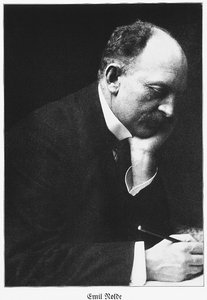
Emil Nolde
1867 - 1956 , Allemagne
En bref
- Artistic Movement Or Style: Expressionism, Die Brücke
- Artists Who Influenced This Artist:
- Vincent van Gogh
- Paul Gauguin
- Date Of Birth: August 7, 1867
- Date Of Death: April 13, 1956
- Full Name: Emil Nolde
- Nationality: German
- Notable Artworks:
- Masks
- The Mocking of Christ
- Flower Garden (Girl and Washing)
- Autumn Sea
- Place Of Birth: Nolde, Schleswig-Holstein
Articles similaires

Expressionnisme Allemand : 10 Chefs-d'œuvre Révolutionnaires à Découvrir | OriginalUniqueArt
Plongez au cœur de l'Expressionnisme Allemand avec OriginalUniqueArt. Découvrez 10 chefs-d'œuvre de Kandinsky, Munch et Kirchner. Explorez l'histoire, les couleurs et l'émotion derrière ces tableaux iconiques. Reproductions de qualité muséale disponibles sur OriginalUniqueArt.com

Giclée Prints: Archival Quality & Aesthetic Nuances for the Discerning Collector
Explore the world of giclée prints with OriginalUniqueArt. Learn about archival quality, aesthetic nuances & investment potential. Expert guidance for discerning art collectors seeking museum-quality reproductions and lasting value.

The Enduring Legacy of Fine Art Prints: Technique, History & Aesthetic Impact
Explore the rich history & techniques of fine art prints. Discover investment potential, assess authenticity, and learn how to preserve your collection with expert guidance. Trusted insights for discerning collectors.

Echoes of Time: Exploring the Enduring Appeal & Historical Context of Vintage Art Prints
Explore the captivating world of vintage art prints! Discover their history, collecting tips & enduring appeal. Expert insights on chromolithography and building a legacy collection with OriginalUniqueArt.

Top 10 Œuvres d'Art Audacieuses : Couleurs, Histoire et Décoration Intérieure
Plongez dans l'audace de 10 œuvres d'art iconiques : Van Gogh, Matisse et plus. Découvrez leur histoire, leurs couleurs vibrantes et trouvez l'inspiration déco parfaite pour votre intérieur. Reproductions de qualité musée sur OriginalUniqueArt.com.


