

 Aperçu en situation
 Envoyer
 Partager
 Détails de l'œuvre

 Télécharger
 Articles similaires
 Radiographie
 Diaporama
Dancer

 Lire la suite
Reproduction à l'huile faite à la main
Huile sur toile peinte à la main, avec cadre et dimensions personnalisés, réalisée sur commande par nos artistes. ( Commander l'impression Acheter l'image haute résolution)




































Choisissez parmi nos formats prédéfinis qui respectent les proportions originales de l’œuvre.

Vous pouvez saisir vos propres dimensions pour l'adapter à un cadre ou à un espace spécifique. Si la taille sélectionnée ne correspond pas aux proportions de l'image d'origine, nous recadrerons l'œuvre ou prolongerons la peinture avec des éléments peints à la main supplémentaires. Une maquette numérique vous sera envoyée pour approbation avant le début de la production.
Veuillez noter que l'aperçu à l'écran ne reflète pas le recadrage ou l'extension réels. Seule la maquette montrera fidèlement la composition finale.
Bien que des tailles personnalisées soient disponibles, nous vous recommandons de sélectionner une dimension dans la liste prédéfinie afin de préserver les proportions d'origine.
Après la commande, l’équipe OriginalUniqueArt.com contactera le client par e-mail pour recueillir ses instructions et lui fournira une maquette d’aperçu
Livraison dans le monde entier () en 3 à 4 semaines au lieu des 5 semaines habituelles. (28 août). Aucun compromis sur la qualité.

Livraison express gratuite dans le monde entier

Toile de lin de qualité supérieure

Assurance transport complète

Garantie de remboursement des droits de douane

Garantie de fidélité des couleurs

Politique de retour de 60 jours (uniquement en cas de défaut)

Garantie de remboursement à 100%

Offre de tarifs dégressifs
 L'option verre n'est disponible que pour les dimensions inférieures à 110 cm.

Dancer
Technique de reproduction
Format de la reproduction
-


Prix total
$ 300
Biographie de l'artiste
Elie Nadelman: Sculptor of Elegance and Myth
Elie Nadelman (1882-1946) was a Polish-American sculptor whose distinctive style—characterized by sleek, stylized figures—established him as a pivotal figure of the School of Paris and cemented his legacy as one of the most influential sculptors of the 20th century. Born Eliasz Nadelman in Warsaw, Poland, he emigrated to New York City in 1906, where he quickly gained recognition for his innovative approach to figurative sculpture, blending classical ideals with American folk traditions. His artistic journey was marked by periods of intense creativity interspersed with struggles against personal demons and debilitating illness—a biographical tapestry that underscores the profound impact of both triumph and tragedy on his oeuvre.- Early Influences: Nadelman’s formative years were steeped in European artistic currents, notably Impressionism and Art Nouveau. He studied at the Warsaw Academy of Fine Arts and traveled extensively throughout Europe, absorbing inspiration from artists like Auguste Rodin and Edgar Degas. These encounters instilled within him a deep appreciation for expressive modeling and dynamic poses—elements that would become hallmarks of his sculptural idiom.
- The School of Paris: Nadelman’s arrival in Paris in 1907 coincided with the burgeoning artistic movement known as the School of Paris, which drew together avant-garde artists from across Europe. He collaborated closely with fellow sculptors like Ossip Zadkine and Constantin Brâncuși, fostering a dialogue that propelled stylistic experimentation and challenged conventional sculptural conventions.
Sculptural Style and Technique
Nadelman’s sculptures are instantly recognizable for their refined aesthetic qualities—particularly their smooth surfaces and attenuated forms. He eschewed the monumental grandeur of earlier sculptors, opting instead for figures that conveyed grace and fluidity. His technique involved meticulous carving from alabaster and marble, utilizing specialized tools to achieve unparalleled precision and subtlety. Crucially, he employed a reductive process—starting with larger blocks of stone—to distill sculptural ideas into their purest expressions, resulting in works that possessed an almost ethereal beauty.- Classical Inspiration: Despite his embrace of modernist principles, Nadelman remained deeply rooted in classical sculpture, drawing inspiration from Greek and Roman statues to inform his compositional choices and anatomical rendering.
- Mythological Themes: Recurring motifs—such as swans, nymphs, and dancers—suggested a fascination with mythology and folklore. These figures were imbued with symbolic significance, representing ideals of beauty, grace, and spiritual transcendence.
Notable Works and Achievements
Among Nadelman’s most celebrated sculptures are “Ideal Head,” “The Swan,” and “Standing Female Nude”—each exemplifying his distinctive stylistic vision. “Ideal Head,” conceived as a tribute to Auguste Rodin, embodies the sculptor's mastery of expressive modeling and anatomical accuracy. “The Swan,” inspired by Edgar Degas’ ballet dancers, captures the elegance and dynamism of movement with remarkable sensitivity. “Standing Female Nude” represents a bold exploration of feminine form—a testament to Nadelman’s unwavering commitment to artistic innovation.Legacy and Historical Significance
Elie Nadelman's influence extended far beyond his immediate contemporaries, shaping the trajectory of sculptural art in subsequent decades. His pioneering approach to reductive carving and his masterful blending of classical and modernist influences established him as a cornerstone of 20th-century sculpture—a sculptor whose enduring aesthetic ideals continue to inspire artists today. He remains an emblem of artistic integrity and creative courage—a figure whose life story serves as a poignant reminder that true artistry transcends personal hardship and achieves timeless resonance.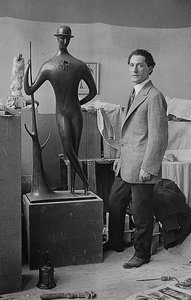
elie nadelman
1882 - 1946
L'essentiel de l'artiste
- Artistic Movement Or Style: School of Paris
- Artists Or Movements Influenced By This Artist: ['Cubism']
- Artists Who Influenced This Artist:
- Classical Sculpture
- Paul Cézanne
- Date Of Birth: 20 February 1882
- Date Of Death: 28 December 1946
- Full Name: Eliasz Nadelman
- Nationality: Polish-American
- Notable Artworks:
- Ideal Head
- The Swan
- Standing Female Nude
- Place Of Birth: Warsaw, Poland

