 Aperçu en situation
 Partager
 Partager
 Détails
 Guide imprimable

 Télécharger
 Articles similaires
 Radiographie
 Voir le diaporama
 Statistiques
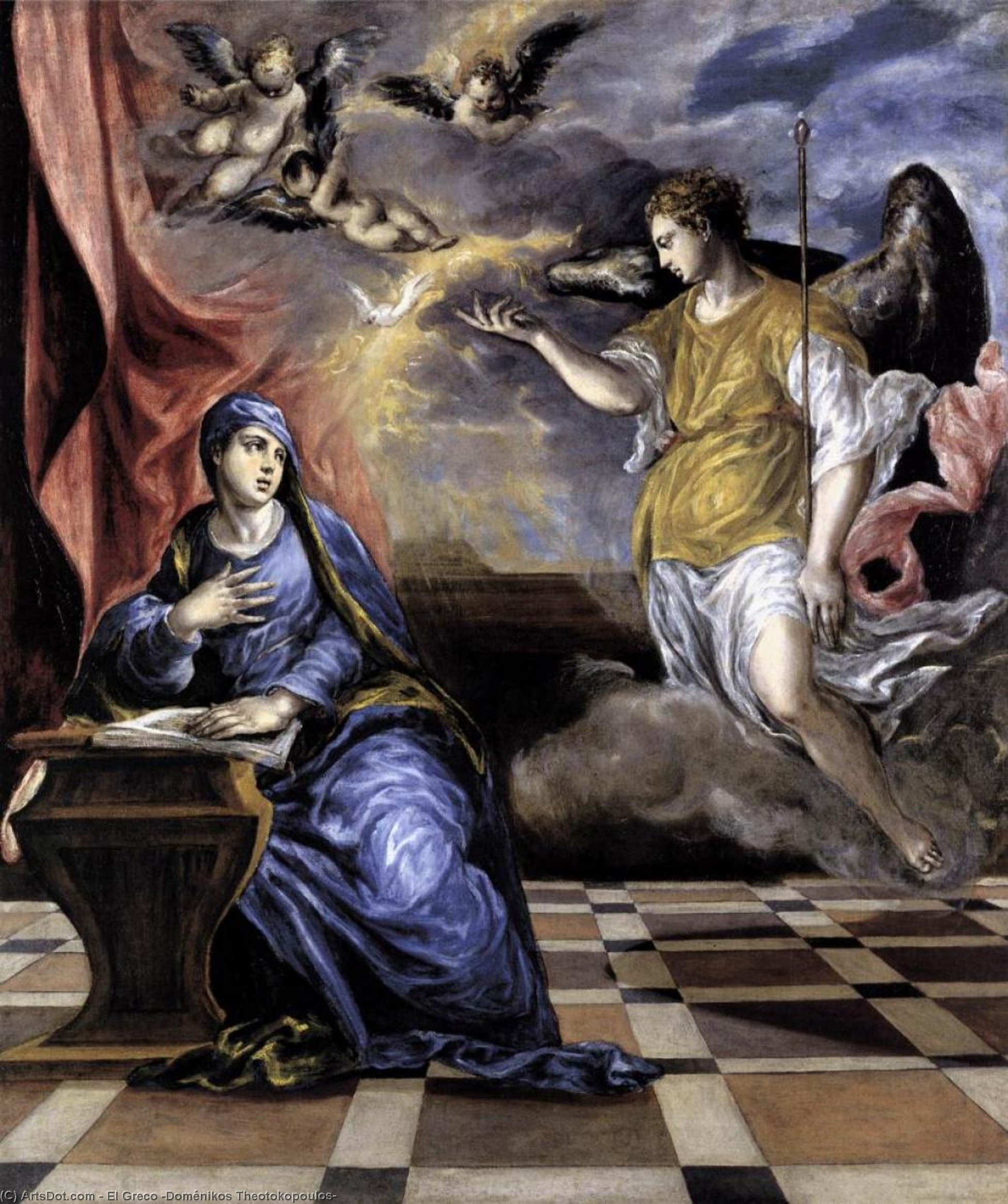
L'Annonciation
 Acrylique sur toile
- Décoration murale
- Mannerism
 1576
1576- Renaissance
 117.0 x 98.0 cm
 Musée Thyssen-Bornemisza
 Afficher la suite
Reproduction à l'huile faite à la main
Huile sur toile peinte à la main, avec cadre et dimensions personnalisés, réalisée sur commande par nos artistes. ( Passer au format impression Passer au format image numérique)




P118B €10

P118H €10

P118W €10

P438Z €10

P508JH €12

P508YH €12

P805H €10

P805Z €10

P919BZ €10

P919G €10

P919XJ €10

P959ZH €10

P968JZ €12

W106C €8

W218G €10

W218JH €8

W218Y €10

W307PJ €10

W316G €10

W316PJ €8

W316Y €10

W398PJ €8

W4111J €10

W500HY €15

W500JH €15

W692G €12

W849H €8

W940BG €15

W953PJ €8




Choisissez parmi nos formats prédéfinis qui respectent les proportions originales de l’œuvre.

Saisissez la largeur et la hauteur souhaitées, pour s'adapter à votre cadre ou à votre mur. Cette œuvre est peinte à la main ; ainsi, pour un format de forme différente, l'artiste peut peindre un peu plus autour du tableau ou réduire légèrement les bords — c'est vous qui choisissez. Nous vous envoyons une maquette numérique pour approbation avant que la peinture ne commence. L'image présentée sur cette page ne reflète pas le résultat réel — seule la maquette le fait.
Après la commande, l’équipe OriginalUniqueArt.com contactera le client par e-mail pour recueillir ses instructions et lui fournira une maquette d’aperçu
Livraison dans le monde entier () en 3 à 4 semaines au lieu des 5 semaines habituelles. (21 octobre). Aucun compromis sur la qualité.

Livraison express gratuite dans le monde entier

Toile de lin de haute qualité

Assurance transport complète

Garantie de remboursement des droits de douane

Garantie de fidélité des couleurs

Garantie de retour de 100 jours (uniquement en cas de défaut)

Garantie de remboursement à 100%

Tarifs dégressifs sur quantité
 L'option verre n'est disponible que pour les dimensions inférieures à 110 cm.

L'Annonciation
Technique de reproduction
Format de la reproduction
-


Prix total final
€ 262
The Annunciation by El Greco
Doménikos Theotokópoulos, universally known as El Greco (1541 – 1614), stands as one of the most singular figures in European art history—a painter whose life and oeuvre defied easy categorization. Born on Crete, then under Venetian dominion, his artistic journey traversed Venice and Rome before anchoring him definitively in the spiritual landscape of Spain: Toledo. El Greco wasn’t merely a product of these places; he synthesized their influences into something wholly distinctive, a style that foreshadowed the emotional intensity of Expressionism and the fragmented forms of Cubism centuries later. His formative years within the Byzantine tradition instilled in him an unwavering dedication to meticulous detail and a profound understanding of religious iconography—a foundation that wouldn’t confine his imagination. He signed his works in Greek, appending “Krḗs” – Cretan – as a proud declaration of his origins, even as he embraced innovations from the Renaissance and Mannerism.The Composition: A Dialogue Between Light and Shadow
“The Annunciation,” painted around 1576, exemplifies El Greco’s unparalleled ability to convey emotion through form and color. The scene depicts Mary seated on a bench—a deliberate choice reflecting Byzantine artistic conventions—receiving the divine messenger Gabriel. Her posture exudes serenity and contemplation; her hands clasped in prayer communicate an inner stillness that contrasts sharply with the dynamism of Gabriel’s gesture, as he speaks to her. The angel’s wings are positioned subtly behind Mary, creating a visual hierarchy that emphasizes his role as herald of God's grace. Beyond these central figures, El Greco populated the canvas with additional individuals—some standing respectfully around Mary, others receding into the background—adding depth and complexity to the narrative. A book rests on the bench beside Mary, symbolizing knowledge and divine revelation. The artist’s masterful use of chiaroscuro – dramatic contrasts between light and dark – intensifies the emotional impact of the scene, guiding the viewer's gaze and highlighting the spiritual significance of the moment.Artistic Significance: Byzantine Roots, Renaissance Echoes
El Greco’s style represents a remarkable fusion of Byzantine and Renaissance traditions. Like many Cretan painters before him, he adhered to strict iconographic conventions—a legacy evident in the idealized depiction of Mary and Gabriel. Simultaneously, however, El Greco absorbed influences from Venetian artists like Titian and Tintoretto, incorporating techniques such as luminous color palettes and dynamic compositions into his work. This synthesis resulted in a style that is both profoundly spiritual and strikingly innovative. The elongated figures characteristic of El Greco—a hallmark of Mannerism—were not merely stylistic flourishes; they served to heighten emotional expression and convey a sense of transcendence. His brushstrokes are loose and expressive, capturing the immediacy of feeling rather than striving for photographic realism.Historical Context: Toledo’s Artistic Crucible
The Museo Thyssen-Bornemisza in Madrid houses an exceptional collection spanning from the twelfth century to the early twentieth century—a testament to European artistic heritage. El Greco's presence within this museum underscores Toledo’s role as a crucible of artistic creativity during the Spanish Renaissance. The city had experienced significant upheaval following the expulsion of Jews and Muslims, fostering a vibrant cultural environment where artists like El Greco could flourish. Furthermore, Toledo Cathedral—a UNESCO World Heritage Site—stands as an enduring symbol of Gothic grandeur and houses masterpieces by El Greco himself, notably “El Expolio,” demonstrating the artist’s profound engagement with religious iconography and architectural spaces.Reproduction Available at OriginalUniqueArt.com
For those captivated by El Greco's visionary artistry, a high-quality reproduction of “The Annunciation” is accessible on OriginalUniqueArt.com. Crafted by skilled artisans using traditional oil painting techniques, this print faithfully captures the essence and luminous beauty of the original artwork—allowing admirers worldwide to experience the transformative power of El Greco’s genius. Explore additional works by El Greco at Museo del Prado and Museo de El Greco in Toledo – a journey into the heart of Mannerist art!Questions et réponses
Comment puis-je obtenir un fichier numérique de «L'Annonciation» de Él Greco ?
Une image numérique de «L'Annonciation» de Él Greco peut être achetée sur sa page Image numérique : un téléchargement d'image numérique haute résolution.
Quelle taille et quel format sont recommandés pour un tirage de «L'Annonciation» de Él Greco ?
Format Format large, orientation Portrait : voilà la configuration d'impression suggérée pour «L'Annonciation» de Él Greco.
«L'Annonciation» de Él Greco est-il une œuvre lumineuse ou sombre ?
« L'Annonciation » présente une luminosité globale de ombre, avec une luminance de Ombre légère.
Biographie de l'artiste
**Jeunesse et formation**
El Greco (Domenikos Theotokopoulos), un peintre, sculpteur et architecte grec renommé, est né en 1541 à Crète, alors sous domination vénitienne. Son nom de naissance était Domenikos Theotokopoulos. La formation précoce d'El Greco en tant que peintre d'icônes de l'école crétoise, un centre majeur de l'art byzantin post-byzantin, a jeté les bases de ses futurs efforts artistiques.**Évolution artistique et influences**
Le style artistique d'El Greco s'est façonné par ses voyages à Venise et Rome, où il a absorbé les styles maniéristes et du Renouveau, influencé notamment par Tintoret et Titien. Son déménagement à Tolède, en Espagne, en 1577 a marqué une période de création prolifique, donnant naissance à des chefs-d'œuvre tels que La Vue de Tolède et L'ouverture du cinquième sceau.**Œuvres notables et style**
* L'allégorie de l'ordre des Camalodites (méroristique, huile) - témoignant du mélange unique d'El Greco entre les traditions byzantines et les éléments stylistiques occidentaux. * Fable (méroristique, huile) – démontrant son utilisation de choix de couleurs vibrantes et inhabituels. * Giacomo Bosio (méroristique, huile) – mettant en valeur la maîtrise d'El Greco du style méroptique.**Héritage et influence**
Le style dramatique et expressionniste d'El Greco, caractérisé par des figures allongées et une pigmentation fantastique, a été une source d'inspiration pour les poètes et les écrivains. Il est considéré comme un précurseur de l'expressionnisme et du cubisme. Pour en savoir plus sur la vie et les œuvres d'El Greco, visitez [https://OriginalUniqueArt.com/@/el-greco-(domenikos-theotokopoulos)](https://OriginalUniqueArt.com/@/el-greco-(domenikos-theotokopoulos)).- **Consultez les peintures d'El Greco** sur [https://OriginalUniqueArt.com/@@/85fr95-el-greco-(domenikos-theotokopoulos)-allegory-of-the-camaldolite-order](https://OriginalUniqueArt.com/@@/85fr95-el-greco-(domenikos-theotokopoulos)-allegory-of-the-camaldolite-order)
- **Apprenez-en davantage sur la vie et les œuvres d'El Greco** sur [https://en.wikipedia.org/wiki/el_greco](https://en.wikipedia.org/wiki/el_greco)
- **Explorez l'Institut hellénique des études byzantines et post-byzantines**, qui présente une large gamme d'artefacts reflétant le riche patrimoine artistique de Byzance, sur /fr/art/show/art-d3b8bv-fr/

Él Greco
1541 - 1614 , Grèce
En bref
- Artistes Influents:
- Titian
- Tintoretto
- Date De Décès: 1614
- Date De Naissance: 1541
- Influences Artistiques:
- Expressionnisme
- Cubisme
- Lieu De Naissance: Crète, Grèce
- Mouvement Artistique: Manierisme, Renaissance espagnole
- Nationalité: Grecque-Espagnole
- Nom Complet: Él Greco (Doménikos Theotokópoulos)
- Oeuvres Notables:
- Vue de Tolède
- Entombs du Comte d'Orgaz
- Allégorie des Camaldoulins
Articles connexes
José Gutiérrez Solana: A Chronicle of Spanish Society Through Expressionist Vision
Explore the captivating world of José Gutiérrez Solana, a pivotal Spanish Expressionist painter. Discover his haunting depictions of early 20th-century Spain, influenced by Goya & El Greco. Learn about his key works and lasting legacy.
Les 25 Chefs-d'œuvre du Prado : Voyage au Cœur de l'Art Espagnol
Plongez au cœur du Musée du Prado avec notre sélection des 25 œuvres incontournables : Velázquez, Goya, El Greco… Découvrez l'histoire et la beauté de ces chefs-d'œuvre baroques. Trouvez l'inspiration déco & achetez des reproductions haute qualité sur OriginalUniqueArt.com !

El Greco : Les 25 Chefs-d'Œuvre Incontournables pour une Décoration d'Exception
Plongez dans l'univers spirituel d'El Greco ! Découvrez les 25 œuvres incontournables du maître espagnol, de *L'Enterrement du Comte d'Orgaz* à ses portraits saisissants. Inspirez votre décoration intérieure avec des reproductions d'art exceptionnelles sur OriginalUniqueArt.com.
Sacred Narratives Embodied: A Comprehensive Exploration of Religious Iconography in Art History
Explore the rich history of religious iconography in art! Discover symbolism, movements & masterpieces from Byzantine to Renaissance periods. Expert insights for collectors and enthusiasts at OriginalUniqueArt.
El Greco : Spiritualité, Style et Innovation – L'Héritage d'un Maître de la Renaissance
Explorez l'univers fascinant d'El Greco : spiritualité, style révolutionnaire et héritage artistique exceptionnel. Découvrez son œuvre unique et son influence durable sur l'histoire de l'art.