Passer au format impression
 Lire la suite







































 Pour les œuvres ou reproductions dont un côté mesure plus de 105 cm (environ 41 pouces), le cadre sera expédié sous forme de kit démonté. Cette méthode garantit une livraison sécurisée et prévient tout dommage pendant le transport.


A Breath of the Bernese Alps: Edward Theodore Compton’s ‘The Jungfrau’
Edward Theodore Compton's “The Jungfrau” isn’t merely a depiction of a mountain landscape; it’s an immersive experience, a frozen moment of awe and reverence for the raw power and sublime beauty of the Swiss Alps. Painted in 1890, this work stands as a pivotal example of early alpine watercolor, showcasing Compton's unique ability to capture not just the visual grandeur but also the very *feeling* of being amidst these colossal peaks. The painting immediately draws the eye into its heart – the imposing silhouette of the Jungfrau itself, rendered with a delicate yet confident hand, dominating the composition and radiating an almost palpable sense of majesty.

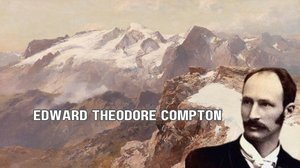
(Image: A portrait of Edward Theodore Compton, the artist behind ‘The Jungfrau’)
The Pioneer of Alpine Watercolor
Born in 1849, Edward Theodore Compton was a singular figure in late 19th-century European art. His journey to Darmstadt, Germany, fueled by his Quaker upbringing's emphasis on simplicity and observation, proved transformative. It was here he truly honed his skills, immersing himself in the vibrant artistic community led by Grand Duke Ludwig III. Compton’s dedication to meticulous observation is evident in every brushstroke of “The Jungfrau.” He wasn’t simply copying what he saw; he was translating a profound emotional response – a sense of humility and wonder – onto the canvas. His self-taught approach, combined with his experiences as a mountaineer (making over 300 ascents), imbued his work with an unparalleled understanding of alpine terrain and light.
Technique and Composition: A Symphony of Light and Shadow
Compton’s mastery lies in his watercolor technique. He employs a broken brushstroke method, layering translucent washes to build up the forms of the mountains – the snow-capped peaks shimmering with reflected sunlight, the shadowed valleys hinting at hidden depths. The composition itself is carefully balanced, drawing the viewer's eye upwards towards the Jungfrau’s summit while simultaneously grounding it in the lush greenery of the foreground. Notice how he uses atmospheric perspective—the subtle blurring of details and colors as they recede into the distance—to create a convincing sense of depth and scale. The scattered figures within the scene, likely tourists enjoying the view, aren't mere additions; they serve to emphasize the vastness of the landscape and our own insignificance in its presence.
Symbolism and Emotional Impact
“The Jungfrau” transcends a simple landscape painting. It embodies the Romantic fascination with nature’s power and beauty, reflecting a desire for escape and spiritual renewal. The Jungfrau itself – named after the Virgin Mary – adds a layer of religious symbolism, suggesting a connection between humanity and the divine within this awe-inspiring environment. The painting evokes a powerful sense of tranquility, solitude, and perhaps even a touch of melancholy—a recognition of the sublime and our own fleeting existence in the face of such enduring grandeur. It’s a piece that invites contemplation, prompting us to consider our place within the natural world and the timeless beauty of the Alps.
Questions et réponses
Quelle place occupe « The Jungfrau » parmi les thèmes récurrents de Edward Theodore Compton ?
Les thèmes récurrents de Edward Theodore Compton incluent quaker spirituality, alpine scenery, german artistic community influence, mountain climbing, exploration themes, royal academy member’s work, illustrations, travel diaries ; « The Jungfrau » se concentre sur alpine landscape, mountain peaks, snowy scene, human figures, edward compton, swiss alps, 19th century art.
Quelle est la situation du droit d'auteur pour «The Jungfrau» de Edward Theodore Compton ?
«The Jungfrau» de Edward Theodore Compton est dans le dans le domaine public - ses droits d'auteur sont tombés dans le domaine public. La durée du droit d'auteur court à partir du décès de l'artiste, survenu en 1921.
Quelle ambiance "The Jungfrau" apporterait-elle à une pièce ?
«The Jungfrau» de Edward Theodore Compton dégage une atmosphère Ethereal et s'intègre parfaitement dans une Living Room. Cette ambiance reflète l'émotion que l'œuvre apporte à l'espace qui l'entoure.
 Aperçu en situation
 Envoyer
 Partager
 Détails de l'œuvre
 Guide
Guide

 Télécharger l'image
 Articles similaires
 Radiographie
 Diaporama
 Q&A
Q&A Statistiques