
 Aperçu en situation
 Envoyer
 Partager
 Détails de l'œuvre
 Guide
Guide

 Télécharger l'image
 Articles similaires
 Radiographie
 Diaporama
 Q&A
Q&A Statistiques
English Mountain View

- 45.0 x 69.0 cm


 Lire la suite
Giclées et impressions d'art
Impressions giclées ou sur toile de qualité musée, avec une production rapide et des finitions au choix. ( Commander la reproduction peinte à la main Passer au format numérique)




P118B €10

P118H €10

P118W €10

P438Z €10

P508JH €12

P508YH €12

P805H €10

P805Z €10

P919BZ €10

P919G €10

P919XJ €10

P959ZH €10

P968JZ €12

W106C €8

W218G €10

W218JH €8

W218Y €10

W307PJ €10

W316G €10

W316PJ €8

W316Y €10

W398PJ €8

W4111J €10

W500HY €15

W500JH €15

W692G €12

W849H €8

W940BG €15

W953PJ €8




Choisissez parmi nos formats prédéfinis qui respectent les proportions originales de l’œuvre.

Saisissez la largeur et la hauteur souhaitées pour qu'elles s'adaptent à votre cadre ou à votre mur. Une impression peut être recadrée, mais jamais agrandie au-delà de l'image originale ; ainsi, un format de forme différente entraînera la perte d'une partie de l'image. Nous vous envoyons une maquette numérique pour approbation avant toute impression. L'image présentée sur cette page ne montre pas le recadrage réel — seule la maquette le permet.
Livraison dans le monde entier () en 2 semaines au lieu des 4/5 semaines habituelles. (1 novembre)

Livraison express gratuite dans le monde entier

Toile de lin de qualité supérieure

Assurance transport complète

Garantie de remboursement des droits de douane

Garantie de fidélité des couleurs

Politique de retour de 100 jours (uniquement en cas de défaut)

Garantie de remboursement à 100%

Offre de tarifs dégressifs
 L'option verre n'est disponible que pour les dimensions inférieures à 110 cm.

English Mountain View
Giclées et impressions d'art
Format de la reproduction
-


Prix total
€ 71
A Pastoral Vision: Edward Theodore Compton’s ‘English Mountain View’
Edward Theodore Compton's “English Mountain View,” painted in 1878, is more than just a depiction of a picturesque landscape; it’s a carefully constructed evocation of tranquility and a testament to the burgeoning trend of plein air painting within the British art scene. Measuring 45 x 69 cm, this watercolor offers a serene glimpse into a world where nature reigns supreme, inviting contemplation and a sense of harmonious connection between humanity and the natural world.
- Subject Matter: The artwork centers on a classic pastoral subject – a mountainous valley teeming with grazing horses. This was a popular motif in Victorian art, reflecting a romanticized view of rural life and an appreciation for the beauty of the English countryside.
- Composition: Compton masterfully employs atmospheric perspective, receding planes, and carefully placed figures to create depth within the scene. The horses, strategically positioned throughout the composition, draw the viewer’s eye into the distance, emphasizing the vastness and grandeur of the landscape.
The Artist's Journey & Alpine Influence
Edward Theodore Compton’s artistic trajectory is as fascinating as the landscapes he depicted. Born in 1849, his early life was shaped by Quaker values – a commitment to simplicity and moral integrity – which undoubtedly informed his artistic sensibilities. However, it was his sojourn to Darmstadt, Germany, in 1867, that truly cemented his artistic identity. Under the patronage of Grand Duke Ludwig III, Compton immersed himself in the vibrant artistic community surrounding Darmstadt, developing a profound fascination with alpine scenery. This experience dramatically influenced his style, leading him to master the delicate techniques required to capture the ethereal qualities of light and shadow on snow-capped peaks and verdant valleys.
Technique & Style: A Masterful Watercolor
Compton’s skill as a watercolorist is immediately apparent in “English Mountain View.” He employs a loose, expressive brushstroke, layering washes of color to create a luminous effect. The subtle gradations of tone – from the cool blues and greens of the distant mountains to the warmer browns and ochres of the foreground – contribute significantly to the painting’s atmospheric depth. His meticulous attention to detail is evident in the rendering of the horses' coats, their muscular forms conveying both power and grace. This piece exemplifies Compton’s pioneering role as a ‘Pioneer of Alpine Watercolor,’ showcasing his ability to translate the dramatic effects of alpine light onto paper.
Symbolism & Emotional Impact
Beyond its aesthetic beauty, “English Mountain View” carries symbolic weight. The horses, traditionally associated with nobility and freedom, represent an idealized vision of rural life – a return to simpler values and a connection to the land. The solitary figure observing the animals adds another layer of meaning, suggesting a contemplative spirit seeking solace in nature’s embrace. The overall effect is profoundly calming, inviting viewers to escape the pressures of urban existence and reconnect with the restorative power of the natural world. This artwork evokes feelings of peace, serenity, and a deep appreciation for the beauty of the English countryside.
Questions et réponses
Qui est l'artiste derrière « English Mountain View » ?
« English Mountain View » est attribué à Edward Theodore Compton.
À quelle étape de la carrière de Edward Theodore Compton appartient « English Mountain View » (1878) ?
«English Mountain View», créé en 1878, appartient à la période Alpine Watercolor de la carrière de Edward Theodore Compton.
Quelle atmosphère «English Mountain View» de Edward Theodore Compton apporte-t-il à un intérieur ?
Avec son atmosphère Calm, « English Mountain View » est idéal pour une Living Room.
Biographie de l'artiste
Edward Theodore Compton : Pionnier de l'aquarelle alpine
Edward Theodore Compton, figure singulière du paysage artistique de l'Europe de la fin du XIXe et du début du XXe siècle, s'érige comme un témoignage extraordinaire à l'intersection de l'art et de l'aventure. Né à Stoke Newington, Londres, en 1849, l'éducation de Compton au sein d'un foyer quaker lui a inculqué une profonde appréciation pour la simplicité et l'intégrité morale — des valeurs qui allaient sans aucun doute façonner sa vision artistique. Bien qu'il ait fréquenté diverses écoles d'art, dont la Royal Academy, il a largement privilégié l'autodidaxie, perfectionnant ses compétences par une observation méticuleuse et une expérimentation inlassable. Son voyage à Darmstadt, en Allemagne, en 1867, marqua un moment charnière, le propulsant au cœur d'une communauté artistique vibrante dirigée par le Grand Duc Louis III et nourrissant une fascination durable pour les paysages alpins.- Influences précoces : Les années de formation de Compton furent imprégnées de spiritualité quaker et nourries par la passion de son père pour l'art, l'exposant à des peintres impressionnistes influents tels que Claude Monet et Pierre-Auguste Renoir.
- <Formation académique et Darmstadt : Bien qu'il n'ait pas obtenu de diplôme formel de la Royal Academy, Compton a grandement bénéficié d'études aux côtés d'Alice, princesse de Hesse, acquérant une expérience inestimable en technique artistique et tissant des liens au sein d'un milieu artistique en pleine effervescence.
L'obsession alpine : des croquis aux chefs-d'œuvre
Un voyage transformateur dans l'Oberland bernois en 1868 alluma chez Compton un dévouement de toute une vie pour capturer la majesté des Alpes, particulièrement le trio emblématique formé par l'Eiger, le Mönch et la Jungfrau. Le panorama à couper le souffle le captiva, inspirant une série d'aquarelles qui deviendraient indissociables de l'art alpin. Ses croquis méticuleux documentaient les terrains escarpés et les conditions lumineuses dramatiques, démontrant un engagement inébranlable envers la précision parallèlement à une grande sensibilité artistique. Cette expérience a ancré sa conviction que l'observation est la pierre angulaire de la création artistique.- Technique : Le style distinctif de Compton consistait à superposer de fines lavis de pigments d'aquarelle sur le papier, parvenant à des effets lumineux qui transmettaient la beauté éthérée des paysages de montagne.
- Œuvres notables : Parmi ses peintures les plus célèbres figurent « Deutsch Im Wald von Valdoniello » et « Deutsch Grohmannspitze und (rechts) Fünffingerspitzen », qui illustrent sa maîtrise du rendu des panoramas alpins.
L'œil du montagnard : au-delà de la toile
Compton n'était pas seulement un peintre ; c'était un alpiniste intrépide qui a gravi plus de 300 sommets, dont 27 premières ascensions — une prouesse remarquable qui a consolidé sa réputation comme l'un des plus grands grimpeurs britanniques. Ses expéditions en Autriche, en Scandinavie, en Afrique du Nord, en Corse et en Espagne ont fourni un matériel visuel inestimable pour ses œuvres, enrichissant ses compositions d'une expérience directe des environnements montagnards. La photographie « Deutsch Allalin, Strahl und Rimpfischhorn von der Ostflanke des Alphubel » témoigne de son dévouement à la précision topographique combinée à une vision artistique.- Impact sur l'art : Les exploits d'alpinisme de Compton ont profondément influencé son art, imprégnant ses peintures d'un sentiment de dynamisme et transmettant les défis rencontrés par les grimpeurs face à des terrains redoutables.
- Héritage : La contribution de Compton à l'art alpin est indéniable ; il a élevé la peinture à l'aquarelle vers de nouveaux sommets, l'établissant comme le médium de choix pour dépeindre les paysages montagneux avec une beauté et un réalisme inégalés.
Villa Compton et poursuite de l'exploration artistique
S'installant à Feldafing, au bord du lac de Starnberg, en 1874, Compton établit un foyer tranquille aux côtés de son épouse Auguste Plotz, créant un environnement propice aux aspirations artistiques. Il continua de voyager intensément, documentant ses impressions par des aquarelles et des dessins à l'encre — témoignage de sa curiosité inépuisable et de son élan artistique. Son travail reflète non seulement la grandeur des paysages alpins, mais aussi les nuances subtiles de la lumière et de l'atmosphère, démontrant la maîtrise de Compton des techniques impressionnistes.- Carrière tardive : La production artistique de Compton resta prolifique tout au long de sa vie, faisant preuve d'une remarquable adaptabilité à des sujets et des médiums divers.
- Importance historique : L'héritage de Compton dépasse ses seules réussites artistiques ; il incarne l'esprit d'exploration et de créativité — une figure ayant su fusionner avec harmonie la passion pour l'art et l'aventure audacieuse.
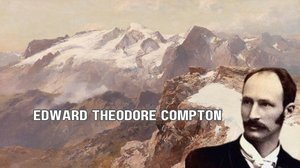
Edward Theodore Compton
1849 - 1921 , Royaume-Uni
L'essentiel de l'artiste
- Artistic Movement Or Style: Alpine Art
- Artists Who Influenced This Artist:
- Claude Monet
- Pierre-Auguste Renoir
- Date Of Birth: 1849
- Date Of Death: 1921
- Full Name: Edward Theodore Compton
- Nationality: Anglais
- Notable Artworks:
- Deutsch Im Wald von Valdoniello
- Deutsch Grohmannspitze und (rechts) Fünffingerspitzen
- Place Of Birth: Stoke Newington, Londres
Articles connexes

Éphémères Visions : L'Aquarelle, Histoire et Résonance Émotionnelle d'un Art Intemporel
Explorez l'histoire fascinante de l'aquarelle, des origines à nos jours. Découvrez les techniques, les artistes emblématiques et nos conseils d'experts pour collectionner ces œuvres éphémères. OriginalUniqueArt.

Les 10 Chefs-d'œuvre de l'Aquarelle qui ont Révolutionné l'Art | OriginalUniqueArt
Plongez dans l'univers fascinant des 10 chefs-d'œuvre de l'aquarelle qui ont marqué l'histoire de l'art. Découvrez Turner, Monet, Goya et bien d'autres ! Retrouvez ces œuvres emblématiques en reproductions exceptionnelles sur OriginalUniqueArt.com.

Ephemeral Visions: Exploring the Artistic Legacy & Contemporary Practice of Watercolor Painting
Explore the captivating world of watercolor painting! Discover its rich history, essential techniques, influential artists & collecting tips. A comprehensive guide for art enthusiasts from OriginalUniqueArt.

L'Aquarelle : Histoire, Techniques et Nuances d'une Peinture de Lumière Éphémère
Explorez l'histoire fascinante de l'aquarelle, des techniques ancestrales aux maîtres impressionnistes. Découvrez les artistes emblématiques et nos conseils pour apprécier et collectionner cette peinture lumineuse.

L'Aquarelle : Maîtriser la Force de l'Eau et de la Lumière en Art
Maîtrisez la transparence et la lumière de l'aquarelle avec notre guide expert. Explorez les techniques des plus grands maîtres dès maintenant.