

 Aperçu en situation
 Partager
 Partager
 Détails
 Guide imprimable

 Télécharger
 Articles similaires
 Radiographie
 Voir le diaporama
 Statistiques
Lobby card, Java Head


 Afficher la suite
L’œuvre d'art présentée sur cette page est protégée par le droit d'auteur, ce qui signifie que nous ne pouvons légalement créer ou vendre de reproduction identique. Cette protection est appliquée en vertu d'accords internationaux tels que la Convention de Berne et par les lois nationales, notamment celles énoncées par le Loi américaine sur le droit d'auteur - Titre 17.
Cette méthode est pleinement conforme aux réglementations sur le droit d'auteur car elle ne repose pas sur la copie ou la duplication de l'œuvre protégée. Il s'agit plutôt d'une réinterprétation créative — une nouvelle peinture qui s'inspire de l'original sans pour autant lui être identique.
Giclées et impressions d'art
Impressions giclées ou sur toile de qualité musée, avec une production rapide et des finitions au choix. ( Acheter la peinture faite à la main Passer au format image numérique)




P118B €10

P118H €10

P118W €10

P438Z €10

P508JH €12

P508YH €12

P805H €10

P805Z €10

P919BZ €10

P919G €10

P919XJ €10

P959ZH €10

P968JZ €12

W106C €8

W218G €10

W218JH €8

W218Y €10

W307PJ €10

W316G €10

W316PJ €8

W316Y €10

W398PJ €8

W4111J €10

W500HY €15

W500JH €15

W692G €12

W849H €8

W940BG €15

W953PJ €8




Choisissez parmi nos formats prédéfinis qui respectent les proportions originales de l’œuvre.

Saisissez la largeur et la hauteur souhaitées pour qu'elles s'adaptent à votre cadre ou à votre mur. Une impression ne peut être que découpée, elle ne peut jamais être agrandie au-delà de l'image originale ; ainsi, un format de forme différente entraînera la perte d'une partie de l'image. Nous vous envoyons une maquette numérique pour approbation avant toute impression. L'image présentée sur cette page ne montre pas le recadrage réel — seule la maquette le permet.
Livraison dans le monde entier () en 2 semaines au lieu des 4/5 semaines habituelles. (18 octobre)

Livraison express gratuite dans le monde entier

Toile de lin de haute qualité

Assurance transport complète

Garantie de remboursement des droits de douane

Garantie de fidélité des couleurs

Garantie de retour de 100 jours (uniquement en cas de défaut)

Garantie de remboursement à 100%

Tarifs dégressifs sur quantité
 L'option verre n'est disponible que pour les dimensions inférieures à 110 cm.

Lobby card, Java Head
Giclées et impressions d'art
Format de la reproduction
-


Prix total final
€ 70
A Glimpse into Cinematic Drama: The Allure of the Lobby Card
This evocative lobby card for "Java Head," dating back to 1923, transports us directly into the vibrant, dramatic heart of early cinema. It is more than just a promotional piece; it is a carefully constructed tableau vivant, capturing the charged atmosphere that defined silent film epics. The composition immediately draws the eye to the intense interaction between the two central figures. On the left, the gentleman, clad in the formal attire of the era—a suit and tie—leans into the scene with an air of grave seriousness, his posture suggesting a pivotal moment of revelation or confrontation. His gaze seems fixed upon the woman, anchoring the narrative tension.
The Symbolism of Culture and Mystery
The woman on the right introduces layers of exotic mystery to this dramatic exchange. Her adornment, featuring what appears to be elaborate traditional Indian jewelry, immediately suggests a cross-cultural narrative—a common trope in early Hollywood melodramas that allowed for rich visual storytelling. Her head is turned slightly away from the viewer, lending her an air of enigmatic contemplation; she seems caught between the man's intensity and some internal deliberation. The background reinforces this sense of journey and scope with its stylized depiction of a ship upon the ocean. This nautical element hints at themes of passage, separation, or perhaps even escape, grounding the personal drama within a grander, sweeping adventure.
Technique and Vintage Allure
The aesthetic quality of this piece is deeply rooted in the illustrative traditions of the early 20th century. The color palette—dominated by rich blues, warm yellows, and deep reds—is characteristic of period printing techniques, lending the entire image a beautiful patina of age that collectors so adore. While the original medium was likely lithography or high-quality printmaking for theatrical display, its reproduction offers us the chance to own this specific visual language. The overall style is illustrative yet highly polished, embodying the grand spectacle promised by "A Paramount Picture."
Emotional Resonance for the Modern Collector
For the discerning collector or interior designer, this artwork serves as a potent piece of decorative storytelling. It doesn't merely hang on a wall; it narrates a moment suspended in time—a breath held just before the climax. The blend of formal Western attire with richly detailed Eastern costume creates an immediate visual dialogue, sparking conversation and contemplation within any sophisticated space. Owning this reproduction allows one to curate an environment steeped in cinematic romance and historical grandeur, making it a captivating focal point that speaks volumes about an appreciation for art history and dramatic flair.
Questions et réponses
Quelle est la tonalité émotionnelle de «Lobby card, Java Head» de Edward Steichen ?
«Lobby card, Java Head» de Edward Steichen dégage une tonalité émotionnelle Romantic.
Quelle ambiance "Lobby card, Java Head" apporterait-elle à une pièce ?
«Lobby card, Java Head» de Edward Steichen possède une atmosphère Elegant et est recommandé pour une Living Room. L'ambiance correspond à ce que l'œuvre apporte à l'espace qui l'entoure.
Où est-il recommandé d'exposer le format Landscape de « Lobby card, Java Head » ?
Le format Landscape de «Lobby card, Java Head» de Edward Steichen est recommandé pour une Living Room. Le format et l'espace guident ensemble l'emplacement d'une reproduction.
Biographie de l'artiste
Premières années et débuts artistiques
- Naissance : Le 27 mars 1879 à Bivange, au Luxembourg
- Immigration aux États-Unis : La famille de Steichen a émigré à Hancock, dans le Michigan, en 1881.
- Première inclination artistique : Il a démontré un vif intérêt pour l'art dès son plus jeune âge, notamment le dessin.
- Première caméra et auto-formation : Il a reçu sa première caméra à seize ans et s’est largement formé par lui-même grâce à l’expérimentation.
- Déménagement à Milwaukee : La famille a déménagé à Milwaukee, où il a poursuivi la lithographie comme apprenti tout en continuant ses activités artistiques.
Développement de carrière et principaux mouvements artistiques
- Pictorialisme précoce : Steichen est devenu une figure importante du mouvement pictorialiste, qui visait à élever la photographie au rang d'art par le biais d’un flou doux et d’effets picturaux.
- Photo-Sécession et Camera Work : Il a cofondé le groupe Photo-Secession avec Alfred Stieglitz et a joué un rôle crucial dans la publication de *Camera Work*, un journal photographique très influent.
- Galerie 291 : Steichen a été instrumental dans l'établissement de la galerie 291 à New York, qui présentait des œuvres d'art européennes d'avant-garde aux côtés de la photographie.
- Transition vers la photographie en ligne droite : Après la Première Guerre mondiale, il a abandonné le pictorialisme et adopté la photographie en ligne droite, mettant l’accent sur la netteté et la représentation directe.
- Pionnier de la photographie de mode : Steichen a révolutionné la photographie de mode tout en travaillant pour *Vogue* et *Vanity Fair*, créant des images emblématiques qui ont défini le style de l'époque.
Réalisations majeures et œuvres notables
- The Pond–Moonlight (1904) : Une photographie pictorialiste majeure connue pour sa qualité atmosphérique et sa richesse tonale ; a atteint des prix d’enchères records.
- The Flatiron (1904) : Autre œuvre précoce importante démontrant sa maîtrise de la technique photographique et de la composition, également ayant obtenu un prix record aux enchères.
- Portraits de célébrités : Il a créé d'innombrables portraits de personnalités éminentes dans les domaines de l'art, de la littérature et du divertissement, capturant leur essence avec une perspicacité remarquable.
- The Fighting Lady (1944) : Il a réalisé ce documentaire de guerre acclamé pour la marine américaine, présentant des images de combats aériens.
- The Family of Man (1955) : Il a organisé cette exposition révolutionnaire au Museum of Modern Art, présentant des photographies du monde entier qui exploraient les expériences humaines universelles ; reconnue par le Registre de la Mémoire du Monde de l’UNESCO.
Influence et signification historique
- Élever la photographie au rang d'art : Steichen a joué un rôle déterminant dans l'établissement de la photographie comme forme d'art respectée grâce à son implication dans le pictorialisme, la Photo-Secession et *Camera Work*.
- Pionnier de la photographie de mode : Son approche innovante de la photographie de mode a transformé l'industrie et influencé des générations de photographes.
- Promouvoir les échanges artistiques internationaux : La galerie 291 a servi de plateforme essentielle pour introduire l’art moderne européen aux publics américains.
- Documenter l'expérience humaine : *The Family of Man* reste un témoignage puissant de l'humanité partagée à travers les cultures et les continents.
- Héritage : La polyvalence, la vision artistique et le succès commercial de Steichen ont cimenté sa place parmi les photographes américains les plus influents du XXe siècle.
Dernières années et décès
- Directeur de photographie au MoMA : De 1947 à 1961, Steichen a été directeur du département de la photographie au Museum of Modern Art (MoMA) de New York.
- Expérimentation continue : Il a continué d’expérimenter avec la photographie jusqu'à sa mort.
- Décès : Edward Jean Steichen est décédé le 25 mars 1973 à Redding, CT.

Edward Steichen
1900 - 1973 , Luxembourg
En bref
- Artistes Influents: ['Alfred Stieglitz']
- Date De Décès: 25 mars 1973
- Date De Naissance: 27 mars 1879
- Lieu De Naissance: Bivange, Luxembourg
- Mouvement Artistique:
- Pictorialisme
- Photographie directe
- Nationalité: Luxembourgeois-Américain
- Nom Complet: Edward Jean Steichen
- Oeuvres Notables:
- The Pond–Moonlight
- The Flatiron
Articles similaires
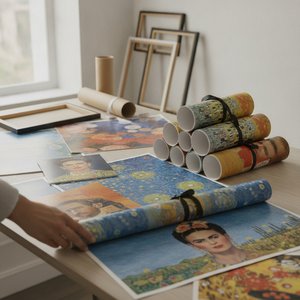
OriginalUniqueArt.com F.A.Q.: Premium Art Poster Prints – Vivid Colors & Versatile Sizing
Discover OriginalUniqueArt.com's premium art poster prints. Featuring 12-color archival pigments for vivid color fidelity and versatile sizing for bespoke decor. Expertly crafted museum-quality reproductions designed for discerning collectors and professional decorators.


