

 Aperçu en situation
 Envoyer
 Partager
 Détails de l'œuvre

 Télécharger
 Articles similaires
 Radiographie
 Diaporama
 Statistiques
Tree Landscape
 Oil On Canvas
- WallArt
- Tonalist Landscape
 1877
1877- 19th Century
 51.0 x 76.0 cm
 Smithsonian American Art Museum
 Lire la suite
Giclées et impressions d'art
Impressions giclées ou sur toile de qualité musée, avec une production rapide et des finitions au choix. ( Commander la reproduction peinte à la main Passer à l'image numérique)




P118B $10

P118H $10

P118W $10

P438Z $10

P508JH $12

P508YH $12

P805H $10

P805Z $10

P919BZ $10

P919G $10

P919XJ $10

P959ZH $10

P968JZ $12

W106C $8

W218G $10

W218JH $8

W218Y $10

W307PJ $10

W316G $10

W316PJ $8

W316Y $10

W398PJ $8

W4111J $10

W500HY $15

W500JH $15

W692G $12

W849H $8

W940BG $15

W953PJ $8




Choisissez parmi nos formats prédéfinis qui respectent les proportions originales de l’œuvre.

Vous pouvez saisir vos propres dimensions pour vous adapter à un cadre ou à un espace spécifique. Si la taille sélectionnée ne correspond pas aux proportions de l'image originale, nous recadrerons l'œuvre ou étendrons l'image avec une bordure en miroir ou une couleur unie. Une maquette numérique vous sera envoyée pour approbation avant le début de la production.
Veuillez noter que l'aperçu à l'écran ne reflète pas le recadrage ou l'extension réelle. Seule la maquette montrera avec précision la composition finale.
Bien que des tailles personnalisées soient disponibles, nous vous recommandons de choisir une dimension dans la liste prédéfinie afin de préserver les proportions originales.
Livraison dans le monde entier () en 2 semaines au lieu des 4/5 semaines habituelles. (8 septembre)

Livraison express gratuite dans le monde entier

Toile de lin de qualité supérieure

Assurance transport complète

Garantie de remboursement des droits de douane

Garantie de fidélité des couleurs

Politique de retour de 100 jours (uniquement en cas de défaut)

Garantie de remboursement à 100%

Offre de tarifs dégressifs
 L'option verre n'est disponible que pour les dimensions inférieures à 110 cm.

Tree Landscape
Giclées et impressions d'art
Format de la reproduction
-


Prix total
$ 80
A Woodland Reverie: Exploring Edward Mitchell Bannister's "Tree Landscape"
Edward Mitchell Bannister’s “Tree Landscape,” painted in 1877, isn’t merely a depiction of a forest; it’s an immersion into a carefully constructed mood – a profound meditation on nature’s tranquility and the subtle power of light. This oil-on-canvas work, currently residing within the Smithsonian American Art Museum's collection, offers a glimpse into the tonalist movement, a style that prioritized atmospheric effects over sharp detail, mirroring the quiet introspection of the artist himself. Bannister, born in Canada and deeply rooted in both African American and European heritage, sought to capture not just what he saw, but how it *felt* – a sentiment powerfully conveyed through his masterful manipulation of color and texture.
The scene unfolds within a dense thicket of trees, predominantly dark browns and greens that immediately establish a sense of depth. These aren’t the vibrant hues of a summer forest; instead, Bannister employs a muted palette, leaning heavily on umber, sienna, and charcoal tones to create an atmosphere of subdued light and shadow. The foreground is dominated by these imposing trees, their forms rendered with broad brushstrokes that suggest both solidity and a gentle yielding to the elements. Notice how he doesn’t meticulously define each branch or leaf; rather, he uses overlapping layers of color to build volume and create a hazy, almost dreamlike quality. This deliberate ambiguity invites the viewer to step into the painting, becoming part of the woodland experience.
The Language of Tonalism: Light, Shadow, and Atmosphere
Bannister’s signature style – tonalism – is exquisitely demonstrated in “Tree Landscape.” He eschewed bright highlights and sharp contrasts, favoring instead a gradual shift between light and dark. The sunlight, filtering through the canopy above, isn't presented as a direct beam but rather as a diffused glow that casts dappled shadows across the forest floor. This subtle interplay of illumination and obscurity is crucial to the painting’s emotional impact. It evokes a sense of peace and contemplation, suggesting a timelessness and connection to something larger than oneself. The artist’s skill lies not in replicating reality with photographic accuracy but in conveying its essence – the feeling of being enveloped by nature's embrace.
The composition itself is carefully balanced, drawing the eye towards a distant clearing. This strategic use of perspective creates a sense of depth and invites the viewer to imagine what lies beyond the trees. The placement of the largest tree on the left side anchors the scene while simultaneously directing our gaze forward. Bannister’s choice of a slightly elevated vantage point further enhances this effect, offering a panoramic view of the woodland expanse.
A Legacy Rooted in Resilience and Representation
Understanding Edward Mitchell Bannister requires acknowledging the significant obstacles he faced as an African American artist in 19th-century America. Despite enduring racial prejudice and limited opportunities, he persevered, establishing himself as a respected figure within Boston’s artistic community and contributing significantly to the development of American landscape painting. “Tree Landscape” stands as a testament to his dedication and talent – a poignant reminder of his ability to capture beauty even amidst adversity. The painting's quiet dignity reflects Bannister’s own resilience, offering a powerful message about the enduring spirit of creativity in the face of societal constraints.
Furthermore, research reveals that Bannister’s work was often commissioned by members of the African American community, highlighting his role as a cultural figure and advocate for representation. The Smithsonian's collection provides valuable context to this history, ensuring that Bannister’s contributions are recognized and celebrated. The painting’s current location within the museum underscores its importance as a significant piece of American art history.
Biographie de l'artiste
Premières années et carrière
- Né: Saint-Andrews, Nouveau-Brunswick (vers 1828)
- Décédé: 1901
- Edward Mitchell Bannister était un peintre à l'huile tonaliste canado-américain. Il a passé la majeure partie de sa vie adulte dans le New England aux États-Unis.
- Il est né à Saint-Andrews, au Nouveau-Brunswick, d’un père barbadien et d’une mère d’origine mixte européenne et amérindienne. Son enfance fut marquée par des difficultés après la mort de ses parents.
- Avant de devenir peintre, il a occupé divers emplois, notamment comme cuisinier sur un navire marchand, avant de s'installer à Boston à la fin des années 1840.
Développement artistique et influences
- Artiste autodidacte: Bannister était largement autodidacte, démontrant une dévotion remarquable au développement de ses compétences artistiques.
- Influence de l'École de Barbizon: Il admirait profondément l'école française de Barbizon, en particulier des artistes comme Jean-François Millet. Cette influence se reflète dans son intérêt pour les scènes rurales et la représentation naturaliste des paysages.
- Tonalisme: Son style s’inscrit dans le tonalism, un mouvement artistique américain qui met l'accent sur l'ambiance, l'atmosphère et les valeurs tonales plutôt que sur les détails nets ou les couleurs vives. Ses peintures présentent souvent des couleurs douces et atténuées, créant une sensation de calme et de sérénité.
- Formation initiale: Il a brièvement étudié la sculpture et l’anatomie sous la direction du Dr William Rimmer à Boston, ce qui a probablement contribué à sa compréhension de la forme et de la composition.
Œuvres notables et reconnaissance
- "Sous les chênes": Cette peinture lui a valu une médaille de bronze lors de l'Exposition centennale de Philadelphie en 1876, marquant une réalisation importante pour un artiste afro-américain à cette époque. Le prix a initialement suscité des controverses en raison de sa race, mais il a été maintenu par ses pairs.
- "Scène de rue à Boston (Boston Common)": Exposée au Walters Art Museum, cette œuvre dépeint la vie quotidienne à Boston et témoigne de sa capacité à capturer les scènes urbaines avec une dignité tranquille.
- "Garçon marchand de journaux": Cette peinture, conservée au Smithsonian American Art Museum, représente un jeune garçon vendant des journaux, offrant un aperçu de la vie urbaine du XIXe siècle.
- Autres œuvres notables: "Paysage boisé", "Coucher de soleil", "Sans titre (femme marchant avec une vache)" et "Sans titre (homme avec deux bœufs)" font partie de ses autres œuvres importantes, démontrant son intérêt constant pour les thèmes pastoraux.
Héritage et redécouverte
- Figure oubliée: Malgré la reconnaissance qu'il a eue de son vivant, l’œuvre de Bannister est largement tombée dans l’oubli après sa mort en 1901.
- Redécouverte dans les années 1970: Son art a été redécouvert pendant le mouvement des droits civiques, et il a commencé à recevoir une attention renouvelée en tant que pionnier de l'art afro-américain.
- Galerie du Rhode Island College: En 1978, le Rhode Island College a dédié sa galerie d’art en son nom avec une exposition intitulée "Quatre artistes de Providence ~ Alston, Bannister, Jennings & Prophet".
- Reconnaissance actuelle: Aujourd'hui, l’œuvre de Bannister est représentée dans les principaux musées et collections, notamment le Smithsonian American Art Museum et le Walters Art Museum. Il est de plus en plus reconnu comme une figure importante de l’histoire de l’art américain et du patrimoine culturel afro-américain.
Informations complémentaires
- OriginalUniqueArt.com: https://OriginalUniqueArt.com/@/edward-mitchell-bannister
- Wikipedia: https://en.wikipedia.org/wiki/Edward_Mitchell_Bannister

Edward Mitchell Bannister
1828 - 1901 , Canada
L'essentiel de l'artiste
- Artistic Movement Or Style: Tonalisme, École de Barbizon
- Artists Who Influenced This Artist:
- Jean-François Millet
- William Morris Hunt
- Date Of Birth: vers 1828
- Date Of Death: 1901
- Full Name: Edward Mitchell Bannister
- Nationality: Canado-Américain
- Notable Artworks:
- Boston Street Scene
- Newspaper Boy
- Under the Oaks
- Place Of Birth: Saint-Andrews, Canada
Articles connexes
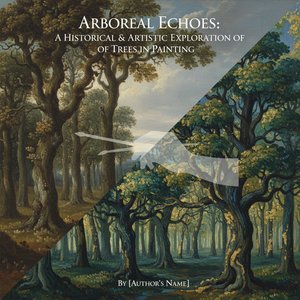
Arboreal Echoes: A Historical & Artistic Exploration of Trees in Painting
Explore the rich history of trees in painting! Discover symbolism, Romantic masterpieces by Caspar David Friedrich & beyond. A curated journey for art enthusiasts.
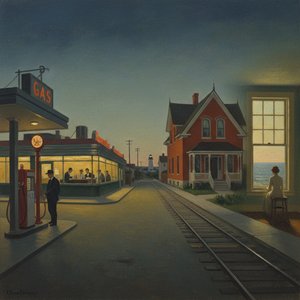
Edward Hopper : Les 25 Œuvres Maîtresses d'un Artiste Américain Intemporel | OriginalUniqueArt
Plongez dans l'univers poignant d'Edward Hopper avec les 25 œuvres incontournables du maître américain. Découvrez la lumière, l'isolation et le réalisme unique de ses tableaux iconiques. Reproductions de qualité muséale sur OriginalUniqueArt.com. Explorez la collection en ligne.
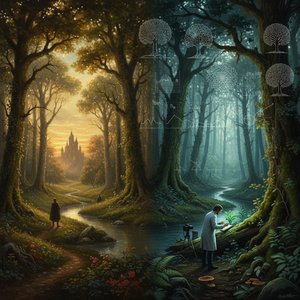
The Enchanted Canopy: Exploring Forests in Art History – From Romantic Idealization to Ecological Consciousness
Explore the rich history of forests in art! Discover Romantic masterpieces by Friedrich & Monet, Symbolist depths, and contemporary visions. Find inspiration & quality reproductions at OriginalUniqueArt.

Edward Mitchell Bannister: A Pioneer of American Landscape Painting & Artistic Recognition
Discover the remarkable life & art of Edward Mitchell Bannister, a pioneering African American landscape painter. Explore his journey overcoming barriers to achieve recognition and lasting impact on 19th-century American art.

Arboreal Echoes: A Historical & Artistic Exploration of Trees in Painting
Explore the rich history of trees in painting! Discover symbolism, Romantic masterpieces by Caspar David Friedrich & beyond. A curated journey for art enthusiasts.

