
 Aperçu en situation
 Envoyer
 Partager
 Détails de l'œuvre
 Guide
Guide

 Télécharger l'image
 Articles similaires
 Radiographie
 Diaporama
 Questions et réponses
 Statistiques
Road near Galle, Ceylon

- 38.0 x 24.0 cm


 Lire la suite
Giclées et impressions d'art
Impressions giclées ou sur toile de qualité musée, avec une production rapide et des finitions au choix. ( Commander la reproduction peinte à la main Passer au format numérique)




P118B €10

P118H €10

P118W €10

P438Z €10

P508JH €12

P508YH €12

P805H €10

P805Z €10

P919BZ €10

P919G €10

P919XJ €10

P959ZH €10

P968JZ €12

W106C €8

W218G €10

W218JH €8

W218Y €10

W307PJ €10

W316G €10

W316PJ €8

W316Y €10

W398PJ €8

W4111J €10

W500HY €15

W500JH €15

W692G €12

W849H €8

W940BG €15

W953PJ €8




Choisissez parmi nos formats prédéfinis qui respectent les proportions originales de l’œuvre.

Saisissez la largeur et la hauteur souhaitées pour qu'elles s'adaptent à votre cadre ou à votre mur. Une impression peut être recadrée, mais jamais agrandie au-delà de l'image originale ; ainsi, un format de forme différente entraînera la perte d'une partie de l'image. Nous vous envoyons une maquette numérique pour approbation avant toute impression. L'image présentée sur cette page ne montre pas le recadrage réel — seule la maquette le permet.
Livraison dans le monde entier () en 2 semaines au lieu des 4/5 semaines habituelles. (7 novembre)

Livraison express gratuite dans le monde entier

Toile de lin de qualité supérieure

Assurance transport complète

Garantie de remboursement des droits de douane

Garantie de fidélité des couleurs

Politique de retour de 100 jours (uniquement en cas de défaut)

Garantie de remboursement à 100%

Offre de tarifs dégressifs
 L'option verre n'est disponible que pour les dimensions inférieures à 110 cm.

Road near Galle, Ceylon
Giclées et impressions d'art
Format de la reproduction
-


Prix total
€ 72
A Glimpse of Ceylon’s Soul: Edward Lear's “Road Near Galle, Ceylon”
Edward Lear’s “Road Near Galle, Ceylon,” painted in 1879, isn’t merely a depiction of a tropical landscape; it’s a carefully constructed window into the heart of late Victorian Sri Lanka. More than just a picturesque scene, this oil painting embodies a profound sense of observation and quiet contemplation – qualities deeply rooted in Lear's own life experiences and artistic sensibilities. The image transports us to a moment suspended in time, capturing not just the physical beauty of the region but also an atmosphere of gentle serenity and understated dignity. It’s a testament to Lear’s ability to distill complex emotions into a single, evocative composition.The Scene Unfolds: A Vibrant Tapestry of Life
The painting immediately draws the eye to a small group of figures traversing a dusty dirt road that snakes its way through a lush, palm-dominated landscape. These aren’t grand heroes or dramatic events; instead, they represent everyday life – men and women engaged in simple activities: some pausing for rest, others continuing their journey with purposeful strides. Their attire, rendered in warm, earthy tones, speaks to the practicality of rural existence while simultaneously hinting at a vibrant local culture. The backdrop is dominated by towering palm trees, their fronds reaching skyward, creating a sense of depth and scale that emphasizes the vastness of the Ceylon landscape. The light itself – a rich, golden hue – seems to bathe the scene in an eternal afternoon glow, lending it a timeless quality. Lear masterfully uses color to create a harmonious balance between the vibrant greens of the foliage and the warm browns and ochres of the road and figures, evoking a feeling of warmth and tranquility.Lear’s Technique: A Delicate Balance of Observation and Impression
Examining the painting's technique reveals Lear’s meticulous approach to capturing light and atmosphere. He employs a broken brushstroke style, layering thin washes of color to build up form and texture with remarkable subtlety. This method allows for a luminous quality, particularly evident in the dappled sunlight filtering through the palm fronds. The artist’s attention to detail is striking – from the individual folds of fabric on the figures' clothing to the intricate patterns of the foliage – yet he avoids overly precise rendering, instead favoring an impressionistic approach that captures the essence of the scene rather than a photographic likeness. The use of color is particularly noteworthy; Lear doesn’t shy away from bold hues but skillfully blends them to create a sense of depth and realism. The painting's overall effect is one of quiet beauty and understated elegance, reflecting Lear’s own artistic philosophy.Symbolism and Context: A Window into Victorian Sri Lanka
“Road Near Galle, Ceylon” offers more than just a visual pleasure; it provides a glimpse into the social and cultural context of late 19th-century Sri Lanka during the British colonial period. Lear’s depiction of everyday life—the simple routines of the villagers—reflects a nuanced understanding of the region's diverse population. The painting can be interpreted as a celebration of Ceylon’s natural beauty and its people, while subtly acknowledging the presence of foreign influence. Lear himself was a keen observer of human nature and a master of capturing fleeting moments of emotion in his art. His own experiences with illness and isolation likely informed his ability to imbue his paintings with a sense of melancholy and introspection. The painting’s title itself—"Road Near Galle, Ceylon"—suggests a deliberate focus on the journey, both literal and metaphorical, that defines human existence.Bringing Lear's Vision Home: Reproductions and Artistic Legacy
Today, “Road Near Galle, Ceylon” stands as a testament to Edward Lear’s artistic genius. High-quality reproductions offer an accessible way to experience the painting’s beauty and evoke its evocative atmosphere. Whether displayed in a living room, study, or gallery, this artwork invites contemplation and offers a connection to a bygone era. Consider framing options that complement the painting's rich colors and textures – a natural linen canvas would be particularly fitting, allowing the artwork to truly shine. Explore various sizes to find one that best suits your space and aesthetic preferences. By investing in a reproduction of “Road Near Galle, Ceylon,” you’re not simply acquiring an image; you’re inheriting a piece of art history—a window into the soul of Ceylon and the perceptive eye of Edward Lear.Questions et réponses
Quelle est la date de création et le mouvement artistique de «Road near Galle, Ceylon» de Edward Lear ?
« Road near Galle, Ceylon » a été créé en 1879, s'inscrivant dans le mouvement Romanticism. La date et le mouvement ancrent l'œuvre dans l'histoire de l'art.
Qui a créé « Road near Galle, Ceylon » et dans quel style s'inscrit cette œuvre ?
Edward Lear a créé « Road near Galle, Ceylon » au sein du mouvement Romanticism.
Qui a créé « Road near Galle, Ceylon » et en quelle année ?
Edward Lear a réalisé « Road near Galle, Ceylon » en 1879.
Biographie de l'artiste
Premières années et carrière
Edward Lear, un artiste, illustrateur, musicien, auteur et poète anglais renommé, est né le 12 mai 1812 à Holloway, dans le nord de Londres. En tant que avant-dernier d'une famille de 21 enfants, la vie de Lear a été marquée par un début de carrière précoce dès l'âge de 15 ans. Son père, Jeremiah Lear, courtier en bourse, a rencontré des difficultés financières après les guerres napoléoniennes, ce qui a entraîné une réduction des finances familiales et le besoin pour Lear de se soutenir financièrement dès son plus jeune âge.Contributions artistiques
Lear a apporté des contributions artistiques multiples :- Illustrations d'oiseaux et d'animaux : Employé par la Zoological Society, les premiers travaux de Lear ont mis en valeur ses compétences dans l'illustration d'oiseaux et d'animaux.
- Peinture de paysage : Après ses voyages considérables à travers l'Europe et l'Asie, Lear s'est consacré à la peinture de paysage, capturant l'essence de ces régions dans ses œuvres.
- Auteur et poète : La renommée de Lear repose sur sa poésie absurde, ses limericks et ses vers humoristiques, comme on le voit dans ses livres "A Book of Nonsense" (1846), "Nonsense Songs" (1871) et "Laughable Lyrics" (1877).
- Compositions musicales : Lear a composé des mélodies pour la poésie d'Alfred Tennyson, avec douze œuvres publiées.
Œuvres notables et héritage
Parmi les œuvres les plus notables de Lear figurent :- "The Owl and the Pussycat", un poème qui est devenu synonyme de son style.
- "The Dong with the Luminous Nose", qui met en valeur son approche fantastique de la poésie.
- Illustrations of the Family of Psittacidae, or Parrots (1830), sa première publication à l'âge de 19 ans.
Musées et collections
Les œuvres de Lear peuvent être trouvées dans divers musées, notamment :- The Ashmolean Museum, Oxford, qui présente sa peinture à l'huile "The Plains of Lombardy from Monte Generoso".
- D'autres collections et musées notables présentant les œuvres de Lear peuvent être trouvés dans la base de données étendue de OriginalUniqueArt.com.
Conclusion
L'héritage d'Edward Lear témoigne de son approche innovante de l'art, combinant humour, poésie absurde et peinture de paysage. Son influence sur le monde de l'art et de la littérature reste inégalée, ses œuvres continuant à inspirer les nouvelles générations. Découvrez davantage d'œuvres d'Edward Lear sur OriginalUniqueArt.com En savoir plus sur Edward Lear sur Wikipédia
Edward Lear
1812 - 1888 , Royaume-Uni
L'essentiel de l'artiste
- Artistic Movement Or Style: Nonsense, paysage
- Date Of Birth: 12 mai 1812
- Date Of Death: 1888
- Full Name: Edward Lear
- Nationality: Britannique
- Notable Artworks:
- Le hibou et la puss”,
- Le nez lumineux”,
- Illustrations de perroquets”
- Place Of Birth (City And Country): Londres, Royaume-Uni
Articles connexes

Les 25 chefs-d'œuvre de John Constable : l'âme du paysage anglais
Explorez les 25 chefs-d'œuvre de John Constable et l'âme du romantisme anglais. Découvrez toute la collection sur OriginalUniqueArt.com.

Évocations de lieux : Un voyage historique à travers l'art du paysage
Explorez l'histoire fascinante de la peinture de paysage à travers les chefs-d'œuvre du Romantisme. Découvrez Friedrich, Turner et Aivazovski et laissez-vous inspirer par la beauté sauvage et le sublime. Reproduction d'art de qualité chez OriginalUniqueArt.

Les 10 Chefs-d'œuvre du Paysage Romantique : Artistes et Décor d'Intérieur
Plongez dans l'émotion du Romantisme avec les 10 plus beaux paysages de Friedrich, Turner & Delacroix. Découvrez leur histoire et trouvez l'inspiration déco idéale sur OriginalUniqueArt.com !

Évocations de Lieux : Un Voyage Historique à Travers l'Art du Paysage
Explorez l'histoire fascinante de la peinture de paysage romantique ! Découvrez les maîtres (Friedrich, Turner) et le concept du sublime. Conseils d'experts pour collectionner et apprécier cet art intemporel.
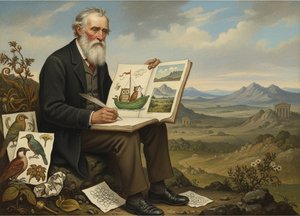
Edward Lear: A Life Beyond Nonsense – Landscape, Illustration & the Poetics of Isolation
Explore the life of Edward Lear beyond his nonsense poems. Discover his stunning landscape paintings, travel illustrations & the poignant themes of isolation in this expert art history analysis.


