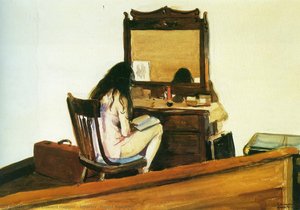
Aperçu en situation
 Partager
 Partager
 Détails

 Télécharger l'image
 Articles similaires
 Radiographie
 Voir le diaporama
Small Town Station


 Afficher la suite
Reproduction à l'huile faite à la main
Huile sur toile peinte à la main, avec cadre et dimensions personnalisés, réalisée sur commande par nos artistes. ( Acheter l'impression Acheter l'image)




P118B $10

P118H $10

P118W $10

P438Z $10

P508JH $12

P508YH $12

P805H $10

P805Z $10

P919BZ $10

P919G $10

P919XJ $10

P959ZH $10

P968JZ $12

W106C $8

W218G $10

W218JH $8

W218Y $10

W307PJ $10

W316G $10

W316PJ $8

W316Y $10

W398PJ $8

W4111J $10

W500HY $15

W500JH $15

W692G $12

W849H $8

W940BG $15

W953PJ $8




Choisissez parmi nos formats prédéfinis qui respectent les proportions originales de l’œuvre.

Vous pouvez saisir vos propres dimensions pour l'adapter à un cadre ou à un espace spécifique. Si la taille sélectionnée ne correspond pas aux proportions de l'image d'origine, nous recadrerons l'œuvre ou prolongerons la peinture avec des éléments peints à la main supplémentaires. Une maquette numérique vous sera envoyée pour approbation avant le début de la production.
Veuillez noter que l'aperçu à l'écran ne reflète pas le recadrage ou l'extension réels. Seule la maquette montrera fidèlement la composition finale.
Bien que des tailles personnalisées soient disponibles, nous vous recommandons de sélectionner une dimension dans la liste prédéfinie afin de préserver les proportions d'origine.
Après la commande, l’équipe OriginalUniqueArt.com contactera le client par e-mail pour recueillir ses instructions et lui fournira une maquette d’aperçu
Livraison dans le monde entier () en 3 à 4 semaines au lieu des 5 semaines habituelles. (26 août). Aucun compromis sur la qualité.

Livraison express gratuite dans le monde entier

Toile de lin de haute qualité

Assurance transport complète

Garantie de remboursement des droits de douane

Garantie de fidélité des couleurs

Politique de retour de 60 jours (uniquement en cas de défaut)

Garantie de remboursement à 100%

Tarifs dégressifs sur quantité
 L'option verre n'est disponible que pour les dimensions inférieures à 110 cm.

Small Town Station
Technique de reproduction
Format de la reproduction
-


Prix total final
$ 300
Description de l'œuvre
Edward Hopper’s “Small Town Station”: A Portrait of American Solitude
Edward Hopper's "Small Town Station," painted between 1918 and 1920, isn’t merely a depiction of a rural American scene; it’s a distilled essence of the era’s burgeoning sense of isolation and quiet contemplation. This deceptively simple canvas—a red brick station building anchoring a small town against a backdrop of a towering church steeple – immediately draws the viewer into a world brimming with unspoken narratives and subtle emotional currents. Hopper, a master of capturing fleeting moments of human experience, expertly utilizes light and shadow to create an atmosphere both familiar and profoundly melancholic.
The painting’s composition is meticulously crafted. The station itself, rendered in muted tones, feels almost abandoned, its windows dark and reflecting the overcast sky. A few figures are present – a man leaning against a post, a woman seated on a bench – but they remain largely detached, lost in their own thoughts. Their presence doesn't inject life into the scene; instead, it subtly underscores the pervasive sense of solitude. Hopper’s signature use of geometric forms—the sharp angles of the building, the straight lines of the tracks—contrasts with the softer curves of the benches and the figures, creating a visual tension that mirrors the emotional landscape of the work.
The Language of Light and Shadow: Hopper's Technique
Hopper’s technical skill is evident in his masterful manipulation of light. He employs a limited palette – primarily browns, grays, and blues – to evoke a sense of stillness and introspection. The strong directional lighting, originating from an unseen source, casts dramatic shadows that emphasize the forms and create a palpable depth within the scene. Notice how the light catches the edges of the building, highlighting its solidity while simultaneously obscuring details, contributing to the painting’s enigmatic quality. Hopper's brushwork is generally smooth and controlled, reflecting his commitment to realism, yet he subtly introduces textural variations—particularly in the depiction of the brick – to prevent the image from feeling overly sterile.
Interestingly, early versions of this work, as evidenced by a painting held at the Whitney Museum (accession number 70.1209), reveal a more vibrant color scheme and a greater degree of activity. This suggests that Hopper experimented with different approaches before settling on the subdued palette and contemplative mood that define the final version. The evolution demonstrates his process—a careful balancing act between observation, technique, and artistic intent.
Symbolism and the American Psyche
"Small Town Station" resonates deeply within the context of early 20th-century America. Following the rapid industrialization and urbanization of the late Victorian era, many Americans experienced a growing sense of displacement and alienation. Hopper’s work captures this feeling with remarkable precision. The station itself can be interpreted as a symbol of transition—a point between journeys, both literal and metaphorical. The church steeple, towering above the town, represents faith and tradition, perhaps offering a counterpoint to the prevailing sense of isolation.
Furthermore, the painting speaks to the broader themes explored by Hopper throughout his career: loneliness, urban alienation, and the search for meaning in a rapidly changing world. He wasn’t simply depicting a place; he was portraying an emotional state—a quiet yearning for connection amidst the vastness of modern life. As art critic Edward Hopper described it, "I paint what I see, not necessarily what I think I see."
A Timeless Masterpiece: Reproduction and Beyond
OriginalUniqueArt offers meticulously crafted hand-painted reproductions of “Small Town Station,” allowing you to experience the profound beauty and emotional resonance of this iconic work in your own space. Our artists carefully replicate Hopper’s nuanced use of light, color, and composition, ensuring that the reproduction captures the essence of the original painting. Whether displayed as a statement piece in a contemporary interior or as a nostalgic reminder of America's past, “Small Town Station” continues to captivate viewers with its quiet power and enduring appeal. Explore our high-quality reproductions today and bring this poignant portrait of American solitude into your home.
Biographie de l'artiste
**jeunesse et influences**
Edward Hopper, peintre et graveur américain réaliste de premier plan, est né le 22 juillet 1882 à Upper Nyack, New York. Sa famille, d'ascendance principalement néerlandaise, lui a offert une éducation confortable qui lui a permis de poursuivre ses inclinations artistiques dès son plus jeune âge. - **inspirations :** L’œuvre de Hopper a été influencée par les écrits de Ralph Waldo Emerson et des maîtres impressionnistes français Édouard Manet et Edgar Degas. - **formation précoce :** Il a commencé à étudier l'art grâce à un cours par correspondance en 1899, puis est passé à l’École d'Art et de Conception de New York.**style artistique et thèmes**
Edward Hopper's rendus sobres et soigneusement calculés reflétaient sa vision personnelle de la vie américaine moderne. Son travail peut être caractérisé par : - **scènes urbaines et rurales :** Les deux ensembles étaient dépeints avec un mélange unique de réalisme et d’émotion profonde. - **lumière :** Maîtrise de la lumière, souvent utilisée pour évoquer des sentiments d'isolement ou de contemplation. - **figures :** Souvent sans visage ou en arrière-plan, mettant l'accent sur l'environnement plutôt que sur les figures.**œuvres notables et leur signification**
- House by the Railroad (Musée d'Art Moderne, New York, États-Unis), un exemple de la capacité de Hopper à évoquer un sentiment de mélancolie grâce à une composition simple mais puissante. - Reclining Nude (50 x 35 cm, Nouveau Réalisme, aquarelle), mettant en valeur sa versatilité pour capturer la forme humaine.**Héritage et influence**
- **Influence sur les artistes futurs :** Le style unique de Hopper a influencé de nombreux artistes, dont Pierre Sanford Ross, connu pour ses scènes urbaines et rurales. - **Popularité durable :** Ses œuvres continuent de captiver le public par leurs thèmes intemporels de solitude et de la condition humaine.**Explorez davantage sur OriginalUniqueArt**
- [https://OriginalUniqueArt.com/@/edward-hopper](Œuvres d'Edward Hopper) - /fr/art/show/art-8xyffg-fr/Achetez de l'art inspiré par les maîtres]- Plongez dans le monde de l'art grâce à la vaste collection de OriginalUniqueArt.
- Découvrez comment l'héritage d' Edward Hopper continue d'inspirer les artistes et les amateurs d'art.
**Références**
- [https://OriginalUniqueArt.com/@/edward-hopper](Wikipedia : Edward Hopper) - [https://en.wikipedia.org/wiki/edward_hopper](Biographie d'Edward Hopper sur Wikipédia)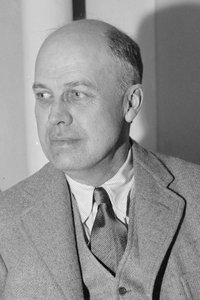
Edward Hopper
1931 - 1967 , États-Unis d'Amérique
En bref
- Artistes Influents:
- Ralph Waldo Emerson
- Édouard Manet
- Edgar Degas
- Date De Décès: 1967
- Date De Naissance: 22 juillet 1882
- Influence Sur Les Artistes: ['Pierre Sanford Ross']
- Lieu De Naissance: Upper Nyack, États-Unis
- Nationalité: Américaine
- Nom Complet: Edward Hopper
- Oeuvres Notables:
- House by the Railroad
- Nighthawks
- Gas
- Chop Suey
- Summertime
- Style Artistique: Réalisme américain
Articles similaires
Edward Hopper : Les 25 Œuvres Maîtresses d'un Artiste Américain Intemporel | OriginalUniqueArt
Plongez dans l'univers poignant d'Edward Hopper avec les 25 œuvres incontournables du maître américain. Découvrez la lumière, l'isolation et le réalisme unique de ses tableaux iconiques. Reproductions de qualité muséale sur OriginalUniqueArt.com. Explorez la collection en ligne.

Réalisme Américain : 10 Chefs-d'œuvre Incontournables pour une Déco Inspirée
Plongez au cœur du Réalisme Américain avec 10 chefs-d'œuvre d'Edward Hopper, Andrew Wyeth et plus. Découvrez l'histoire et les techniques de ces artistes emblématiques. Reproductions de tableaux de qualité musée sur OriginalUniqueArt.com !

The Unvarnished Truth: A Cultural Journey Through the Soul of American Realism
Explore the profound beauty of American Realism. From the Ashcan School's urban grit to intimate portraits, discover how artists captured the authentic soul of a nation through unvarnished truth and masterful observation.
Le Réalisme Américain du XXe siècle : Un commentaire social et artistique poignant
Explorez le Réalisme Américain du XXe siècle : de l'Ashcan School à Hopper. Analyse approfondie des artistes, techniques et l'impact social de ce mouvement artistique puissant. Découvrez son héritage sur OriginalUniqueArt.

Réalisme Contemporain : Les 10 Chefs-d'œuvre Qui Ont Marqué l'Histoire de l'Art
Plongez au cœur du Réalisme Contemporain avec les 10 œuvres incontournables qui ont marqué l'histoire de l'art. Découvrez Lucian Freud, Gerhard Richter et bien d'autres ! Reproductions de qualité muséale sur .